

Business
Budget 2026: Jewellery sector seeks duty rationalisation, reforms and GST cuts – The Times of India


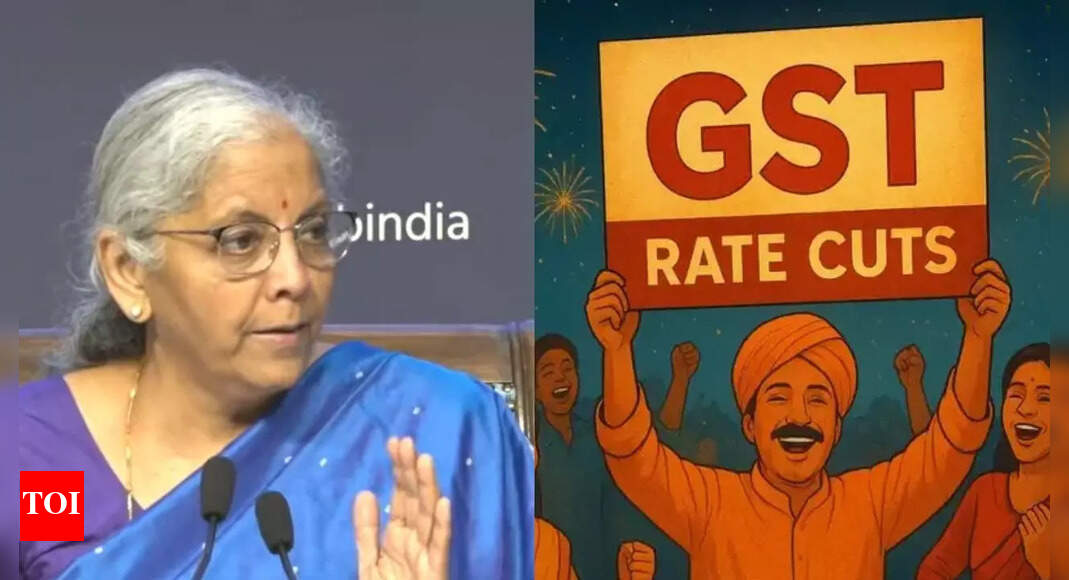
For the Union Budget 2026-2027, India’s gems and jewellery industry is urging the government for a mix of GST cuts, customs reforms and policy changes to counter global trade headwinds and improve export competitiveness. In its pre-Budget memorandum submitted to finance minister Nirmala Sitharaman, the Gem and Jewellery Export Promotion Council (GJEPC) highlighted measures aimed at lowering costs for exporters and strengthening India’s role in the global diamond trade and value discovery ecosystem. “The global gem and jewellery trade is undergoing a major transformation. With high US tariffs, evolving consumer preferences, and shifting global supply chains, it is imperative that India maintains its competitive edge,” GJEPC chairman Kirit Bhansali said. According to Bhansali, the proposals focus on enhancing cost efficiency, reinforcing Special Economic Zone (SEZ) operations and improving policy frameworks that support investment and skill development. He said that with supportive reforms and a stable trade environment, India could both withstand current global pressures and drive the next phase of growth in the international jewellery market. The Council flagged concerns over the existing 4% Safe Harbour tax, stating that it remains too high and discourages international trade. The agency also called for rationalisation of import duties on cut and polished diamonds as well as coloured gemstones to help Indian exporters remain competitive globally. In addition, the GJEPC has sought amendments to the Customs Act, 1962, to bring customs procedures in line with the needs of a fast-evolving, export-oriented gems and jewellery sector. Its recommendations include risk-based customs clearance, AI-enabled digital appraisals and self-certification for trusted exporters to improve efficiency, transparency and turnaround time. Separately, the All India Gem and Jewellery Domestic Council (GJC) has made its own representation to the government, focusing on GST rationalisation, hallmarking, direct tax reforms and sector-wide improvements. “GST on gold and silver jewellery should be rationalised to 1.25 per cent from 3 per cent, which will help restore proportionality, reduce financial stress on households, and enable a wider base of taxed transactions,” GJC chairman Rajesh Rokde said. The GJC has also proposed exempting capital gains tax on exchanges of hallmarked jewellery, provided the proceeds from the sale are immediately reinvested in new jewellery purchases, thereby ensuring continuity of asset holding. Another key demand relates to the Tourist GST Refund scheme. The Council has urged the government to operationalise the scheme at the earliest by notifying the required rules and setting up digital claim and verification systems at major international gateways. It suggested starting with a phased pilot at Delhi, Mumbai and Bengaluru airports, citing higher levels of jewellery sales and foreign tourist arrivals. “Foreign tourists, particularly from the Middle East, Europe and the United States, face a tax-inclusive price disadvantage while purchasing jewellery in India as compared to regional competitors like the UAE and Singapore, where such refunds are efficiently processed through automated airport systems,” Rokde said. The expert further highlighted that this results in a lost opportunity for India “wherein foreign buyers either defer purchases or procure jewellery abroad, converting India’s competitive craftsmanship into exported retail demand losses.”




Business
WTO reform push: India flags dysfunctional dispute system at MC14, seeks review of e-commerce duty moratorium – The Times of India
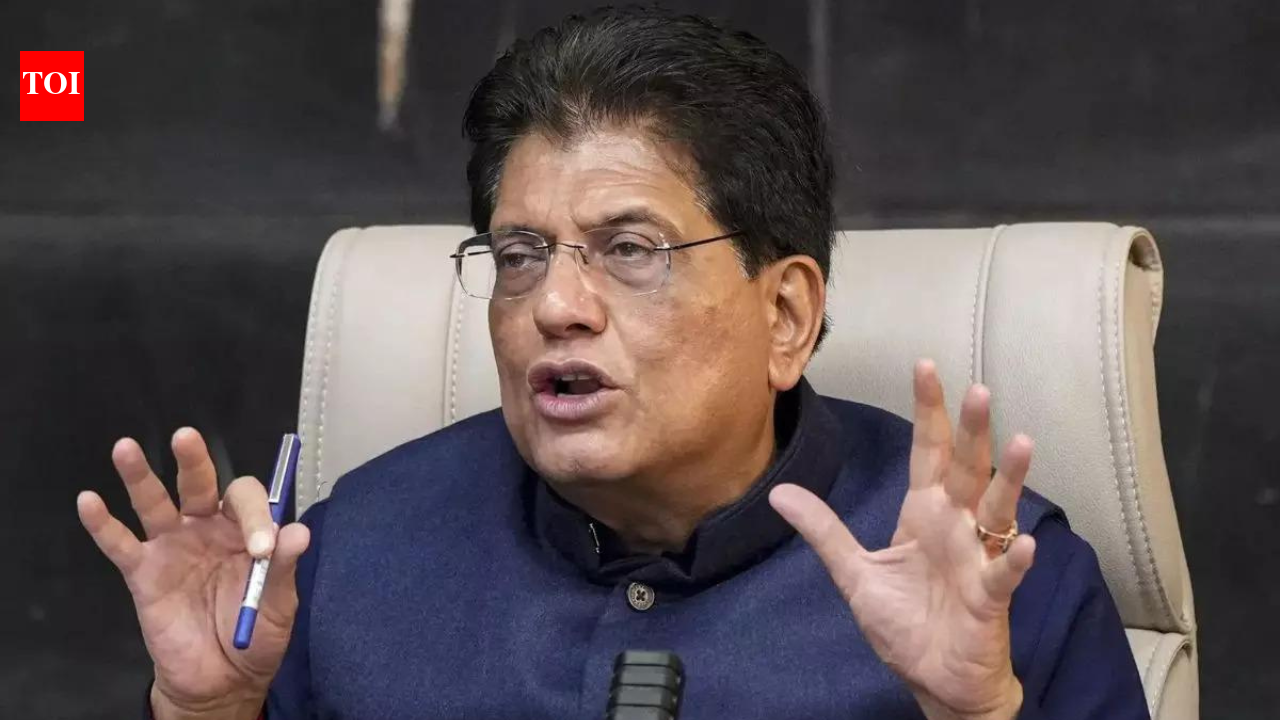
India on Thursday urged members of the World Trade Organisation (WTO) to restore a fully functional dispute settlement system, saying the current mechanism has deprived countries of effective redressal, PTI reported.Speaking on the opening day of the WTO’s 14th ministerial conference (MC14) in Yaounde, Cameroon, commerce and industry minister Piyush Goyal stressed the need to revive the automatic and binding nature of dispute resolution within the global trade body.“A dysfunctional Dispute Settlement System has deprived Members from effective redressal. We must restore the automatic and binding dispute settlement system,” he said.The WTO’s dispute settlement mechanism has faced prolonged disruption since 2009 after the US blocked appointments to the Appellate Body.Goyal also called for a reassessment of the moratorium on customs duties on electronic transmissions, which WTO members have periodically extended since 1998. India has repeatedly raised concerns over the potential revenue implications of the arrangement.“In the absence of a common understanding among Members on the scope of the moratorium on customs duties on electronic transmissions and given its potentially significant implications, the continued extension of this moratorium warrants careful reconsideration,” he said.The four-day MC14 is scheduled to conclude on March 29.On broader WTO reforms, Goyal emphasised that any restructuring should be transparent, inclusive and member-driven, with development concerns at the centre. He underlined that core principles such as non-discrimination, consensus-based decision-making and equity must be upheld. The minister added that the principle of special and differential treatment (S&DT) should be made precise, effective and operational.On agriculture negotiations, he said a permanent solution on public stockholding for food security purposes, the special safeguard mechanism and cotton are long-pending mandated issues that member countries “must deliver on them on priority”.“India remains committed to negotiating a comprehensive Fisheries Subsidies Agreement that balances current and future fishing needs, protects the livelihoods of poor fishers, with appropriate and effective S&DT,” Goyal said.He also stated that incorporating plurilateral outcomes into the WTO framework should be based on consensus and should not undermine the rights of non-participants or impose additional obligations on them.“We will engage constructively to show that WTO remains central to global trade and strive to Reform it to remain responsive, Perform in delivering on development, equity, and inclusiveness, and Transform to better serve the interests of the poor, vulnerable, and marginalized people, anchored in consensus and multilateralism,” he said.Other WTO members also highlighted the need for reforms. According to a statement from US Trade Representative Jamieson Greer, the organisation has struggled to address systemic issues such as persistent trade imbalances, structural excess capacity, economic security and supply chain resilience.“As ministers, our focus should be on reforms that would make the WTO more responsive to Members and improve our ability to achieve outcomes that optimize our trading relationships,” Greer said, adding that countries should consider making the e-commerce duty moratorium permanent.Separately, a ministerial statement by the G-33 grouping of developing countries reiterated that public stockholding for food security remains a crucial policy tool for developing and least developed nations.“We urge all WTO Members to work together in reaching a permanent solution on this issue as per the Ministerial mandates,” the statement said.China also called for restoring a fully functioning dispute settlement mechanism at the earliest to strengthen the WTO’s role in global economic governance. The UK said it wanted to “improve accountability by reinstating a functioning dispute settlement system”.EU trade commissioner Maros Sefcovic warned that inaction could weaken the rules-based trading system. “Maintaining the status quo is not an option — we cannot go on as we are. If we do, we risk erosion of the rules-based system and the WTO sliding into irrelevance. Therefore, I strongly believe we must act urgently to reform the WTO,” he said
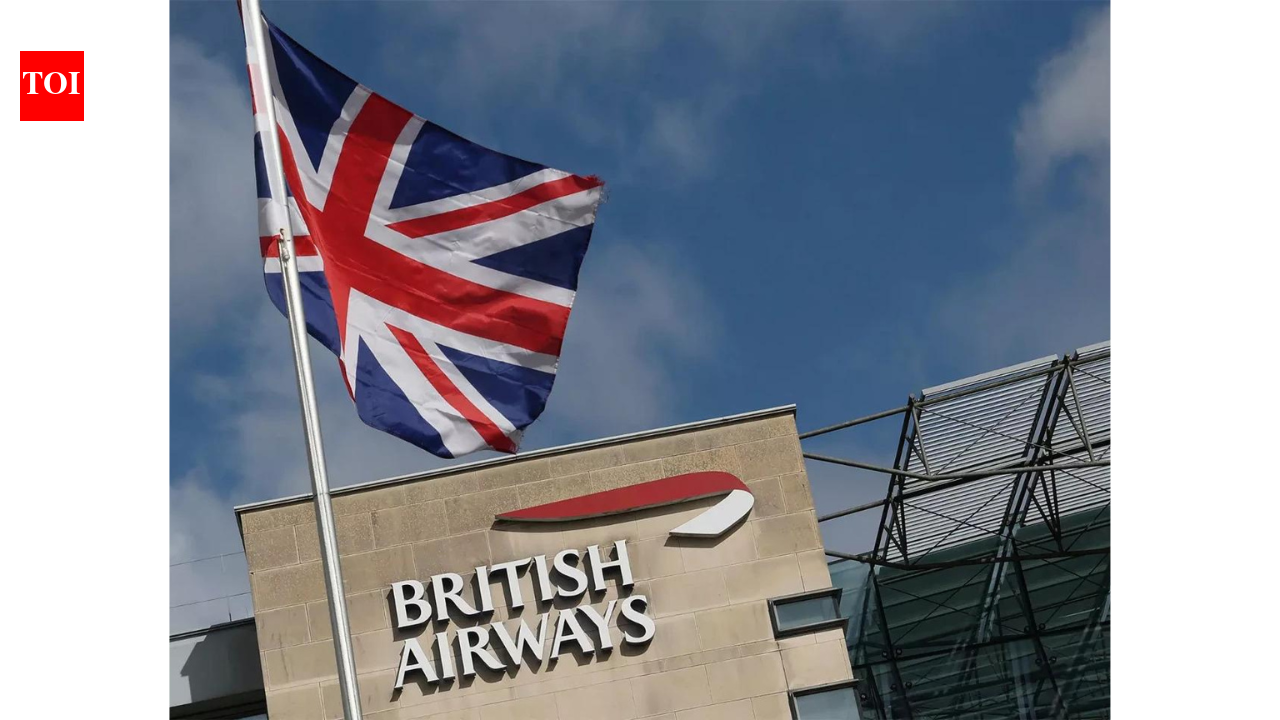
NEW DELHI: With the big Gulf carriers operating a fraction of their schedules, foreign airlines are expanding their India flights to meet the increased demand for options to the likes of Emirates, Qatar Airways and Etihad. SWISS will operate a second daily light between between Delhi and Zurich from April 1 to May 31, 2026. British Airways will have a third daily service from Delhi starting April 7, followed by a third daily service from Mumbai from May 15. Air India has been adding flights to the west whenever possible during the Iran war.In a statement Thursday, Lufthansa group carrier SWISS said it is increasing its flight offering between Switzerland and India. “From April 1 to May 31, 2026, in addition to its regular service from Zurich to Delhi, SWISS will operate a second daily connection using an Airbus A330. Numerous passengers of other airlines are currently unable to take their originally booked flights via the Gulf region. As a result, many are switching to direct connections to and from Asia. SWISS is seeing a corresponding rise in demand for such nonstop services. We are pleased to offer our customers this additional flight to Delhi over the next two months. The flights are available for booking with immediate effect,” SWISS said in a statement.“Depending on further developments in the Middle East, SWISS continuously assesses how aircraft and capacities that become available can be deployed where demand is particularly strong. In addition to demand, key factors include operational constraints such as available airport slots, traffic rights and fleet deployment capabilities,” SWISS statement added.British Airways also announced additional flights from Delhi and Mumbai “to meet strong travel demand”. “In response to the ongoing situation in the Middle East, the airline is adding short-term capacity from Delhi and Mumbai to meet customer demand. A third daily service from Delhi will launch on April 7, followed by a third daily service from Mumbai from May 15. With this additional capacity, British Airways will operate up to 63 weekly flights with more than 1,000 additional seats per week between India and the UK, offering more options for customers travelling to the UK or connecting onwards across the airline’s global network,” BA said in a statement.Neil Chernoff, British Airways’ chief planning and strategy officer, said: “As we continue to respond to the evolving situation in the Middle East, we’ve been able to reallocate additional capacity to meet strong demand to other destinations across our route network. India remains one of our most important global markets, and these additional services from Delhi and Mumbai respond to customer demand and provide greater choice and flexibility for our customers when travelling to the UK and beyond. We will continue to review our network and make adjustments based on where our customers want to fly this summer.”

Two major CEOs told CNBC in recent months that the rise of artificial intelligence contributed to their decisions to hand over the reins and step down from their positions.
It’s one of the latest insights into how America’s corporate leaders are sizing up the AI transition.
Coca-Cola CEO James Quincey told CNBC’s “Squawk Box” on Thursday that his decision to step down from his role was influenced by larger “waves of the organizational momentum.”
“My job is also to think who’s the best team to put on the field to get the next wave done,” Quincey said. “And I concluded that, actually, it was time to put someone else on the field for the next wave of growth.”
Quincey, who has served as CEO of the beverage giant since 2017, will be succeeded by current COO Henrique Braun, effective at the end of this month.
“In a pre-AI, a pre-gen-AI mode, we made a lot of progress. But now there’s a huge new shift coming along,” Quincey said.
While he said he’s leaning into the technological advances, he believes the beverage company needs “someone with the energy to pursue a completely new transformation of the enterprise.”
That person, Quincey said, is Braun, who he believes will uniquely equip the company to embrace its next chapter.
Quincey’s comments echo sentiments from former Walmart CEO Douglas McMillon in December ahead of his departure from that role.

McMillon, who had held the position as CEO of the global retailer since 2014, told CNBC’s “Squawk Box” at the time that he had decided to hand over the role to someone “faster.” John Furner, who was previously head of Walmart U.S., took over the top job on Feb. 1.
“With what’s happening with AI, I could start this next big set of transformations with AI, but I couldn’t finish,” McMillon told CNBC.
“About a year ago, I really started feeling like this next run, you could see what agentic commerce was gonna look like, the vision for AI shopping, and I started thinking about everything that needs to happen over the next few years, and it really caused me to think that now was the right time [to step down],” he said.
Walmart in December made the move to list on the Nasdaq, something McMillon said was symbolic of the progress the company has made with technology.
The retailer has been incorporating AI to optimize its supply chain, provide assistants for customers and more.
“I think what you’re going to see from the Walmart team is they’re just going to keep scaling what we’ve already started, build some new stuff on top, and then use AI to transform it all,” he said.


Amazon’s Spring Sale Is So-So, but Cadence Capsules Are a Bright Spot

The unexpected path that led Morgan and Frankie Price to Arkansas gymnastics

US-Iran mediation: Politicians castigate India’s Jaishankar for spiteful remarks on Pakistan

-

 Fashion1 week ago
Sales at US apparel, clothing accessories stores up 4% YoY in Jan 2026
-

 Tech1 week ago
Justice Department Says Anthropic Can’t Be Trusted With Warfighting Systems
-
 Fashion1 week ago
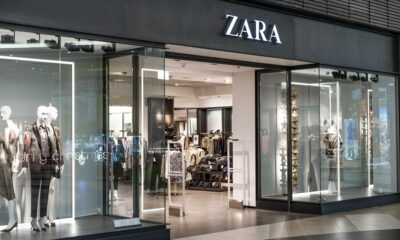
Spain’s Inditex FY25 sales rise 3.2% to $46.28 bn amid strong demand
-

 Politics1 week ago
Iran strikes Tel Aviv with cluster-warhead missiles in retaliation of Larijani’s martyrdom
-

 Sports1 week ago
March Madness 2026 – How to watch in SA, start time, schedule, TV channel for NCAA championship basketball tournament
-

 Entertainment1 week ago
Val Kilmer revived 1 year after death through AI
-

 Entertainment1 week ago
With few new leads 45 days after Nancy Guthrie’s disappearance, investigation “becomes much harder,” expert says
-
 Business1 week ago
Brits cashing in jewellery as gold price hits record high