

Sports
Buster Olney’s 2026 top 10 at every MLB position: First basemen

Spring training camps are underway, which means it is time to look at the state of baseball. As part of our 2026 MLB season preview, ESPN’s Buster Olney surveyed those around the industry to help him rank the top 10 players at every position as part of his annual positional ranking series.
Today, we rank the best of the best relievers.
The objective of this exercise is to identify the best players for the 2026 season, not who might be best in five years or over their career. We will roll out a position per day over the next two weeks. Here’s the rest of the schedule: starting pitchers (Monday), relief pitchers (Tuesday), catchers (Wednesday), second basemen (Friday), third basemen (Feb. 23), shortstops (Feb. 24), corner outfielders (Feb. 25), center fielders (Feb. 26), designated hitters (Feb. 27).

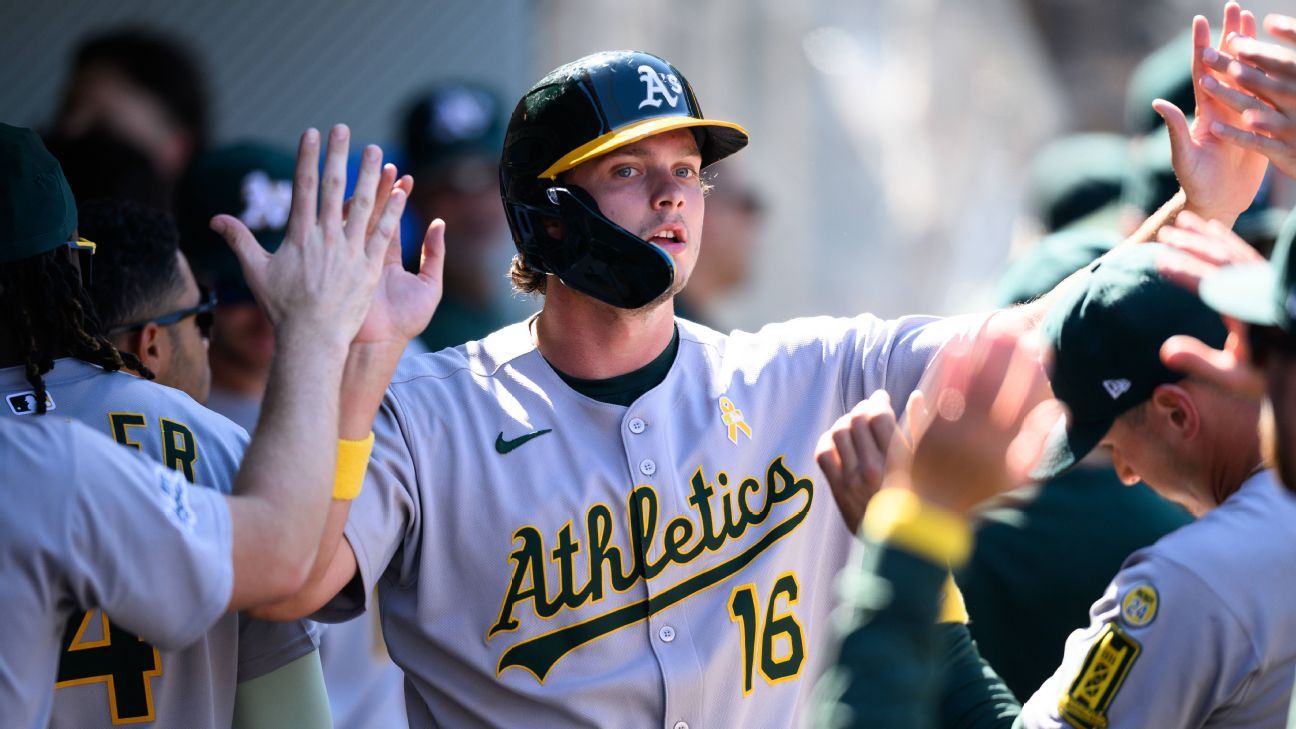
Typically, there is a distinct learning curve for even the best college hitters as they adapt to the challenge of facing professional pitchers, sometimes requiring significant adjustments, swing concessions and years of repetitions. That’s why the rookie season of A’s first baseman Nick Kurtz was so shocking.
After being drafted fourth overall in 2024 and starting the ’25 season in the minor leagues, Kurtz wrecked major league pitching for 36 homers and an OPS+ of 173 in his first 117 games. He effectively spotted the rest of the league a month — making his debut on April 23 — and only Matt Olson accumulated more fWAR than Kurtz among first basemen in 2025.
David Forst, the A’s head of baseball operations, was asked the other day about the alterations that Kurtz made after being drafted to propel him to such a fast start in the big leagues.
“He hasn’t had the time [in pro ball] to make adjustments yet,” Forst said. “He’s done the exact same thing in the major leagues as he did in college.”
This is not an exaggeration. In Kurtz’s last season at Wake Forest in 2024, he posted a slash line of .306/.531/.763. His first season in the big leagues: .290/.383/.619.
Kurtz turns 23 next month. Given the damage he did last year, and the promise for more of the same to come, where should he land among the accomplished list of first basemen that includes future Hall of Famers in Freddie Freeman and Bryce Harper, star hitters such as Rafael Devers and Josh Naylor, and sluggers such as Pete Alonso and Olson?
Evaluators love what they see in Kurtz.
Top 10 first basemen
 1. Vladimir Guerrero Jr., Toronto Blue Jays
Last October, Guerrero ascended from mere stardom to being in the conversation for the best and most dangerous hitter in the game with how he dominated postseason pitching. Vlad Jr. decided to focus less on mechanics and more on the pitcher and wow, did that approach work for him in the playoffs: He hit eight home runs in 18 games, going 29-for-73 (.397) with 14 walks and seven strikeouts. This season’s MVP race among Vladdy, Aaron Judge, Cal Raleigh, Kurtz, Bobby Witt Jr., Jose Ramirez and Julio Rodriguez could be a monster.
 2. Matt Olson, Atlanta Braves
Olson’s consistent production is vaulting him into Hall of Fame territory. He needs just 12 more homers for 300 in his career and has at least 29 in seven of his 10 seasons. New Atlanta manager Walt Weiss is more inclined to rest players than Brian Snitker was, and Olson might be his most challenging conversation — he has played every game over the past three seasons. There is so much to playing first base that no statistic fully captures the skills required, but Olson led all first basemen in defensive runs saved by far (17), and he was second in outs above average (nine).
 3. Nick Kurtz, Athletics
Kurtz’s greatest adjustment might need to be made against left-handed pitchers because he is going to see a ton of them this year when opposing managers are trying to figure out a way to mitigate his power. Last season, his OPS versus right-handed pitchers was 468 points higher than versus lefties — 1.153 to .685. But given his immediate impact and steady improvement over last season, he figures to get better over time against lefties. His impressive history also suggests he’ll turn around last year’s walk/strikeout numbers of 63/151 — through his college years and first season of pro ball, he had 201 walks and 120 strikeouts. Kurtz has a special set of skills.
 4. Pete Alonso, Baltimore Orioles
All of the conversation about Alonso’s defense and baserunning — overstated criticism — have overshadowed his remarkable consistency with the Mets. “You just pencil him in for 35 homers and 110 RBIs, and you know he’ll give you 155 to 160 games,” one evaluator said. None of that is an overstatement — Alonso has hit at least 34 home runs in every year of his career other than the COVID-shortened season of 2020, and he’s driven in 463 runs over the last four years, or about 116 per season. And he’s missed a total of 24 games in his first seven seasons. Time will tell whether the Mets’ decision to not pay him was the right one, but undoubtedly, there will be a lot of moments in 2026 when they will miss him.
 5. Freddie Freeman, Los Angeles Dodgers
If you polled opposing managers about who they would least like to see in the batter’s box with the game on the line, Freeman would probably be among the first hitters named, even at age 36. He continues to excel, with a .295/.367/.502 slash line last season, and at this point, there’s every reason to believe he’ll have a shot at being the next — and maybe last? — hitter to reach 3,000 hits. He’s got 569 to go, and given his understanding of opposing pitchers and his ability to hit to all fields, Freeman should continue to age well. He’s got two years left on his Dodgers contract, and with Shohei Ohtani entrenched as L.A.’s designated hitter indefinitely, questions might emerge next season about where Freeman will finish his career.
 6. Bryce Harper, Philadelphia Phillies
David Dombrowski, the head of Philadelphia’s baseball operations, kicked off a lot of conversation about what kind of player Harper is with the way he answered a question about Harper’s production at the end of last season. Where does Harper actually stand? Well, his OPS+ last year was 129, meaning he was well above average, and in this era of dominant pitching, his on-base percentage of .357 ranked 26th among the 154 hitters who qualified for the batting title. Harper scored 72 runs in 132 games and accumulated 27 homers. He’ll play this season at age 33, with Dombrowski’s assessment providing the foundation for whatever narrative develops.
 7. Josh Naylor, Seattle Mariners
Naylor thrived after his trade to Seattle, posting an .831 OPS and going 19-for-19 in stolen bases over the last 54 games of the regular season — and carrying that over into the postseason, when he hit .417/.481/.792 in the AL Championship Series. Early in free agency, the Mariners retained him on a five-year, $92.5 million deal.
 8. Rafael Devers, San Francisco Giants
Members of San Francisco’s front office say they believe Devers will become a solid first baseman as he works with new infield instructor Ron Washington, and there has never been any doubt about whether he can hit. Even through his tumultuous 2025 season, Devers still finished with an OPS of 140, right in line with his career numbers, and he hit 35 homers. It will be interesting to see how he adjusts in his first full season in Oracle Park, where he had an uncharacteristic 59 strikeouts in 48 games and batted .234 — numbers that suggest he might have been trying to muscle up in a pitchers’ park.
 9. Michael Busch, Chicago Cubs
With the confines of Wrigley Field more friendly to pitchers and right-handed hitters most days, Busch hit 21 of his 34 homers on the road. But he was still really good at home, with a .356 OBP and a .500 slugging percentage. With the Cubs’ best hitters mostly right-handed, the team will need the left-handed Busch to thrive and balance out the lineup, especially if Pete Crow-Armstrong has another season of streaks.
 10. Vinnie Pasquantino, Kansas City Royals
After a string of injuries, Pasquantino stayed on the field in 2025 and finished with 66 extra-base hits, 113 RBIs and a career-high 120 OPS+. He played 126 of his 160 games at first base last season but could have more time at DH in ’26, as the Royals rely more on Carter Jensen behind home plate and Salvador Perez plays more games at first.
Honorable mentions
Jonathan Aranda, Tampa Bay Rays: Aranda would be in the top 10 if not for an injury that cost him August and almost all of September last year. He finished about 80 plate appearances short of qualifying for a batting title, but the only hitter with at least 400 plate appearances who had a higher average than Aranda’s .316 was Judge. Aranda had a wRC+ of 153, and among first basemen, only Kurtz was better.
Ben Rice, New York Yankees: Part of the reason Yankees general manager Brian Cashman talks about the improvement in his team’s roster over the last year is Rice’s development, which has the team believing he’s going to be an impact hitter in the seasons ahead. In his first full season, Rice generated a slugging percentage of .499, with an OBP of .337. His second-half slash line was .281/.352/.542, and lest you assume he’s just another left-hander hitter exploiting the Yankee Stadium dimensions, his home/road splits were pretty even (.250/.336/.518 at home, .259/.338/.481 on the road).
Willson Contreras, Boston Red Sox: A tough hitter who has adapted well in his position shift to first base. His strikeouts spiked last year to a career-high 142, and his walk rate of 7.8 in ’25 was a career low.
Jorge Polanco, New York Mets: In the end, manager Carlos Mendoza could deploy Brett Baty — or Mark Vientos — at first, and Polanco could get a lot of run at DH. No matter where he plays, he should help the Mets’ offense, coming off a season in which he had an .821 OPS.
Spencer Torkelson, Detroit Tigers: Torkelson made a lot of offseason changes that paid off in the first half of last season, when he hit 21 of his 31 homers and had an OPS of .826.
Andrew Vaughn, Milwaukee Brewers: Vaughn had a .308/.375/.493 slash line in 64 games for Milwaukee, and his walk-strikeout ratio shifted dramatically — from seven walks and 43 strikeouts in his last 48 games with Chicago to 24 walks and 37 strikeouts with the Brewers.
Christian Walker, Houston Astros: His offensive struggles were real (a 99 wRC+), but he continued to play well defensively and he hit 27 homers.
The women’s college basketball transfer portal officially opened Monday, and by day’s end more than 1,000 players had entered.
In past years the portal opened during the NCAA tournament. New regulations this year prevented any official activity until after the season concluded Sunday with UCLA beating South Carolina for the championship. The transfer portal window is also shorter this year, closing on April 20.
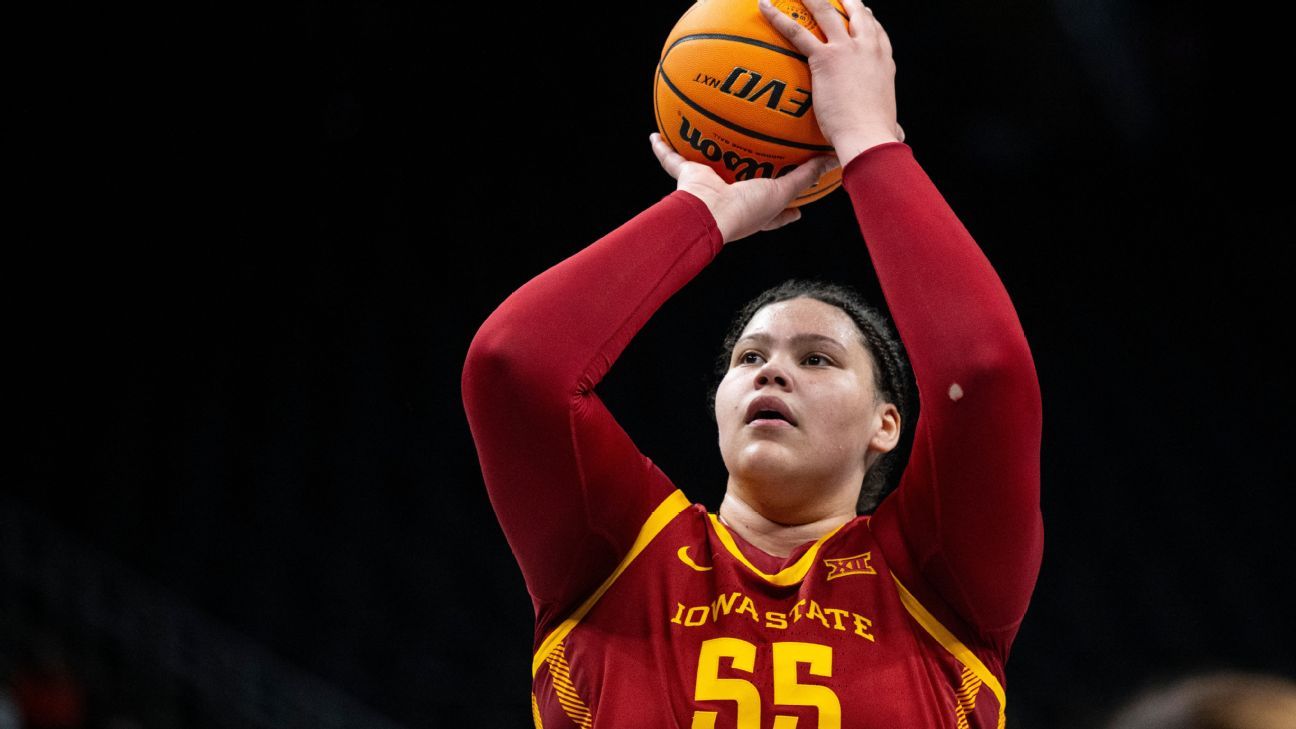
Iowa State‘s Audi Crooks, the nation’s second-leading scorer, is the biggest impact player in the portal to date. The Cyclones’ roster was decimated, with 10 players entering the portal. Georgia lost nine players after letting go of coach Katie Abrahamson-Henderson, but no program was hit harder, or more publicly, than Tennessee.
Lady Vols coach Kim Caldwell is now tasked with replacing her entire roster. She also lost the No. 2 recruit in the country, Oliviyah Edwards, who had committed to the Lady Vols but has requested a release from her national letter of intent. Every player from Caldwell’s No. 2-rated recruiting class from a year ago is gone.
Few players have announced where their next destinations will be, but that process will play out over the next few weeks. As players find their new teams, and as more players enter the portal over the next 14 days, this list will evolve and change. And we’ll continue to update the rankings.
1. Audi Crooks, 6-3, C, Jr., Iowa State
Crooks is the best of the available transfers and also the most intriguing. While she’s a nearly unstoppable post presence and ranked second in the nation in scoring (25.8 PPG), Crooks doesn’t fit every system and has limitations. Incorporating her could require coaches to alter their approach. Crooks could be the big scorer that a contender needs to take that next step, but a program’s willingness to make big philosophical changes for just the one season she has left might shrink Crooks’ market.
2. Kymora Johnson, 5-7, G, Jr., Virginia
In the wake of the firing of coach Amaka Agugua-Hamilton, Virginia has lost multiple players to the transfer portal, but none more impactful than Johnson. One of the best players in the ACC, who broke into the national spotlight with her sparkling NCAA tournament performance, Johnson helped the Cavaliers reach the Sweet 16. She ranked second in the ACC in scoring (19.5 PPG) and first in assists (6.3 APG).
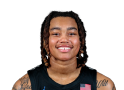
3. Liv McGill, 5-9, G, So., Florida
The only player in the country to average at least 20 points, six rebounds and six assists, McGill was the cornerstone of the Gators for two seasons but will not be sticking around for new coach Tammi Reiss. McGill, who is from Minnesota and played at the same high school as Paige Bueckers, can score in a variety of ways and would have the potential to be a game changer for a top-tier program that needs to replace a top offensive player or two.

4. Talaysia Cooper, 6-0, G, Jr., Tennessee
Cooper is eligible for the WNBA draft but has decided to play one more college season — but at a third school after stops at South Carolina and Tennessee. One of the few Lady Vols that consistently produced in Kim Caldwell’s unorthodox system in Knoxville, Cooper might still benefit from more consistent minutes. She averaged 16.0 points per game and shot an improved 34.3% from 3-point range. Her length is an asset both as a perimeter defender and a finisher at the rim.

5. Dani Carnegie, 5-9, G, So., Georgia
One of the best under-the-radar portal acquisitions a year ago (from Georgia Tech), Carnegie was named first-team all-SEC, averaging 17.8 points per game, and helped the Lady Dogs to their best season in eight years. An even better scorer than she was with the Yellow Jackets, Carnegie is a shot creator, for herself or teammates, and can handle the responsibility of being a No. 1 option.
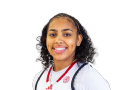
6. Zamareya Jones, 5-7, G, So., NC State
Doubling her minutes, point production and assists in her second season, Jones appeared on the verge of becoming one of the ACC’s top guards. She and Zoe Brooks might have been the conference’s best backcourt next year had Jones elected to stay in Raleigh. She was second on the team to Brooks with 14.9 points and 3.8 assists per game. Jones was also the Wolfpack’s best 3-point shooter and excels in transition.
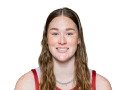
7. Addy Brown, 6-2, F, Jr., Iowa State
The 11 games Brown missed this season derailed the Cyclones’ season. Her versatility was the perfect complement to Crooks, but now they are both leaving Ames, Iowa. She was all-Big 12 honorable mention as a freshman and second-team all-conference last season, averaging 13.6 points, 8.1 rebounds and 5.2 assists over her career. Brown has proved she can be impactful playing off the ball and should fit nearly any system.
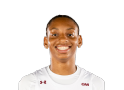
8. Taryn Barbot, 5-10, G, Jr., Charleston
The best mid-major player in the portal, Barbot is a two-time CAA player of the year who averaged 20.1 points per game, good for 17th nationally. She showcased her ability for the Power 4 conferences by scoring 36 points against Duke in the first round of the NCAA tournament. Her sister, Taylor Barbot, was 12th in the country at 6.0 assists per game. Taryn and Taylor have played together for three years at Charleston, so expect a package deal.
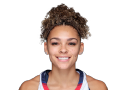
9. Jada Williams, 5-8, PG, Jr., Iowa State
The move to Iowa State was a good one for Williams despite staying just one year after two with Arizona. Williams became a better shooter, a more disciplined point guard and ranked third in the country with 7.7 assists per game. With her quickness and experience, Williams could step into another major conference program to fill a one-year gap at the point, much like Tonie Morgan did at Kentucky this season.

10. Nunu Agara, 6-2, F, Jr., Stanford
After averaging more than 15 points per game in consecutive seasons — but no NCAA tournament appearances to show for it — Agara is looking to finish her career elsewhere. Limited as a 3-point shooter but outstanding in the lane, Agara shot 51.3% on 2-point field goal attempts and pulled down 8.7 rebounds per game. Not being the No. 1 option and a primary focus of the defense might help Agara’s efficiency and her WNBA draft standing.

11. Aaliyah Crump, 6-1, F, Fr., Texas
Health was an issue for Crump in her lone season with the Longhorns, but the talent was clearly there. The highest-rated recruit for Vic Schaefer at Texas — No. 5 overall — and a starter to begin the season, Crump suffered a foot injury in November that forced her to miss two months. She averaged 7.9 points per game and had 16-point outings against LSU and Arkansas in February. Texas is bringing in two highly regarded freshmen wings in this recent recruiting class, but Crump was a likely starter next season and a possible No. 1 scoring option in 2027-28 after the departure of Madison Booker.

12. Tilda Trygger, 6-6, F, So., NC State
A native of Sweden, Trygger spent the first two years in the United States in Raleigh. She was productive with 10.6 points and 7.0 rebounds after being more of a role player as a freshman. With good shooting range and improved physicality, Trygger has a high ceiling and has all-conference potential for her final two seasons.
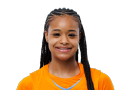
13. Mia Pauldo, 5-6, G, Fr., Tennessee
Of all the departures from the Lady Vols, this one might hurt the most. Pauldo was Kim Caldwell’s biggest get in 2025’s No. 2-rated recruiting class. The entire recruiting class is now gone after one season. Pauldo was Tennessee’s third-leading scorer (10.4 PPG) and its best 3-point shooter (36.5%). Pauldo is also a pure point guard but was seldom able to show off those skills to their fullest in Knoxville. She is joined by her sister, Mya Pauldo, in the portal.

14. Madison St. Rose, 5-10, G, Sr., Princeton
The least surprising player in the portal, St. Rose could not stay at Princeton because of Ivy League rules prohibiting redshirts. She missed most of the 2024-25 season with a knee injury, so St. Rose has eligibility left that she can’t use with the Tigers. St. Rose could help any national contender at either guard spot after averaging 15.8 points on 47.9% shooting this season.
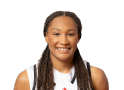
15. Kiyomi McMiller, 5-8, G, So., Penn State
A volume shooter with electric offensive abilities, McMiller is looking for her third team in as many years. A clash with the coaching staff her freshman season at Rutgers pushed her to Penn State, where this season was calmer and more productive for McMiller (21.6 PPG). A coaching change for the Lady Lions opened the door for another transfer. McMiller’s raw talent should necessitate being higher on this list, but her two teams were a collective 14 games below .500, and where she might fit best is the biggest question mark.
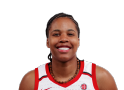
16. Mia Woolfolk, 6-3, F, So., Georgia
With noticeable improvement in her second season in Athens, Woolfolk played some of her best games against Georgia’s best opponents. She had 29 points against Oklahoma, 19 points and seven rebounds in the upset of Vanderbilt and 27 in the NCAA tournament loss to Virginia. Woolfolk’s strength is in the low post, but she moves well and uses her quickness facing up to get by taller opponents and to the rim.
17. Lara Somfai, 6-3, F, Fr., Stanford
The Cardinal roster suffered some big losses when the portal opened, but none bigger than Somfai. Losing Agara hurts, but Somfai and fellow freshman Hailee Swain were supposed to be the building blocks that brought Stanford back to prominence. Somfai has three years of eligibility remaining. She averaged 10.8 points and 9.1 rebounds.

18. Justice Carlton, 6-1, F, So., Texas
A 28-game starter for a Final Four team this season, Carlton appeared to gain more and more of Vic Schaefer’s trust as the season progressed. Her strength is elite and she uses it to score from close range against taller defenders. Carlton averaged 8.5 points and 4.0 rebounds that included a 15-point effort in the SEC tournament championship game. Her physicality made her an ideal fit for Texas, and her loss is a big one for the Longhorns.
19. Kaylene Smikle, 6-0, G, Sr., Maryland
Health is the question mark, otherwise Smikle might be higher in these rankings. She was first-team all-Big Ten in 2025 after scoring 17.9 points per game before being limited to seven games this season and then opting for knee surgery. That preserved Smikle’s final year of eligibility, which will now be used at her third school. Smikle, who began her career at Rutgers, has never averaged fewer than 16.1 points in a full season.

20. Jaida Civil, 6-0, G, Fr., Tennessee
The numbers were modest (6.4 PPG, 4.0 PPG), but Civil demonstrated defensive skills and athleticism that should fit anywhere. Ranked No. 20 in that recruiting class that also featured the Pauldo sisters and Deniya Prawl, Civil’s playing time swelled in February before those minutes were trimmed again in the postseason.
Also considered:
Achol Akot, Oklahoma State; Carys Baker, Virginia Tech; Essence Cody, Alabama; Skylar Forbes, Marquette; Lanie Grant, North Carolina; Gracie Merkle, Penn State; Zahirah Walton, George Mason; Jadyn Wooten, Oklahoma State

The Pakistan Cricket Board (PCB) has issued no-objection certificates to several national players, allowing them to participate in various overseas leagues.
According to the board, Mohammad Nawaz, Mohammad Abbas, Usama Mir and Sufiyan Muqeem have been granted NOCs for their respective commitments.
Nawaz, Usama Mir and Sufiyan Muqeem have been cleared to feature in the Vitality Blast, while Test cricketer Mohammad Abbas has been issued an NOC to play county cricket in England.
The move reflects the board’s continued policy of allowing players to gain international exposure through participation in foreign leagues while ensuring their availability for national duties.
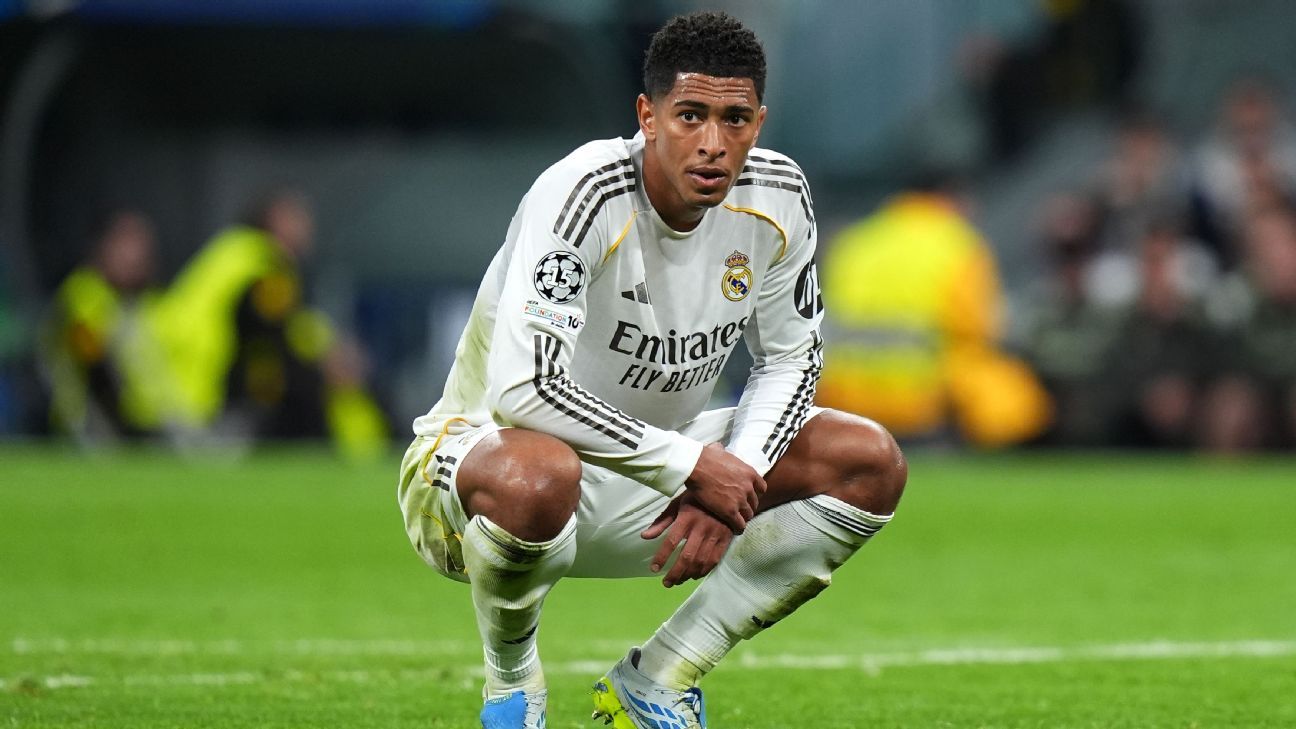
MADRID — Sometimes that famous Bernabéu magic isn’t quite enough.
Real Madrid have had so many great UEFA Champions League nights at this stadium, beating often superior teams in frequently inexplicable circumstances. But in Tuesday’s 1-2 loss to Bayern Munich, reality caught up with them, the comeback just out of reach.
Playing against a talented, confident, fluid Bayern team, Madrid spent the first hour looking quite ordinary. The visitors were superior, more than the game’s scoreline suggested. But as the second half went on, the dynamic slowly but surely changed. Madrid began to create a steady stream of chances, Vinícius Júnior and Kylian Mbappé getting ever closer.
When Mbappé did, eventually, pull a goal back in the 74th minute, the Bernabéu crowd, cautiously hopeful, found their voices, as Madrid pushed for more. But the equalizer never materialized, thanks largely to Bayern goalkeeper Manuel Neuer and his outstanding nine saves.
By the final whistle, both teams had had 20 shots, creating similar numbers of chances (15-14 in Madrid’s favor, with three of Madrid’s classed by Opta as “big chances” compared with Bayern’s two), although Bayern’s xG (expected goals) of 2.99 comfortably outstripped Madrid’s 1.97.
A one-goal margin means the tie is open as the teams head to Munich for next week’s return leg. “We’re alive,” coach Álvaro Arbeloa repeated several times postmatch.
“We could have scored more,” Real Madrid goalkeeper Andriy Lunin said afterward. “The team reacted well. Neuer was the MVP.”
Antonio Rüdiger agreed: “The best player was Neuer.”
Still, the feeling for much of this game was that Arbeloa’s team had found its level, its few strengths, and more weaknesses, exposed in the Champions League spotlight, against elite opposition.
Vincent Kompany’s Bayern dominated from the start, with two great chances to score: one from Dayot Upamecano, whose miss-hit, close-range shot was cleared off the line by Álvaro Carreras, and another from Serge Gnabry, who couldn’t take advantage of Thiago Pitarch‘s misplaced pass, which left him in on goal facing Lunin. Eventually, they went ahead through Luis Díaz, finishing off a cleverly worked move involving Harry Kane and Gnabry, in the 41st minute.
1:24
Will Bayern Munich pay for missed chances against Real Madrid?
Frank Leboeuf believes Bayern Munich’s “sloppiness” allowed Real Madrid back into the game.
Kane’s goal to make it 0-2, just 20 seconds into the second half, made the comeback feel even more distant. Arbeloa’s halftime team talk must surely have involved Madrid starting aggressively, with intensity, taking the game to Bayern.
Instead, they were alarmingly passive: Vinícius played a poor pass to Carreras, under pressure, who gave away possession cheaply. As Vinícius and Mbappé jogged back toward their own goal, Bayern worked the ball up to Kane, totally unattended outside the box, to stroke the ball past Lunin.
“We made two mistakes [for the goals],” Arbeloa said. “We lost the ball twice. We have to avoid that. Against these teams if you make mistakes, you pay for it.”
It was in the last half-hour that Madrid were at their most dangerous, Bayern tiring in their press, as the home side enjoyed more space to run into.
Three good chances came in seven minutes, just after the hour. First, Vinícius, played in by Upamecano’s weak header, tried to round Neuer, was forced wide and was unable to get his shot back on target. Then Mbappé went close twice, denied once by Neuer, before shooting across the face of goal shortly afterward. Mbappé kept going.
“That’s the Mbappé we want to see,” Arbeloa said. “He was a constant threat.”
More threat came when Trent Alexander-Arnold got on the ball. His deliveries from the right had looked like one of Madrid’s most promising routes toward goal all night, and now he crossed for Mbappé, whose far-post shot crept over the line after being initially saved by Neuer.
As Madrid pushed for a second goal, there was danger, too, at the other end. Three times in the last minutes of the game, Bayern could have finished off the tie. Substitute Éder Militão — who improved Madrid significantly when he was introduced — blocked a cross bound for the six-yard box, before Bayern went close twice more, in the 89th and 91st minutes, wasting one three-on-one break.
Madrid’s task for the second leg in Munich next week will be made harder by the absence of their most consistent player this season, Aurélien Tchouaméni, who will be suspended and has no natural replacement in midfield.
They will have to be bold, and play on the front foot, an approach alien to a team that has been more comfortable with a more conservative, deep block style.
“If any team can win in Munich, it’s Real Madrid,” Arbeloa insisted in his postmatch news conference. They might.
Madrid could still produce something extraordinary and unexpected in Germany, as they have before. In Vinicius, Mbappé, Jude Bellingham and Federico Valverde, they have the players who make it possible.
But even with a much-improved last half-hour here, what they did at the Bernabéu wasn’t sufficient. They’ll need to do more in Munich, and in reaching for that, will also be more vulnerable.


Indian central bank keeps repo rate unchanged

Prince Harry suffers setback ahead of Australia visit
Adani group stocks rise up to 13%, add Rs 96,000 crore to market cap; what’s driving the rally? – The Times of India

-
Uncategorized6 days ago
[CinePlex360] Please moderate: “Trump signals p
-
Uncategorized1 week ago
[CinePlex360] Please moderate: “Further tariff
-

 Entertainment5 days ago
Joe Jonas shares candid glimpse into parenthood with Sophie Turner
-

 Tech5 days ago
Our Favorite iPad Is $50 Off
-

 Fashion1 week ago
China’s Anta Sports posts record $11.62 bn revenue in 2025
-
 Sports4 days ago
UConn Final Four run could trigger a $50M furniture giveaway for Massachusetts-based Jordan’s Furniture
-

 Politics5 days ago
Iran can sustain Strait of Hormuz closure for years, will cut US military logistics: Official
-

 Politics1 week ago
Trump considers asking Arab allies to help to pay for Iran war