

Fashion
CELYS expands filament manufacturing capability


This expanded capability addresses a recurring challenge faced by brands, mills, and innovators: limited access to flexible production volumes and technical customisation during the development phase. Conventional polyester manufacturing is typically optimised for large scale output and high minimum order quantities, leaving little room for small order volumes, iterative trials, or application specific specifications. The new CELYS manufacturing line is designed to close this gap.
Intimiti has strengthened its CELYS material strategy by acquiring a dedicated manufacturing line to support innovation, customisation and early-stage commercialisation of compostable polyester filaments.
The new line enables small batches, tailored specifications and faster concept-to-validation, while advancing CELYS as a flexible platform with greater transparency.
Enabling Development and Filament Innovation
The newly acquired manufacturing line enables Celys to support smaller order quantities and customised filament specifications, allowing partners to move efficiently from concept to validation. Designed for development, sampling, and specialised applications, this capability delivers the precision and responsiveness required during early-stage material innovation, while enabling closer collaboration on filament parameters, functional requirements, and performance optimisation.
These advances mark Celys’ evolution from a single material innovation to a more flexible material platform, designed to integrate seamlessly into existing textile ecosystems while enabling greater agility at the front end of development.
Building the Foundation for Transparency
Alongside the expansion of manufacturing capability, Celys is progressing toward the release of Life Cycle Assessment data. Additional technical specifications and performance metrics are also in development, providing partners with greater transparency and confidence as projects advance toward commercialisation.
“Our focus extends beyond material innovation to building the infrastructure required for adoption at scale,” said Dr Gray Li, Chief Technology Officer at Celys. “This manufacturing capability enables closer collaboration, increased flexibility, and more practical pathways from development to commercial products.”
Note: The headline, insights, and image of this press release may have been refined by the Fibre2Fashion staff; the rest of the content remains unchanged.
Fibre2Fashion News Desk (HU)








EIF is a mechanism aimed at leveraging and coordinating support for trade and investment priorities in least-developed countries (LDCs).
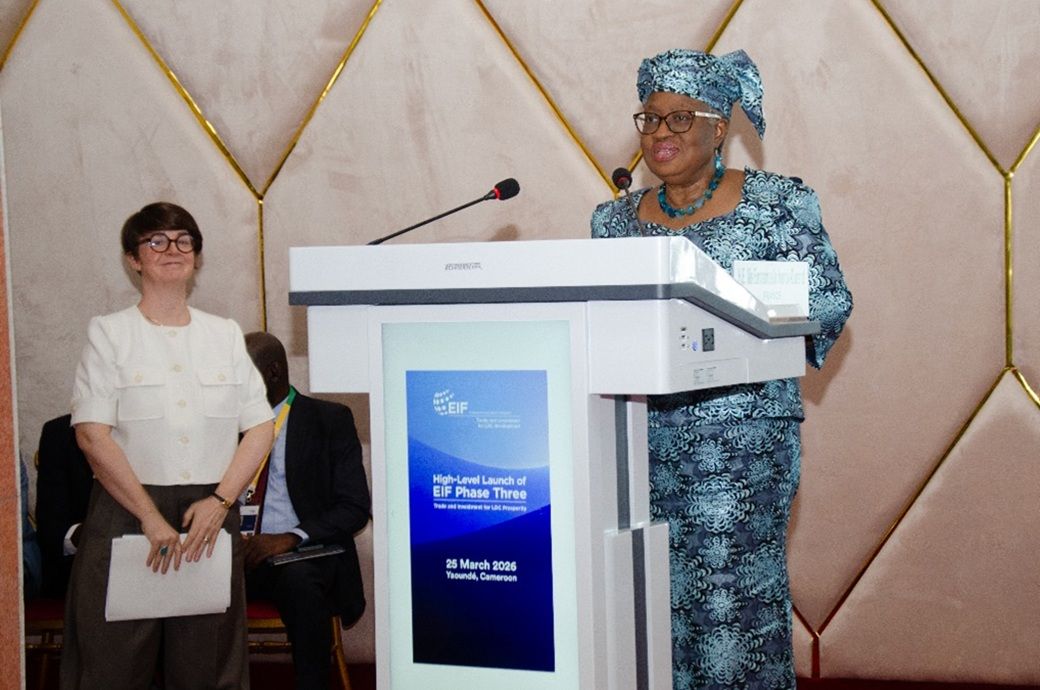
WTO Director-General Ngozi Okonjo-Iweala called for stronger partnerships to achieve the objectives of the Enhanced Integrated Framework’s (EIF) third phase, launched yesterday in Yaounde.
It aims to coordinate support for trade and investment priorities in LDCs.
The latest six-year phase has also secured fresh contribution pledges from Germany, Liechtenstein, Norway, Switzerland and the UK.
The new phase was launched at a side event to the 14th WTO Ministerial Conference (MC14) in Yaounde, Cameroon, co-organised by Cambodia, the United Arab Emirates and the EIF executive secretariat.
The third phase of the EIF introduces a shift from stand-alone projects to multi-year country programming. It is designed to help LDCs better integrate into the global trading system while addressing structural vulnerabilities and seizing new opportunities in areas such as digital trade, services, green value chains and regional integration.
The latest six-year phase also received new contribution pledges from Germany ($1.964 million), Liechtenstein (~$63,139), Norway ($4.15 million), Switzerland ($3.16 million) and the United Kingdom ($6.67 million).
“This third phase of the EIF comes at a defining moment for the LDCs and recently graduated countries. Familiar structural vulnerabilities are being compounded by a disrupted global trading system, power politics, debt pressures, climate change, and global economic uncertainty. At the same time, the current global context offers some important opportunities for LDCs to use trade to drive growth, development, and job creation,” Okonjo-Iweala said in a release issued by the WTO.
The DG also emphasised the need to scale up support and partnerships to match the ambition of the new phase.
Fibre2Fashion News Desk (DS)

US imports of jackets and blazers stood at $*,***.*** million in ****, reflecting a moderation from $*,***.*** million in **** and $*,***.*** million in ****. Despite the overall contraction, Vietnam strengthened its dominance, with exports rising to $***.*** million in ****, even as China’s shipments dropped sharply to $***.*** million, according to *fashion.com/market-intelligence/texpro-textile-and-apparel/” target=”_blank”>sourcing intelligence tool TexPro.
The transition has been gradual but decisive. In ****, China led with $***.*** million in exports to the US, ahead of Vietnam’s $***.*** million. The gap narrowed in ****, with China at $***.*** million and Vietnam close behind at $***.*** million. By ****, Vietnam had nearly caught up, reaching $***.*** million compared to China’s $***.*** million. The turning point came in ****, when Vietnam surged ahead as China’s exports declined significantly.
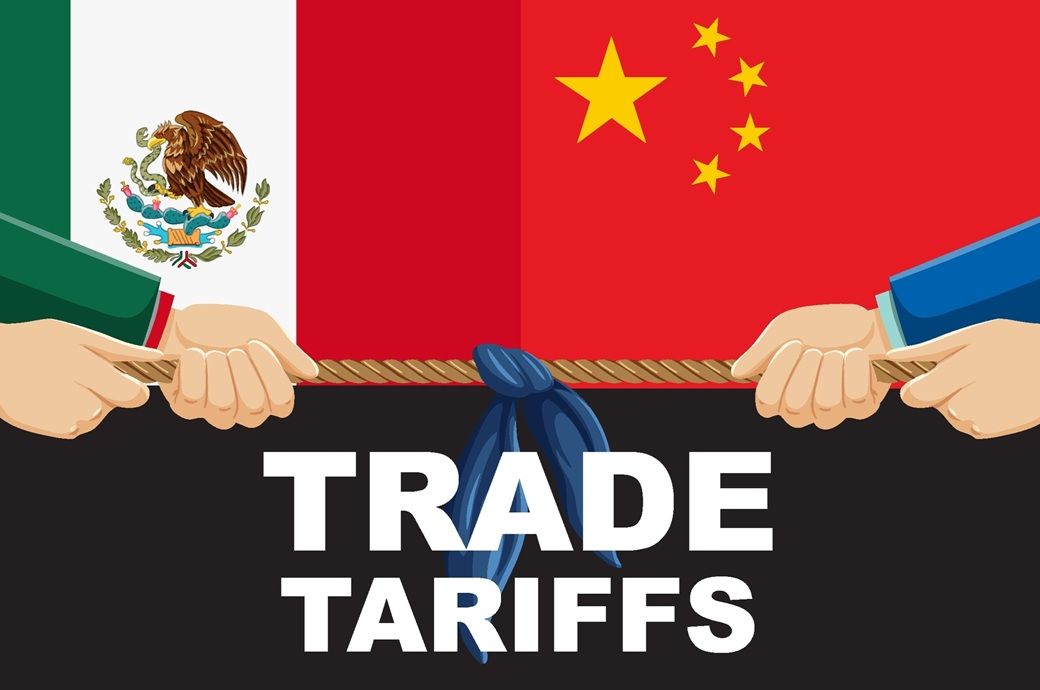
The probe, initiated on September 25, 2025, was conducted under China’s Foreign Trade Law and the country’s regulations on foreign trade barrier investigations.
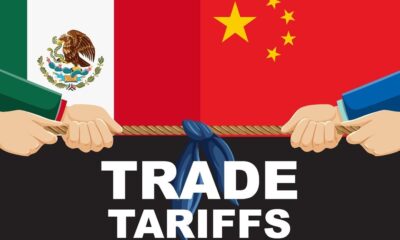
China’s Ministry of Commerce (MOFCOM) has concluded that Mexico’s tariff hikes and other restrictive measures on non-FTA partners constitute trade and investment barriers against China.
The probe, launched on September 25, 2025, found the policies limited market access and hurt Chinese firms, with Beijing authorised to take countermeasures to protect domestic industries.
MOFCOM found that Mexico’s decision to raise import tariffs on products from countries without free trade agreements, including China, as well as other restrictive policies, had limited market access for Chinese goods, services and investment.
The ministry stated that these measures had “restricted and impeded the entry of Chinese products, services and investment into the Mexican market,” thereby weakening the competitiveness of Chinese enterprises.
According to the ministry’s spokesperson, the findings confirm that Mexico’s policies constitute trade and investment barriers under Chinese law. The MOFCOM is authorised to take corresponding measures to safeguard the legitimate interests of Chinese industries.
The investigation forms part of China’s broader response to tariff hikes imposed by Mexico on non-FTA partners, which Beijing has repeatedly criticised as protectionist and detrimental to bilateral economic ties.
Fibre2Fashion News Desk (JP)


WTO launches 3rd phase of Enhanced Integrated Framework

Time to hold the line

Vietnam overtakes China in US jackets, blazers imports

-

 Fashion1 week ago
Sales at US apparel, clothing accessories stores up 4% YoY in Jan 2026
-

 Entertainment1 week ago
Val Kilmer revived 1 year after death through AI
-
 Fashion1 week ago
US’ G-III Apparel’s FY26 sales fall 7% to $2.96 bn
-

 Sports1 week ago
March Madness 2026 – How to watch in SA, start time, schedule, TV channel for NCAA championship basketball tournament
-
 Business1 week ago
Brits cashing in jewellery as gold price hits record high
-
 Business1 week ago
World’s largest mining group names new chief executive
-

 Fashion6 days ago
China’s textile & apparel exports surge 17% to $50 bn in Jan-Feb 2026
-

 Fashion1 week ago
Suez and Hormuz shut together, triggering global supply shock