

Business
Centre Eases Rules For Import Of Steel Not Covered Under Quality Control Orders

New Delhi: The government on Thursday announced new measures to ease rules for import of steel grades not covered under Quality Control Orders (QCOs), apart from approving extension of certain exemptions after reviewing the concerns submitted by industry participants.
In order to streamline the regulatory framework governing steel imports and to facilitate ease of doing business, the Ministry of Steel undertook a review of the existing import-related requirements. It also reviewed the requirement for obtaining clarification or No Objection Certificate (NOC) from the Ministry of Steel for import of steel grades not covered under any QCO.
“Based on the recommendations of the High-Level Committee on Non-Financial Regulatory Reforms (HLC-NFRR), it has been decided that steel grades not covered by any Quality Control Order will no longer require clarification or NOC from the Ministry of Steel,” according to an official statement.
All steel grades not covered under any QCO — across all HSN Codes relating to the Ministry of Steel — have been mapped on the Steel Import Monitoring System (SIMS) Portal. Importers may directly generate SIMS numbers for such non-QCO grades through the Portal without seeking any reference or approval from the Ministry of Steel, the statement added.
As per the Quality Control Orders issued by the Ministry of Steel, all grades of steel covered under the Orders are required to be imported only from manufacturers holding valid and operative BIS licences for the relevant grades.
In cases where import of QCO-covered steel grades is proposed from manufacturers who do not possess BIS licences, an exemption mechanism is already in place and such applications are examined by the Committee constituted on May 14, 2020.
The Committee, comprising representatives from the Bureau of Indian Standards (BIS), Directorate General of Foreign Trade (DGFT) and domain experts, will continue to examine applications and decide on granting exemptions for import of QCO-covered steel products manufactured by non-BIS licensee units, said the ministry.
Also, based on representations received from industry, the Ministry had earlier granted exemption from mandatory QCO compliance for specified Chapter 73 steel products for imports with Bill of Lading having shipped on board date on or before 31.10.2025.
“This exemption has now been extended to imports with Bill of Lading having shipped on board date on or before 31.03.2026,” according to the ministry. The ministry had earlier exempted three Indian Standards applicable to stainless steel flat products — IS 6911, IS 5522 and IS 15997 — for imports with Bill of Lading having shipped on board date on or before 31.12.2025.
“This exemption has now been extended to imports with Bill of Lading having shipped on board date on or before 31.03.2026,” it added.
Last Updated:
RBI has summoned senior officials of Yes Bank following a major data breach involving the Yes Bank–BookMyForex multi-currency forex card




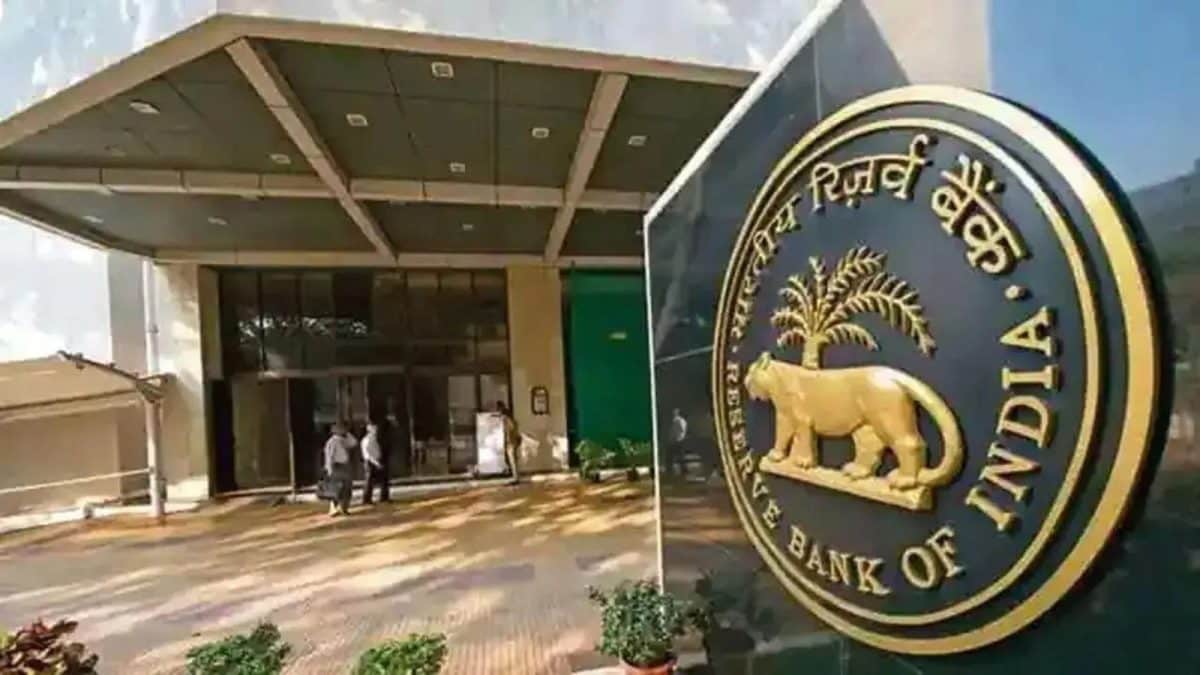
Reserve Bank of India headquarters in Mumbai.
The Reserve Bank of India (RBI) has summoned senior officials of Yes Bank following a major data breach involving the Yes Bank–BookMyForex multi-currency forex card, two people aware of the development told The Economic Times (ET).
According to the report, card details and CVV numbers of several users were allegedly compromised. The central bank has sought a detailed explanation from the bank on how its systems may have been breached and the sequence of events that led to the exposure of sensitive customer data.
“The RBI has sought a comprehensive briefing from Yes Bank’s senior management on the root cause of the breach, the timeline of events, and the adequacy of the bank’s cybersecurity framework,” one of the persons cited by ET said. “The regulator wants clarity on how sensitive card data, including CVV numbers, may have been exposed and what immediate containment measures have been implemented.”
Yes Bank declined to comment on the RBI’s queries but said an internal investigation had identified fraudulent transactions involving 15 merchants in a Latin American country on February 24. Transactions worth Rs 2.54 crore were approved across 5,000 customers, while 688 unauthorised attempts amounting to around Rs 90 lakh were blocked. The bank said it is working with the card network to initiate chargebacks and ensure that affected customers do not face financial losses.
Separately, BookMyForex said it does not store customers’ sensitive card information and that its systems were neither breached nor compromised during the period in question.
The RBI has also sought details on how sensitive card data—particularly CVVs—was stored and protected, whether encryption and prescribed security protocols were followed, and why existing cyber controls failed to prevent the breach. In addition, the regulator is reviewing the timeline of detection and reporting, the robustness of third-party risk management and oversight, the number of customers impacted, and the steps taken to block cards, prevent misuse and mitigate losses. It has also asked for clarity on internal accountability, supervisory lapses and remedial measures to prevent a recurrence, ET reported.
 Click here to add News18 as your preferred news source on Google.
Follow News18 on Google. Join the fun, play games on News18. Stay updated with all the latest business news, including market trends, stock updates, tax, IPO, banking finance, real estate, savings and investments. To Get in-depth analysis, expert opinions, and real-time updates. Also Download the News18 App to stay updated.
February 26, 2026, 07:53 IST
Read More
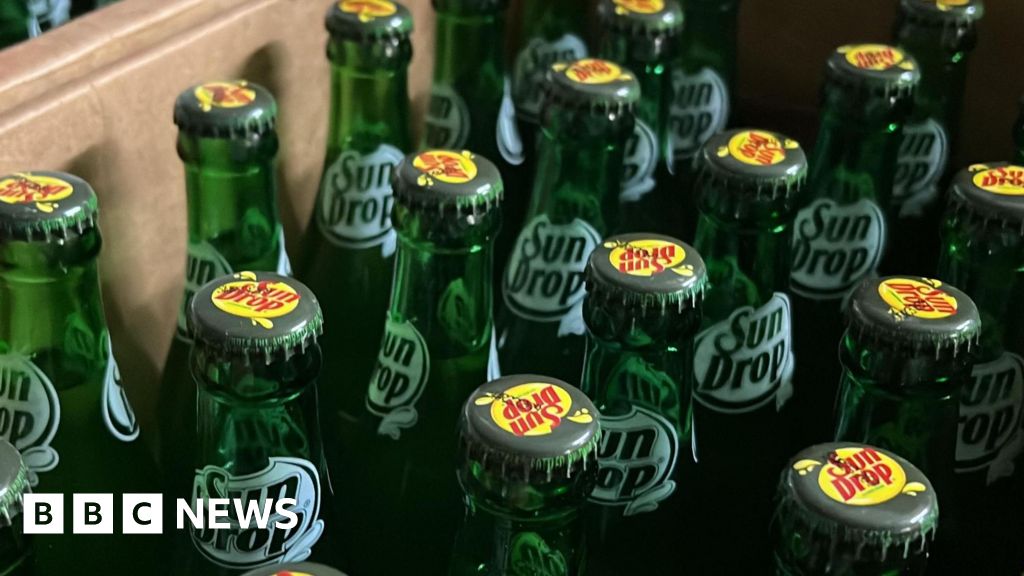
Soft drinks company Twig’s Beverage has a loyal following for its old-fashioned approach.
Source link

Queen’s University Belfast says there were more than 10,500 visits by students to its food bank in the students’ union.
Source link


US’ New Balance expands manufacturing amid record sales

UCF drains 14 3-pointers, runs away from No. 19 BYU in upset win

Bangladesh trade milieu hit by high rates, unstable law & order: DCCI

-

 Entertainment1 week ago
Queen Camilla reveals her sister’s connection to Princess Diana
-

 Tech1 week ago
Rakuten Mobile proposal selected for Jaxa space strategy | Computer Weekly
-

 Politics1 week ago
Ramadan moon sighted in Saudi Arabia, other Gulf countries
-

 Entertainment1 week ago
Robert Duvall, known for his roles in "The Godfather" and "Apocalypse Now," dies at 95
-

 Politics1 week ago
Tarique Rahman Takes Oath as Bangladesh’s Prime Minister Following Decisive BNP Triumph
-
 Business1 week ago
Tax Saving FD: This Simple Investment Can Help You Earn And Save More
-

 Fashion1 week ago
Australia’s GDP projected to grow 2.1% in 2026: IMF
-

 Tech1 week ago
Businesses may be caught by government proposals to restrict VPN use | Computer Weekly