

Business
Cheaper tequila and canned cocktails were the only bright spots for booze during a rough 2025


Various cans of alcoholic ready-to-drink beverages, including Captain Morgan’s rum and cola; Bacardi’s mango mojito; Archers’ schnapps and lemonade; Malibu’s pineapple and piña colada cocktails; and Gordon’s gin and tonic cocktails, are displayed for sale in a supermarket on Jan. 10, 2024.
John Keeble | Getty Images
The U.S. alcohol industry had another sobering year in 2025.
Spirits supplier revenue fell 2.2% to $36.4 billion for the year, according to new data by industry trade group the Distilled Spirits Council of the United States, or Discus. The decline came as economic pressure and weaker consumer confidence weighed on discretionary spending.
“While total U.S. spirits sales edged down 2.2% in 2025, the spirits industry remains resilient,” said Chris Swonger, Discus CEO and president, in a statement.
Overall volumes for the year rose 1.9% to 318.1 million 9-liter cases, indicating growing demand. But the revenue decline suggests that while Americans are still drinking, they are also trading down — opting for lower-priced spirits and pulling back on premium purchases.
Nearly every major spirits category posted revenue declines. Vodka sales fell 3% to $7 billion. Sales of tequila and mezcal — the industry’s fastest-growing segment for several years now — slipped 4.1% to $6.4 billion. American whiskey and cordials revenue dipped 0.9% and 3.2%, respectively.
The exception was in convenience and value.
Last call for optimism
Sales of premixed cocktails, including spirits–based ready-to-drink beverages, surged over 16% compared to the year prior, reaching $3.8 billion. The category, known as RTD, has more than doubled its market share since 2021 as consumers gravitate toward a lower price point.
Within tequila, the shift has also been toward more affordable bottles, as macro headwinds make consumers rethink splurges on premium brands. Volume in the lowest tequila/mezcal price point the trade group tracks grew 6.5% in 2025, along with a 2.8% climb in the next tier higher. Volume for whiskey, vodka, rum and gin all fell at those price points.
As consumers move toward more-affordable spirits, companies like Diageo and Brown-Forman may be best positioned, as they have the most exposure to lower-priced tequila and the fast-growing RTD category. Diageo owns Casamigos tequila and has built out a sizable portfolio of spirit-based RTDs, while Brown-Forman controls key mixed-price tequila brands like El Jimador.
On the other hand, beer-heavy players like AB InBev and Molson Coors have minimal tequila exposure, although they have been expanding their RTD portfolios. Modelo and Corona owner Constellation Brands is in a unique position with both beer and tequila exposure, but a smaller RTD footprint.
Overall, the beverage alcohol market has softened after years of pandemic-fueled growth, and Discus’ new data reinforces that normalization is now turning into contraction.
“The companies that have started to report are posting weak numbers but no worse than expected,” said Trevor Stirling, Bernstein European and American beverages analyst. “The rate of decline is not getting worse, might be slowing and one can dream of a return to volume growth.”
Lingering trade tensions
Distillers have also been navigating headwinds abroad. American spirits exports fell 9% year over year in the second quarter of 2025, amid lingering trade tensions and the removal of U.S. products from many Canadian retail shelves following President Donald Trump‘s tariff hikes on the U.S. neighbor last year.
Industry leaders say tariff uncertainty is making it difficult to plan long term.
“The unpredictability surrounding global trade issues continues to weigh heavily on the U.S. spirits sector,” Swonger said. “Reinstating zero-for-zero tariffs on distilled spirits must be a priority to get our American distillers back on a path to growth and prosperity.”
Despite the revenue pullback, spirits actually maintained its market share lead of the total beverage alcohol market at 42.4%, compared to beer and wine at 41.8% and 15.7%, respectively.
Still, the message from 2025 is clear: Consumers are drinking less, but those who are still drinking are being more selective. In a tougher economic environment, cheaper tequila and canned cocktails are winning out over premium bottles behind the bar.




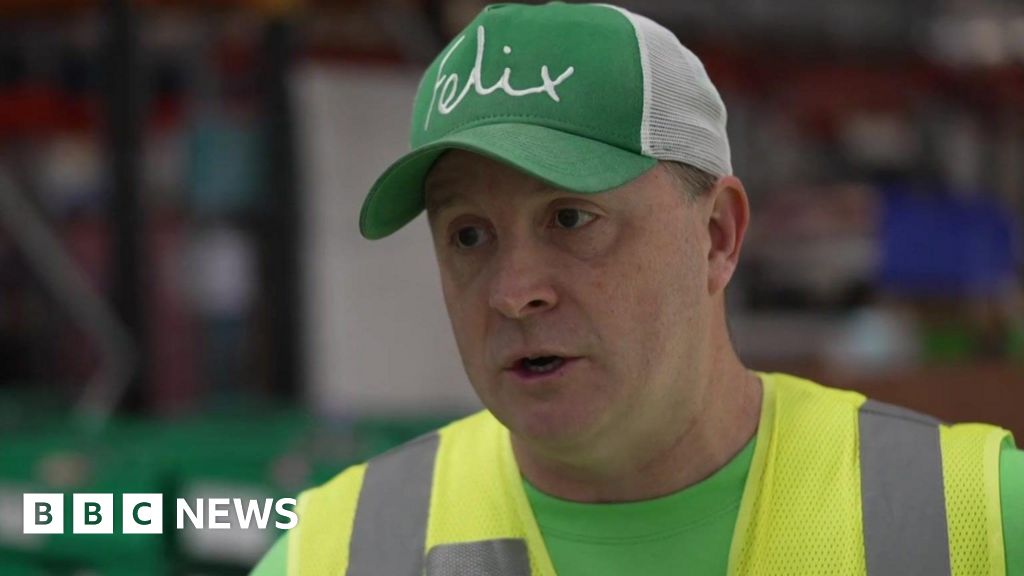
The Felix Project is among the organisations feeling the effects of increased costs due to the conflict in Iran.
Source link
Business
Crude oil soars as Middle east conflict chokes supply routes, Hormuz concerns stokes panic – SUCH TV

Crude oil prices climbed on Monday on continuing fears of supply losses because of shipping disruptions in the key Middle East producing region from the US-Israeli war with Iran.
Brent crude futures rose $1.71, or 1.6%, to $110.74 a barrel by 0057 GMT. US West Texas Intermediate crude futures gained $0.71, or 0.6%, to trade at $112.25 per barrel.
On Thursday, the last trading day before the Good Friday holiday break, WTI settled up more than 11%, and Brent soared nearly 8% in volatile trading, recording their biggest absolute price increase since 2020, as US President Donald Trump promised to continue attacks on Iran.
The Strait of Hormuz, which carries oil and petroleum products from Iraq, Saudi Arabia, Qatar, Kuwait and the United Arab Emirates, remains largely closed by Iranian attacks on shipping after the war began on February 28.
Because of the Middle East supply disruptions, refiners are seeking alternative sources for crude, particularly for physical cargoes in the US and the UK North Sea.
“Global buyers are bidding aggressively for (US) Gulf Coast barrels, and Brent is rallying even faster,” the Schork Group said in a client note on Monday.
On Sunday, Trump ratcheted up pressure on Tehran, threatening in an expletive-laden Easter Sunday social media post to target Iran’s power plants and bridges on Tuesday if the strategic Strait of Hormuz is not reopened.
Still, some vessels, including an Omani-operated tanker, a French-owned container ship and a Japanese-owned gas carrier, crossed the Strait of Hormuz since Thursday, shipping data showed, reflecting Iran’s policy to allow passage for vessels from countries it deems friendly.
The war threatens to linger on as Iran has officially told mediators it is not prepared to meet with US officials in the Pakistani capital, Islamabad, in the coming days, and efforts to produce a ceasefire have reached a dead end, the Wall Street Journal reported on Friday.
On Sunday, OPEC+, consisting of some members of the Organisation of the Petroleum Exporting Countries and allies such as Russia, agreed to a modest rise of 206,000 barrels per day for May.
However, that decision will largely exist on paper as several of the group’s key producers are unable to raise output due to the war.
Russian supply has been disrupted recently by Ukrainian drone attacks on its Baltic Sea export terminal. Media reports on Sunday said its Ust-Luga terminal resumed loadings on Saturday after days of disruptions.
Trump wrote: “Tuesday will be Power Plant Day, and Bridge Day, all wrapped up in one, in Iran. There will be nothing like it!!! Open the Fuckin’ Strait, you crazy bastards, or you’ll be living in Hell – JUST WATCH! Praise be to Allah. President DONALD J. TRUMP”.


Hailey Bieber leans into motherhood with style

How Vietnam T&A sector is recalibrating for the next growth journey
London charity ‘feels the pinch’ of higher energy and fuel prices

-

 Sports1 week ago
USMNT handed reality check by Doku, Belgium ahead of World Cup
-

 Sports1 week ago
2026 NCAA men’s hockey tournament: Schedule, results
-
Uncategorized4 days ago
[CinePlex360] Please moderate: “Trump signals p
-

 Entertainment3 days ago
Joe Jonas shares candid glimpse into parenthood with Sophie Turner
-

 Tech2 days ago
Our Favorite iPad Is $50 Off
-
Uncategorized7 days ago
[CinePlex360] Please moderate: “Further tariff
-

 Entertainment1 week ago
The Avett Brothers’ bassist explains why he wrote a book about John Quincy Adams
-

 Sports1 week ago
Man City show why they are worthy WSL title winners as tired United wilt