

Politics
China blasts ‘false’ news after report says chipmaker supplying Iran

- Beijing rejects claims of SMIC supplying chip tools to Iran.
- Wang Yi urges peace talks amid Iran conflict tensions.
- US officials say shipments began year ago and may still be ongoing.
China’s foreign ministry accused the media of publishing “false information” on Friday following a report that said the country’s top semiconductor firm has sent chipmaking tools to Iran.
The report, which cited information from two unidentified senior officials in US President Donald Trump’s administration, said contract chipmaker SMIC “began sending the tools to Iran roughly a year ago”.
A US official was quoted in the report as saying they had “no reason to believe that any of this has stopped”.
China is a key partner of Iran but has not announced military assistance to Tehran in the war triggered by US-Israeli strikes on February 28, repeatedly calling for a ceasefire.
The chipmaker, Semiconductor Manufacturing International Corporation (SMIC), did not respond to an AFP request for comment on Friday.
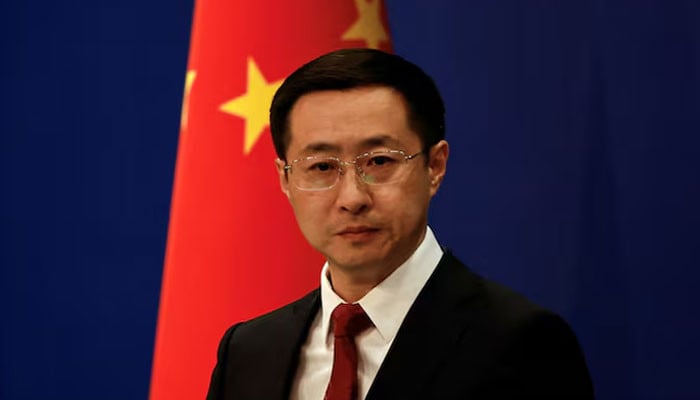
Asked about the report at a regular news conference in Beijing, foreign ministry spokesman Lin Jian said he was “not familiar with the situation”.
“What I can tell you is that recently, some media have been keen on releasing some news that seems right but instead is wrong,” Lin said.
He added that, “after verification”, such reports were “all” found to be “false information” but did not elaborate.
China condemned the US-Israeli killing of Iranian supreme leader Ali Khameini but has also said it “does not go along” with Tehran’s strikes on Gulf states hosting US bases.
Beijing’s top diplomat Wang Yi told his Iranian counterpart Abbas Araghchi in a phone call this week that he hoped “all parties can seize every opportunity and window for peace and start the peace talks process”.
- Agreement “focuses on integrated systems, data analysis tools”.
- Saudi Arabia, Ukraine sign MoU on defence procurement: SPA.
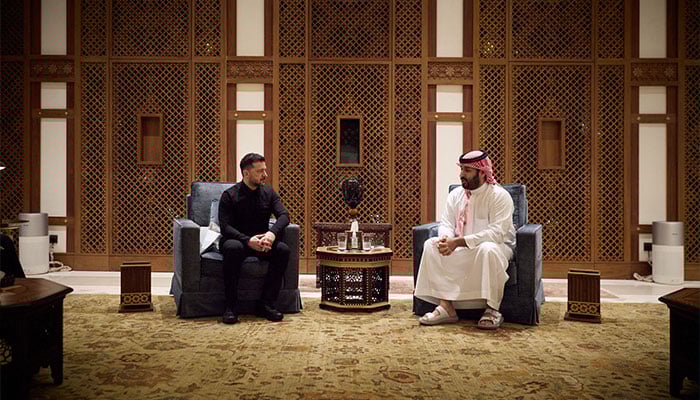
- Zelensky meets Crown Prince MBS, confirms defence arrangement.
Ukraine and Saudi Arabia have signed an air defence agreement during President Volodymyr Zelensky’s visit to the kingdom facing Iranian drone attacks, two senior officials told AFP on Friday.
Kyiv has sought to leverage its expertise in downing Russian drones to help Gulf nations, which are being attacked with the same kind of Iranian-designed Shahed drones that Russia fires on Ukraine.
“The point of the agreement is that Ukraine will support them in developing all the necessary components of air defence, which they currently lack,” one official said of the document which, according to another was signed on Thursday.
Both spoke to AFP on the condition of anonymity.
Kyiv has been using a mix of cheap drone interceptors, electronic jamming tools and anti-aircraft guns to down Russian drones fired at its cities on a nightly basis for four years.
It touts its anti-drone defences as the best in the world.
Ukraine has proposed swapping its interceptors for vastly more expensive air-defence missiles that Gulf countries are using to down Iranian drones. Ukraine says it needs more of them to fend off Russian missile attacks.
The deal signed between Ukraine and Saudi Arabia “is not only about interceptors as such, but about building a system, integrating it with other air defence components, Ukrainian experience in its use, AI, and all the other elements of data analysis needed to counter Shaheds and other drones,” one of the officials said.
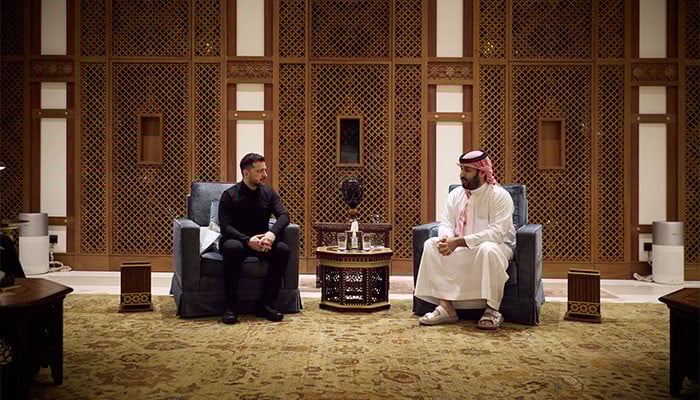
Zelensky confirmed on social media that both countries had “reached an important arrangement” on defence cooperation and that he had met Saudi Crown Prince Mohammed bin Salman during his visit.
“We are ready to share our expertise and systems with Saudi Arabia,” Zelensky said, adding: “Saudi Arabia also has capabilities that are of interest to Ukraine, and this cooperation can be mutually beneficial.”
He did not disclose what exactly has been agreed as part of the deal.
Zelensky also met Ukrainian anti-drone experts that have been deployed to the country since US and Israel launched strikes on Iran that spurred retaliatory drone and missile attacks from Tehran.
“Even in such a short time, Ukrainian experts were able to share extensive expertise,” Zelensky said.
“Ukraine’s expertise is unique, and recognised as such, and that is why everyone is so interested in our technologies and experience.”
MoU on defence procurement
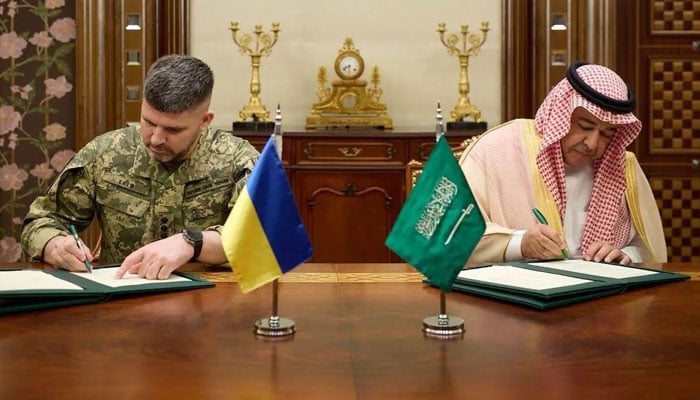
The Saudi Ministry of Defence and its Ukrainian counterpart have signed a memorandum of understanding related to defence procurement arrangements in Jeddah, Saudi state news agency SPA reported.
Saudi Assistant Minister of Defence for Executive Affairs Dr Khaled Al-Biyari and Ukrainian Chief of the General Staff of the Armed Forces Lieutenant General Andrii Hnatov signed the agreement, it added.
- India’s military spending reaches $71 billion this fiscal year.
- India’s defence spending highest ever in a fiscal year.
- India ranks as second-largest arms importer globally.
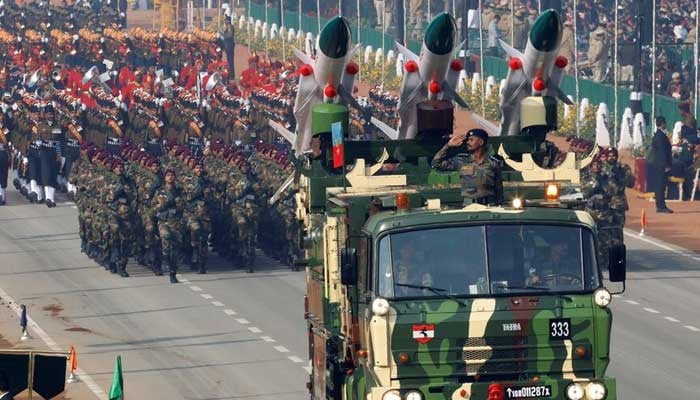
NEW DELHI: India approved proposals worth $25 billion on Friday to buy transport aircraft, Russian S-400 missile systems and remotely piloted strike aircraft as it pushes its military modernisation and replenishes equipment after its conflict with Pakistan.
The decision comes on the back of another major approval last month worth $40 billion to purchase more French Rafale fighter jets for the air force and Boeing P-8I reconnaissance aircraft for the navy.
Friday’s approvals also covered purchases of armoured piercing tank ammunition, gun systems and aerial surveillance systems for the army, increasing the life of the Sukhoi-30 fighter jets operated by the air force, and hovercraft for the coastguard, a statement from the defence ministry said.
Separately, the ministry also signed a 4.45 billion rupees ($47 million) contract on Friday with Russia’s JSC Rosoboronexport to acquire Tunguska air defence missile systems for the army.
In all, India has approved 55 proposals worth 6.73 trillion rupees ($71 billion) and signed contracts for another 503 proposals amounting to 2.28 trillion rupees in the fiscal year ending March 31, the statement said, adding that both were the highest in a fiscal year.
India is the world’s fifth-largest military spender and the second-largest arms importer after Ukraine, according to latest data from the Stockholm International Peace Research Institute.
It has for decades been modernising its mostly Soviet-era equipment and increasingly looking to new sources including France, Israel, the United States and Germany. In recent years, it has pushed to manufacture everything from guns and drones to fighter jets and submarines at home, either on its own or in collaboration with foreign partners.
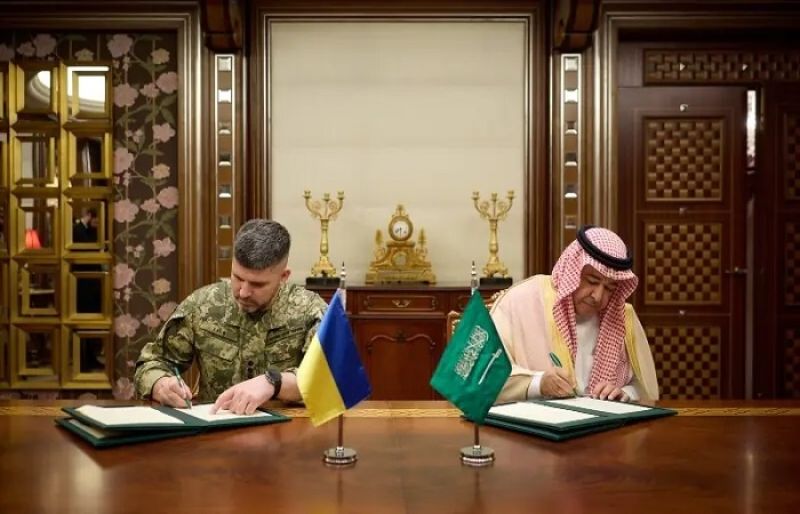
Ukraine and Saudi Arabia have signed an air defence agreement during President Volodymyr Zelensky’s visit to the kingdom, which is facing Iranian drone attacks, two senior officials told AFP on Friday.
Kyiv has sought to leverage its expertise in downing Russian drones to help Gulf nations, which are being attacked with the same kind of Iranian-designed Shahed drones that Russia fires on Ukraine.
“The point of the agreement is that Ukraine will support them in developing all the necessary components of air defence, which they currently lack,” one official said of the document which, according to another was signed on Thursday.
Both spoke to AFP on the condition of anonymity.
Kyiv has been using a mix of cheap drone interceptors, electronic jamming tools and anti-aircraft guns to down Russian drones fired at its cities on a nightly basis for four years.
It touts its anti-drone defences as the best in the world.
Ukraine has proposed swapping its interceptors for vastly more expensive air-defence missiles that Gulf countries are using to down Iranian drones.
Ukraine says it needs more of them to fend off Russian missile attacks.
The deal signed between Ukraine and Saudi Arabia “is not only about interceptors as such, but about building a system, integrating it with other air defence components, Ukrainian experience in its use, AI, and all the other elements of data analysis needed to counter Shaheds and other drones,” one of the officials said.
Zelensky confirmed on social media that both countries had “reached an important arrangement” on defence cooperation and that he had met Saudi Crown Prince Mohammed bin Salman during his visit.
“We are ready to share our expertise and systems with Saudi Arabia,” Zelensky said, adding: “Saudi Arabia also has capabilities that are of interest to Ukraine, and this cooperation can be mutually beneficial.” He did not disclose what exactly had been agreed as part of the deal.
Zelensky also met with Ukrainian anti-drone experts who have been deployed to the country since the US and Israel launched strikes on Iran that spurred retaliatory drone and missile attacks from Tehran.
“Even in such a short time, Ukrainian experts were able to share extensive expertise,” Zelensky said.
“Ukraine’s expertise is unique, and recognised as such, and that is why everyone is so interested in our technologies and experience.”

Asda boss rejects profiteering claims as petrol price tops 150p

Britney Spears turns a new page after recent legal trauma

This Premium Sennheiser Soundbar Is $1,000 Off

-

 Entertainment1 week ago
Val Kilmer revived 1 year after death through AI
-

 Fashion7 days ago
China’s textile & apparel exports surge 17% to $50 bn in Jan-Feb 2026
-
 Business1 week ago
Video: The Effects of High Oil Prices
-
 Business7 days ago
Flipkart group CFO to leave co amid IPO plans – The Times of India
-

 Sports7 days ago
Rating Adidas’ 2026 World Cup away shirts: Argentina, Spain, Mexico and more
-

 Fashion1 week ago
The hidden $1.62 war tax now embedded in every garment you source
-

 Sports7 days ago
American Conference Commissioner Tim Pernetti thanks Trump for Army-Navy game executive order
-
Tech1 week ago
The Corsair 4000D RS PC Case Keeps Your System Cool