

Fashion
Confindustria Moda: Slowdown in Italian fashion exports in the first seven months to €21.7 billion


By
Ansa
Published
November 14, 2025
Italian textiles and clothing exports slowed in the first seven months of 2025. According to analysis by Confindustria Moda‘s research department, drawing on data from Istat, Movimprese and internal surveys, cross-border sales reached 21.7 billion euros between January and July, down 2.5 per cent compared with the first seven months of 2024.
Trade within the European Union accounted for 51.5 per cent of the total, at 11.19 billion euros, while trade with non-EU countries represented 48.5 per cent, at 10.55 billion euros. The leading export destinations are France, at 2.79 billion euros (12.8 per cent), Germany, at 2.16 billion euros (9.9 per cent), and the United States, at 1.75 billion euros (8 per cent). The United States posted a 4.4 per cent increase compared with the first seven months of 2024.
Imports, on the other hand, totalled 15.5 billion euros, up 4.9 per cent. Imports from China rose by 17.9 per cent over the period, and the country remains Italy’s leading source of textiles and clothing imports, at 2.63 billion euros, followed by Spain (1.45 billion), France (1.07 billion) and Bangladesh (1.04 billion).
This article is an automatic translation.
Click here to read the original article.
Copyright © 2025 ANSA. All rights reserved.








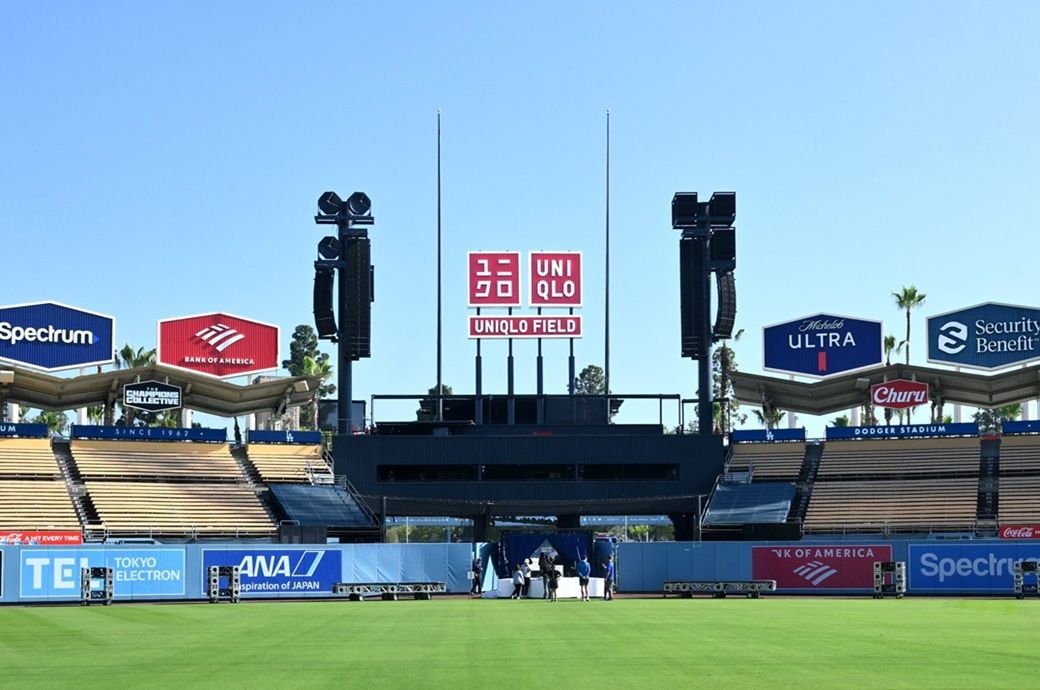
Bringing together two world-class brands, each with loyal supporters around the globe, the alliance is the first major sports partnership for UNIQLO in the United States. Under the agreement, UNIQLO will have naming displays in various stadium locations including above the batter’s eye in center field, on the facade beneath the press box, and on the grass along the baselines.
“With UNIQLO, we have established a historic partnership that we’re very proud to present in our ballpark,” said Stan Kasten, President & CEO, Los Angeles Dodgers. “UNIQLO is as distinguished in their field as the Dodgers are on ours. Both organizations aspire to be global leaders and to set the standard in our respective industries and communities.”
The Los Angeles Dodgers and Uniqlo have formed a landmark partnership featuring prominent “Uniqlo Field at Dodger Stadium” branding across the venue.
The collaboration, Uniqlo’s first major US sports deal, will include fan events, LifeWear giveaways, and dedicated in-store displays in California to strengthen engagement with both Dodgers fans and Uniqlo customers.
Commenting on the news, Tadashi Yanai, UNIQLO Founder and Fast Retailing Group Chairman, said, “It is a great honor to partner with the Los Angeles Dodgers – such a prestigious, world-class team that innovates with the times. For everyone at UNIQLO, this is a dream partnership that brings people everywhere together. Like the Dodgers, UNIQLO aims to be No. 1 in the world. We look forward to teaming with the Dodgers to deliver new value to fans and customers in Los Angeles and the United States as we continue our work to become the most loved and most trusted brand here and around the world.”
With a scope wider than typical sports sponsorships, the new partnership includes:
A focus on Dodgers fans
An in-stadium event will be hosted early in the coming season at UNIQLO Field at Dodger Stadium. This will be a large-scale event, introducing UNIQLO to thousands of Dodgers fans with giveaways of UNIQLO LifeWear items.
Efforts to engage UNIQLO customers
UNIQLO plans to create dedicated in store spaces at select locations in California, with a focus on the Los Angeles area, to showcase and promote the partnership.
A genuine commitment to the Los Angeles community
Joint contributions to the community will be an ongoing priority of the partnership. UNIQLO and the Dodgers are now working on a range of community-impact initiatives that specifically benefit the citizens and communities of Los Angeles, with a key focus on the next generation. Details will be announced around May.
Note: The headline, insights, and image of this press release may have been refined by the Fibre2Fashion staff; the rest of the content remains unchanged.
Fibre2Fashion News Desk (RM)
Total apparel imports (HS ** and ** combined) stood at NZ$***.** million (~$***.** million) in January–February ****, down from NZ$***.** million in the same period of ****, marking a decline of **.* per cent year on year.
The country’s imports of knitted apparel (HS **) fell to NZ$***.** million (~$***.** million) in the first two months of current year, compared with NZ$***.** million a year earlier, registering a decline of **.** per cent. Similarly, non-knitted apparel (HS **) imports dropped to NZ$***.** million (~$**.** million) from NZ$***.** million, reflecting a decrease of **.** per cent. The parallel contraction across both segments indicates broad-based weakness in garment imports rather than category-specific pressure.
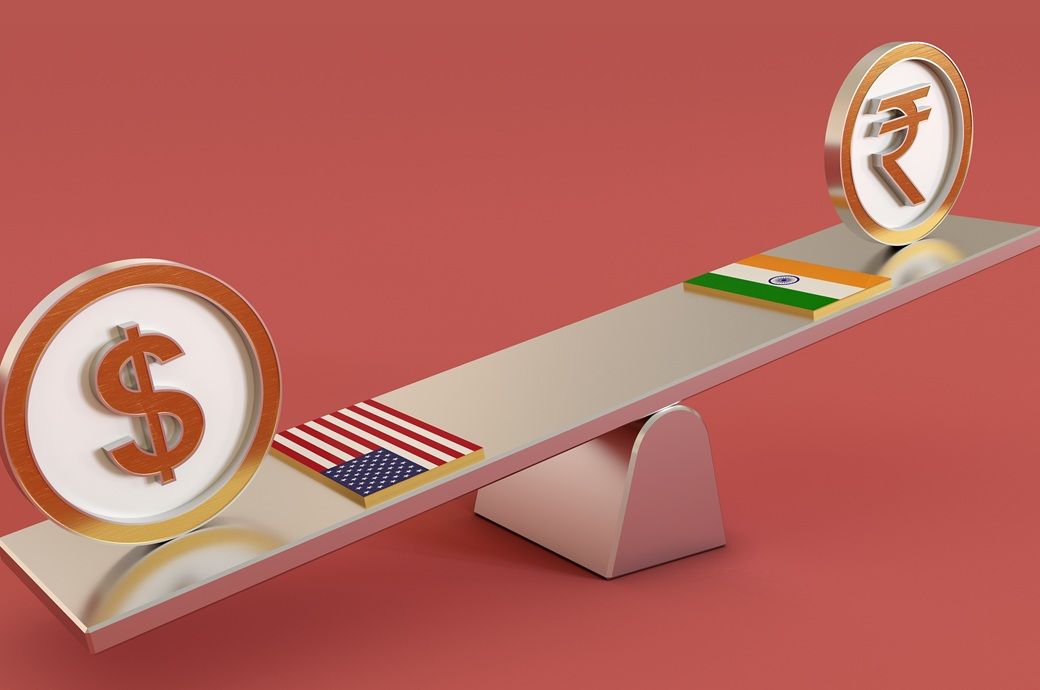
A perfect storm behind the rupee slide
The current depreciation is not cyclical; it is geopolitical and structural.
The Indian rupee’s sharp fall is creating a dual impact, boosting export competitiveness while simultaneously inflating input, energy, and logistics costs.
MMF segments are most exposed, as import dependence erodes margin gains from currency depreciation.
Demand weakness in the US and EU limits the benefit of improved pricing, creating a cost–demand mismatch.
- Oil shock from Middle East conflict: Brent crude surged past $110–115/barrel, sharply increasing India’s import bill
- Foreign capital outflows: Over $19 billion exited Indian equities, pressuring the currency
- Strong US dollar and high interest rates: Capital shifting towards dollar assets
- Trade and geopolitical uncertainty: Weakening investor confidence and export outlook
Together, these forces have pushed the rupee to record lows, with risks of further depreciation if conditions persist.
The Indian rupee’s fall past ₹95 per US dollar marks its steepest annual decline in 14 years, representing a critical moment for the textile and apparel (T&A) industry, reshaping cost structures, export competitiveness, and sourcing strategies simultaneously. While a weaker rupee traditionally boosts exporters by improving rupee realisations on dollar-denominated sales and enhancing India’s price competitiveness against peers like Bangladesh and Vietnam, the current depreciation is occurring alongside a sharp rise in crude oil prices and global uncertainty, creating a far more complex operating environment.
The industry’s heavy dependence on imported inputs, particularly in the man-made fibre (MMF) value chain, including polyester, PTA, MEG, dyes, and specialty chemicals, means that the currency shock is directly translating into higher raw material costs. This is further compounded by rising energy and logistics expenses, as fuel-linked inflation drives up power tariffs, freight rates, and processing costs across spinning, dyeing, and finishing segments. As a result, the initial export margin gains are already being diluted, especially for MMF-based manufacturers and vertically integrated players with significant import exposure.
At the same time, rupee volatility is intensifying working capital pressures across the value chain. Higher input costs are inflating inventory values, while fluctuating exchange rates are making export realisations less predictable and increasing the cost of hedging. For small and mid-sized enterprises, this could tighten liquidity cycles and increase dependence on short-term financing.
On the demand side, the situation remains equally challenging: key export markets such as the US and EU are grappling with inflation, cautious consumer spending, and elevated retail inventories, limiting order visibility despite improved pricing competitiveness from India. This creates a structural paradox where Indian suppliers are more cost-effective globally yet face subdued demand and heightened price resistance from international buyers.
Segment-wise, cotton textiles stand relatively insulated due to lower import dependency, whereas MMF and synthetic segments face the sharpest cost pressures, and garment exporters operate in a narrow margin band between currency gains and demand weakness.
In response, the industry is already undergoing strategic recalibration. Manufacturers are gradually shifting towards cotton and blended products to reduce exposure to volatile petrochemical inputs, while also strengthening foreign exchange risk management through increased hedging. There is a renewed push towards supply chain localisation, particularly for chemicals and trims, alongside efforts to renegotiate pricing with global buyers though with limited success in a demand-constrained environment.
Looking ahead, much will depend on the trajectory of crude oil prices, the potential for further rupee depreciation towards the ₹100/$ mark, and the effectiveness of policy interventions in stabilising currency markets. Ultimately, the rupee’s sharp fall is proving to be a double-edged sword for the T&A sector: offering short-term export advantages, but simultaneously accelerating cost inflation and exposing structural vulnerabilities, thereby forcing companies to prioritise efficiency, agility, and financial discipline in an increasingly volatile global trade landscape.
Fibre2Fashion News Desk (DL)


Apparel retailer Uniqlo signs landmark deal with Los Angeles Dodgers

Visa launches new AI tools to manage the charge dispute process

New Zealand’s apparel imports down 11% to $216 mn in Jan-Feb

-

 Politics1 week ago
Afghanistan announces release of detained US citizen
-

 Tech1 week ago
Can a Home Appliance Fix the Problem of Soft-Plastic Waste?
-

 Sports1 week ago
Broadcast industry CEO says consolidation is ‘essential’ to compete for NFL soaring media rights prices
-
 Business1 week ago
Property Play: Home flippers see smallest profits since the Great Recession, real estate data firm says
-

 Entertainment1 week ago
UN warns migratory freshwater fish numbers are spiralling
-
 Business1 week ago
Gold prices soar in Pakistan – SUCH TV
-
 Business1 week ago
More women are entering wealth management, but few are in advisory roles, study finds
-

 Fashion1 week ago
ICE cotton slips on weaker crude, profit booking