

Politics
Critical Putin-Trump summit on hold after Russia rejects ceasefire

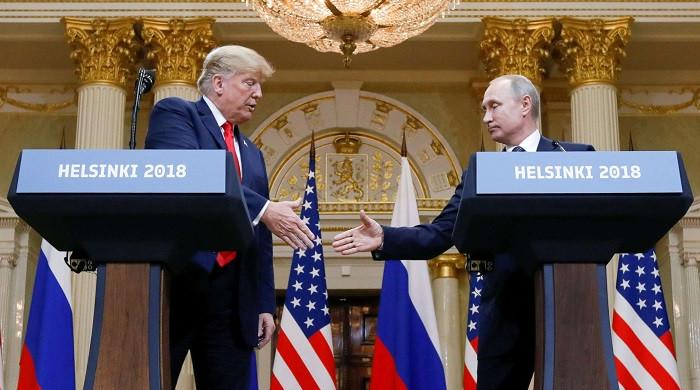
- Summit preps appear stalled after Rubio-Lavrov meeting postponed.
- ‘I guess the Russians wanted too much’ says European diplomat.
- Neither side has publicly abandoned plans for Budapest meeting.
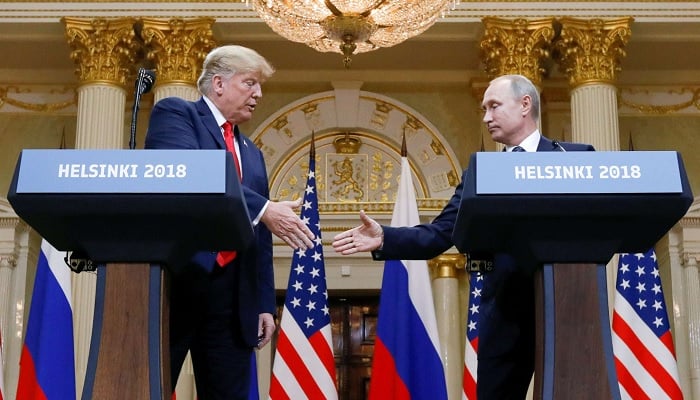
A planned summit between US President Donald Trump and Russian President Vladimir Putin was put on hold on Tuesday, as Moscow’s rejection of an immediate ceasefire in Ukraine cast a cloud over attempts at negotiations.
A senior White House official told Reuters, “There are no plans for President Trump to meet with President Putin in the immediate future” after Secretary of State Marco Rubio and Russian Foreign Minister Sergei Lavrov had a “productive call” but opted against an in-person meeting.
Trump had announced last week that he and Putin would meet soon in Hungary to try to bring an end to the war in Ukraine. But Putin has been unwilling to consider concessions. Moscow has long demanded that Ukraine agree to cede more territory before any ceasefire.
Trump, asked by reporters about the prospect of a summit, said he did not want to have a “wasted meeting” but suggested there could be more developments and that “we’ll be notifying you over the next two days” about them.
Kirill Dmitriev, Putin’s investment envoy, said in a social media post that “preparations continue” for a summit.
Russia reiterated its long-standing terms for a peace deal in a private communique known as a “non-paper” that it sent to the US last weekend, according to two US officials and two people familiar with the situation.
The communique reaffirmed Russia’s demand for full control of the long-contested eastern Donbas region, according to one official, effectively rejecting Trump’s call for a ceasefire to commence with a freeze of the frontlines at their prevailing locations.
Russia controls all of the province of Luhansk and about 75% of neighbouring Donetsk, which together make up the Donbas region.
European leaders called on Washington on Tuesday to hold firm in demanding an immediate ceasefire in Ukraine, with present battle lines to serve as the basis for any future talks.
NATO said Secretary General Mark Rutte travelled to Washington on Tuesday for talks with Trump that two sources familiar with the matter said would take place on Wednesday.
A Western official, speaking on condition of anonymity, said Rutte planned to present to Trump the European views on a ceasefire and any subsequent peace negotiations.
Trump, who last week spoke by phone to Putin and met Ukrainian President Volodymyr Zelenskiy, had hoped for another high-profile session with the Russian leader after their August summit in Alaska failed to advance negotiations.
But the two sides postponed a preparatory meeting between Rubio and Lavrov that had been expected to take place in Budapest on Thursday.
Lavrov and Rubio spoke by phone on Monday. Lavrov said the place and the timing of the next Trump-Putin summit were less important than the substance of implementing the understandings reached in Alaska.
The Kremlin said there was no clear date and that “serious preparation” for a summit was needed, which may take time.
“Listen, we have an understanding of the presidents, but we cannot postpone what has not been finalised,” Kremlin spokesman Dmitry Peskov said. “Neither President Trump nor President Putin gave exact dates.”
Asked if Moscow had an understanding of a possible date for the summit, Peskov said: “No, there is no understanding.”
‘I guess Russians wanted too much’
Neither side has publicly abandoned plans for Trump to meet Putin. Hungary’s foreign minister, Peter Szijjarto, was in Washington on Tuesday, where he posted on Facebook: “We have some serious days ahead”.
But two senior European diplomats said the postponement of the Rubio-Lavrov meeting was a sign the Americans would be reluctant to go ahead with a Trump-Putin summit unless Moscow yields its demands.
“I guess the Russians wanted too much and it became evident for the Americans that there will be no deal for Trump in Budapest,” said one.
The Russians “haven’t at all changed their position, and are not agreeing to ‘stop where they are’,” said the second diplomat. “And I assume Lavrov gave the same spiel, and Rubio was like: ‘See you later’.”
Europeans concerned Trump will get no concessions
Ukraine’s European allies have been concerned that Trump could meet Putin for a second time without getting any serious concessions from the Russian leader.
In a statement on Tuesday, the leaders of European powers, including Britain, France, Germany and the EU, said they “strongly support President Trump’s position that the fighting should stop immediately, and that the current line of contact should be the starting point of negotiations.”
Trump has often changed his emphasis in public when speaking about Ukraine. But last Friday, after he met with Zelenskiy at the White House, he explicitly endorsed the position that a ceasefire should start with forces at their present positions.
Reuters and other news organisations reported that Trump’s meeting with Zelenskiy behind closed doors was contentious, with the US president repeatedly using profanity and pushing Zelenskiy to accept some Russian demands.
But Zelenskiy has painted the meeting as a success because it ended with Trump publicly backing a ceasefire at the present lines, Kyiv’s longstanding position.
European leaders are due to meet this week with Zelenskiy as their guest, first at an EU summit and then at a meeting of the “coalition of the willing” countries discussing a security force to guarantee a post-war settlement in Ukraine. Russia rejects such an international security force.
The choice of Budapest as a venue for a Putin-Trump meeting is contentious within the EU, where Hungary’s Prime Minister Viktor Orban is an outlier as one of the few leaders to maintain warm relations with Russia.
Any trip to Budapest would require Putin to fly through the airspace of other EU countries. Poland said on Tuesday it could force Putin’s plane down and arrest him on an international warrant if he flies over its territory, but Bulgaria said Putin could use its airspace to reach the meeting.


In yet another incident of hate crime against religious minorities in India, Bihar Chief Minister Nitish Kumar removed the hijab (veil) of a newly recruited Muslim doctor during an official event on Monday, drawing widespread criticism worldwide.
The shameful incident took place at “Samvad,” the CM’s secretariat, where appointment letters were being handed over to newly recruited doctors, The Indian Express reported.
When the hijab-clad woman went to collect her job letter, the CM, 75, looked at her and asked: “What is this?”
Then, he bent a little and pulled her hijab down.
Meanwhile, the flustered appointee was hastily pulled aside by an official standing near the stage.
The shocking incident triggered a wave of anguish among minorities in the country and drew strong criticism from the opposition parties, especially the Congress and the Rashtriya Janata Dal (RJD).
Reacting to the video, the Congress accused Kumar of inappropriate conduct towards the woman official, calling it a “vile act”.
In a post on X, the party said, “This is Bihar’s Chief Minister Nitish Kumar. Look at his shamelessness—a female doctor had come to collect her appointment letter, and Nitish Kumar pulled off her hijab. A man occupying the highest position in Bihar is openly indulging in such a vile act.”
The RJD questioned Kumar’s mental health.
“What has happened to Nitish ji? His mental state has now reached a completely pitiable condition,” the party said in a post on X.
In India, hate crimes against religious minorities have alarmingly increased during the tenure of Prime Minister Narendra Modi.
Last month, a US report recommended designating India as a country of “special concern” due to religious prejudice and serious violations of religious freedom.
US Commission on International Religious Freedom, in its report, exposed religious discrimination in India and extremist policies of the RSS and the BJP’s Hindutva agenda.
The report revealed that Modi and the BJP had implemented discriminatory policies against minorities in line with the Hindutva ideology.
It added that the BJP, as the political wing of the RSS, promotes Hindu nationalism.
The RSS has been involved for decades in violent acts against minorities, particularly Muslims and Sikhs.


- Private firms may import, process uranium under new bill.
- Foreign firms in joint ventures may apply for licence.
- New bill requires approval from both houses of parliament.
NEW DELHI: India on Monday set in motion steps to end decades of state control over nuclear power, by introducing a bill in parliament that would allow private firms to build and operate plants as the government seeks to make atomic energy central to its clean energy push.
Foreign companies in a joint venture with Indian companies could apply for a licence if selected to do so by the government.
India’s nuclear sector has been tightly guarded since its first reactor went online in 1969, shaped by Cold War politics and fuel-technology restrictions after its 1974 nuclear test.
State-run Nuclear Power Corp of India Ltd (NPCIL) owns and operates India’s current fleet of nuclear power plants but Reuters reported last year that India was looking to invite domestic private firms such as Tata Power, Adani Power and Reliance Industries to invest about $26 billion in the sector.
The new bill, which must be approved by the lower and upper houses of parliament to become law, would allow any “person expressly permitted by the central government” to apply for a licence to enter the nuclear sector, a major shift from decades when only state-run companies could operate reactors.
India plans to expand nuclear power capacity to 100 gigawatts (GW) over the next two decades, more than 12 times the current 8.2 GW.
The new bill, named the Sustainable Harnessing of Advancement of Nuclear Energy for Transforming India Bill, 2025, drops a rule that lets operators sue suppliers for equipment defects, a provision foreign suppliers have long opposed. Foreign suppliers include General Electric Co, Westinghouse Electric Co and France’s EDF.
The bill doubles operator liability for large reactors to 30 billion rupees ($330.75 million), retains the overall compensation cap at previous levels and proposes a nuclear liability fund to cover accident claims in line with global norms.
Private firms will be allowed to import and process uranium, according to the bill. The government has kept strategic activities such as uranium mining, nuclear fuel enrichment and fuel reprocessing under government control, and all operators would require licences.


- Four people charged with conspiracy, reads complaint.
- Group also planned to target ice agents, vehicles, says official.
- Says plot included planting explosives at 5 sites on New Year’s Eve.
WASHINGTON: The FBI has foiled a bomb plot targeting multiple targets, including immigration agents and vehicles, in Los Angeles and Orange County, Attorney General Pam Bondi said on Monday.
“The Turtle Island Liberation Front—a far-left, pro-Palestine, anti-government, and anti-capitalist group—was preparing to conduct a series of bombings against multiple targets in California beginning on New Year’s Eve. The group also planned to target ICE agents and vehicles,” Bondi said in a statement.
Four people have been charged with conspiracy and possession of an unregistered destructive device, according to the complaint filed in the US District Court for the Central District of California.
The bombing plot called for planting explosive devices at five locations targeting two US companies at midnight on New Year’s Eve in the Los Angeles area, it said.
The four defendants named in the complaint are Audrey Illeene Carroll, Zachary Aaron Page, Dante Gaffield, and Tina Lai.
According to a sworn statement in support of the complaint, Carroll in November presented an eight-page handwritten document to a paid confidential source titled “Operation Midnight Sun” which described a bomb plot.
Carroll and Page later allegedly recruited the other two defendants to help carry out the plan, which included them “acquiring bomb-making materials and traveling to a remote location in the Mojave Desert to construct and detonate test explosive devices on December 12, 2025,” the sworn statement alleges.
FBI agents intervened, however, before they could complete their work to assemble a functional explosive device.


Magnitude-5.2 earthquake shakes parts of Karachi, Balochistan

Maybe Salah’s not finished at Liverpool after all; Real Madrid grind out another win

RBI Holds 879.6 Tonnes Of Gold As Prices Surge Amid Global Uncertainty

-

 Politics1 week ago
Thailand launches air strikes against Cambodian military: army
-
 Fashion1 week ago
Germany’s LuxExperience appoints Francis Belin as new CEO of Mytheresa
-
 Politics1 week ago
Zelenskiy says Ukraine’s peace talks with US constructive but not easy
-

 Politics5 days ago
Trump launches gold card programme for expedited visas with a $1m price tag
-

 Tech6 days ago
Jennifer Lewis ScD ’91: “Can we make tissues that are made from you, for you?”
-
 Business5 days ago
Rivian turns to AI, autonomy to woo investors as EV sales stall
-

 Entertainment1 week ago
Too big to fail? IndiGo crisis exposes risks in Indian aviation
-

 Tech5 days ago
Google DeepMind partners with UK government to deliver AI | Computer Weekly