

Politics
Cuba restores power grid after latest blackout

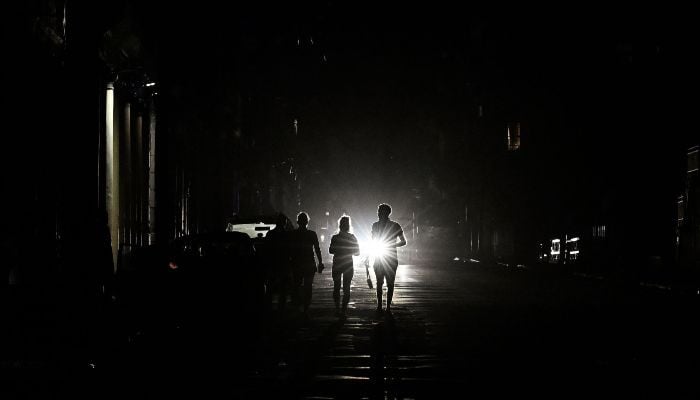
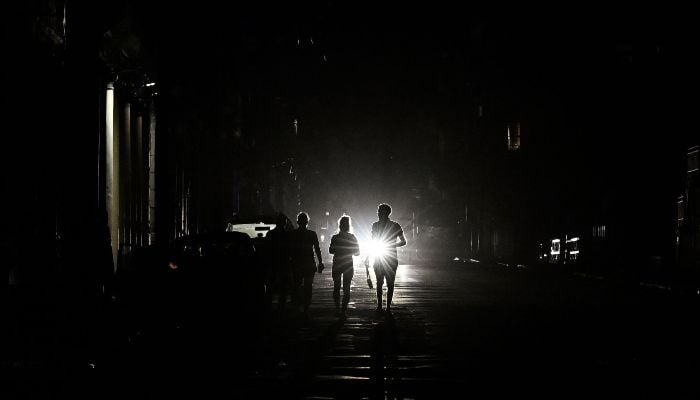
HAVANA: Cuba’s power grid was restored, officials said, a day after the second nationwide blackout in a week as the crisis-hit island struggles under a US oil blockade.
Two-thirds of Havana had power again in the afternoon, the capital’s electricity company said, a day after the energy ministry reported a “total disconnection” of the national electric system in the country of 9.6 million people.
“Thanks to the efforts of our electrical workers, the SEN (National Electric System) was restored,” Prime Minister Manuel Marrero Cruz said on X late Sunday.
Authorities cautioned, however, that demand would still exceed supply.
The outage comes as Cuba’s communist government has faced growing pressure from US President Donald Trump, who imposed the de facto oil blockade in January and mused this past week about “taking” the Caribbean island.
A top Cuban diplomat said the country’s military was “preparing these days for the possibility of military aggression.”
“We truly hope that it doesn’t occur,” Deputy Foreign Minister Carlos Fernandez de Cossio told NBC’s ‘Meet the Press’ in an interview taped before the blackout.
He said Havana was willing to continue talking with Washington, but discussing changes to its political system was off the table.
“Cuba has no quarrel with the United States. We do have the need and the right to protect ourselves. But we are willing to sit down,” Fernandez de Cossio said in the interview, which aired Sunday.
Restless night
There have been seven nationwide blackouts since 2024, making life more difficult for Cubans who fear food will spoil in refrigerators, among other problems in a country in economic crisis.
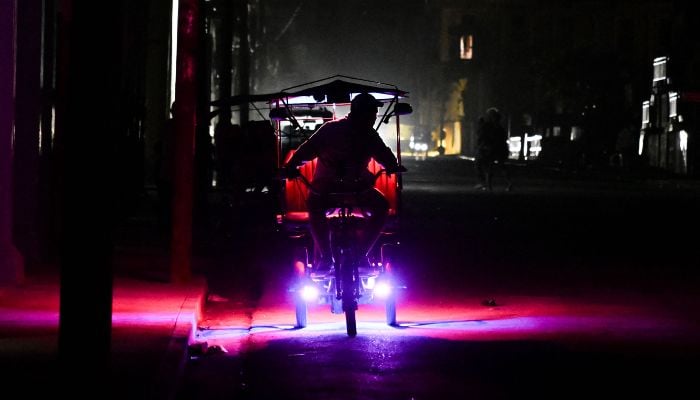
“The truth is, it gets harder every day to live with this situation,” Alina Quinones, a 48-year-old nurse, told AFP as she headed to the Havana hospital where she works, after barely sleeping.
She had no power, internet or phone connection, making it impossible to reach relatives in Matanzas, a city east of the capital.
Francisco Gonzalez, a 79-year-old retiree, also said he had a sleepless night in the dark, “sitting in an armchair at home, waiting for the power to come back on.”
Regular outages, as well as persistent shortages of food, medicine and other basics, are fueling public frustration, with people banging pots at night as a form of protest.
In a rare moment of violence, demonstrators vandalised a provincial office of the Cuban Communist Party last weekend.
The breakdowns have intensified since Cuba’s main regional ally and oil supplier, Venezuela’s socialist leader Nicolas Maduro, was captured in a US military operation in January.
Trump subsequently threatened to impose tariffs on countries that sell oil to Cuba.
No oil has arrived since January 9, hitting the power sector, while public transport has dwindled and airlines have curtailed flights to the island, a blow to its all-important tourism business.
‘Very severe’
The latest grid failure was due to an outage in a generating unit at one of the country’s ageing thermoelectric plants, triggering a domino effect in the system, according to authorities.
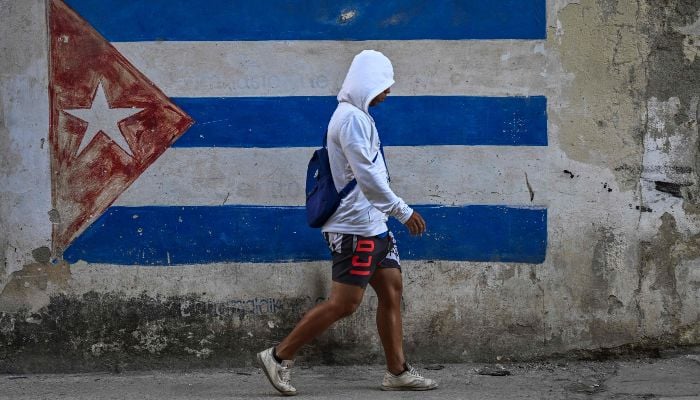
The blackout occurred as an international aid convoy began arriving in Cuba this week, bringing sorely-needed medical supplies, food, water and solar panels to the Caribbean island.
But getting oil to power its decades-old thermoelectric plants is becoming increasingly urgent.
“It is very severe. And we are acting as proactively as we can to cope with the situation,” Fernandez de Cossio told NBC.
“We do hope that fuel will reach Cuba one way or the other and that this boycott that the United States has been imposing does not last and cannot be sustained forever,” he said.
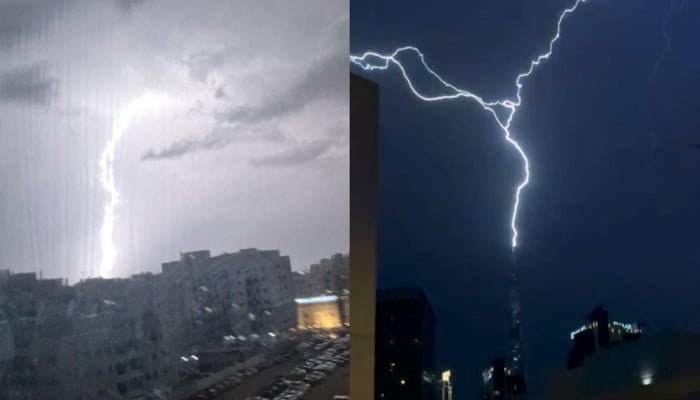
DUBAI: A powerful storm system swept across the United Arab Emirates overnight, bringing heavy rain, strong winds, and near-constant lightning that lit up the night sky for more than two hours, residents said.
Flashes were so bright in some areas that parts of the country appeared “like daytime in the dark,” with booming thunder waking residents around 11pm local time.
The storm affected multiple emirates, including Dubai, Sharjah, Ajman, Umm Al Quwain, Fujairah, Ras Al Khaimah and Abu Dhabi. Fujairah recorded 47.9mm of rainfall, while Ras Al Khaimah saw flooding on sections of Emirates Road caused by overflow from Al Beeh and Qada’a valleys, prompting authorities to advise motorists to take alternative routes.
The National Centre of Meteorology (NCM) issued a flash flood alert after midnight as the storm moved from western regions into Abu Dhabi and Dubai.
Dubai Police and the Ministry of Interior also issued public advisories, including messages in Urdu, urging residents to avoid unnecessary travel, maintain safe distances on roads, and stay away from pools of water or fast-moving rivers to prevent vehicles from skidding. Hail and reduced visibility in some areas were reported.
Dubai Airports warned travellers to allow extra time for journeys to DXB and DWC airports as adverse weather might cause delays. Authorities also announced the temporary closure of Jebel Jais in Ras Al Khaimah due to hazardous conditions.
The UAE Government and NCM said unstable weather, including heavy rain, thunderstorms, strong winds, and occasional hail, is expected to continue through Friday before gradually easing from Saturday, with clearer skies and cooler temperatures forecast. Officials urged residents to remain vigilant and cooperate with authorities to stay safe.
- US officials say shipments began year ago and may still be ongoing.
- Says collaboration may include training on semiconductor technology.
- Allegations risk worsening tensions between Washington and Beijing.
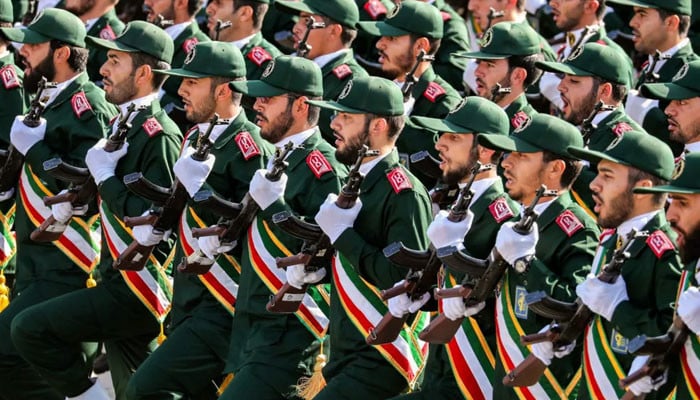
WASHINGTON: SMIC, China’s largest chipmaker, has sent chipmaking tools to Iran’s military, two senior Trump administration officials said on Thursday, raising questions about Beijing’s stance in the month-old US-Israeli conflict with Iran.
SMIC, which has been heavily sanctioned by the US government over alleged ties to the Chinese military, began sending the tools to Iran roughly a year ago and “we have no reason to believe that any of this has stopped,” one of the officials said.
The official added that the collaboration “almost certainly included technical training on SMIC’s semiconductor technology.”
The officials spoke on condition of anonymity in order to discuss previously undisclosed US government information. They did not specify whether the tools were of US origin, which would likely make shipment to Iran a violation of US sanctions.
SMIC, the Chinese Embassy in Washington, and a spokesperson for the Iranian mission to the United Nations did not immediately respond to requests for comment.
The Chinese government maintains that it carries out normal commercial trade with Iran. SMIC, which was added to a trade blacklist in 2020 that restricts its access to US exports, has denied allegations that it has ties to the Chinese military-industrial complex.
China has not publicly taken a side in the Middle East conflict. Chinese Foreign Minister Wang Yi this week called on the parties to seize all opportunities to start peace talks as soon as possible.
The allegations threaten to heighten tensions between Washington and Beijing as the US wages war against Tehran and as it has sought to choke off China’s advanced chip industry.
Reuters reported last month that Iran was close to a deal with China on the purchase of anti-ship cruise missiles, just as the United States deployed a vast naval force near the Iranian coast ahead of strikes on the Islamic Republic.
It was not immediately clear what, if any, role the chipmaking tools have played in Iran’s response to the war, which was launched by the US and Israel on February 28 and has roiled financial markets, triggered a surge in oil prices and fuelled global inflation fears.
One of the officials said the tools have been provided to Iran’s “military industrial complex” and could be used for any electronics that require chips.
Washington has sought to curtail China’s ability to make advanced semiconductors through sanctions on SMIC and other Chinese chipmakers, aiming to limit their access to advanced chipmaking equipment from top US suppliers such as Lam Research, KLA and Applied Materials.
The Biden administration tightened restrictions on SMIC in 2024 by cutting off its most advanced factory from more US imports after it produced a sophisticated chip for Huawei’s Mate 60 Pro phone, Reuters reported.
- Trump claims talks with Iran are ‘going very well’.
- Iranian official dismisses US peace proposal as ‘unfair’.
- WSJ cites mediators as saying: Iran hasn’t asked for pause.
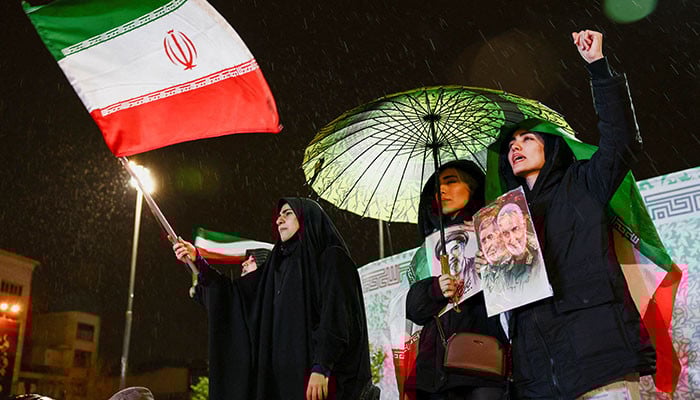
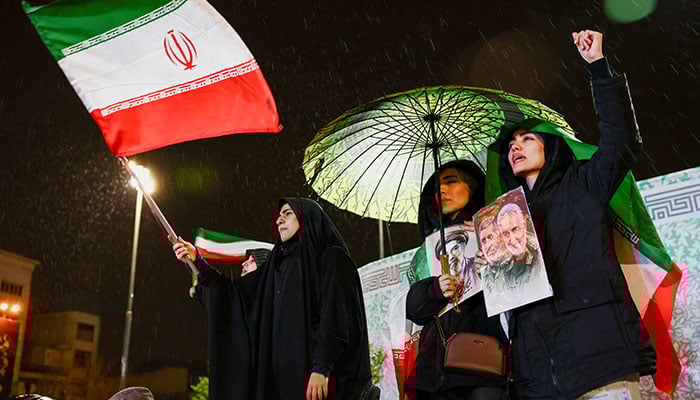
DUBAI/TEL AVIV/WASHINGTON: President Donald Trump announced that he will pause attacks on Iran’s energy plants for 10 days at Tehran’s request and said talks with Iran were going “very well,” although an Iranian official dismissed a US proposal for ending the conflict as “one-sided and unfair.”
The war has killed thousands of people, spread to neighbouring nations and hit the global economy with soaring energy prices since the US and Israel launched strikes on February 28, after talks about Tehran’s nuclear programme failed to yield a deal.
On Thursday, Trump threatened during a cabinet meeting at the White House to increase pressure on Iran if it did not make a deal, before later posting on social media that he would pause attacks on Iranian energy plants for 10 days until April 6, 2026 at 2000 EDT (0000 GMT on April 7).
“Talks are ongoing and, despite erroneous statements to the contrary by the Fake News Media, and others, they are going very well,” he added in his Truth Social post.
He later told Fox News’ “The Five” programme that the Iranians had asked for a seven-day pause. There was no immediate reaction from Tehran.
Iran has not asked for a 10-day pause on strikes on its energy plants, the Wall Street Journal cited peace talk mediators as saying.
Drone speedboats
The war has massively disrupted shipping, sending crude oil prices up around 40% and causing a spike of some two-thirds in shipments of liquefied natural gas to Asia. Prices of nitrogen-based fertilisers, critical to food production, have risen by around 50%.
Despite Trump’s upbeat assessment, Iran continued to retaliate against US and Israeli strikes by hitting Israel and US bases; it also struck Gulf states and effectively blocked Middle East fuel exports via the Strait of Hormuz.
The US has deployed uncrewed drone speedboats for patrols as part of its operations against Iran, the Pentagon told Reuters, the first time Washington has confirmed using such vessels in an active conflict.
Trump said the US would become the Islamic Republic’s “worst nightmare” if it did not comply with US demands, which include opening the strait and ending Tehran’s nuclear programme.
He said taking control of Iran’s oil was an option, but gave no details.
The Iranian official told Reuters that a 15-point US proposal, conveyed to Tehran by Pakistan, was reviewed in detail on Wednesday by senior Iranian officials and the representative of Iran’s supreme leader.
While they felt it served only US and Israeli interests, diplomacy had not ended, the official said.
The fighting continued to rage, however.
On Thursday, Iran launched multiple waves of missiles at Israel, striking Tel Aviv, Haifa and other areas, including a Palestinian town in central Israel.
At least one ballistic missile hit Tel Aviv, according to Israel’s military, while others carried cluster munitions that dispersed smaller explosives, damaging homes and cars.
Israel’s ambulance service said a man was killed in Nahariya after Hezbollah fired a rocket barrage at the northern city.
In Iran, strikes hit the southern city of Bandar Abbas and a village on the outskirts of the southern city of Shiraz. A university building in Isfahan was reported to have been hit.
Strait of Hormuz a crucial issue
Trump suggested on Thursday that Iran let 10 oil tankers transit the Strait of Hormuz as a goodwill gesture in negotiations, including some Pakistan-flagged vessels.
The president has sent thousands of troops to the Middle East, some of whom have already arrived, driving expectations of a ground invasion, although details remain scant.
Trump’s special envoy, Steve Witkoff, confirmed that the US had sent a “15-point action list” as a basis for negotiations to end the war.
It includes demands ranging from dismantling Iran’s nuclear programme to curbing its missiles and effectively handing over control of the strait, according to sources and reports.
Pakistan’s foreign minister said “indirect talks” between the US and Iran were taking place through messages relayed by Islamabad, with other states including Turkey and Egypt also supporting mediation efforts.
Any talks look set to be extremely thorny.
Iran has hardened its stance since the war began, demanding guarantees against future military action, compensation for losses, and formal control of the strait, Iranian sources say.
It also told intermediaries that Lebanon must be included in any ceasefire deal, regional sources said.
Trump has not identified with whom the US is negotiating in Iran, with many high-ranking officials among the thousands of people killed in the war across the Middle East.


Germany’s ifo index drops to 86.4 in March as uncertainty weighs on

Just Eat and Autotrader among five firms under investigation over online reviews

Australia’s Myer posts strong H1 FY26 sales growth, up 24.5% YoY

-

 Fashion1 week ago
Sales at US apparel, clothing accessories stores up 4% YoY in Jan 2026
-

 Entertainment1 week ago
Val Kilmer revived 1 year after death through AI
-

 Fashion1 week ago
US’ G-III Apparel’s FY26 sales fall 7% to $2.96 bn
-

 Sports1 week ago
March Madness 2026 – How to watch in SA, start time, schedule, TV channel for NCAA championship basketball tournament
-
 Business1 week ago
Brits cashing in jewellery as gold price hits record high
-

 Fashion6 days ago
China’s textile & apparel exports surge 17% to $50 bn in Jan-Feb 2026
-
 Business1 week ago
Video: The Effects of High Oil Prices
-
 Business6 days ago
Flipkart group CFO to leave co amid IPO plans – The Times of India