

Tech
Cursor Launches an AI Coding Tool For Designers

Cursor, the wildly popular AI coding startup, is launching a new feature that lets people design the look and feel of web applications with AI. The tool, Visual Editor, is essentially a vibe-coding product for designers, giving them access to the same fine-grained controls they’d expect from professional design software. But in addition to making changes manually, the tool lets them request edits from Cursor’s AI agent using natural language.
Cursor is best known for its AI coding platform, but with Visual Editor, the startup wants to capture other parts of the software creation process. “The core that we care about, professional developers, never changes,” Cursor’s head of design, Ryo Lu, tells WIRED. “But in reality, developers are not by themselves. They work with a lot of people, and anyone making software should be able to find something useful out of Cursor.”
Cursor is one of the fastest growing AI startups of all time. Since its 2023 debut, the company says it has surpassed $1 billion in annual recurring revenue and counts tens of thousands of companies, including Nvidia, Salesforce, and PwC, as customers. In November, the startup closed a $2.3 billion funding round that brought its valuation to nearly $30 billion.
Cursor was an early leader in the AI coding market, but it’s now facing more pressure than ever from larger competitors like OpenAI, Anthropic, and Google. The startup has historically licensed AI models from these companies, but now its rivals are investing heavily in AI coding products of their own. Anthropic’s Claude Code, for example, grew even faster than Cursor, reaching $1 billion in annual recurring revenue just six months after launch. In response, Cursor has started developing and deploying its own AI models.
Traditionally, building software applications has required many different teams working together across a wide range of products and tools. By integrating design capabilities directly into its coding environment, Cursor wants to show that it can bring these functions together into a single platform.
“Before, designers used to live in their own world of pixels and frames, and they don’t really translate to code. So teams had to build processes to hand off tasks back and forth between developers and designers, but there was a lot of friction,” says Lu. “We kind of melded the design world and the coding world together into one interface with one AI agent.”
AI-Powered Web Design
In a demo at WIRED’s San Francisco headquarters, Cursor’s product engineering lead Jason Ginsberg showcased how Visual Editor could modify the aesthetics of a webpage.
A traditional design panel on the right lets users adjust fonts, add buttons, create menus, or change backgrounds. On the left, a chat interface accepts natural-language requests, such as “make this button’s background color red.” Cursor’s agent then applies those changes directly into the code base.
Earlier this year, Cursor released its own web browser that works directly within its coding environment. The company argues the browser creates a better feedback loop when developing products, allowing engineers and designers to view requests from real users and access Chrome-style developer tools.











Yesterday’s discount on the Sonos Ace over-ear headphones wasn’t the only sale you can find on new additions to your Sonos setup. You can also nab the Sonos Roam 2 for just $139 as part of the Amazon Spring Sale. This Bluetooth speaker has excellent sound despite its relatively compact size, and of course it plays nicely with your other Sonos speakers.
.png)
Unlike older Sonos products, the Roam 2 now has Bluetooth in addition to Wi-Fi. When you’re home, the speaker joins your network and acts just like any other Sonos speaker in your setup. Take it on the go, and you can easily connect your phone and keep the tunes rolling. The Sonos app isn’t always the best at finding new speakers, but in this case it fired right up and connected to the Roam 2, good news for the easily frustrated. It has a fun sound profile that’s great for picnics or backyard hangs, with solid bass and balanced mid and upper ranges. Some other Bluetooth speakers might get louder, but the Roam 2 makes up for it by joining a chorus of other speakers around your home.
While the first-generation Roam suffered from some long-term battery health issues, Sonos has assured us that the Roam 2 more than fixes the problem, and at least in the short time our reviewer Parker Hall spent with it, it wasn’t an issue anymore. The outside is also slightly prone to smudges and scuffs, something to keep in mind if you prefer your equipment looking pristine. It’s waterproof, though, and quite sturdy, so just know that any marks you see on the housing are just surface level.
I spotted the discount in both black and white, but they’re both marked as “Limited Time Deals” so you’ll want to move fast if you’re interested. For anyone wondering what else is out there, or for non-Sonos users, make sure to check out our guide to the best Bluetooth speakers, or swing by our roundup of the best deals on hand-tested and approved products in the Amazon Spring Sale to see what else sparks your fancy.

As immigration became one of the defining focuses of Donald Trump’s second administration, the Department of Homeland Security (DHS) has taken center stage. Under the 2025 One Big Beautiful Bill Act, DHS, which oversees Immigration and Customs Enforcement (ICE), Customs and Border Protection (CBP), US Citizenship and Immigration Services (USCIS), and several other agencies, received more than $80 billion in additional funding, and in January the agency announced that it had hired more than 12,000 new agents.
Even as cities like Los Angeles and Minneapolis have seen a surge of immigration officers descend upon them, DHS has maintained a high level of opacity around its operations. Officers carrying out raids and arrests are often masked and driving in unmarked cars. As enforcement has pulled in federal law enforcement personnel from across the government, it has become difficult to tell what agency a given officer works for, let alone who they actually are. Though DHS has been combative with the media, ICE agents themselves have been mostly quiet, even if some have mixed feelings about their work and where the agency is headed.
Karl Loftus, an independent journalist who runs the Instagram account @deadcrab_films, started a new project following the immigration surge in Minneapolis called Confessions of an ICE Agent. There, he publishes interviews with people who work in immigration enforcement across DHS. This includes agents and officers with the two main divisions of ICE—Homeland Security Investigations and Enforcement and Removal Operations—as well as CBP officers. He offers them anonymity and a place to speak their minds outside the structures of traditional media, and in return gets a glimpse of what the people inside the agency are experiencing, creating an archive of this moment in its history.
In one post, a biracial agent speaking shortly after Trump announced that he would be replacing DHS Secretary Kristi Noem told Loftus he believed Noem was a “DEI” hire. In another, an HSI agent called the people leading the US government “imbeciles,” saying they were “disgusted by nearly all of them.” Another HSI agent expressed concerns about DHS colleagues violating the law, and complained of having to pause investigation into child sexual abuse cases to focus on immigration work. “If they gave child exploitation cases a fraction of the attention, funding, resources, personnel, analytical support, etc. that they’re now giving immigration enforcement, we could do so much good,” they said.
WIRED spoke to Loftus about the public response to a polarizing topic, how he vets his sources, and the pressure to pick a side. A DHS spokesperson responded to WIRED’s request for comment saying that they cannot verify anonymous interviews but that DHS and its Homeland Security Investigations unit “is not slowing down and remains committed to all aspects of its mission, leveraging a whole-of-government approach to address threats to public safety and national security.”
This conversation has been edited for length and clarity.
WIRED: Before this project, your account mostly focused on things like disaster recovery after Hurricane Helene and similar topics. How did you start working on ICE?
Karl Loftus: In 2018 I was a volunteer in North Carolina during Hurricane Florence. I was there during the hurricane for four days doing search and rescue. That kind of started my passion for disaster response. I had been in Jamaica for seven weeks responding to Hurricane Melissa, working with a handful of different NGOs. I worked with Global Empowerment Mission repairing roofs of hospitals and medical centers to try to get the medical infrastructure back on track. I worked with World Central Kitchen. I was there documenting. I had planned to go to Wisconsin for the holidays, which is where I’m from, to visit some family, but I ended up staying in Jamaica. In early January, I finally made it up to the Midwest to see some family, and that’s when the Renee Good shooting happened. I was like, “Man, I know shit’s about to go insane the following day, and there’s going to be protests and riots and all this stuff.” So I decided to make the trip to Minneapolis.
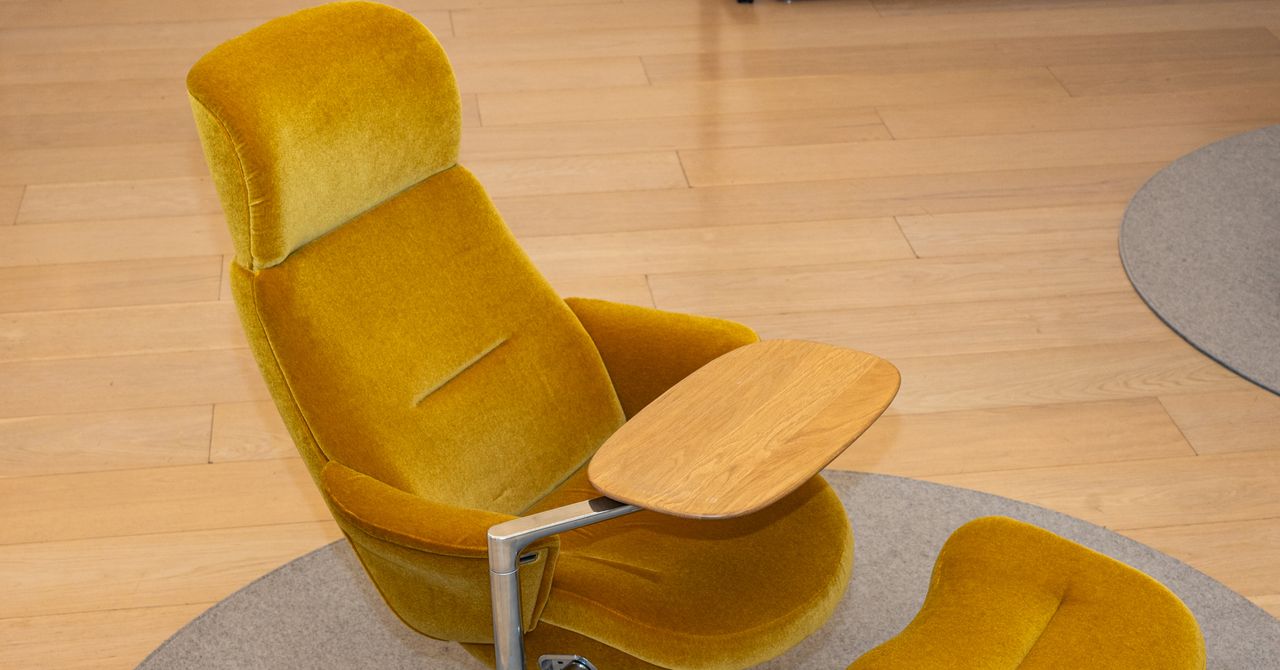
The chair starts at $8,995, but that doesn’t include the side table or ottoman. Add those and it costs $10,995. The model pictured above uses Alpaca wool fabric and brings the cost up to $14,995. (There are more than 300 fabrics and colors to choose from, and the swiveling table comes in various woodgrains.) The Herman Miller Eames, of which the Diffrient Lounge also takes inspiration, costs roughly $8,500 today, depending on which leather you choose.
“The Eames is obviously an iconic design—it’s timeless, it’s beautiful—but it’s not something you can work comfortably in for a long time,” Silva says.
Don’t let the Lounge in the name fool you. Silva assures me that every chair the company designs is built with ergonomic comfort in mind, with the adjustable work surface and headrest allowing for different postures. While traditional lounge chairs focus on style, Silva says the Lounge prioritizes comfort. In my brief time on the chair, it indeed felt enveloping and cushy yet supportive. And the mechanical levers made it easy to shift the chair into a more active sitting position or a more relaxing posture, without disrupting the ergonomics with a laptop on the table.
Diffrient had been tinkering with the idea of a lounge chair that could double as a workstation for a long time, Silva says, and believed that technology allowed people to work in different ways.
“The chair acknowledges the fact that creativity and productivity don’t necessarily happen when you’re tied to your desk,” he says. “They happen in different postures; more relaxed or moving around the office, and this chair supports those transitions.”
King recites a famous quote from Diffrient: “The best chair is a bed.” When you sit upright, your weight compresses your spine, but when you lean back, a large portion of that weight goes into the backrest, so when you’re lying down, there’s significantly less pressure on your spine. “Reclining is really healthy,” King says. “He always thought it would be a good way to work.”
Luxe Seat
How does a chair come to cost $15,000? Silva highlights Humanscale’s long-standing approach to simplicity. After all, it’s a hallmark of the original Freedom chair. While the Diffrient Lounge may not look very complex, that’s by design, cleverly masking the engineered mechanical system with clean lines and curves. There’s even some automation in the headrest. If you’re fully reclined and the headrest is in a forward position to support your head, as you come back up, the headrest will automatically go into a neutral position.



The Sonos Bluetooth Speaker Is $40 Off

Niall Horan’s new album ‘Dinner Party’ has a release date: Full tracklist

Steelers legend loses patience with latest chapter in Aaron Rodgers saga: ‘They need to move forward’

Stock market crash today (March 12, 2026): Nifty50 opens below 23,600; BSE Sensex down over 900 points on continuing US-Iran war – The Times of India

Intertextile Shanghai 2026: Fringe events spotlight market trends

What time will NASA’s 600 kg satellite crash to Earth today— 14 years after launch?

-
Business7 days ago
Stock market crash today (March 12, 2026): Nifty50 opens below 23,600; BSE Sensex down over 900 points on continuing US-Iran war – The Times of India
-
 Fashion1 week ago
Intertextile Shanghai 2026: Fringe events spotlight market trends
-
 Entertainment1 week ago
What time will NASA’s 600 kg satellite crash to Earth today— 14 years after launch?
-

 Fashion1 week ago
German brand Adidas posts 13% revenue growth in 2025
-
 Fashion1 week ago
UK’s Topshop unveils Tolu Coker capsule collection
-
 Tech1 week ago
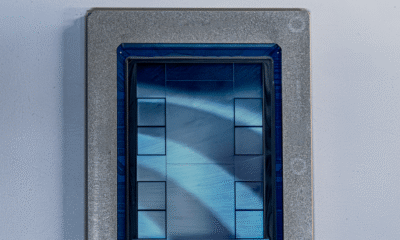
Meta Developed 4 New Chips to Power Its AI and Recommendation Systems
-

 Fashion1 week ago
India’s textile recycling market may reach $3.5 bn by 2030: Report
-
 Business1 week ago
US ignites Iran war, but Gulf Arab states pay the price | The Express Tribune