

Business
D.R. Horton is tapping a startup’s AI zoning tool to build more homes


D.R. Horton signage stands in front of homes under construction at the Eastridge Woods development in Cottage Grove, Minnesota.
Daniel Acker | Bloomberg | Getty Images
A version of this article first appeared in the CNBC Property Play newsletter with Diana Olick. Property Play covers new and evolving opportunities for the real estate investor, from individuals to venture capitalists, private equity funds, family offices, institutional investors and large public companies. Sign up to receive future editions, straight to your inbox.
D.R. Horton, the nation’s largest homebuilder, is tapping an artificial intelligence tool from Portland, Oregon-based startup Prophetic to build more homes and address the country’s housing shortage.
Chronic underbuilding since the Great Recession has caused a deficit of roughly 4 million homes, according to analyses from several sources, including Zillow. The supply-demand imbalance has caused prices to rise over 50% from pre-pandemic levels.
Homebuilders are trying to respond but say that the cost of construction, along with the difficult and costly process for acquiring and developing buildable lots, is making that difficult.
“One of the largest challenges to providing affordable housing is the identification, acquisition and entitlement of land suitable for development. We are confident the insights provided by Prophetic are going to help us expand homeownership opportunities for hard-working American individuals and families,” said Jason Jones, vice president of data analytics at D.R. Horton, in a release.
Prophetic has developed an AI-native platform for land acquisition and development analysis. For any potential parcel of land, Prophetic’s software will pull every single zoning manual from every city and county in a state. The company said it is currently operational in 25 states and expects to be in all 50 by June.
“It’s an incredibly large, tedious, detail-oriented process to take tens of thousands of these zoning documents and extract the rules, not only efficiently, but correctly,” said Oliver Alexander, founder and CEO of Prophetic.
Among other things, the system looks at minimum lot size and minimum or maximum density setbacks, which differ by municipality and zone. It updates those quarterly.
“Then it tells you where that information came from, which is the key differentiator,” Alexander explained. “When you have that section title and the page that it came from, that builds trust, and then it becomes ultra-efficient, where you can analyze development potential in 30 seconds instead of two to three hours.”
Alexander said there are a little over 440,000 different ways to describe what you’re allowed to do on a piece of dirt in the states Prophetic has analyzed. Developers need to go through all of that information to figure out if they can build a single- or multifamily housing development on it.
The AI’s large language model-based analysis of these documents at scale can answer the questions and then feed that into search AI, which Alexander calls “the major unlock” – search plus the zone AI information together. At the ground level, with this AI, builders can figure out what they can build, where and how much at a much faster pace, making them more competitive with landowners.
“If you have that much of an edge in your speed to decision, you effectively control your entire market, because before anyone else can decide, you’ve tied it up,” said Alexander.





The rising use of AI by fashion retailers contributed to Citizens Advice receiving almost 18,000 complaints from customers last year – a surge of 21% on a year earlier, it has reported.
The advisory service said it was helping a consumer with a fashion purchase every seven minutes, finding that the ever-increasing use of AI “makes it easier for scammers to trick people into buying items that look nothing like the images advertised”.
According to the charity’s consumer service, 82% of complaints about clothes, shoes and accessories related to online orders (14,487), while 14% were bought in-store (2,569).
Women’s clothing caused the most headaches, making up almost half (48%) of all complaints (8,508), while men’s clothing made up 20% (3,523).
The most common five issues suffered by fashion buyers last year were faulty goods, making up 18% of all complaints, delivery failures or delays (13%), trouble returning unwanted goods (12%), breach of contract (9%) and poor customer service (6%).
Of last year’s complaints, one in 13 involved scams, including shoppers thinking they were buying items from UK-based companies, due to their advertising.
Instead, consumers had received poor quality items that were not as pictured, and, when they tried to return them, were asked to pay expensive fees to send them to an address overseas.
One consumer, Hannah, a mother in her 30s from the East Midlands who did not want her surname published, told Citizens Advice she was Christmas shopping online when she saw a jacket she liked advertised at half price.
The company selling the jacket claimed it was based in London’s Covent Garden, and Hannah bought it for £35 using a debit card.
Hannah said: “The jacket took a few weeks to come and when it did, it was a totally different material and colour, and not as premium as it was pictured. The pockets were different and it had massive plastic buttons, but the one in the photograph had nice metal ones. It even smelled cheap.”
Hannah emailed the company to complain and request a refund.
She said: “The service felt very different to any other clothing company I’d dealt with. They asked for pictures of the jacket I’d received and I thought ‘this company sent the item to me, surely they should know what it looks like’. They also emailed me on Boxing Day.
“They said I could return the jacket if I sent it to China at my own expense, it left me fuming. I looked up the cost of shipping and it was about £15. The website clearly stated it was a UK business, which was deceptive.”
Hannah reported the incident to the Citizens Advice Consumer Service, and was able to get a full refund through her bank, which covered the cost. Eventually, the company did issue a refund itself.
Jane Parsons, consumer spokeswoman at Citizens Advice, said: “Shopping should be simple and stress-free, but every year we hear from thousands of frustrated people who have a tough time trying to resolve issues with retailers and sellers.
“Consumers face all kinds of problems from receiving faulty items, to waiting weeks for deliveries and poor customer service. Plus, the ever-increasing use of AI makes it easier for scammers to trick people into buying items that look nothing like the images advertised.
“It’s important consumers know what steps to take before they part with their cash or after there’s an issue. It can make all the difference in avoiding a trap or getting a refund.”
Mike Andrews, national coordinator of the National Trading Standards eCrime Team, said: “Online retail scams leave shoppers out of pocket and understandably frustrated.
“What appears to be a genuine retailer can turn out to be a fake website, a misleading advert or goods that never arrive.
“Criminals are increasingly using professional-looking sites and convincing promotions to exploit people’s confidence in well-known brands.
“We would encourage consumers to pause before buying online – check the retailer using a URL checker from a reputable website like Get Safe Online, be cautious of offers that seem too good to be true, avoid buying directly through social media adverts and always pay by card or a secure payment platform.”
UK consumer laws are difficult to enforce when sellers turn out to be based overseas.
Citizens Advice suggests the following before buying from an unfamiliar company:
– Check reviews on search engines and third party websites– Watch out for heavily discounted, ‘too good to be true’ prices and huge closing down sales– Be mindful of the targeted shopping adverts in your social media feeds – this is often how customers are drawn in– Consider whether images used to advertise an item were created by AI. This can be difficult, but look for overly airbrushed images, inconsistent textures or distortions on the face and body– Check the company’s website delivery information. Overseas stores offer shipping to the UK in a much longer timeframe than a genuine UK brand would– If you’ve been caught out by this type of scam and you paid by debit or credit card, you may be able to use a ‘chargeback scheme’ or a ‘section 75’ claim to get a refund.
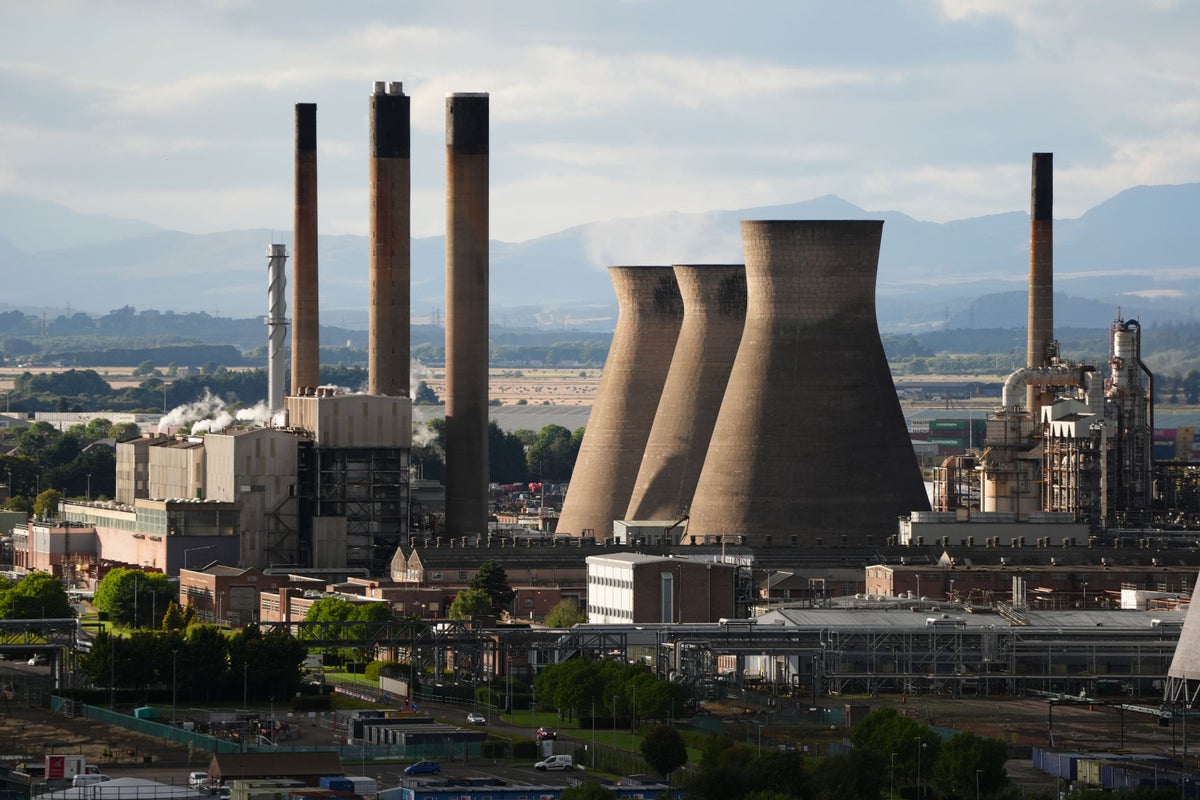
New figures show the recent spike in energy prices cost Scotland’s economy £11 billion, leading to renewed calls for the country to end its “dependence on international fossil fuels”.
A new report by the Energy & Climate Intelligence Unit (ECIU) calculated the direct additional costs faced by businesses, households and other “energy consumers” between 2021 and 2024 as a result of the energy crisis.
This saw wholesale gas prices soar in the wake of Russia’s invasion of Ukraine, while the price of road fuel rose due to a spike in oil prices.
The analysis shows the crisis cost Scottish households an additional £5.8 billion in excess energy costs, which the ECIU said equates to around £2,260 per household, or 70% of a typical Scot’s annual spend on food and non-alcoholic drinks.
Those in areas with the lowest average household incomes were also found to have spent a greater proportion of their income on energy on excess energy costs than people in richer areas.
Industry faced additional costs of £1.8 billion, with Glasgow (£800 million), Edinburgh (£740 million), the Highlands and Islands (£560 million) and Aberdeen (£390 million) seeing the biggest spikes.
Meanwhile the commercial, agricultural and public sector organisations had to absorb an extra £2.6 billion.
The remaining £0.8 billion related to non-domestic road fuels.
The ECIU said the findings expose Scotland’s “deep vulnerability to global oil and gas markets”, adding that many energy-intensive industries continue to face high industrial energy costs.
It pointed to a recent report showing the UK has some of the highest energy costs in Europe, largely because of its relative dependence on gas.
It also flagged previous IMF analysis suggesting the UK’s dependence on imported fossil fuels left it the worst-hit economy in western Europe by the spike in prices which followed the Russian invasion of Ukraine.
The report stated: “Our findings show a significant burden placed on Scottish consumers during the crisis, highlighting the risks for all energy consumers of reliance on volatile fossil fuel markets.”
It added: “While there has been some progress made on reducing demand for gas through building more renewables during the crisis, progress on shifting away from gas boilers for heating and reducing dependence on oil and gas in the industrial sector remains slow.
“In an increasingly uncertain world, this raises questions about whether Scotland is prepared for another crisis.”
Professor Tavis Potts, co-coordinator at the Just Transition Lab at the University of Aberdeen, said: “Anybody who has paid a gas bill over the past few years – businesses and families alike – has felt the impacts of Scotland’s reliance on oil and gas.
“Drilling for more North Sea gas won’t fix this underlying problem or lower bill costs for consumers or industry as output is too low to influence prices that are set in global markets.
“With most of the North Sea gas resource having been extracted, future marginal finds could only supply a fraction of the UK’s future demand – and it won’t make any difference to bills with increasing reliance on imports.
“To shield energy consumers from future energy price shocks in an increasingly uncertain world, lowering demand through renewables and other net zero technologies is key.
“Wind power cut UK wholesale day-head prices by a third last year and with recent offshore wind auctions delivering at scale, this effect is set to increase.”
Mercedes Villalba, Labour MSP for the North East of Scotland, described the findings as “damning”.
“They reveal the immense cost of our continued dependence on international fossil fuels for households across Scotland,” she said.
“What’s more, the ECIU makes clear that working-class communities bear the brunt of our government’s failure to accelerate a just energy generation.”
Minister for Energy Consumers Martin McCluskey said: “This report shows exactly why we need to push ahead with our clean power mission to bring down the cost of energy and guarantee home grown, clean power for our country.
“We have secured enough homegrown clean energy in our recent auction to power the equivalent of 16 million homes, protecting households from future price shocks.
“Alongside that, our Warm Homes Plan – backed by £15 billion of funding – will cut the cost of heating homes in Scotland, making homes warmer, bills lower, and our energy system more secure.”
The Scottish Government’s Energy Secretary Gillian Martin said: “Fundamentally, energy prices remain high compared to pre-2022 levels, and despite UK Government promises to bring them down.
“Scotland is an energy rich nation but shamefully, 31% of our population are in fuel poverty. We must have the full powers of independence to make our energy wealth work for our people.
“In the meantime, we have worked with stakeholders to develop a social tariff in the form of an automatic and targeted discount on energy bills to address unaffordable bills at source, which the UK Government must urgently adopt. Under our proposals, which have cross sector support, 660,000 households in Scotland would see their estimated fuel bills go down by an average of £700.
“Until that happens, we will continue to do all that we can within our powers to tackle fuel poverty and support households that are struggling, particularly in rural communities.”
She added: “We are investing £300 million this year into improving the heating and energy efficiency of our homes and buildings.
“And this winter we will invest over £197 million in our Winter Heating Benefits, with more than 1.5 million payments already made to help households with their energy bills this winter.”

Despite judiciary restriction, structural changes in global trade by high tariffs are unlikely to be easily reversed
ISLAMABAD:
The anxiously awaited ruling of the US Supreme Court on Friday striking down the “reciprocal tariffs” represents a significant constitutional and political setback for President Trump. The tariffs, imposed under the Emergency Powers Act, had been central to his trade and foreign policy strategy. They were justified on the grounds that persistent trade deficits constituted a national emergency.
The court rejected this expansive interpretation, ruling that emergency powers cannot override the constitution’s assignment of tariff authority to Congress, leaving the president no choice but to withdraw the duties. Yet the story does not end there. Almost immediately after complying with the ruling, Trump signalled that his broader tariff agenda remains intact. While expressing strong disagreement with the decision, he issued a proclamation imposing a new 15% global tariff under Section 122 of the Trade Act of 1974. This rarely used provision allows the president to impose temporary import surcharges for up to 150 days, after which congressional approval is required for continuation.
In practical terms, the court’s decision establishes an important limit. The president cannot rely on emergency powers to impose open-ended, broad-based tariffs. However, it does not remove other statutory authorities. US trade law contains multiple instruments, each with its own procedural and legal thresholds. Nearly one-third of existing tariffs imposed under these statutes remain in force and indications from various government spokespersons are that these are likely to be expanded. The era of unrestricted emergency tariffs may have ended, but tariff activism has not.
Nevertheless, uncertainty persists. What becomes of bilateral trade arrangements negotiated while the emergency tariffs were in force? Several countries, including India and Bangladesh, entered into side agreements committing to purchase substantially larger volumes of US goods in exchange for partial tariff relief. If the legal foundation of those tariffs has been invalidated, the status of such commitments becomes unclear. The White House has stated that the United States will continue to honour its legally binding Agreements on Reciprocal Trade and expects the same from its partners.
For Pakistan, some uncertainty will remain. While the new 15% tariff places Pakistan at the same level as all other countries, questions remain about the broader trade relationship. For example, would Pakistan be required to negotiate a bilateral trade arrangement like those reached with countries such as India and Bangladesh?
There is perhaps a possible understanding related to the procurement of certain quantities of US energy products, defence equipment, and selected agricultural commodities to narrow the trade deficit and for receiving lower reciprocal tariff. However, the key question is what Pakistan receives in return, since the 15% tariff is applied globally rather than being tailoured to specific countries.
Another unresolved issue concerns the approximately $170 billion in tariffs already collected under the now-invalidated emergency measures. These duties were paid not by foreign exporters but mostly by US importers. Any refund process would likely prove complex and administratively burdensome.
Although the government may attempt to delay refund claims, the tariffs have been deemed unlawful from the outset, strengthening the legal position of claimants. The fiscal and administrative consequences could be substantial.
The court has clarified the constitutional limits of emergency authority, but the global trading system will continue to operate under the shadow of strategic tariff policy. Except for China, most countries initially adjusted to US tariff pressure rather than confront it directly.
Many are now recalibrating. The European Union and middle powers such as Canada and Australia, along with emerging blocs including BRICS, are diversifying supply chains and strengthening alternative trade corridors to reduce exposure to abrupt US policy shifts. It is not likely that the court decision would change their current readjustments away from the United States. While the judiciary may curb executive overreach, the structural changes in global trade triggered by aggressive tariff policies are unlikely to be easily reversed. Pakistan must navigate this evolving landscape with strategic caution to avoid becoming a victim of collateral damage in a broader economic confrontation.
The writer is a member of the National Tariff Policy Board. He has previously served as Pakistan’s ambassador to WTO


Jennifer Lopez pays sweet tribute to twins on 18th birthday

NASA Delays Launch of Artemis II Lunar Mission Once Again
Energy crisis cost Scottish economy £11bn, study finds

-

 Entertainment6 days ago
Queen Camilla reveals her sister’s connection to Princess Diana
-

 Tech6 days ago
Rakuten Mobile proposal selected for Jaxa space strategy | Computer Weekly
-

 Politics6 days ago
Ramadan moon sighted in Saudi Arabia, other Gulf countries
-

 Entertainment6 days ago
Robert Duvall, known for his roles in "The Godfather" and "Apocalypse Now," dies at 95
-

 Politics6 days ago
Tarique Rahman Takes Oath as Bangladesh’s Prime Minister Following Decisive BNP Triumph
-

 Sports6 days ago
Usman Tariq backs Babar and Shaheen ahead of do-or-die Namibia clash
-

 Tech6 days ago
Businesses may be caught by government proposals to restrict VPN use | Computer Weekly
-
 Fashion6 days ago
Australia’s GDP projected to grow 2.1% in 2026: IMF