

Business
Delhi’s Economy Gets A Push! GST 2.0 Rate Cuts To Aid MSMEs, Trade And Hospitality

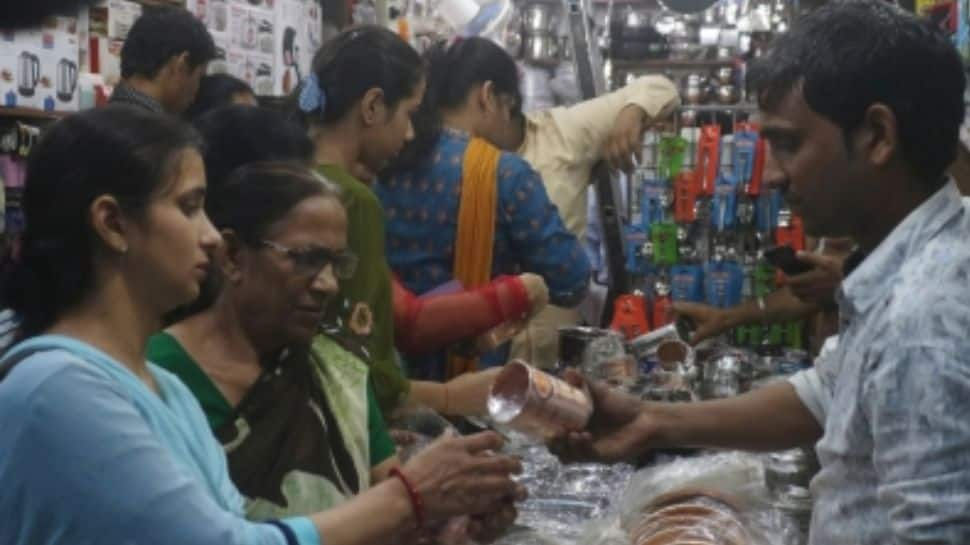
New Delhi: The rollout of GST 2.0 rate cuts is set to bring direct relief to Delhi households by lowering their day-to-day expenses. At the same time, the move is expected to boost the city’s economy, as MSMEs, traders, and the hospitality sector gain from reduced input costs, stronger demand, and improved competitiveness.
Widespread Impact Across Delhi Markets
From Karol Bagh’s automobile and apparel shops to the wholesale trade in Sadar Bazar and Khari Baoli, and from Chawri Bazar’s paper hub to the busy streets of Chandni Chowk, the effects of GST 2.0 will be felt everywhere. Alongside this, lower rates on everyday goods and essential services will ease expenses for households across the city.
Delhi’s Auto Hubs Powering North India’s Trade
Delhi has long been a key centre for automotive component trading, with markets like Karol Bagh and Kashmere Gate well-known for their wholesale and retail networks. These family-run businesses and MSMEs not only cater to the city’s massive vehicle population but also supply parts across north India and even export to neighbouring countries. In fact, Delhi’s auto hubs alone trade components worth nearly Rs 1,000 crore every month with Bangladesh. As a result, the city plays a crucial role in India’s auto components industry, which recorded a turnover of Rs 6.14 lakh crore in FY24.
GST Cuts to Make Vehicle Maintenance Cheaper
With GST on auto parts reduced from 28 per cent to 18 per cent, the cost of vehicle maintenance for both consumers and mechanics is expected to drop by nearly 7.8 per cent. Lower prices for spare parts will mean smaller service bills, encouraging vehicle owners to replace worn-out components more regularly. This not only saves money but also helps improve safety and efficiency on Delhi’s roads.
As the national capital, Delhi is a major destination for tourists, business travellers and medical tourism. It offers everything from luxury properties to budget stays in Paharganj and Karol Bagh. In 2024, Delhi’s hotel market recorded about 72.9 per cent average occupancy with an average daily rate (ADR) of nearly Rs 10,273.
The new GST rate of 5 per cent for rooms below Rs 7,500 per night directly reduces the cost of staying in Delhi’s hotels. For example, booking a room at Rs 5,000 per night would now attract an additional tax of only Rs 250 (5 per cent). This makes hotel stays around 6.25 per cent cheaper. These savings accumulate over a multiple-night stay, which will result in higher occupancy rates.
To complement room-rate relief, key kitchen inputs used by hotels, restaurants, cafes, and caterers have also been cut from 18 per cent to 5 per cent. The 13-percentage-point tax reduction on these crucial kitchen supplies will directly lower the input costs for restaurants and hotels.
Delhi-NCR is the top city for hospitality job opportunities, with a 20.37 per cent increase in job postings in 2022-23. A sustained boost in the sector would translate into increased job creation and better earnings for the large workforce employed in Delhi’s hotels and restaurants.
Delhi is also a massive consumer of milk and dairy products. The city is served by an extensive supply network from cooperatives like Mother Dairy and Amul. Delhi employs thousands of workers in milk processing plants (like the Mother Dairy plant in Patparganj) and as delivery agents or vendors in local markets.
Footwear, eco-friendly furniture, beauty and wellness services, and printing-paper packaging all sit in Delhi’s consumer basket while powering its MSME engine. The GST cut on affordable footwear and finished leather, along with furniture, printing & stationery items, will lower final prices and ease working-capital strain for small traders.
GST on items like bamboo, cane, and rattan furniture is now 5 per cent, improving affordability for households and demand certainty for artisans and small retailers. The furniture sector provides employment to thousands in both formal showrooms and informal workshops across Delhi, with major markets in Kirti Nagar and Panchkuian Road. (With IANS Inputs)





Business
UPI transactions hit record Rs 29.53 lakh crore in March; volumes cross 22.6 billion – The Times of India

Unified Payments Interface (UPI) transactions touched a record high in March, with both value and volume hitting new peaks, driven by festive spending and financial year-end activity, according to PTI.Data released by the National Payments Corporation of India (NPCI) showed that UPI transactions totalled Rs 29.53 lakh crore in value during March, up 19 per cent from Rs 24.77 lakh crore in the same month last year.On a month-on-month basis, transaction value rose 10 per cent from Rs 26.84 lakh crore recorded in February.In volume terms, UPI registered 22.64 billion transactions during the month, marking a 24 per cent increase from 18.3 billion transactions a year ago. The volume was 20.39 billion in February.Average daily transactions stood at 730 million, with an average daily value of Rs 95,243 crore, as spending picked up during festivals such as Holi and Eid.“The sustained growth in the digital payment ecosystem in India is an affirmation of the penetration of real-time payment systems in the day-to-day life of the people. UPI processed 22.64 billion transactions worth 29.53 lakh crore in March 2026, marking its emergence as one of the trusted payment systems in the country,” said Anand Kumar Bajaj, MD & CEO of PayNearby.UPI now accounts for around 85 per cent of all digital transactions in India and contributes nearly 50 per cent of global real-time digital payments.The platform is operational in seven countries, including the UAE, Singapore, Bhutan, Nepal, Sri Lanka, France and Mauritius, with its entry into France marking its first expansion into Europe.NPCI, an initiative of the Reserve Bank of India and the Indian Banks’ Association, operates UPI, enabling real-time peer-to-peer and merchant payments across the country.

But Spencer says his business is being squeezed from every angle – as well as minimum wage, he has had increases in business rates, national insurance, and statutory sick pay. He also expects energy bills to go up because of the war in the Middle East.

Visa Inc. signage on the floor of the New York Stock Exchange (NYSE) in New York, US, on Wednesday, Jan. 28, 2026.
Michael Nagle | Bloomberg | Getty Images
Visa is launching six new tools using artificial intelligence to modernize the process of disputing credit card charges, the company told CNBC exclusively.
The digital payments company said the tools are designed to reduce the costs and frustration of “outdated” dispute processes for multiple entities involved in the payments process: merchants, issuers and acquirers.
“Some of the challenges are these back-office systems are still largely manual,” Andrew Torre, Visa’s president of value-added services, told CNBC. “We really had to think differently about how we approach this at scale.”
In 2025, Torre said, Visa processed more than 103 million charge disputes globally, marking a 35% increase since 2019.
“Our goal is to streamline this as much as possible,” Torre said. “We’d love to be able to see that growth rate come down.”
Visa’s new tools are part of a larger push by major banks and financial institutions to incorporate AI into their businesses — both internally and in consumer-facing applications. JPMorgan Chase and Goldman Sachs have both said they’re already using AI to hire fewer people. BNY spent $3.8 billion on technology in 2025, or about 19% of its revenue.
Visa said three of its six new tools focus on merchants, allowing them to address potential disputes before they escalate, managing disputes with generative AI responses and providing a deeper level of detail on order insights to manage confusion over unfamiliar charges.
For example, Torre said, many disputes are borne out of cardholders not recognizing a specific charge on their statements. With the new tool, Visa will be able to provide further details to financial institutions to show cardholders that data at a deeper level, according to the company.
The other three tools are built for issuers and acquirers, using predictive AI models to aid in case-by-case analysis, analyzing documents for summaries and auto fill and establishing an AI-powered dispute platform to manage the entire process in one location, Visa said.
“We’ll be able to get them insights and data so they can move from being reactive to proactive,” Torre said.
Torre said Visa’s new AI tools are part of a broader host of solutions for consumers, including a subscription manager announced last week that allows cardholders to cancel unnecessary subscriptions directly on the manager.
The automation will save time, money and unnecessary confusion for both parties, he added. Most of the tools will be generally available later this year, the company said.
“We really believe that disputes in this solution makes it much easier to manage and resolve,” Torre said. “We think it has better outcomes for everyone.”


The New Era of Militia Influencers
UPI transactions hit record Rs 29.53 lakh crore in March; volumes cross 22.6 billion – The Times of India

Taylor Swift, Travis Kelce wedding planning comes to life: Details

-

 Politics1 week ago
Afghanistan announces release of detained US citizen
-

 Sports1 week ago
Broadcast industry CEO says consolidation is ‘essential’ to compete for NFL soaring media rights prices
-

 Tech1 week ago
Can a Home Appliance Fix the Problem of Soft-Plastic Waste?
-

 Entertainment1 week ago
UN warns migratory freshwater fish numbers are spiralling
-
 Business1 week ago
Property Play: Home flippers see smallest profits since the Great Recession, real estate data firm says
-
 Business1 week ago
Gold prices soar in Pakistan – SUCH TV
-

 Fashion1 week ago
ICE cotton slips on weaker crude, profit booking
-
 Business1 week ago
More women are entering wealth management, but few are in advisory roles, study finds