

Business
Digital gold vs jewellery: Experts weigh in on costs, safety & returns; what you need to know – The Times of India

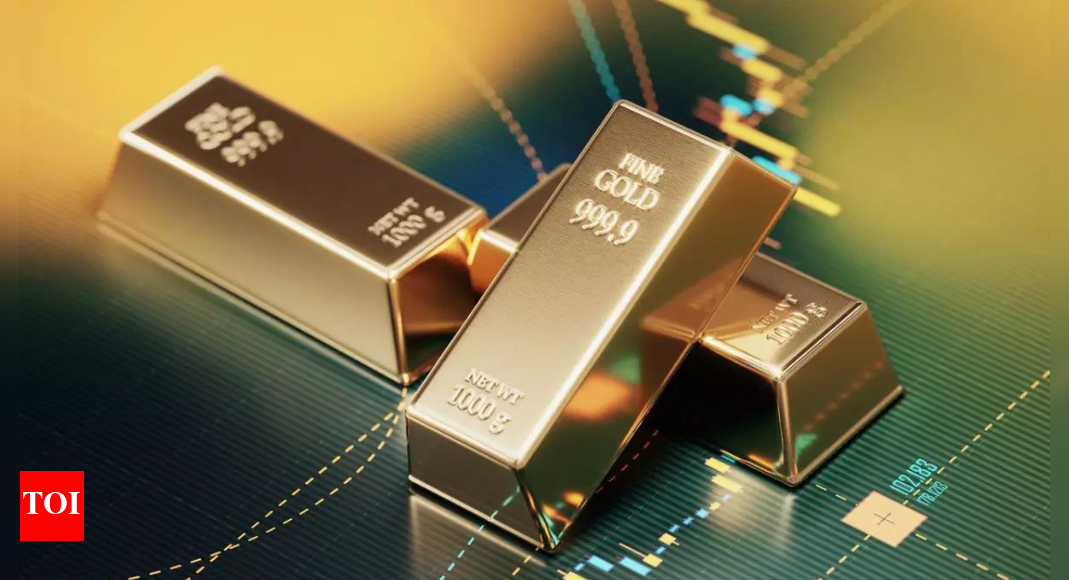
As Diwali and Dhanteras approach, gold continues to remain a preferred investment and a symbol of tradition in India. While most consumers buy gold in the form of jewellery, coins, and bars during the festive season, digital gold has been attracting attention from investors seeking convenience and systematic wealth accumulation.Digital gold allows investors to benefit from rising gold prices without holding the metal physically. Unlike jewellery, it does not carry making charges and can be purchased online with investments starting as low as Rs 10. The metal is stored in secured vaults, protecting buyers from theft, damage, or the hassles of safe storage, according to an ET report.“Digital gold feels cheaper because you can start small, even with Rs 10. But add platform spreads and GST, and the total cost often comes close to buying physical coins. The real value is convenience. For serious investors, however, Gold ETFs are a smarter alternative as they are regulated by SEBI,” said Trivesh D, COO, Tradejini.Physical gold, on the other hand, retains its charm with lustre and wearability, and its price appreciates over time. Experts, however, point out that it quietly eats into returns due to GST, making charges, and annual locker fees. “Digital gold also has costs: 3% GST and usually a fee as small as 0.3–0.4% annual fee after five years, which varies, but it is transparent and predictable. Over time, digital gold and gold ETFs often cost less unless you are buying large, high-purity coins or bars directly from trusted mints,” Trivesh added, ET quoted.When physical gold makes senseFor large investments exceeding Rs 2–3 lakh, physical gold, especially coins or bars, may be more cost-effective, factoring in per-gram platform costs of digital gold over time, said Prithviraj Kothari, Managing Director at RiddiSiddhi Bullions Ltd. and President of India Bullion and Jewellers Association Ltd. “Investors get to have the physical gold while avoiding prolonged storage fees imposed by digital options after five years. For smaller ticket sizes or systematic accumulation (Rs 100–Rs 10,000), digital gold is a great option because of fractional buying and instant liquidity,” he added.Digital gold also offers unmatched liquidity, allowing investors to buy or sell 24×7 at market-linked rates via trusted apps. “Physical gold, though tangible, involves valuation deductions, purity checks, and buyback delays. The ability to instantly redeem digital gold into cash or physical coins, often linked via UPI, has made it a preferred choice among younger and tech-savvy investors seeking flexibility,” said Aksha Kamboj, Vice President, India Bullion & Jewellers Association (IBJA) and Executive Chairperson, Aspect Global Ventures.Security is another advantage. Digital gold is stored in insured, bank-grade vaults audited by independent trustees. “You do not have to worry about theft, damage, or locker keys. Physical gold, even in a locker, carries some risk and an annual rent without full-value insurance. However, platform credibility is crucial,” said Trivesh. Reputable platforms use a custodian model to safeguard ownership even if the provider goes out of business, noted Vijay Kuppa, CEO, InCred Money.Investors can also gradually accumulate wealth through digital gold SIPs. “With the option to start from as little as Rs 10, investors can accumulate gold consistently through automated purchase plans offered by fintech platforms. Given gold’s steady appreciation in 2025, digital gold SIPs are emerging as a convenient and smart long-term savings tool,” said Aksha. Vijay added, “Digital gold perfectly supports the Systematic Investment Plan (SIP) model. Investors can set up recurring, small purchases at daily or monthly intervals. Even such a small SIP can eventually lead to an important step in generating wealth.”Over a five- to ten-year horizon, both physical and digital gold track similar price trajectories, but digital gold may deliver slightly better post-tax returns due to negligible storage costs, absence of making charges, and ease of portfolio rebalancing. “With gold prices rising rapidly in 2025 amid global uncertainty, systematic accumulation through digital platforms ensures efficiency and tax parity while avoiding the expenses associated with holding physical gold,” Aksha said.
(Disclaimer: Recommendations and views on the stock market and other asset classes given by experts are their own. These opinions do not represent the views of The Times of India)



From the UK, flights have also been cancelled for many Middle East destinations, including all flights to Israel and Bahrain, three-quarters of the day’s scheduled flights to the United Arab Emirates, and more than two-thirds (69%) of flights to Qatar.
Business
IIP sees 4.8% YoY growth in January; manufacturing & electricity support rise – The Times of India

India’s Index of Industrial Production saw a 4.8% increase year-on-year in January 2026, according to the Ministry of Statistics & Programme Implementation. The rise in industrial output was largely driven by a 4.8 per cent expansion in manufacturing and a 5.1 per cent improvement in electricity generation. Mining activity also supported overall growth, registering a 4.3 per cent uptick during the month.Estimates placed IIP at 169.4 for January 2026, compared with 161.6 in January 2025. This follows a stronger reading in December 2025, when industrial production had grown by 7.8 per cent. For January 2026, the sector-specific indices stood at 157.2 for mining, 167.2 for manufacturing and 212.1 for electricity.Within manufacturing, 14 of the 23 industry groups at the NIC two-digit level posted year-on-year gains in January. The strongest contributors were manufacture of basic metals, which rose 13.2 per cent; manufacture of motor vehicles, trailers and semi-trailers, up 10.9 per cent; and manufacture of other non-metallic mineral products, which increased 9.9 per cent. Growth in basic metals was supported by items such as flat products of alloy steel, MS slabs, and hot-rolled coils and sheets of mild steel.The automobile category advanced on the back of higher output of auto components and spare parts, commercial vehicles, and bus and minibus bodies or chassis. In the non-metallic mineral products segment, cement of all types, cement clinkers and stone chips were key contributors.According to use-based classification, output of primary goods grew 3.1 per cent, capital goods rose 4.3 per cent and intermediate goods increased 6 per cent compared with January 2025. Infrastructure and construction goods recorded the sharpest rise at 13.7 per cent, while consumer durables expanded 6.3 per cent. In contrast, consumer non-durables declined by 2.7 per cent. The ministry identified infrastructure and construction goods, intermediate goods and primary goods as the leading drivers of growth under this classification.
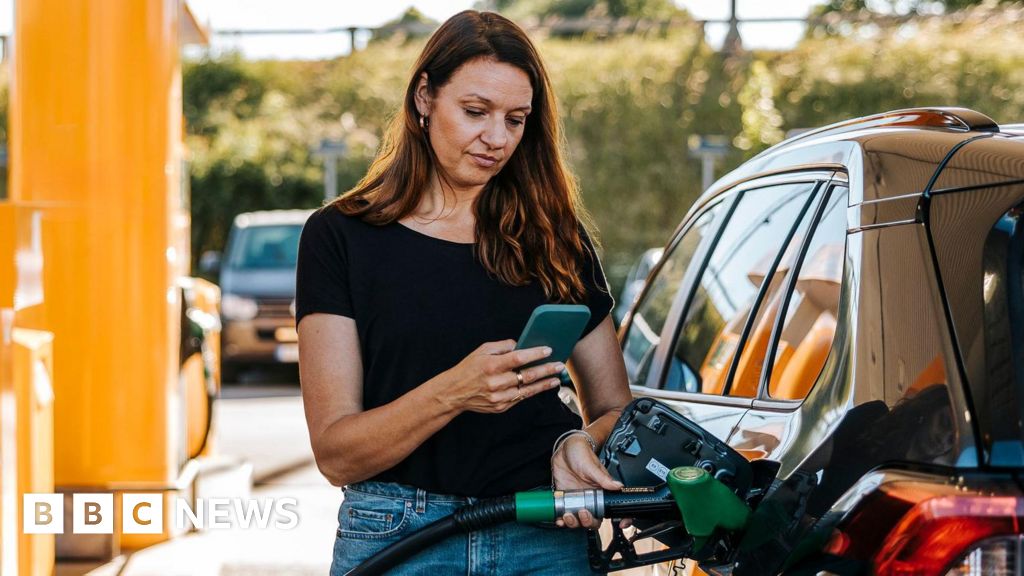
There might also be a more direct impact on food. “Some elements of crude oil are used in fertiliser, and so there could be a cost implication in terms of food prices,” Benjamin Goodwin, partner at banking advisory firm PRISM Strategic Intelligence told the BBC.

Limited flights leave UAE while disruption continues amid Iran strikes

Brad Falchuk describes impactful conversation with Eric Dane for “Famous Last Words”

Apple’s Price-Friendly iPhone 17e Gets a MagSafe Upgrade

-

 Politics1 week ago
Pakistan carries out precision strikes on seven militant hideouts in Afghanistan
-

 Tech1 week ago
These Cheap Noise-Cancelling Sony Headphones Are Even Cheaper Right Now
-

 Sports1 week ago
Kansas’ Darryn Peterson misses most of 2nd half with cramping
-

 Entertainment1 week ago
Viral monkey Punch makes IKEA toy global sensation: Here’s what it costs
-
Sports1 week ago
Mike Eruzione and the ‘Miracle on Ice’ team are looking for some company
-
 Business6 days ago
Households set for lower energy bills amid price cap shake-up
-

 Politics1 week ago
Trump says he will raise US global tariff rate from 10% to 15%, following court ruling
-

 Entertainment1 week ago
Talking minerals and megawatts