Connect with us

Business

Digital Life Certificate From Comfort Of Home For Pensioners: How To Book Doorstep Request Through India Post; Check Direct Link

Published

on

Digital Life Certificate From Comfort Of Home For Pensioners: How To Book Doorstep Request Through India Post; Check Direct Link


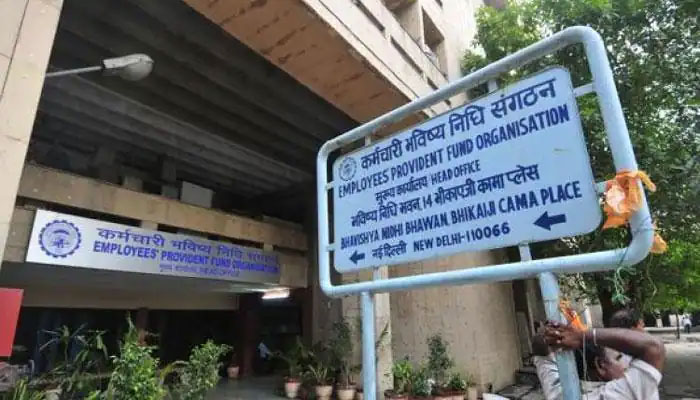
New Delhi: India Post Payments Bank (IPPB) has signed a memorandum of understanding (MoU) with Employees’ Provident Fund Organisation (EPFO), to provide doorstep Digital Life Certificate (DLC) services to its pensioners under the Employees’ Pension Scheme, 1995. 

Under this collaboration, IPPB — a 100 per cent government-owned entity under the Department of Posts — will leverage its wide network of over 1.65 lakh post offices and more than 3 lakh postal service providers (postmen and Gramin Dak Sevaks).

Digital Life Certificate For Free

Add Zee News as a Preferred Source


EPFO will bear the cost of issuing Digital Life Certificate entirely, making the service free for their pensioners.

They are equipped with doorstep banking devices and digital process of face authentication technology and fingerprint biometric authentication, to assist EPFO pensioners in submitting their Digital Life Certificates conveniently from their homes, eliminating the need for them to visit bank branches or EPFO offices to submit traditional paper-based certificates.


Digital Life Certificate: How To Book Doorstep Request Online

Doorstep request for Digital Life Certificate can be made through the Post Info app or website.

You can visit https://ccc.cept.gov.in/ServiceRequest/request.aspx to book India Post doorstep request for Digital Life Certificate


India Post Payments Bank introduced the doorstep service of Digital Life Certificate in 2020 for generating Jeevan Pramaan for pensioners using Aadhaar-enabled biometric authentication to reduce the turnaround time for issuance of Jeevan Pramaan.

On completion of the certificate generation process, confirmation SMS will be received by the pensioner in his mobile number and the certificate can be viewed online the next day.



Source link

Business

Why more people are now buying Christmas presents in the Boxing Day sales

Published

on

Why more people are now buying Christmas presents in the Boxing Day sales


While the pre-Christmas shopping frenzy peaks, 25 per cent of festive shoppers will delay buying some gifts until after Christmas Day, a survey has revealed.

This trend is largely due to the cost of living crisis, with many seeking savings in post-Christmas sales.

Two-fifths (41 per cent) of those surveyed for cashback website Rakuten see sales as a good way to economise.

Additionally, a third (32 per cent) believe money saved by delaying purchases justifies changing the tradition of opening gifts on Christmas Day. Men, the research notes, are more likely than women to postpone gift buying until after the festive period.

The survey indicated that shoppers expect to spend £163 on average in the Boxing Day sales.

The cost of living crisis is behind many people buying Christmas presents in the sales (Getty/iStock)

The research also found that, apart from the financial savings, there were other advantages to leaving some gift-buying until after Christmas Day.

Some people hold off to avoid pre-Christmas stress and crowds, and some believe that buying gifts after Christmas Day helps to extend the festive atmosphere into the new year.

The survey also indicated that many gift recipients will not mind waiting until after 25 December to find something under the Christmas tree with their name on it.

For more than half (52 per cent) of those who celebrate Christmas, receiving a gift after Christmas Day is not a problem, according to the survey of 2,000 people across the UK carried out by OnePoll in October.

Rakuten’s savings expert, Bola Sol, said: “With prices slashed and discounts galore, waiting a few extra days can mean big savings. It’s a great way to stretch the present budget, especially for those who aren’t too fussy about receiving or giving gifts on Christmas Day.”

She suggested setting a Boxing Day sales budget, comparing prices, and combining gift budgets with friends and family members to give a more meaningful gift without overspending.


Source link

Continue Reading

Business

What are the ‘hidden charges’ on forex transactions: RBI issues draft rules on charges; what could change? – The Times of India

Published

on

What are the ‘hidden charges’ on forex transactions: RBI issues draft rules on charges; what could change? – The Times of India


Reserve Bank of India (ANI image)

The Reserve Bank of India (RBI) has issued a draft proposal aimed at making cross-border payments more transparent and consumer-friendly. With this, the bank aims to address long-standing complaints about hidden charges and unclear pricing in foreign exchange transactions.A large number of individuals face difficulties while making overseas payments for education, living expenses, travel, investments or remittances, mainly due to complex processes and high service costs.In many cases, customers only discover the true cost of a transaction after it has been completed. This includes charges such as fees, margins and intermediary costs that are either bundled into exchange rates or deducted later without a clear explanation.To address these issues, the RBI has proposed new regulations that would require banks and other authorised dealers to disclose the total cost of foreign exchange transactions upfront, before a customer agrees to the deal. The move is intended to help customers compare charges across service providers and make more informed decisions, according to ET.

What the RBI has proposed

Under the draft circular, authorised dealers such as commercial banks and certain financial institutions will be required to clearly communicate all transaction-related costs in advance. This includes commonly used foreign exchange transactions such as:

  • Foreign exchange cash (T+0): Same-day currency exchange
  • Tom (T+1): Settlement on the next business day
  • Spot (T+2): Settlement within two business days

The disclosure requirement will cover both foreign exchange transactions and related derivative contracts used by retail customers.The RBI observed that a similar step was taken in January 2024, when authorised dealers were mandated to disclose mid-market rates for forex and foreign currency interest rate derivatives. The new proposal builds on a similar framework by extending transparency to the full cost structure of transactions.What counts as “total transaction cost”Before entering into a foreign exchange transaction, authorised dealers will now have to provide a complete breakdown of costs. According to Hemal Shah, Partner and Leader – Treasury and Commodity Advisory, Risk Consulting, EY India, this would include:

  • The foreign exchange rate applied
  • Currency conversion charges
  • Sending or outward remittance fees
  • Receiving fees, if applicable
  • Charges levied by intermediary or correspondent banks
  • Any other fee linked to executing the transaction

Importantly, these details must not only be shared upfront but also included in the final deal confirmation, allowing customers to verify what they were quoted against what they were ultimately charged.Once finalised, the instructions will be applicable within three months from the date of issuance.

Problems faced by retail users

Retail customers have long flagged that international transfers feel far more expensive and opaque than domestic payments. Often, customers are shown only an exchange rate, while additional costs such as remittance fees, FX margins, SWIFT charges and intermediary bank deductions are revealed only later.Experts point out that banks frequently embed margins and multiple fees into a single quoted rate, making it difficult for customers to understand the actual pricing. Charges on the recipient side, such as correspondent bank fees or instances where beneficiaries bear costs instead of remitters, have also added to confusion, particularly for exporters.Another major concern is the lack of transparency around correspondent bank fees, which can vary significantly depending on routing and overseas banking arrangements. While banks often describe these as outside their control, the RBI has flagged this as a key area where disclosure standards need improvement.

How customers will benefit

By mandating upfront disclosure, the RBI aims to give retail users a clearer picture of the true cost of cross-border transactions. This will help customers better understand pricing mechanisms, dealer margins, and the differences between various forex products.“Enhanced visibility on the hidden charges allows retail users to make better decisions on the pricing offered by ADs,” said Shah.Vijay Mani, Partner and Banking and Capital Markets Leader at Deloitte India, added that the move can significantly improve trust and comparability, provided the disclosures are implemented in a clear and customer-friendly manner.The RBI has invited public comments on the draft circular. Feedback can be submitted until January 9, 2026, after which the central bank will review responses before issuing final guidelines.

Who do the rules apply to?

Authorised Dealers under RBI regulations include Authorised Dealer Category-I banks and Standalone Primary Dealers authorised under Category-III to conduct foreign exchange transactions.Customers are classified as retail or non-retail for the purpose of these rules. Non-retail users include large financial institutions, NBFCs, insurance companies, mutual funds, alternative investment funds and Indian entities with a net worth of Rs 500 crore or more or a turnover of Rs 1,000 crore or more. Non-residents, other than individuals, are also treated as non-retail users.Any customer who does not fall into these categories is considered a retail user and will directly benefit from the proposed transparency measures.


Source link

Continue Reading

Business

Will Budget 2026 Bring Back Train Ticket Discounts For Senior Citizens?

Published

on

Will Budget 2026 Bring Back Train Ticket Discounts For Senior Citizens?


Last Updated:

As Budget 2026 approaches, elderly passengers are hopeful that a long-withheld relief might finally return.

img

Stay Ahead, Read Faster

Scan the QR code to download the News18 app and enjoy a seamless news experience anytime, anywhere.

QR Code

Next Photogallery


Source link

Continue Reading

Trending