

Sports
Dolphins appear done with Tua Tagovailoa. But his contract complicates things.

With Miami eliminated from playoff contention, Coach Mike McDaniel is benching Tagovailoa in favor of seventh-round rookie Quinn Ewers this week.
Source link
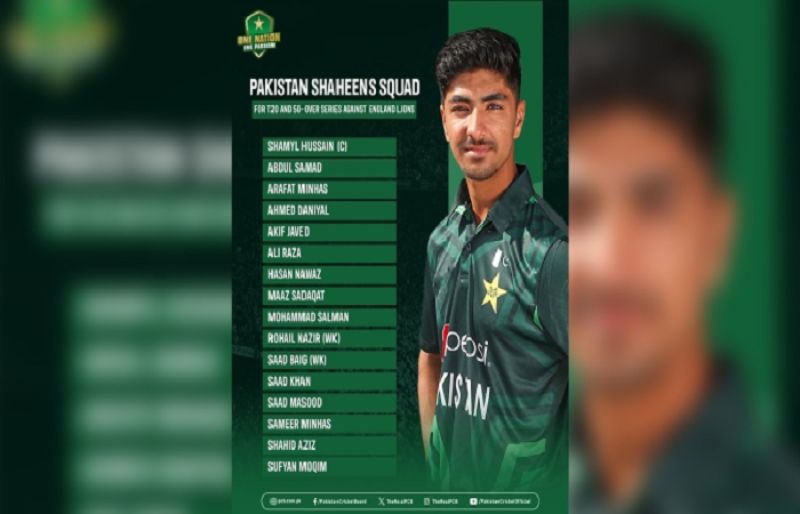
Pakistan Shaheens have announced their squad for the upcoming T20 and ODI series against England Lions to be played in the United Arab Emirates, with Shamil Hussain named captain for both formats.
All matches of the series will be held at the Oval Stadium in Abu Dhabi.
The three-match T20 series will begin on February 20, followed by a five-match ODI series from February 27 to March 9.
Abdul Samad, Hassan Nawaz, Moaz Sadaqat and Saad Khan have been included in the squad, along with Sameer Minhas and Arafat Minhas.
Rohail Nazir and Saad Baig will share wicketkeeping duties.
Spin bowlers Saad Masood and Sufyan Muqim are also part of the team, while the fast bowling unit includes Ali Raza, Ahmed Daniyal, Akif Javed, Muhammad Salman and Shahid Aziz.
Pakistan Shaheens will hold a seven-day training camp in Karachi from February 11 to February 17.
Former captain Sarfaraz Ahmed has been appointed mentor and manager of the Shaheens.
Ijaz Ahmed will serve as head coach, with Mansoor Amjad named fielding coach and Aizaz Cheema as bowling coach.
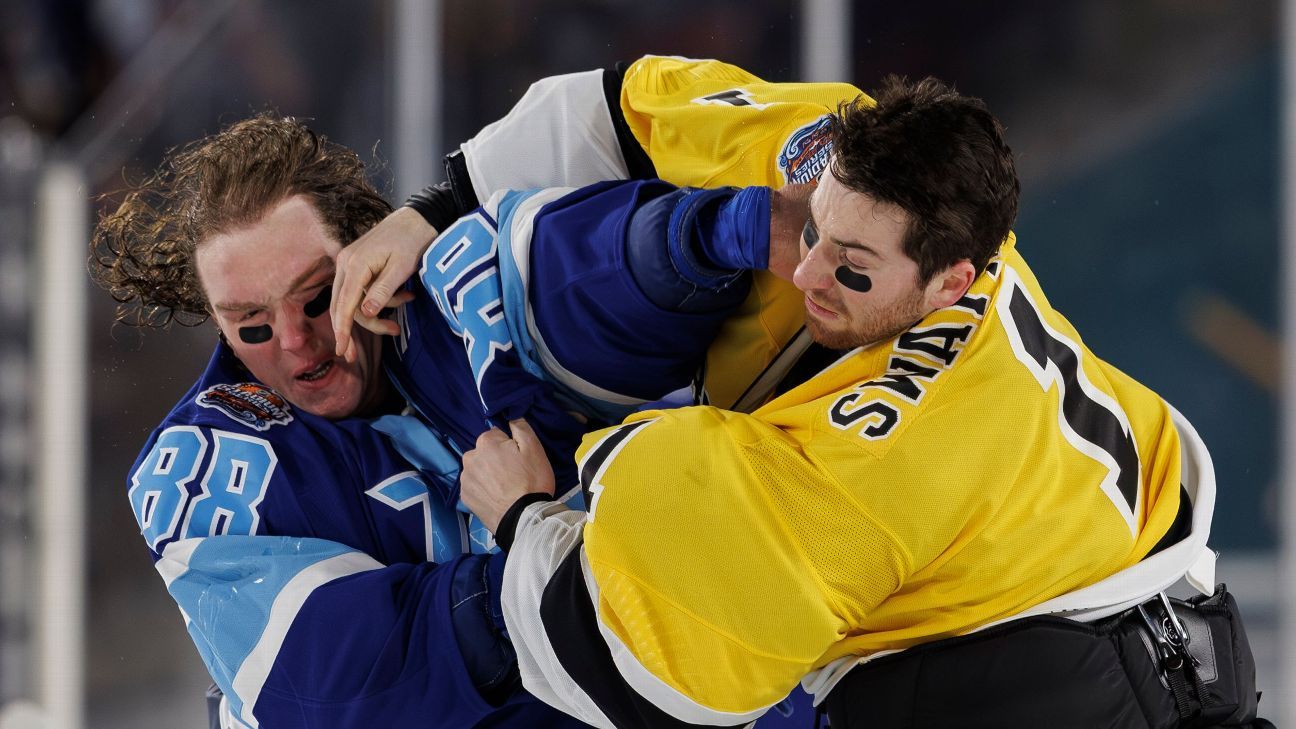
TAMPA, Fla. — The Tampa Bay Lightning credited the first goalie fight in an NHL outdoor game for helping to spark their historic Stadium Series comeback win over the Boston Bruins on Sunday.
With 8:59 left in the second period and the Bruins leading 5-2, Lightning forward Brandon Hagel tried to poke the puck from under Bruins goalie Jeremy Swayman after a save. Swayman then jumped on top of Hagel next to his crease, leading to a melee between the teams while the Lightning were on a power play. Tampa Bay goalie Andrei Vasilevskiy skated from his crease to the opposite blue line during the chaos.
“I just saw Sway was swinging the blocker on [Hagel] a bit, so it was just a reflex to go to the red line and challenge him. He accepted,” Vasilevskiy said.
Swayman spotted the Tampa Bay goalie, dropped his stick and skated out to meet Vasilevskiy as the two engaged near center ice. Swayman took off his gloves and mask and signaled to Vasilevskiy to remember to remove his mask before the fists flew.
“I don’t want to hit his helmet, so I’m glad we didn’t do that,” Swayman said.
The Lightning goalie nicknamed “The Big Cat” grabbed Swayman’s collar and started throwing left hands. The Boston goalie wasn’t able to get much offense in before Vasilevskiy wrestled him to the ice.
Did Swayman know that Vasilevskiy was a lefty before their fight?
“No,” the Bruins goalie said curtly, with a laugh. “Glad we both had our first gig against each other. Really worthy opponent.”
Vasilevskiy gave him a tap on the back and then tapped the back of Swayman’s head in appreciation of the moment, grinning widely as the fans roared inside Raymond James Stadium.
“When we both fell, we just kind of said to each other nice words. It was super nice. It’s one of the biggest moments for me, because I never fought in the NHL,” Vasilevskiy said. “Big thanks to him. He was great in the net all game and great in the fight as well.”
Swayman was also appreciative.
“He wanted to win, which is good. So did I. So that’s game respecting game,” he said. “I’m fighting the biggest, toughest goalie in the league. It wouldn’t be my first choice, but glad we got the first one out of the way. Probably retire after that.”
The crowd of nearly 65,000 fans stood and cheered during the confrontation, and then again when the referee announced the goalies had both received five-minute majors for fighting. Players on both benches were on their feet, too, slapping their sticks against the boards in appreciation and respect for their netminders.
“He was throwing lefts. I was like, ‘Oh my God.’ I didn’t want to be the other guy,” Lightning winger Nikita Kucherov said. “I was so happy. I was so fired up. I think the bench felt it. Everyone in the building felt it. Ever since that fight, the game was turned. Vasy had to do it, I guess. He had to wake us up.”
The Lightning would score twice on 5-on-3 power plays over the next 5:12, cutting the Bruins’ lead to 5-4 heading into the third period. Kucherov tied the score in the third period, and the Lightning eventually won 6-5 in a shootout.
Tampa Bay’s rally from a four-goal deficit to win marked the largest comeback victory in franchise history and the largest in an NHL outdoor game.
Lightning coach Jon Cooper said he could feel the momentum starting to swing before the fight, but the goalie throwdown was an emotional high the Lightning needed at that moment.
“I was like, ‘Thank goodness something positive was going to happen to our game,'” he said. “I give Boston a lot of credit. They took it to us and we weren’t prepared for it. Vasy was pissed.”
Hagel said he felt the fight was “a big turning point in the game.”
So did Kucherov, who was also convinced that his goalie would win the fight.
“I knew he was going to beat the wheels off of Swayman right away,” Kucherov said. “We call him ‘White Tyson’ now.”
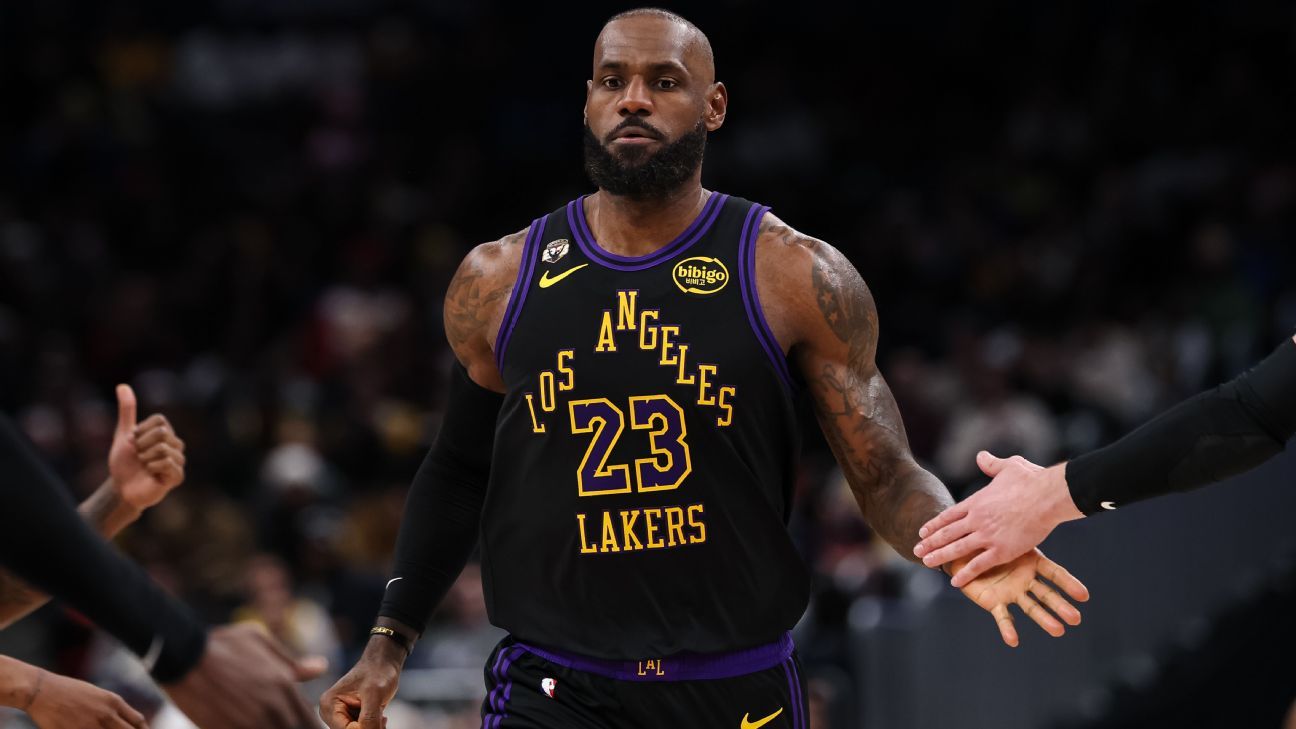
NEW YORK — For a 22nd straight year, LeBron James is an All-Star.
The NBA announced its reserves for the Feb. 15 midseason showcase Sunday night on NBC before James and his Los Angeles Lakers faced the New York Knicks at Madison Square Garden. Voting was conducted by the league’s coaches over the past week.
James, 41, was the last player announced, as the league’s oldest player extended his record for both overall and consecutive selections by another season.
“Super humbling,” James said Sunday night, after the Lakers lost to the Knicks 112-100. “The coaches voted, right, so mad respect to the coaches and them seeing the way I’m still playing at this latter stage of my career.
“And to be able to be an All-Star means a lot to my family, people that have been following my career, my LeBron faithful. They’ve been following my journey and it’s always rewarding just from a humbling standpoint to be able to be rewarded for what you put your work into.”
James did not play in last season’s All-Star event because of injury.
“You think about a star player, their prime is their All-NBA, All-Star years,” Lakers coach JJ Redick said. “And you know, he’s basically had a 20-plus-year prime. It’s kind of unheard of. It is unheard of, uncharted, whatever you want to call it. I mean, it’s incredible. It’s a testament to the work that he puts in.”
James was joined on the court Sunday by three other All-Stars: starters Luka Doncic and Jalen Brunson, and fellow reserve selection Karl-Anthony Towns.
“Of course he deserves it,” teammate Doncic said of James. “He’s playing at a top level still at that age. It’s incredible to share the floor with him.”
The reserves named with James were led by Houston Rockets forward Kevin Durant, whose 16th All-Star selection is fourth most of all time — breaking a tie with Hall of Famers Tim Duncan and Kevin Garnett and putting him behind only Kobe Bryant (18), Kareem Abdul-Jabbar (19) and James.
Joining James and Durant as Western Conference reserve selections included a trio of first-time participants — Denver Nuggets guard Jamal Murray, Oklahoma City Thunder forward Chet Holmgren and Portland Trail Blazers forward Deni Avdija — plus Minnesota Timberwolves guard Anthony Edwards (fourth) and Phoenix Suns guard Devin Booker (fifth).
“Multiple 50-point games, multiple 50-point games in the playoffs, let’s see, triple-double in the finals, NBA champion, most wins in the West over the last 10 years, he’s the point guard of that team … in my mind, all those things make sense, except for the one that was missing,” Nuggets coach David Adelman said of Murray.
In the Eastern Conference, Towns — making his sixth All-Star team — was joined by Cleveland Cavaliers guard Donovan Mitchell (seventh), Indiana Pacers forward Pascal Siakam (fourth), Toronto Raptors forward Scottie Barnes (second) and a trio of first-time picks: Detroit Pistons center Jalen Duren, Miami Heat guard Norman Powell and Atlanta Hawks forward Jalen Johnson.
“I believe that he deserves it, and I think probably one of the best compliments you can give him is the fact that he starred in all of his roles that he’s had in his career, and he just continues to get better,” Heat coach Erik Spoelstra said of Powell. “He’s having his best years now after the age of 30.”
Under the NBA’s latest format change for the event — U.S. vs. the World — the 24 All-Star participants will be divided into three eight-player rosters — two featuring Americans, with the third made up of international players. They will each play two 12-minute games, with the two teams with the best record — or the two with the best point differential if they all go 1-1 — facing each other in the championship game.
The All-Star Game will take place at the LA Clippers‘ arena (Intuit Dome) in Inglewood, California. The Clippers were notably absent from Sunday’s announcement; despite going 16-4 over their past 20 games to partially erase a brutal start to the season, the team didn’t have any of its players selected for this year’s event.
Either Clippers star Kawhi Leonard — who since Dec. 20 has led the league in scoring and steals — or Rockets center Alperen Sengun is probably the best candidate to replace Milwaukee‘s Giannis Antetokounmpo, who will sit out the game because of a calf injury. NBA commissioner Adam Silver will pick a replacement for Antetokounmpo, plus any additional players should the need arise.
Other players chosen last month as starters were: Boston‘s Jaylen Brown, Detroit’s Cade Cunningham, Philadelphia‘s Tyrese Maxey, Golden State‘s Stephen Curry, Oklahoma City’s Shai Gilgeous-Alexander, Denver’s Nikola Jokic and San Antonio‘s Victor Wembanyama.
Detroit’s J.B. Bickerstaff will coach one of the All-Star teams. Either San Antonio’s Mitch Johnson or Adelman will coach another — that will be decided by results of games Sunday — and the NBA has not announced how the coach of the third team will be decided.
Bickerstaff earned his nod because the Pistons lead the Eastern Conference. Johnson or Adelman will go by having the best record in the Western Conference among eligible coaches; Oklahoma City’s Mark Daigneault coaches the team with the West’s best record, but he cannot coach the All-Star Game this year because he coached at the event last season.
The Associated Press contributed to this report.


Canada could lift GDP 7% by easing internal trade barriers

Investors suffer a big blow, Bitcoin price suddenly drops – SUCH TV
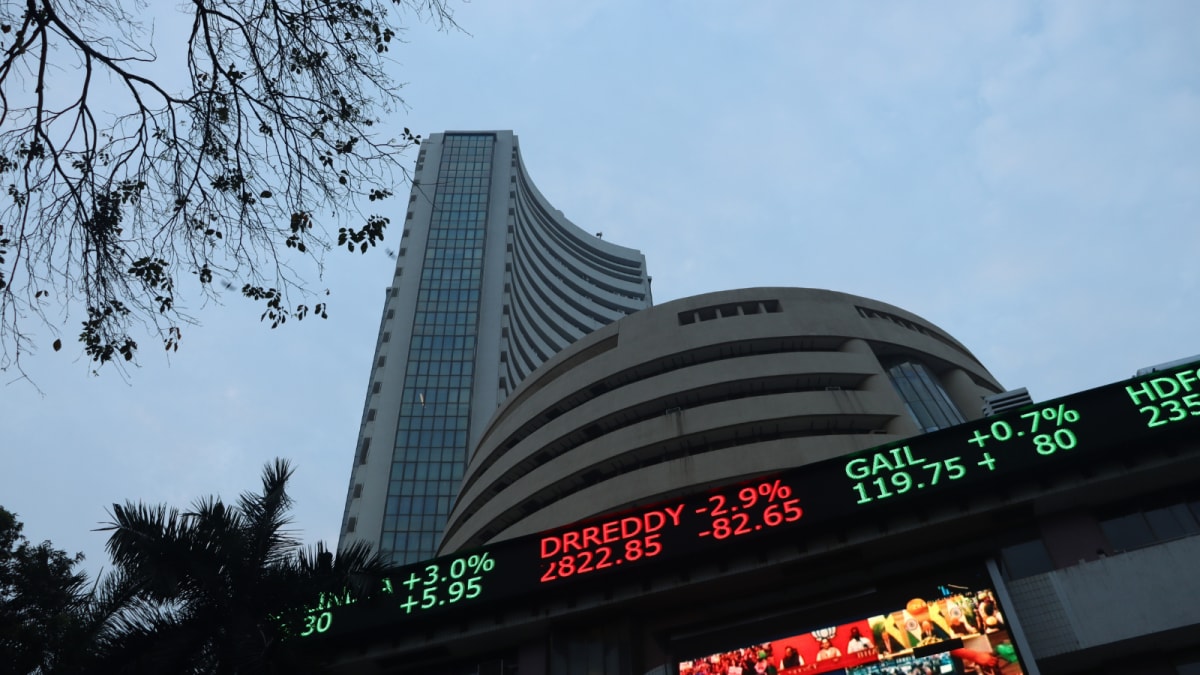
Post-Budget Session: Bulls Push Sensex Up By Over 900 Points, Nifty Reclaims 25,000

-
 Sports6 days ago
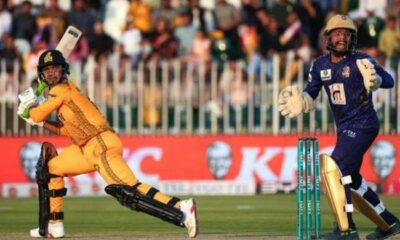
PSL 11: Local players’ category renewals unveiled ahead of auction
-
 Entertainment5 days ago
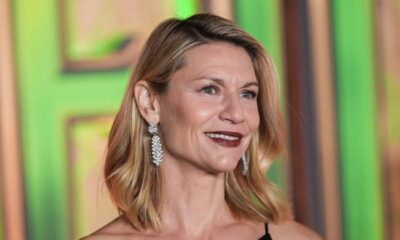
Claire Danes reveals how she reacted to pregnancy at 44
-

 Tech1 week ago
ICE Asks Companies About ‘Ad Tech and Big Data’ Tools It Could Use in Investigations
-
 Business6 days ago
Banking services disrupted as bank employees go on nationwide strike demanding five-day work week
-

 Fashion1 week ago
Spain’s apparel imports up 7.10% in Jan-Oct as sourcing realigns
-
 Sports6 days ago
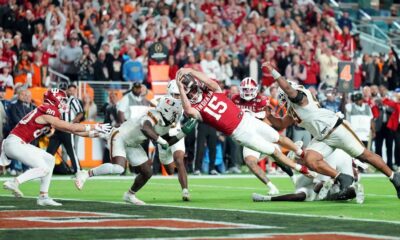
College football’s top 100 games of the 2025 season
-

 Politics1 week ago
Fresh protests after man shot dead in Minneapolis operation
-

 Entertainment1 week ago
Natasha Lyonne fails at sobriety after 20 years