

Business
Dr Reddys, Titan & more: Top stocks to buy on December 3 — Check list – The Times of India


HSBC has a buy on Dr Reddys Labs with the target price at Rs 1,430. Analysts said that the semaglutide opportunity is intact for Dr Reddy’s in Canada, and it has replied to Health Canada’s queries on its application. GLP-1 drugs class remains the company’s focus segment and it is making progress in long-term drivers like biosimilars. Health Canada approval for generic semaglutide will be a key catalyst for the stock.Goldman Sachs has a buy on Titan with the target price at Rs 4,500. Analysts said the company expects a 15-20% growth in its jewellery business in the medium term. The company is maintaining jewellery margins despite headwinds. Its consolidated earnings before interest and taxes (EBIT) growth is ahead of standalone jewellery EBIT growth, driven by the strong trajectory of Caratlane, watches and other businesses. Titan’s eyewear business is strong in the premium segment and it is exploring how to address the mass market opportunity.Bernstein has and outperform rating on Trent with the target price cut to Rs 5,000. Analysts said they believe that the company’s revenue growth now is at a bottom. From here on the key drivers of recovery are like-for-like for split stores turns positive with base effect, about 20% compounded annual growth rate in Zudio network for three years, improved consumer demand cycle and growth in Westside business. On the other hand the key risk remains the competitive upsurge (more stores and replicating Zudio’s fashion sense and demand pull).CLSA has an outperform rating on Power Grid Corp with the target price at Rs 342. Analysts said that the company’s entry into the battery energy storage systems (BESS) should be a positive surprise with it emerging as a preferred bidder for a 150MW project. The company’s strategy of entering adjacencies such as BESS inside a transmission substation as it is likely to win the BESS concession at 11% above the price of lowest bid. They expect the company to scale-up its BESS portfolio to multi-GW with its competitive advantage of a 100 basis points (= 1 percentage point) lower interest rate versus private competitors.Macquarie has an outperform rating on ITC with the target price at Rs 480. Analysts said that the govt is proposing a new cess on cigarettes, which is likely to replace the compensation cess. This new levy increases uncertainty on taxation for the players, analysts said. In turn this could involve a transition period for things to adapt and normalise to any new system.(Disclaimer: Recommendations and views on the stock market, other asset classes or personal finance management tips given by experts are their own. These opinions do not represent the views of The Times of India)





The logo for the Food and Drug Administration is seen ahead of a news conference at the Health and Human Services Headquarters in Washington, April 22, 2025.
Nathan Posner | Anadolu | Getty Images
A key U.S. Food and Drug Administration official who oversees vaccines and biotech treatments will step down from the agency following multiple decisions that raised concerns within the industry.
Vinay Prasad, director of the Center for Biologics Evaluation and Research, will leave the FDA at the end of April, an agency spokesperson confirmed on Friday. It is his second departure from the position: He briefly left the post in July following backlash over his regulatory decisions, and returned only two weeks later in August.
In a post on X, FDA Commissioner Marty Makary said the FDA will appoint a successor before Prasad returns next month to the University of California San Francisco, where he taught before taking the FDA position last year. Makary said Prasad “got a tremendous amount accomplished” during his tenure at the agency.
Prasad’s decision to step down comes after criticism of the FDA mounted within the biotech and pharmaceutical industry and among former health officials. In the past year, the agency has denied or discouraged the approval applications of at least eight drugs, according to RTW Investments, after taking issue with data the companies used to support their applications. The FDA also initially refused to review Moderna’s flu shot before it later reversed course.
All of those companies accused the FDA of reversing previous guidance about the evidence they could use to back their applications, sparking criticism within the industry that an unreliable regulatory process could stifle development of drugs for hard-to-treat diseases.
A former FDA official who spoke to CNBC on the condition of anonymity to speak freely on the issue called the reversals the worst kind of regulatory uncertainty because companies say they are being told one thing and then experience another.
In a statement earlier Friday, an FDA spokesperson said there was “no regulatory uncertainty,” adding the agency “makes decisions based on the evidence, but does not make assurances about outcomes.” The spokesperson said the FDA is “conducting rigorous, independent reviews and not rubber-stamping approvals.”
The most recent controversy came after the FDA discouraged UniQure from applying for expedited approval of its experimental treatment for Huntington’s disease.
The agency, which underwent staff cuts and an overhaul under Health and Human Services Secretary Robert F. Kennedy Jr., has faced broader backlash for its drug and vaccine approvals process. Critics have worried the agency could stifle the development of new treatments and risk the safety of patients.
The Wall Street Journal earlier reported Prasad’s departure.
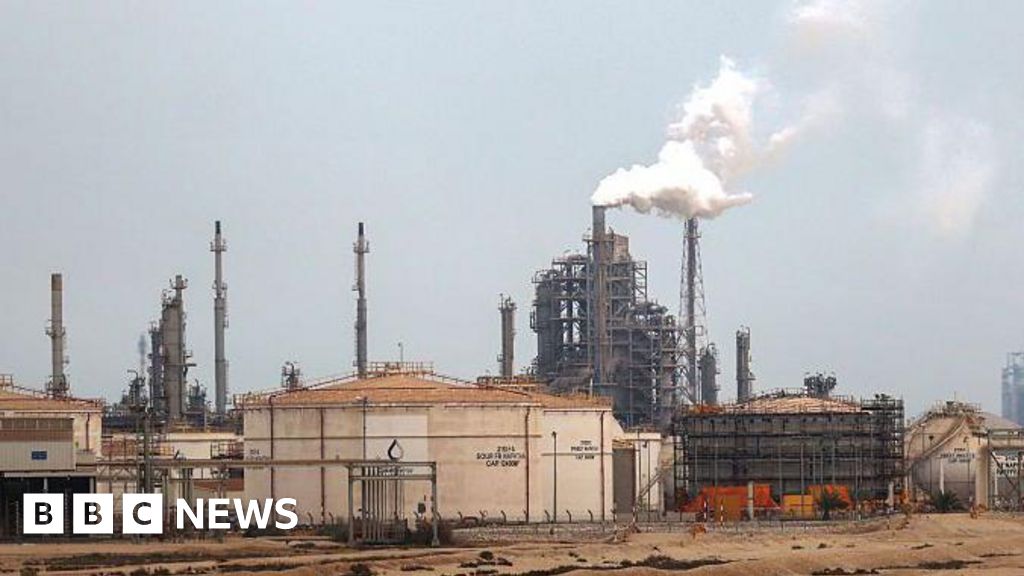
Energy Minister Saad al-Kaabi says oil could hit $150 a barrel if the Iran conflict continues over the coming weeks.
Source link

The federal government has raised petrol prices by Rs55 per litre as surging global oil prices, fuelled by the US‑Israel war with Iran, put pressure on domestic energy costs.
The announcement was made by Petroleum Minister Ali Pervaiz Malik in a press conference alongside DPM Ishar Dar and Finance Minister Muhammad Aurangzeb.
This marks the first weekly review of fuel prices since regional tensions threatened a major share of global energy flows following the closure of the Strait of Hormuz.
Previously, the federal government adjusted petroleum prices on a fortnightly basis.


Winners and losers of the 2026 NHL trade deadline

Ben Stiller condemns use of ‘Tropic Thunder’ clip in political video

Spain, France lead World Cup 2026 Power Rankings, 100 days out

Attock Cement’s acquisition approved | The Express Tribune

India Us Trade Deal: Fresh look at India-US trade deal? May be ‘rebalanced’ if circumstances change, says Piyush Goyal – The Times of India

Policy easing drives Argentina’s garment import surge in 2025

-
Business1 week ago
Attock Cement’s acquisition approved | The Express Tribune
-
 Fashion1 week ago
Policy easing drives Argentina’s garment import surge in 2025
-
Business1 week ago
India Us Trade Deal: Fresh look at India-US trade deal? May be ‘rebalanced’ if circumstances change, says Piyush Goyal – The Times of India
-

 Politics1 week ago
US arrests ex-Air Force pilot for ‘training’ Chinese military
-

 Sports1 week ago
Sri Lanka’s Shanaka says constant criticism has affected players’ mental health
-

 Entertainment1 week ago
Bobby J. Brown, “The Wire” and “Law & Order: SUV” actor, dies of smoke inhalation after reported fire
-

 Sports1 week ago
LPGA legend shares her feelings about US women’s Olympic wins: ‘Gets me really emotional’
-

 Fashion7 days ago
South Korea’s Misto Holdings completes planned leadership transition