

Politics
Dubai to launch floating arts museum

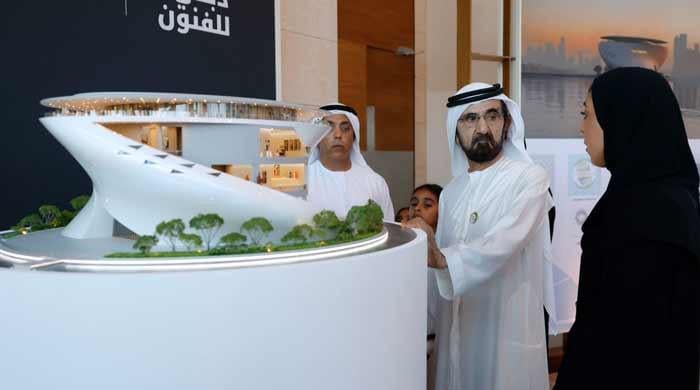

DUBAI: The city of superlatives is preparing to add another landmark to its skyline — one that will quite literally float.
The Dubai Arts Museum (DUMA), announced by Sheikh Mohammed bin Rashid Al Maktoum, vice president and prime minister of the UAE and ruler of Dubai, is set to rise on an island in the heart of Dubai Creek.
Unlike conventional museums anchored on land, DUMA’s design incorporates the waters of the creek into its architectural identity. The museum, conceived by world-renowned Japanese architect Tadao Ando, aims to merge minimalist modernism with Dubai’s vibrant cultural narrative.
Sheikh Mohammed described the project as “a mirror of Dubai’s artistic identity and cultural spirit,” emphasising its role in shaping the city’s creative ecosystem.
By floating on the creek, DUMA is not just a museum, but a symbolic statement of Dubai’s ambition to redefine how art interacts with urban space.
The project is being delivered in partnership with Emirati businessman Abdullah Al Futtaim and his son Omar Al Futtaim, highlighting a collaboration between the public and private sectors.
Sheikh Mohammed described their involvement as “a bright example of how private enterprise can contribute meaningfully to the city’s cultural and creative economy.”
Officials indicate that DUMA will host a mix of contemporary and classical art, while its architecture will allow the museum to function as a public space, promenade, and cultural hub, providing residents and visitors with a unique vantage point of Dubai Creek.
Construction is expected to begin later this year, with completion projected within three years.
- State Department says removal of ambassadors is standard.
- Foreign service association calls it “institutional sabotage”.
- Lawmaker says move damages US leadership.
The Trump administration is recalling nearly 30 ambassadors and other senior career diplomats to ensure embassies reflect its “America First” priorities, a move critics said would weaken US credibility abroad.
The State Department declined to provide a list of the diplomats being recalled. A senior department official said on Monday the move was “a standard process in any administration”, but critics said that was not so.
“An ambassador is a personal representative of the president, and it is the president’s right to ensure that he has individuals in these countries who advance the America First agenda,” said the official, who spoke on condition of anonymity.
Nearly 30 senior diplomats were among those ordered back to Washington, people familiar with the matter said.
They were posted to smaller countries where the top US representative has traditionally been from the Foreign Service, which is made up of career officials not aligned with a political party, the people said.
The recalled diplomats were encouraged to find new roles in the State Department, a second US official said.
The American Foreign Service Association, representing foreign service officers, said it was working to confirm which members were recalled after some reported being notified by phone with no explanation — a process its spokesperson called “highly irregular.”
“Abrupt, unexplained recalls reflect the same pattern of institutional sabotage and politicisation our survey data shows is already harming morale, effectiveness, and US credibility abroad,” spokesperson Nikki Gamer said in an email.
The State Department declined to respond to Gamer’s comments.
Trump has sought to place loyalists in senior roles since starting his second term after encountering resistance during his first term, advancing his foreign policy priorities within the US national security establishment.
Jeanne Shaheen, ranking Democrat on the US Senate Committee on Foreign Relations, assailed the Republican administration’s removal of the diplomats while about 80 ambassadorial posts remain vacant.
“President Trump is giving away US leadership to China and Russia by removing qualified career Ambassadors who serve faithfully no matter who’s in power,” Shaheen posted on X. “This makes America less safe, less strong and less prosperous.”
- Agartala assistant mission services also halted.
- Suspension remains until further official notice.
- Dhaka says closures due to “unavoidable circumstances”.
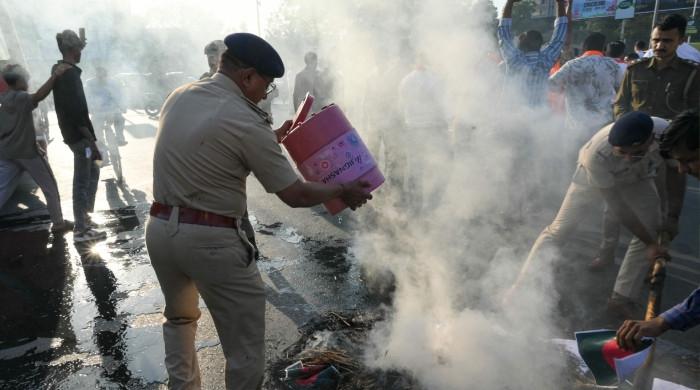
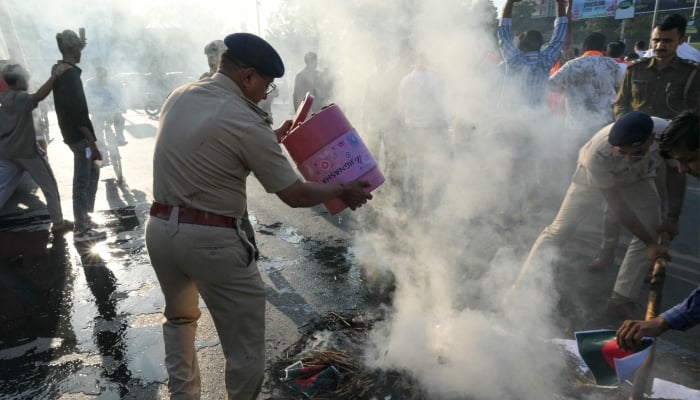
Bangladesh has suspended consular services and visa operations at its High Commission in India’s New Delhi, following a protest which Dhaka described as “unjustifiable” and “highly regrettable”.
In addition to suspending services at its High Commission in New Delhi, Bangladesh has also stopped consular services at the Assistant High Commission in Agartala, according to Bangladesh’s Dhaka Tribune.
The services will remain suspended until further notice by the Bangladeshi officials, the publication reported.
India’s ANI also reported a formal notice posted at the High Commission in Delhi regarding the closure.
“Due to unavoidable circumstances, all consular and visa services at the Bangladesh High Commission in New Delhi have been temporarily suspended until further notice,” the publication quoted the notice as saying.
The closure of the consular services comes following a protest held outside the Bangladesh HC under the banner of “Akhand Hindu Rashtra Sena”, which New Delhi said was against the killing of Dipu Chandra Das and for the protection of minorities in Bangladesh.
Das, a garment factory worker, was beaten to death on December 18 in Bangladesh’s Mymensingh, on allegations of blasphemy, after which his body was also set ablaze, reported Prothom Alo.
Bangladesh’s Ministry of Foreign Affairs rejected India’s explanation, saying that the protest cannot be labelled “misleading propaganda”.
“The miscreants were allowed to carry out their activities right outside the perimeters of the HC, creating panic among the personnel inside the complex,” said Bangladesh’s foreign office.
Relations between the two nations worsened after the killing of prominent Bangladeshi student leader Sharif Osman Hadi.
Hadi, 32, was shot in the head by masked assailants in Dhaka while launching his campaign for the elections. He was a spokesperson for the Inquilab Mancha, or Platform for Revolution, and participated in the protests that overthrew Hasina.
Following his death, mobs attacked the Indian Assistant High Commission in Chittagong, as well as setting fire to multiple newspapers’ outlets in Dhaka, accusing them of favouring India, where Bangladesh’s ousted PM Sheikh Hasina has taken refuge since fleeing Dhaka in the wake of the 2024 uprising.
- Iran’s defence capabilities designed to deter aggressors: official.
- Israel expresses concern over Iran’s missile production: report.
- Israel seeks to attack it again to curtail those efforts, says report.
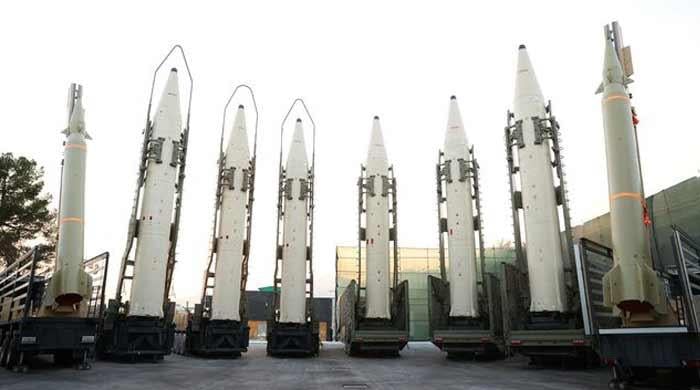
Iran insisted on Monday that its missile programme was defensive in nature and designed to dissuade attack, while adding that the existence of its arsenal was not up for debate.
Israel had presented Iran’s ballistic missiles, along with its nuclear programme, as the two main threats it sought to neutralise during the 12-day war the foes fought in June.
“Iran’s missile programme was developed to defend Iran’s territory, not for negotiation,” foreign ministry spokesman Esmaeil Baqaei said at a weekly press conference.
“Therefore, Iran’s defence capabilities, designed to deter aggressors from any thought of attacking Iran, are not a matter that could be talked about.”
Iran’s ballistic capabilities put Israel within striking distance, and after Israel’s unprecedented attacks that sparked the war in June, Tehran responded with waves of missiles and drones launched at Israeli cities.
According to US broadcaster NBC, Israel is growing increasingly concerned that Iran is seeking to rebuild and expand its missile production following the war, and may seek to attack it again to curtail those efforts.
During a planned visit to the US later this month, Israeli Prime Minister Benjamin Netanyahu “is expected to present US President Donald Trump with options for the US to join or assist in any new military operations”, NBC reported, citing an unnamed source with direct knowledge of the plans and former US officials briefed on them.
Over the course of the recent war, Israel struck military sites, nuclear facilities and residential areas, killing more than 1,000 people.
Israel reported more than 50 Iranian missile strikes inside its territory that killed 28 people.
The US briefly joined its ally in striking Iran’s nuclear facilities before declaring a ceasefire.
Iran once procured much of its weaponry from the United States, but following the break in diplomatic relations after its 1979 Islamic revolution, it had to develop its own domestic arms industry.


Trump pulls 30 envoys in ‘America First’ push, critics say it weakens US abroad

LIV Golf’s Mito Pereira makes stunning decision to retire at 30

The Justice Department Released More Epstein Files—but Not the Ones Survivors Want

-
 Business1 week ago
Studying Abroad Is Costly, But Not Impossible: Experts On Smarter Financial Planning
-
 Business1 week ago
KSE-100 index gains 876 points amid cut in policy rate | The Express Tribune
-

 Fashion5 days ago
Indonesia’s thrift surge fuels waste and textile industry woes
-
 Business5 days ago
BP names new boss as current CEO leaves after less than two years
-

 Sports1 week ago
Jets defensive lineman rips NFL officials after ejection vs Jaguars
-

 Tech1 week ago
For the First Time, AI Analyzes Language as Well as a Human Expert
-

 Tech5 days ago
T-Mobile Business Internet and Phone Deals
-

 Entertainment1 week ago
Prince Harry, Meghan Markle’s 2025 Christmas card: A shift in strategy