

Fashion
Duty exemption offers temporary relief to Indian industry: NITMA

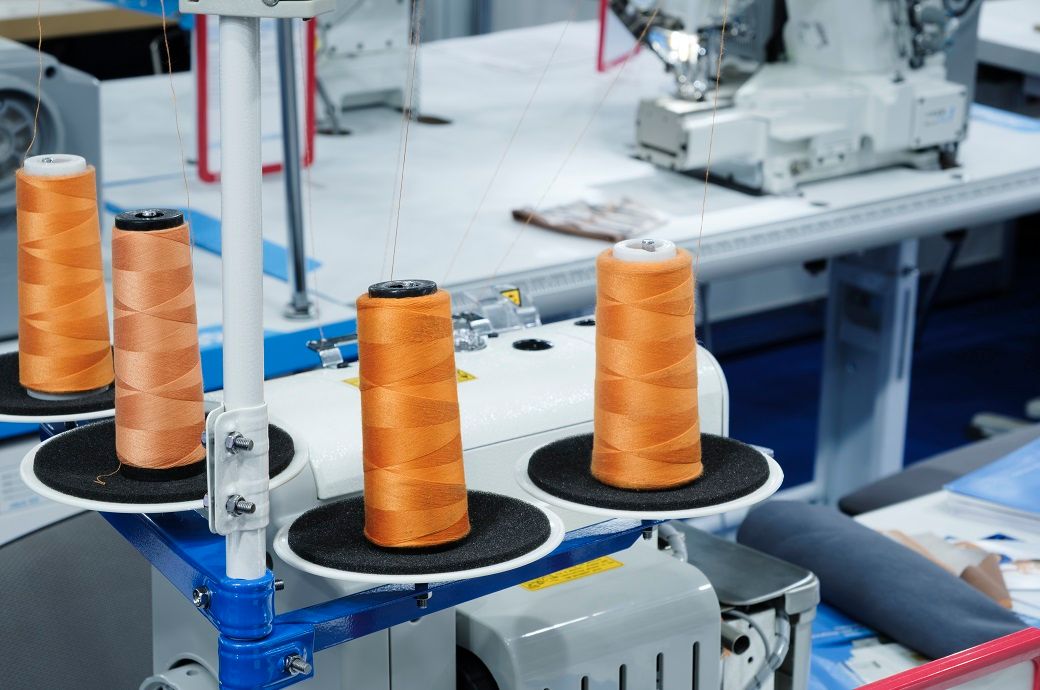
The duty exemption, announced amid ongoing supply disruptions in West Asia, is expected to ease input costs for polyester manufacturers. PTA and MEG are critical raw materials used in the production of PSF, a key segment within India’s MMF ecosystem.
India’s duty exemption on PTA and MEG offers temporary relief to polyester manufacturers, easing input costs amid supply disruptions.
However, NITMA warns that the inverted duty structure under the India-ASEAN FTA continues to hurt domestic mills.
Industry seeks policy correction as benefits have not fully passed down the value chain.
Downstream price corrections remain absent.
Industry bodies, including the NITMA, while welcoming the move, have cautioned that the benefit may remain limited unless deeper policy distortions are addressed. NITMA noted that the exemption, currently valid until June 30, 2026, should be extended if global volatility persists to ensure sectoral stability.
A major concern flagged by stakeholders has been the long-standing inverted duty structure under the India-ASEAN Free Trade Agreement. At present, PSF attracts a customs duty of 5.5 per cent, while finished PSY is imported duty-free, creating a disadvantage for domestic spinning mills.
Industry leaders argue that without correcting the duty imbalance, domestic manufacturers will continue to face eroding competitiveness against imports. NITMA has urged the government to ensure parity by aligning duties on PSF and PSY, either by including both under exemptions or excluding both, particularly as the ASEAN–India Trade in Goods Agreement (AITIGA) undergoes review. While the duty exemption marks a positive step towards easing cost pressures, the broader consensus within the industry is that comprehensive policy correction is essential to restore balance and strengthen the ‘Make in India’ vision in the MMF segment.
Meanwhile, industry leaders expressed concerns as expected price corrections in downstream segments had not materialised despite the duty relief on raw materials. Former Southern Gujarat Chamber of Commerce and Industry (SGCCI) president Ashish Gujarati told Fibre2Fashion, “Yarn prices should have declined by at least 5 per cent following the exemption, but this has not occurred.” He added that MMF stakeholders have raised the issue with the Textile Commissioner, seeking intervention to ensure that input cost benefits are passed along the value chain.
Fibre2Fashion News Desk (KUL)












The situation now represents a supply-side disruption, with pressures transmitted through energy costs, logistics and working capital cycles, it observed.
CII has unveiled a 20-point action plan for the government and the central bank (RBI) to respond to the situation evolving due to the Iran war.
CII observed that though the government and the RBI have initially responded with speed, clarity and coordination, the situation continues to evolve, with supply side pressures in energy, logistics and trade channels persisting beyond the initial phase.
While the policy response has mitigated immediate risks, the evolving situation requires continued coordination between the government and industry, it said.
“The government and the RBI have responded with speed, clarity and coordination. The early measures have helped stabilise sentiment and demonstrate that India’s policy framework is both responsive and resilient in the face of external shocks,” CII director general Chandrajit Banerjee said on CII’s official Instagram handle.
At the same time, CII observed that the situation continues to evolve, with underlying supply side pressures in energy, logistics and trade channels persisting beyond the initial phase.
Industry feedback indicates that while the first round of policy measures has mitigated the immediate impact, several sectors continue to face operational and financial stress, particularly micro, small and medium enterprises (MSMEs), exporters and energy intensive industries.
Here are some of the CII recommendations:
The Ministry of Finance may consider introducing a time-bound Conflict-Linked Emergency Credit Line Guarantee Scheme (CL) ECLGS), similar in spirit to the Emergency Credit Line Guarantee Scheme (ECLGS) implemented during the pandemic, so that additional collateral-free working capital can be extended to affected enterprises through government-backed guarantees, particularly targeting MSMEs, exporters and gas-dependent sectors.
RBI may consider a temporary and clearly defined three-month moratorium and restructuring window for MSMEs, especially exporters and ancillary units linked to export supply chains. It could institute a special refinance window for MSMEs and other affected sectors, complemented by targeted liquidity support.
The ministry and the central bank could provide immediate contractual and operational relief to the industry, especially MSMEs, by extending delivery timelines for central and state public sector undertaking (PSU) contracts by three to four months without invoking liquidated damages clauses, reducing performance bank guarantee and security deposit requirements to minimal levels to ease liquidity constraints.
In addition, temporary relief in electricity tariffs may also be offered to help manage rising input costs during the disruption period.
A temporary reduction or waiver of administrative banking charges, including loan processing fees, foreign exchange handling charges and documentation costs, may be considered for MSMEs and affected sectors.
The ministry may consider a time-bound rationalisation of the tax and duty structure on energy inputs to mitigate cascading cost impacts of the disruption.
It may consider a temporary exemption from long-term capital gains tax for foreign investors in primary market investments, with the qualifying holding period extended from two to three years.
It may introduce accelerated depreciation benefits on capital goods, including domestically-procured equipment, to stimulate private capital expenditure during the disruption period. In addition, GST input credit could be refunded on capital goods within three to six months.
A special foreign exchange swap window may be considered for oil and gas PSUs, enabling them to meet their US dollar requirements in a manner that reduces volatility in the foreign exchange market and limits undue pressure on reserves.
The government may extend financial and institutional support to trade diversification efforts and development of alternative transport corridors, including initiatives that reduce dependence on a single geography for critical trade routes and energy logistics.
Fibre2Fashion News Desk (DS)
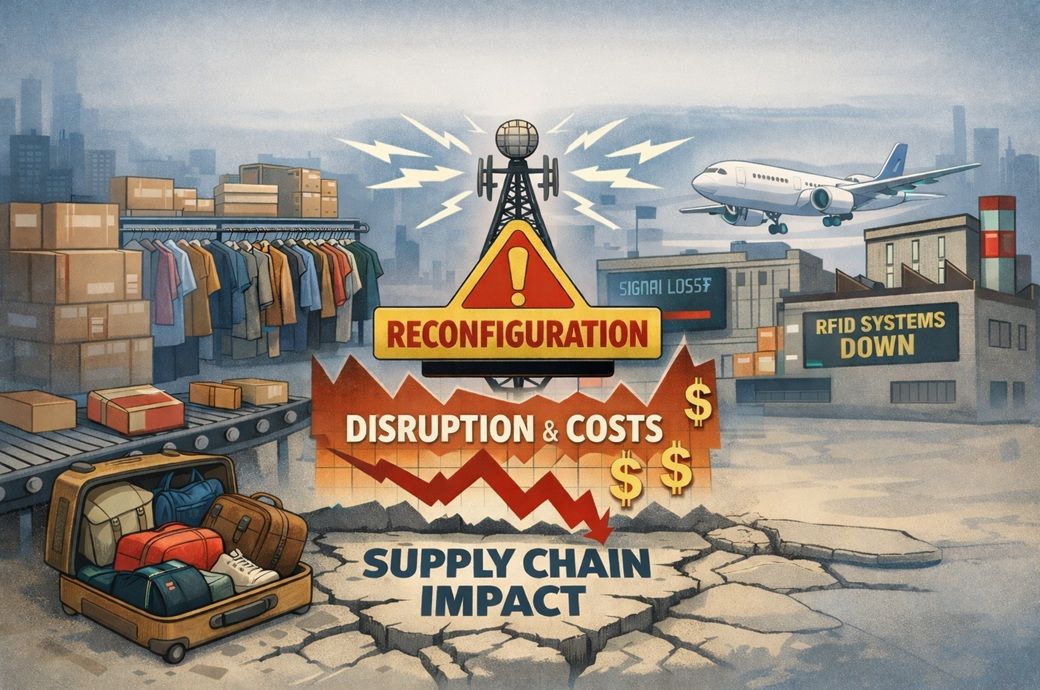
In a letter to Secretary of Commerce Howard W. Lutnick, AAFA president and chief executive officer Steve Lamar wrote that these industries depend on RFID technology in the lower 900 MHz band for inventory tracking, logistics coordination, theft prevention, checkout and emerging retail technologies.
US trade body AAFA is concerned over proposals to reconfigure the 902-928 MHz (lower 900 MHz) band as that would create significant operational disruption and costs for apparel, footwear and travel goods companies.
These industries depend on RFID technology in the lower 900 MHz band for inventory tracking, logistics coordination, theft prevention, checkout and emerging retail technologies.
Resulting interference could degrade performance, disrupt supply chain systems and require costly equipment upgrades or replacements. These disruptions would delay products reaching markets and reduce revenue, the letter noted.
The band’s availability under Federal Communications Commission (FCC) Part 15 has enabled innovation across industries, and reconfiguration would undermine this, Lamar said.
AAFA joined a broad coalition of industry stakeholders1 in response to NextNav’s petition to the FCC to reconfigure the lower 900 MHz, underscoring shared concerns that changes to this band would disrupt critical operations, increase costs and harm supply chains across multiple sectors.
For apparel, footwear, and travel goods companies already operating on tight margins, these added costs would directly affect their ability to offer affordable products, the letter said.
To maintain US leadership in innovation and ensure competitive, resilient supply chains, AAFA urged consideration of these impacts and recommended pursuing positioning, navigation and timing (PNT) objectives in alternative spectrum bands.
Fibre2Fashion News Desk (DS)

The most traded May 2026 contract settled at 71.67 cents per pound, up 0.75 cent or 1.06 per cent. The contract marked the highest level since May 6, 2025. December 2026 contract settled at 75.75 cents with a gain of 0.77 cent. The market is showing strong momentum with third consecutive higher close and 8 gains in the last 9 sessions, indicating sustained bullish trend.
ICE cotton futures climbed to an 11-month high, supported by drought concerns in key US regions and a weaker dollar boosting export appeal.
Strong fund buying and declining certified stocks reinforced bullish sentiment.
Despite moderate export sales, demand outlook remains firm, with any price dips expected to attract active buying interest.
Total trading volume stood at 63,327 contracts, relatively lighter, suggesting controlled but firm buying interest.
A key supportive factor was the 0.2 per cent decline in the US Dollar Index, making American cotton more competitive globally and boosting export demand outlook.
Trade sentiment improved as demand conditions showed signs of recovery, even though export sales pace remained moderate but stable.
Market participants believe any price dips will attract strong buying interest, reflecting underlying strength.
Weather concerns remain critical, with drought conditions persisting in major US cotton-producing regions, especially across the southern belt, raising supply-side risks. USDA’s first Crop Progress Report for the 2026 season showed planting at 5 per cent, in line with the 5-year average and slightly ahead of last year’s 4 per cent. Early sowing has begun in Texas, Arizona, and California, indicating a normal start to the season but weather risks remain.
ICE data showed certified stocks declining to 113,241 bales, down from 114,665 bales, reflecting tightening available deliverable supplies. CFTC positioning data revealed that speculators increased net long positions by 21,606 contracts to 28,743, highlighting strong bullish participation from funds.
In related markets, crude oil prices rose 0.8 per cent, increasing polyester production costs and making cotton a more attractive alternative fibre.
US equity markets gained around 0.5 per cent, supported by optimism over possible ceasefire developments, improving overall risk sentiment. However, Chicago wheat futures declined over 1 per cent due to weak export demand, limiting broader commodity market strength. Broader market direction continues to be influenced by geopolitical tensions, inflation concerns, currency movements, and energy market volatility.
The cotton market is in a strong bullish phase, driven by improving demand outlook, weaker dollar, fund buying, and supply risks from drought and falling stocks. The trend remains firm upward, and any short-term correction is likely to be well supported by active buying interest.
This morning (Indian Standard Time), ICE cotton for May 2026 was traded at 71.67 cents per pound (unchanged), cash cotton at 69.67 cents (up 0.75 cents), the July 2026 contract at 73.94 cents (up 0.10 cent), the October 2026 contract at 75.80 cents (up 0.78 cent), the December 2026 at 75.78 cents (up 0.03 cent) and the March 2027 contract at 76.74 cents (up 0.06 cent). A few contracts remained at their previous closing levels, with no trading recorded so far today.
Fibre2Fashion News Desk (KUL)


CII submits 20-pt agenda to Indian govt to back firms hit by Iran war

Women’s NCAA basketball transfer rankings for 2026-27 season

Trump agrees to two-week ceasefire after Pakistan’s intervention

-
Uncategorized6 days ago
[CinePlex360] Please moderate: “Trump signals p
-
Uncategorized1 week ago
[CinePlex360] Please moderate: “Further tariff
-

 Entertainment5 days ago
Joe Jonas shares candid glimpse into parenthood with Sophie Turner
-

 Tech4 days ago
Our Favorite iPad Is $50 Off
-

 Sports4 days ago
UConn Final Four run could trigger a $50M furniture giveaway for Massachusetts-based Jordan’s Furniture
-

 Fashion1 week ago
China’s Anta Sports posts record $11.62 bn revenue in 2025
-

 Politics5 days ago
Iran can sustain Strait of Hormuz closure for years, will cut US military logistics: Official
-
 Business7 days ago
UPI transactions hit record Rs 29.53 lakh crore in March; volumes cross 22.6 billion – The Times of India