

Business
Eli Lilly’s next-generation obesity drug delivers strong weight loss, reduces knee pain in late-stage trial


The Eli Lilly logo appears on the company’s office in San Diego, California, U.S., Nov. 21, 2025.
Mike Blake | Reuters
Eli Lilly on Thursday said its next-generation obesity drug delivered what appears to be the highest weight loss yet in a late-stage trial while reducing knee arthritis pain, clearing the first of several upcoming studies on the weekly injection.
The highest dose of the drug helped patients with obesity and a type of knee arthritis lose an average of 23.7% of their body weight at 68 weeks, when analyzing all participants, including those who discontinued treatment. When evaluating only patients who stayed on the drug, the highest dose delivered 28.7% weight loss on average.
The company said some patients lost so much weight that they decided to drop out of the trial.
“It’s incredible,” said Dr. Caroline Apovian, co-director of the Center for Weight Management and Wellness at Brigham and Women’s Hospital. “Now, we have a drug that rivals the weight loss benefits of surgery.”
Apovian said Eli Lilly appears to be positioning the drug strategically for people with severe obesity, or a body mass index above 35 or 40. She noted that the company said 84% of patients in the trial had a BMI above that number in the trial.
Shares of Eli Lilly rose more than 3% on Thursday.
It is the first late-stage data on retatrutide, which works differently from existing injections and appears to be more effective. Eli Lilly is betting big on retatrutide as the next pillar of its obesity portfolio after its weight loss injection Zepbound and its upcoming pill. But it’s still unclear when the drug could enter the market.
It’s a critical part of the drugmaker’s plan to maintain its market share majority over Novo Nordisk in the booming market for weight loss and diabetes drugs. Some analysts estimate the segment could be worth about $100 billion by the 2030s.
Retatrutide also met the trial’s other main goal of reducing pain from knee osteoarthritis – a common condition that wears down the joint’s cartilage and leads to pain and stiffness – by up to 62.6% on average when analyzing all patients, based on a widely used survey. More than 1 in 8 patients who took the drug were completely free from knee pain by the end of the trial, Eli Lilly said.
One concern with current weight loss drugs is that they can lead to the loss of lean muscle mass. But Apovian said the results show that in adults with severe obesity, you can improve physical function with retatrutide.
The results appear to surpass Wall Street’s expectations. In a note ahead of the findings, BMO Capital Markets analyst Evan Seigerman said his base-case assumption was for the drug to show weight loss of around 20% to 23%, with at least a 50% reduction in knee pain.
The company believes retatrutide “could become an important option for patients with significant weight loss needs and certain complications, including knee osteoarthritis,” Kenneth Custer, president of Lilly Cardiometabolic Health, said in a statement.
In a note Thursday, JPMorgan analyst Chris Schott said retatrutide’s tolerability data, or how well patients handle the treatment, is “somewhat worse vs Zepbound, though not surprising, in our view.”
Roughly 18% of patients on the highest dose of the drug stopped treatment due to side effects, compared with 4% of those in the placebo group. Eli Lilly said those dropout rates were “highly correlated” to patients’ starting body mass index and included discontinuations due to “perceived excessive weight loss.”
Among those with a BMI of 35 or higher who took highest dose, 12% stopped treatment. Schott said that number is closer to the dropout rates seen in trials on Eli Lilly’s weight loss drug Zepbound and Novo Nordisk‘s obesity injection Wegovy.
In a separate note on Thursday, BMO’s Seigerman said discontinuation rates “appear to highlight the speed and strength of weight loss was excessive for some patients with lower BMI.” But he said, “all in results are impressive.”
Around 43% of patients on the highest dose experienced nausea, while roughly 33% and 20.9% had diarrhea and vomiting, respectively. More than 1 in 5 patients on the highest dose also experienced dysesthesia, which is an unpleasant nerve sensation. The company said it was generally mild for patients and rarely led to them discontinuing treatment.
The study, called TRIUMPH-4, didn’t solely focus on weight loss, meaning that other trials specifically designed for that outcome could produce different or higher results. Eli Lilly expects to report findings from seven additional phase three trials on the drug by the end of 2026.
Dubbed the “triple G” drug, retatrutide works by mimicking three hunger-regulating hormones – GLP-1, GIP and glucagon – rather than just one or two like existing treatments. That appears to have more potent effects on a person’s appetite and satisfaction with food than other treatments.
Tirzepatide, the active ingredient in Zepbound, mimics GLP-1 and GIP. Novo Nordisk’s semaglutide, the active ingredient in Wegovy, mimics only GLP-1.
Higher doses of tirzepatide helped patients with obesity lose roughly 20.9% of their body weight on average in late-stage studies, when analyzing all patients regardless of discontinuations.
As Eli Lilly establishes an edge in the space, its chief rival, Novo Nordisk, is racing to catch up. In March, Novo Nordisk said it agreed to pay up to $2 billion for the rights to an early experimental drug from the Chinese pharmaceutical company United Laboratories International.
Novo Nordisk’s newly acquired drug is a clear potential competitor to retatrutide because it similarly uses a three-pronged approach to promoting weight loss and regulating blood sugar. But Novo Nordisk’s treatment is much earlier in development, meaning it will take several years before it reaches patients.




Britain is to “step up” defensive support for Gulf states after Iran attacked energy sites across the region in a “serious escalation” of the war that could push up inflation and interest rates.
The price of Brent crude climbed as high as $119 a barrel and European gas prices briefly surged by 35 per cent after Iran pounded Qatar’s Ras Laffan energy hub and other Middle Eastern oil and gas infrastructure with missiles.
Interest rates were held at 3.75 per cent instead of the previously expected cut, as the Bank of England warned that the war could push inflation as high as 3.5 per cent by July on the back of rising energy bills, and that rates could rise – creating misery for homeowners.
It came as:
- US defence secretary Pete Hegseth said “ungrateful” European allies should be thanking Donald Trump for the war
- Trump claimed he was unaware of Israel’s strike on Iran’s South Pars gas field
- Oman called the US/Israel attacks a “grave miscalculation”
- Europe’s biggest airlines warned of higher fares
Iran’s attacks were in retaliation to an Israeli strike on the vital South Pars gas field, which drew condemnation from the Gulf states as well as Tehran. It was the first attack of the war so far on an energy production facility. Tehran fired missiles at multiple energy sites across the Gulf, including a Saudi oil refinery, Qatari gas facilities and two more oil refineries in Kuwait.
While Sir Keir Starmer and Emmanuel Macron called for de-escalation, President Trump threatened to “massively blow up” the South Pars facility if Iran did not halt its retaliatory attacks, repeating his claim that US forces had “obliterated” Iran’s navy and military, adding that the war was “substantially ahead of schedule”. He denied that plans were being made to send more American troops to the region.
John Healey, the UK defence secretary, said Tehran’s tit-for-tat responses threatened to further destabilise the region and Europe’s economies. He called them a “serious escalation”, adding: “They further destabilise the region and we will step up the defensive support that we can offer to those Gulf states.”
British forces are already deployed to the Middle East, with RAF jets flying defensive sorties against Iranian drones across the Gulf and British air defence systems protecting critical infrastructure in Saudi Arabia. UK military planners have also joined US Central Command to help formulate proposals for opening the Strait of Hormuz, a critical trade route for the world’s oil and gas.But there were signs of growing frustration towards Washington’s war aims in the Gulf states, with Oman’s foreign minister claiming that the conflict was President Trump’s “greatest miscalculation”.
In the most scathing attack on Washington’s foreign policy yet by a Gulf state, Badr Albusaidi said “this is not America’s war” and criticised Mr Trump for supporting Israel. Writing in The Economist, he called on American allies to help extricate it from the conflict, which has continued for a third week despite failing to achieve the US and Israel’s stated aim of instigating regime change in Tehran or stopping its nuclear programme.
Meanwhile, the Bank of England has warned that it may have to put up interest rates if the war continues to drive up inflation and unemployment. Its governor, Andrew Bailey, said the impact was already being felt by consumers as petrol prices surge and that he is “ready to act as necessary to ensure inflation remains on track to meet the 2 per cent target”. That would pave the way for a rate hike as early as the end of April.
Bets on the financial markets suggest a 50/50 chance that Britain will face higher interest rates from next month – and the possibility of two more rises by the end of the year.
Danni Hewson, head of financial analysis at AJ Bell, said: “Markets are now pricing in an almost 50 per cent chance that April’s meeting will see rates rise to 4 per cent with the potential for two additional rate hikes by the end of the year. But no one has a crystal ball. No one knows how long the conflict will last or the amount of damage that could be inflicted on crucial energy infrastructure by the time it ends.”
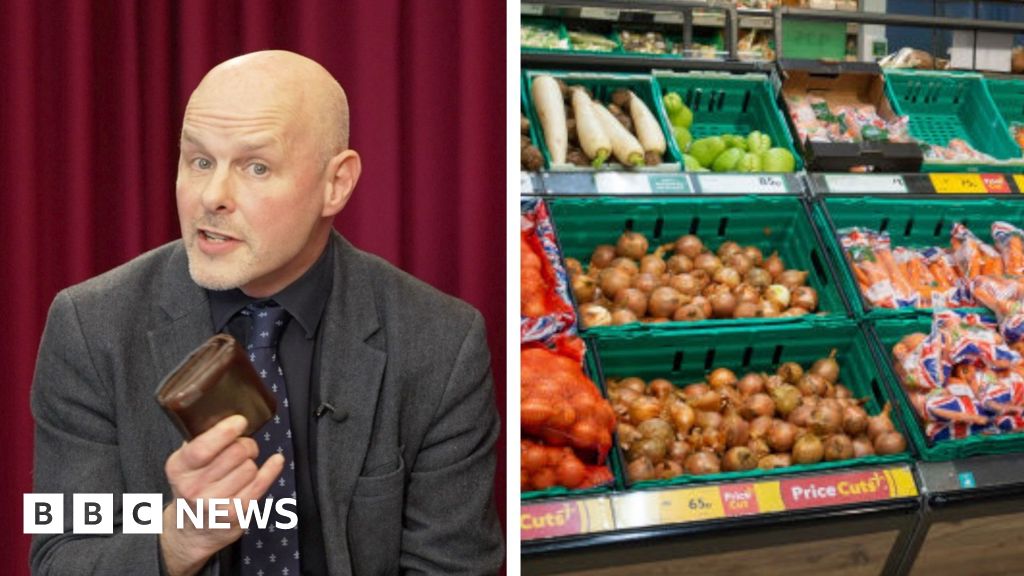
From fuel to mortgages, the BBC looks at how oil and gas prices could push up the cost of living.
Source link
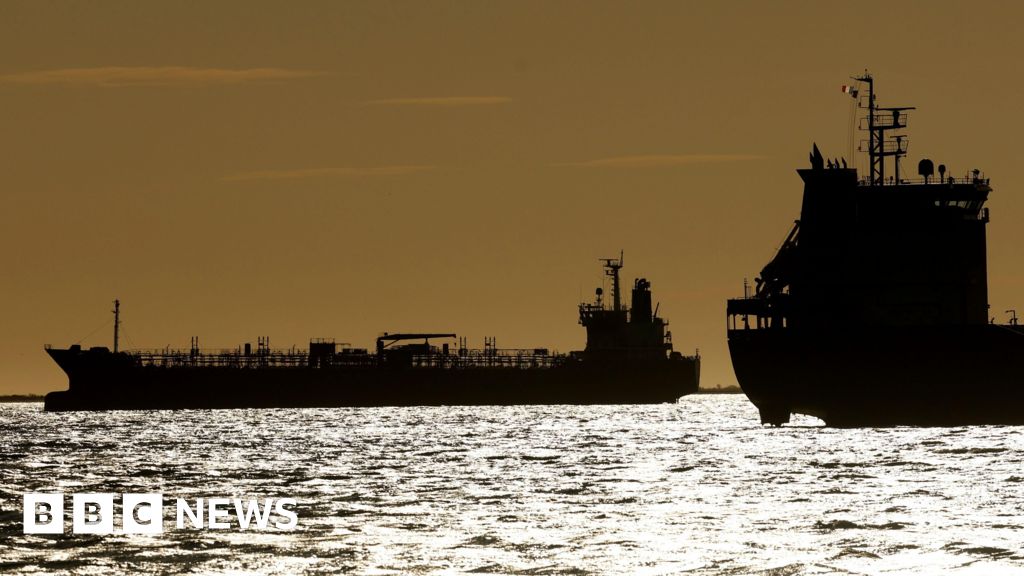
“To put it mildly, this is bananas,” said David Tannenbaum, director of Blackstone Compliance Services, a consultancy specialising in maritime sanctions. “Essentially we’re allowing Iran to sell oil, which could then be used to fund the war effort.”


FIFA clears Israeli settlement clubs but fines IFA over breaches

Prince William and Kate wow with last-minute surprise portrait drop

US Takes Down Botnets Used in Record-Breaking Cyberattacks

Stock market crash today (March 12, 2026): Nifty50 opens below 23,600; BSE Sensex down over 900 points on continuing US-Iran war – The Times of India

UK’s Topshop unveils Tolu Coker capsule collection

US ignites Iran war, but Gulf Arab states pay the price | The Express Tribune

-
Business1 week ago
Stock market crash today (March 12, 2026): Nifty50 opens below 23,600; BSE Sensex down over 900 points on continuing US-Iran war – The Times of India
-
 Fashion1 week ago
UK’s Topshop unveils Tolu Coker capsule collection
-
Business1 week ago
US ignites Iran war, but Gulf Arab states pay the price | The Express Tribune
-

 Fashion1 week ago
India’s textile recycling market may reach $3.5 bn by 2030: Report
-

 Tech1 week ago
Meta Developed 4 New Chips to Power Its AI and Recommendation Systems
-

 Sports1 week ago
Bangladesh crush Pakistan in ODI series opener | The Express Tribune
-
 Business1 week ago
8th Pay Commission: How Much Will Central Govt Employees’ Salaries Rise? What We Know So Far
-
 Entertainment1 week ago
Gas, food, household prices explained