

Business
Elon Musk could become world’s first trillionaire under new Tesla pay deal

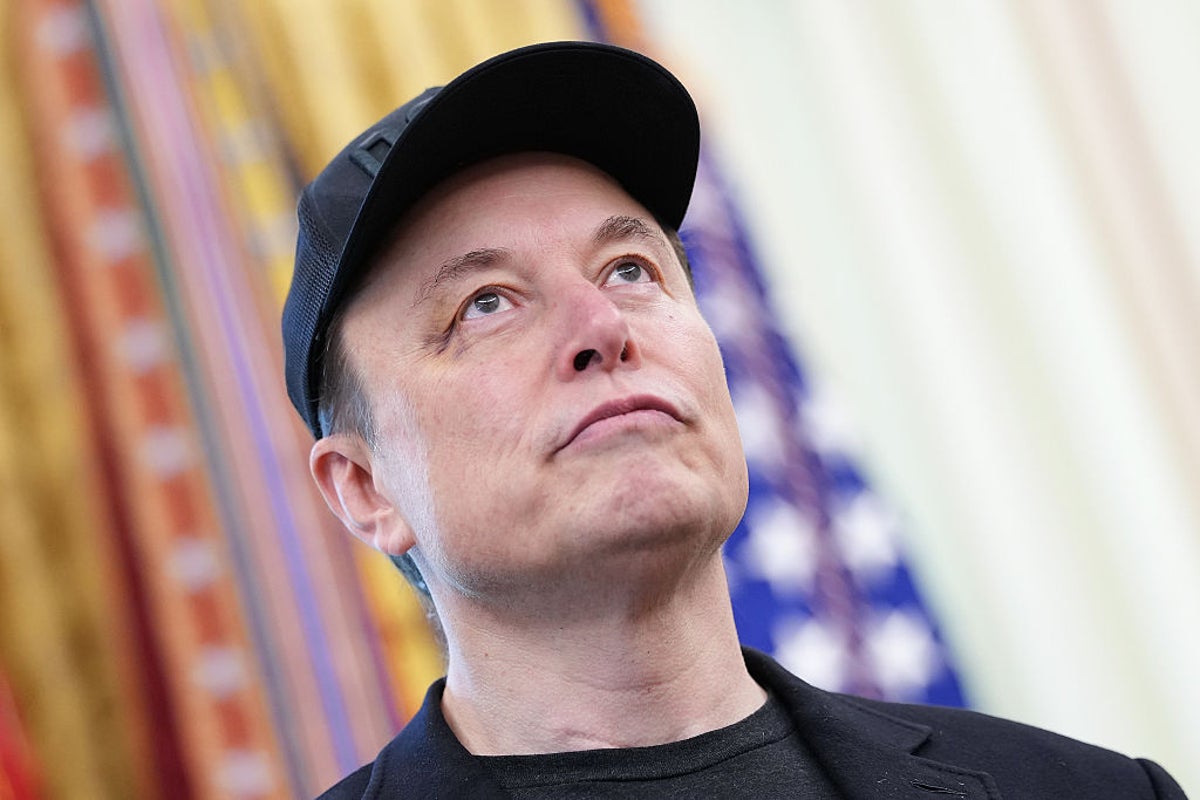
Elon Musk could become the world’s first trillionaire under a new proposed payment package at Tesla – if the chief executive hits a series of ambitious targets across the next decade.
Already the world’s richest man with a net worth of $378bn (£280bn), the South African-born entrepreneur could be handed a deal worth more than $1 trillion (£740bn) if shareholders vote through board proposals.
Based on current market capitalisation values, it would make Mr Musk worth more than all but the six or seven biggest public companies on the planet.
Achieving the terms of the deal would almost certainly make Tesla the biggest business in the world, as one of the terms included is to grow the company’s market value to $8.5 trillion (£6.3 trillion) from the $1.1 trillion figure it stands at today. Chipmaker Nvidia is presently the only firm bigger than $4 trillion.
The new incentive plan from Tesla was shown in a filing to the US Securities and Exchange Commission on Friday. In it, Mr Musk could increase his stake in the company to at least 25 per cent.
“We are laying the foundation for our next decade of growth by rolling out our ambitious vision and securing our leadership to deliver against that vision,” read part of the filing, later adding: “Retaining and incentivising Elon is fundamental to Tesla achieving these goals and becoming the most valuable company in history.”
Tesla’s filing goes on to suggest he could also have a say in his eventual successor as CEO: “While we believe Elon is the only person capable of leading Tesla at this critical inflection point, changing the world is neither an overnight process nor the work of a single person.”
The company’s share price, which rose 2.5 per cent in pre-market trading after the filing was announced, is down 16 per cent across 2025 as a whole as the EV maker struggles with industry competition, pricing and brand image.
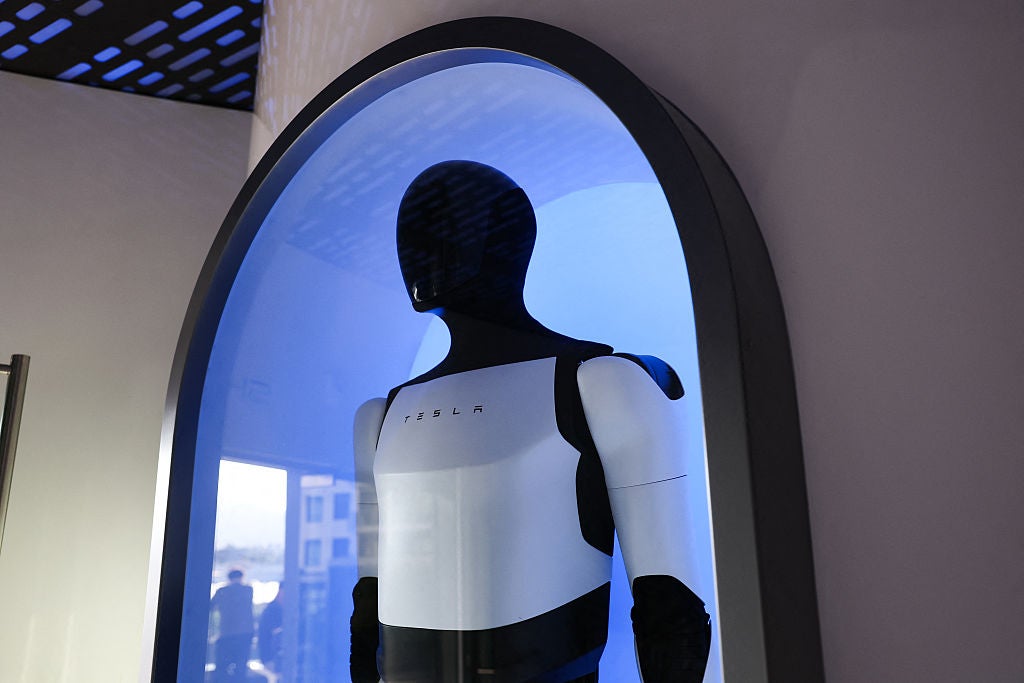
However, in future it expects to generate far more revenue through AI and other product avenues – the progression of which is linked to Mr Musk’s prospective pay package, such as getting 1 million robotaxis on the road and 1 million AI humanoid robots in production.
Get your charger and tariff now.
Save happily EV after.
T&Cs apply
ADVERTISEMENT

ADVERTISEMENT
The shares would be dealt out in tranches according to milestones being hit, including the company’s financials.
Not everyone is immediately convinced however, with some market analysts questioning the likelihood of reaching the targets – as well as whether Tesla’s performance under Mr Musk of late suggests he should even be the one to steer the company into that future.
“One minute Tesla’s board is wondering if Elon Musk is a liability to the company given his outspoken views and political distractions, the next they’re effectively saying ‘pick a number, any number’ to lock him in for as long as possible,” said Dan Coatsworth, investment analyst at AJ Bell.
“A $1 trillion pay package beggars belief. Is one person worth that much? Musk is a visionary, has endless energy, and the confidence to succeed – all qualities required in leadership.
“But he also presides over a company that has lost its edge, is being overtaken by rivals, and whose brand has been tarnished by Musk’s actions outside of Tesla. Surely Musk should be fighting for his job, not Tesla’s board fighting to keep him?
“Tesla is a public company, and shareholders will ultimately decide if he deserves a $1 trillion pay deal.
“The bigger question is whether this proposal sets a new precedent and boardrooms across America will think it’s OK to add a zero or two onto the end of current remuneration packages. It all seems a tad excessive and a symptom of poor corporate governance.”
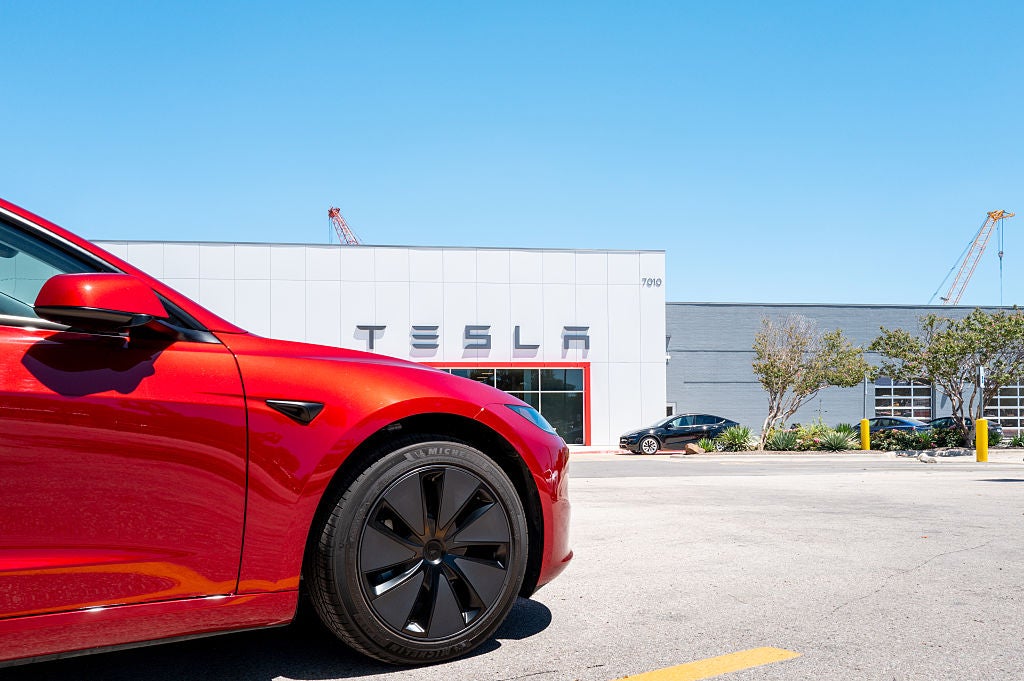
Very early in the new pay plan, Tesla would have to reach a market valuation of $2 trillion (£1.48 trillion) and achieve 20 million vehicle deliveries. Tesla delivered fewer than two million vehicles in 2024.
Mr Musk needs to remain with Tesla for at least seven and a half years to cash out on any stock, and 10 years to earn the full amount.
He would also receive more voting power over Tesla under the proposed plan.
The EV company is set to hold its annual shareholders meeting on 6 November.
Sales have fallen precipitously in Europe and plunged 40 per cent in July in the 27 European Union countries compared with the year earlier, even as sales overall of electric vehicles soared, according to the European Automobile Manufacturers’ Association.
Meanwhile, sales of Chinese rival BYD continued to climb fast, grabbing 1.1 per cent market share of all car sales in the month versus Tesla’s 0.7 per cent.
Investors have grown increasingly worried about the trajectory of the company after Mr Musk had spent so much time in Washington this year, becoming one of the most prominent officials in the Trump administration in its bid to slash the size of the US government.
Mr Musk said recently that he needed more shares and control so he could not be ousted by shareholder activists.
Additional reporting by Associated Press

Last Updated:
Gold is sold at a discount in Dubai due to Middle East conflict disrupting flights. Traders offer up to $30 per ounce less than London prices.




Dubai Gold Selling Cheaper As Iran War Grounds Flights
Gold is being sold at a discount in Dubai as the widening conflict in the Middle East disrupts flights and hampers the movement of bullion from one of the world’s key trading hubs.
According to a Bloomberg report, traders in Dubai are offering discounts of up to $30 per ounce compared to the global benchmark price in London. The unusual price cut comes as shipments remain stranded due to flight disruptions triggered by the escalating conflict involving Iran and Israel.
Dubai is a key global centre for refining and exporting gold to markets across Asia, including India. However, partial airspace restrictions and heightened security risks have slowed the movement of bullion out of the region.
Why Gold Is Being Sold Cheaper
Gold is typically transported in the cargo holds of passenger aircraft. With several flights from the UAE restricted amid regional tensions, traders are struggling to move bullion to international markets.
At the same time, insurance and freight costs have surged, making shipments more expensive and uncertain. Many buyers have therefore stepped back from placing new orders, unwilling to bear high logistics costs without assurance of timely delivery.
To avoid paying prolonged storage and financing costs while shipments remain stuck, some traders are offering gold at discounted prices.
Although transporting bullion by road to airports in neighbouring countries such as Saudi Arabia or Oman is theoretically possible, logistics firms are reluctant due to the risks and complications of moving high-value cargo across land borders during a conflict.
What It Means For India
India, one of the largest buyers of gold shipped from Dubai, could face short-term supply disruptions if the situation continues.
Renisha Chainani, head of research at Augmont Enterprises Ltd., said several cargo shipments have already been delayed, creating temporary tightness in the availability of physical bullion in India.
However, industry experts as reported by Bloomberg say the immediate impact may remain limited as domestic inventories are currently comfortable after heavy imports earlier this year.
Chirag Sheth, principal consultant for South Asia at Metals Focus, said Bloomberg that India has ample stocks for now, but warned that prolonged disruptions could eventually affect supply if the conflict continues for several months.
Meanwhile, global gold prices have surged this year amid geopolitical uncertainty, with spot gold recently trading above $5,000 per ounce.
 Click here to add News18 as your preferred news source on Google.
Follow News18 on Google. Join the fun, play games on News18. Stay updated with all the latest business news, including market trends, stock updates, tax, IPO, banking finance, real estate, savings and investments. To Get in-depth analysis, expert opinions, and real-time updates. Also Download the News18 App to stay updated.
March 08, 2026, 10:03 IST
Read More

Some seven in 10 British adults without a full driving licence say learning to drive is currently unaffordable, according to a survey.
The figure is even higher among younger people, with 76% of 18 to 29-year-olds without a licence saying driving lessons are financially out of reach, the poll for car insurer Prima found.
Overall, 38% said the cost of driving lessons was the biggest deterrent to learning to drive.
Some 32% were put off by the price of buying a car and 15% said the cost of car insurance was the main barrier to learning to drive.
Almost half (45%) said they would consider learning to drive if it became significantly cheaper.
Nick Ielpo, UK country manager at Prima, said: “For a growing number of people, driving is no longer a symbol of freedom – it’s a financial stretch too far.
“Between lessons, buying a car and insuring it, the upfront and ongoing costs are pricing many people out before they even start.”
Find Out Now surveyed 1,134 adults who do not hold a full driving licence between January 21 and 23.

Go Digit General Insurance on Saturday said it has received a demand notice of about Rs 170 crore for short payment of goods and services tax (GST) for nearly five years. The company has received an order copy from the Office of the Commissioner of GST & Central Excise, Chennai South Commissionerate on March 6, confirming GST demand of Rs 154.80 crore levying penalty of Rs 15.48 crore and Interest u/s 50 of CGST Act, 2017 for the period July 2017 to March 2022, the insurer said in a regulatory filing. The company is in the process of evaluating the legal advice on the implications and would file an appeal, it said.


Special loan facility for Feb wages in Bangladesh’s export units

Let girls fly

Why have 1,000 ships at times lost their GPS in the Mideast?

LPGA legend shares her feelings about US women’s Olympic wins: ‘Gets me really emotional’

India Us Trade Deal: Fresh look at India-US trade deal? May be ‘rebalanced’ if circumstances change, says Piyush Goyal – The Times of India

Pakistan’s semi-final qualification scenario after England defeat New Zealand

-
 Sports1 week ago
LPGA legend shares her feelings about US women’s Olympic wins: ‘Gets me really emotional’
-
Business1 week ago
India Us Trade Deal: Fresh look at India-US trade deal? May be ‘rebalanced’ if circumstances change, says Piyush Goyal – The Times of India
-

 Fashion1 week ago
South Korea’s Misto Holdings completes planned leadership transition
-
 Entertainment1 week ago
Pakistan’s semi-final qualification scenario after England defeat New Zealand
-

 Entertainment1 week ago
Bobby J. Brown, “The Wire” and “Law & Order: SUV” actor, dies of smoke inhalation after reported fire
-
 Business1 week ago
Greggs to reveal trading amid pressure from cost of living and weight loss drugs
-
 Business1 week ago
CNBC To Merge TV And Digital News Operations, Nearly A Dozen Jobs To Be Cut: Report
-

 Entertainment1 week ago
What’s new in Pokémon? Every game, update, surprise from 30th anniversary event