

Entertainment
Elon Musk fuses SpaceX and xAI in $1tn mega deal

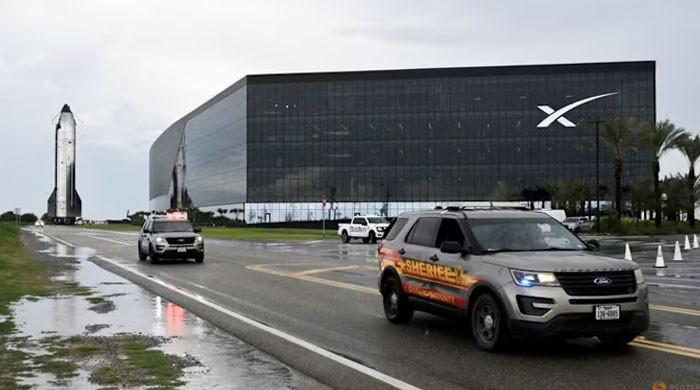
Elon Musk said on Monday that SpaceX has acquired his artificial-intelligence start-up xAI in a record-setting deal that unifies Musk’s AI and space ambitions by combining the rocket-and-satellite company with the maker of the Grok chatbot.
The deal, first reported by Reuters last week, represents one of the most ambitious tie-ups in the technology sector yet, combining a space-and-defence contractor with a fast-growing AI developer whose costs are largely driven by chips, data centres and energy. It could also bolster SpaceX’s data-centre ambitions as Musk competes with rivals like Alphabet’s Google, Meta, Amazon-backed Anthropic and OpenAI in the AI sector.
The transaction values SpaceX at $1 trillion, and xAI at $250 billion, according to a person familiar with the matter.
“This marks not just the next chapter, but the next book in SpaceX and xAI’s mission: scaling to make a sentient sun to understand the Universe and extend the light of consciousness to the stars!” Musk said.
The purchase of xAI sets a new record for the world’s largest M&A deal, a distinction held for more than 25 years when Vodafone bought Germany’s Mannesmann in a hostile takeover valued at $203 billion in 2000, according to data compiled by LSEG.
The combined company of SpaceX and xAI is expected to price shares at about $527 each, another person familiar with the matter said. SpaceX was already the world’s most valuable privately held company, last valued at $800 billion in a recent insider share sale. xAI was last valued at $230 billion in November, according to the Wall Street Journal.
The merger comes as the space company plans a blockbuster public offering this year that could value it at over $1.5 trillion, two people familiar with the matter said.
SpaceX, xAI and Musk did not immediately respond to requests for comment.
The deal further consolidates Musk’s far-flung business empire and fortunes into a tighter, mutually reinforcing ecosystem – what some investors and analysts informally call the “Muskonomy” – which already includes Tesla, brain-chip maker Neuralink and tunnel firm the Boring Company.
The world’s richest man has a history of merging his ventures. Musk folded social media platform X into xAI through a share swap last year, giving the AI start-up access to the platform’s data and distribution. In 2016, he used Tesla’s stock to buy his solar-energy company SolarCity.
The agreement could draw scrutiny from regulators and investors over governance, valuation and conflicts of interest given Musk’s overlapping leadership roles across multiple firms, as well as the potential movement of engineers, proprietary technology and contracts between entities.
SpaceX also holds billions of dollars in federal contracts with NASA, the Department of Defense and intelligence agencies, which all have some authority to review M&A transactions for national security and other risks.

Megan Thee Stallion is excited to collaborate with Cardi B again.
The Grammy-winning rapper has been on a career high this week, making her Broadway debut as the first female Zidler in Moulin Rouge, and a surprise new collaboration with Nickelback on the Cheetos Dill Pickle promo song, Pickle’s Back.
Speaking to Entertainment Tonight on Wednesday, March 25, Megan teased what’s next: a long-awaited collaboration with her “girl,” Cardi B.
“Don’t worry about that, don’t worry about that,” she said with a smirk when asked about a possible collaboration with the Bodack Yellow rapper. “This is going to happen again. This is definitely going to happen again. Now, when it’s going to happen, I’m not telling you,” she teased.
The hip-hop icons first collaborated on Cardi’s 2020 hit, WAP. Three years later, they came together for Bongos. More recently, they reunited on stage at Cardi’s ongoing Little Miss Drama tour during a stop in Megan’s hometown of Houston, Texas.
“It was great, I love performing with Cardi,” Megan told ET about the performance. “She’s amazing. Every time we link up, it’s like, we don’t have to see each other for a long time, but every time I see her it’s like, I just saw you yesterday. We just pick back up where we left off from. That’s my girl,” she gushed.
“We’re both authentic, and we both are ourselves. We just both like to laugh, so we don’t really take anything too seriously,” Megan added.
Cardi also gushed over Megan following the performance, sharing a picture of the duo backstage on her Instagram Stories and writing, “I love you so so so so so sooooooo much.”

John Mellencamp capped off a milestone night at the 2026 iHeartRadio Music Awards with both an honor and a heartfelt performance.
He received the Icon Award from his daughter, Teddi Mellencamp, before strumming through acoustic renditions of his most beloved hits.
The 74-year-old rocker was visibly moved as Teddi delivered an emotional tribute, calling her father her “best friend.”
John then handed the trophy back to her, acknowledging her ongoing battle with stage 4 melanoma.
He then turned to the crowd with a mix of humor and encouragement.
“I’ve been doing this 50 years and I’ve enjoyed most of it,” he quipped.
“…for all you young people who are starting out, there’s nothing closer to heaven than writing a song or hearing your songs on the radio, or having a show.”
Mellencamp’s acoustic set, featuring “Jack & Diane” and “Pink Houses”, was a reminder of the enduring power of his catalog.
Since his 1976 debut, he has sold more than 60 million albums worldwide.
He has earned induction into the Rock and Roll Hall of Fame, and co founded Farm Aid with Willie Nelson and Neil Young, a benefit concert that has supported American farmers for over four decades.
iHeartRadio praised him as “the spirit of the American storyteller.”
It noted that his work has defined eras and influenced generations with its unmistakable voice and point of view.
Mellencamp will now take his greatest hits on the road this summer with the Dancing Words Tour – Greatest Hits, launching in July and spanning 19 dates through August.
The night also featured performances from Kehlani, Lainey Wilson, Ludacris, RAYE, TLC, Salt N Pepa, and En Vogue, while Miley Cyrus received the Innovator Award and Ludacris, who hosted the show, was honored with the Landmark Award.
Taylor Swift, Alysa Liu, Nicole Scherzinger, Nikki Glaser, Sombr, Weezer, Donnie Wahlberg, Jenny McCarthy, Shaboozey and Vin Diesel were among other attendees.
There are moments when the global economy does not collapse but unfolds – like a car crash in slow motion.
What we are seeing today is not a single crisis. It is a combination of pressures building simultaneously: energy, shipping, fertiliser, food, remittances and confidence. When these forces move together, the danger is not an immediate collapse. It is a slow, steady squeeze on everyday life. And in Pakistan, that squeeze is felt quickly.
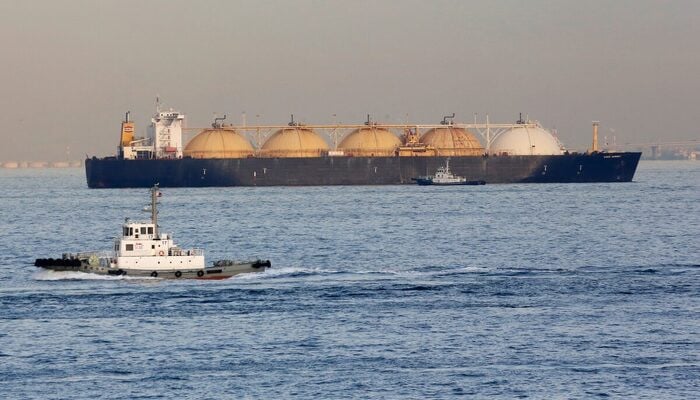
It starts with oil but does not end there. Rising oil prices dominate the headlines. But oil is only the first link in a longer chain. If tensions disrupt flows through the Gulf, the impact spreads rapidly. Energy becomes more expensive. Shipping costs increase. Fertilizer supply tightens. Food production is affected with a delay. Inflation then follows – not suddenly, but gradually, creeping into everyday life. This is how global shocks move. First quietly, like small ripples, then all at once, like a tsunami.
For large economies, this may mean slower growth. For Pakistan, it means something more immediate a steady erosion of purchasing power. Food becomes more expensive. Transport costs rise. Utility bills remain high. Everyday goods quietly become smaller or more expensive. But incomes do not increase at the same pace. That gap creates pressure. And that pressure is already visible in the lives of ordinary households, where Pakistan is most vulnerable.
The country relies heavily on imported fuel and LNG. Fertiliser prices are tied to global gas markets. Many industries depend on imported raw materials. At the same time, most households already spend nearly all their income on basic needs, rent, utilities, food, education and healthcare. This leaves little to no disposable income for anything else.
In addition to this, millions of families depend on international remittances. This creates an additional risk. If Gulf economies slow down, remittance flows may weaken. For many households, these inflows are not extra income, they are the main source of survival. Any disruption here immediately affects consumption, savings and financial stability.
This is not a typical recession. It is a pressure test, especially for the bottom half of the economy. In times of uncertainty, the instinct is to act strongly: raise interest rates sharply; tighten conditions; try to control everything. But this situation is different. This is largely a supply-side shock. Higher interest rates will not produce more oil, reduce shipping costs or increase fertiliser supply.
What they can do is slow down businesses, reduce employment and weaken demand further. Policy must remain responsible and measured. Businesses need time to adjust, not additional pressure.
This is not a moment for complicated policy. It is a moment for clear and focused action. The first priority is communication. People need clarity. When information is missing, uncertainty grows and uncertainty leads to panic. The second priority is targeted support. Pakistan already has strong systems like NADRA and BISP. These should be used to deliver direct assistance to the most vulnerable households rather than broad, expensive subsidies.
A third priority is managing the risk from remittances. If inflows weaken, the pressure on households and the broader economy can intensify quickly. One practical approach is for the government to temporarily borrow against expected remittance inflows over the next six months, based on historical trends. This can provide short-term liquidity, support currency stability and create fiscal space to protect vulnerable households during the shock.
At the same time, banks must play their role. They should proactively expand working capital lines to help businesses manage higher inventory holding costs and supply chain disruptions, ensuring companies can continue operating despite delays and uncertainty.
Quick, responsible action is critical. This is exactly how Pakistan navigated the Covid shock by taking timely, balanced decisions rather than delayed reactions.
Engagement with international partners is also essential. The IMF must be approached with clarity: this is not a routine economic cycle, but a black swan event driven by external geopolitical shocks.
There must be a mutual understanding on temporary flexibility in programme conditions, allowing space to protect vulnerable households, sustain industry and preserve jobs during this period.
At the same time, this moment should be used to make long-overdue structural corrections. Cutting wasteful expenditure must go hand in hand with accelerating the privatisation or restructuring of loss-making state-owned enterprises, while also exploring opportunities for debt reprofiling to ease immediate fiscal pressure.
It is also an opportunity to move faster on smart, forward-looking policies. For instance, an aggressive shift towards locally produced electric motorbikes, supported by a network of solar-powered charging stations, can reduce the fuel import bill, lower urban noise, and improve the environmental footprint, while creating local industry and jobs.
At the same time, businesses must be kept alive. Simple, temporary relief measures such as an annual rental freeze can help retail businesses survive and protect jobs. Food and fertiliser supply must also be secured early. Food crises do not begin in markets; they begin months earlier in fields. Delays now will show up later as higher food prices. Exports must be protected at all costs. They bring in foreign exchange, support employment, and provide stability in uncertain times.
Another area that requires immediate attention is contractual risk. With global supply chains under stress, Pakistan should be prepared for a rise in force majeure events, where companies or even governments are unable to fulfill contracts due to disruptions beyond their control. This can affect import and export agreements, shipping and logistics contracts, energy supply arrangements, and major infrastructure projects.
Early identification is critical. Both the government and private sector must begin mapping these risks now, reviewing contract exposure, and preparing legal and financial responses. If ignored, these disruptions can quickly turn into losses, disputes and long-term damage to business confidence.
Beyond oil and food, there are less visible disruptions now taking shape and they could make the situation worse. One of these is plastics. Modern life depends heavily on plastic materials, especially those made from oil and gas. When energy markets tighten, plastic supply becomes more expensive and uncertain. This affects everyday life in simple but important ways.
Packaging for bottled water, beverages, and food becomes more expensive. FMCG companies struggle to source materials. Textile exporters using synthetic fibres face rising input costs. Retailers find it harder to maintain product availability.
The result is familiar: products become smaller, more expensive or disappear altogether. Inflation spreads quietly into daily consumption, the silent thief.
Another critical but often overlooked vulnerability is the disruption in the helium supply chain. It is not widely discussed, but it is essential for many advanced industries and much of the global supply comes from the Gulf. If supply is disrupted, the effects spread quietly but widely. At a high level, this could mean: MRI machines and hospital diagnostics becoming more expensive and harder to operate; slower semiconductor production, leading to shortages of critical electronics; delays in fibre-optics and high-tech manufacturing; bottlenecks in aerospace and defence systems; constraints on data centre cooling, affecting digital infrastructure; and difficulties in operating military- and high-pressure-sensitive testing equipment.
The shortage may not seem critical in daily life – until it is. When an MRI is not available when you need one, or a critical component of an IT system is delayed, causing essential mission-critical networks to shut down, the impact becomes very real.
Policymakers should remain cognizant of this risk and begin identifying alternatives and solutions before supplies reach critically low levels. This is how geopolitical supply chain disruption and crises function. They are not always dramatic, but they are deeply interconnected.
At its core, this is about confidence. If people believe the system is stable, they adjust and learn to navigate. If they believe it is uncertain, they panic. And panic spreads faster than any policy response.
Pakistan cannot control global events. It cannot control oil prices or geopolitical tensions. But it can control how it responds. Staying measured, targeted and focused while protecting the most vulnerable, protecting exports, preserving employment and keeping the economy moving will define the outcome.
Refuse to panic. Communicate clearly. Act early. Remember, in times like these, more is less. Protect the economy.
The author is a business leader and policy advocate focused on export-led growth, employment generation and competitiveness in emerging economies. He can be reached at: [email protected]
Disclaimer: The viewpoints expressed in this piece are the writer’s own and don’t necessarily reflect Geo.tv’s editorial policy.
Originally published in The News


NCAA men’s tournament: Rick Pitino’s case for best men’s college basketball coach ever

Gold price today (March 25, 2026): How much 24K and 22K gold cost in Delhi, Mumbai & more- Check rates – The Times of India

JustEat and Autotrader among firms investigated in fake reviews probe

-

 Entertainment1 week ago
Val Kilmer revived 1 year after death through AI
-
 Fashion1 week ago
US’ G-III Apparel’s FY26 sales fall 7% to $2.96 bn
-

 Sports1 week ago
March Madness 2026 – How to watch in SA, start time, schedule, TV channel for NCAA championship basketball tournament
-
 Business1 week ago
Brits cashing in jewellery as gold price hits record high
-

 Fashion6 days ago
China’s textile & apparel exports surge 17% to $50 bn in Jan-Feb 2026
-
 Business6 days ago
Flipkart group CFO to leave co amid IPO plans – The Times of India
-
 Business1 week ago
Video: The Effects of High Oil Prices
-

 Sports7 days ago
Rating Adidas’ 2026 World Cup away shirts: Argentina, Spain, Mexico and more