

Business
Emissions from UK residents and businesses fell by 0.5% in 2024, data shows


Greenhouse gas emissions generated by UK residents and businesses both at home and abroad fell by 0.5% in 2024, provisional figures show.
The Office for National Statistics (ONS) said on Friday that the UK’s so-called “residential basis” emissions were 476 million tonnes of carbon dioxide equivalent (CO2e) in 2024.
This was 43.3% below levels in 1990 – the first year the ONS has data for.
Residence basis emissions cover those generated by British residents and businesses regardless of where they occur geographically.
The 0.5% fall from 2023 continues a general downward trend since the data time series began in 1990.
The manufacturing industry was the largest contributor to this total decrease in 2024, falling by 7.4% from 2023, according to the ONS.
Meanwhile, consumer spending remained the largest single contributor to UK emissions on a residence basis, at 26.0% of the 2024 UK total, the figures show.
These emissions were found to have risen by 1.7% in 2024 compared with 2023, marking the first time annual consumer expenditure emissions have increased since 2021, during the coronavirus pandemic.
This rise was largely driven by a 4.1% increase in residential natural gas combustion, the ONS said.
The second largest contributor to the UK’s emissions last year was found to be the transport sector at 16.1%.
It came after emissions from this industry increased by 4.5% in 2024, continuing a general rise for transport since 2021.
The ONS also published figures on changes in UK emissions intensity – which measures environmental efficiency by comparing the quantity of emissions to the economic output.
Between 2023 and 2024, UK emissions intensity fell from 0.16 to 0.15 thousand tonnes of CO2e per million pounds of gross value added (GVA).
Residence basis emissions, which are published by the ONS, can include emissions generated by UK residents overseas, such as travel, and from UK-registered companies operating abroad but they exclude those generated within the UK by foreign residents and businesses.
They differ from the Energy Department’s (Desnz) figures – last released in March – that calculate the emissions generated within the UK’s borders.
In 2024, these territorial emissions were 371.4 million tonnes of carbon equivalent – which was 3.5% lower than 2023 and 54.2% lower than 1990.

Britain is to “step up” defensive support for Gulf states after Iran attacked energy sites across the region in a “serious escalation” of the war that could push up inflation and interest rates.
The price of Brent crude climbed as high as $119 a barrel and European gas prices briefly surged by 35 per cent after Iran pounded Qatar’s Ras Laffan energy hub and other Middle Eastern oil and gas infrastructure with missiles.
Interest rates were held at 3.75 per cent instead of the previously expected cut, as the Bank of England warned that the war could push inflation as high as 3.5 per cent by July on the back of rising energy bills, and that rates could rise – creating misery for homeowners.
It came as:
- US defence secretary Pete Hegseth said “ungrateful” European allies should be thanking Donald Trump for the war
- Trump claimed he was unaware of Israel’s strike on Iran’s South Pars gas field
- Oman called the US/Israel attacks a “grave miscalculation”
- Europe’s biggest airlines warned of higher fares
Iran’s attacks were in retaliation to an Israeli strike on the vital South Pars gas field, which drew condemnation from the Gulf states as well as Tehran. It was the first attack of the war so far on an energy production facility. Tehran fired missiles at multiple energy sites across the Gulf, including a Saudi oil refinery, Qatari gas facilities and two more oil refineries in Kuwait.
While Sir Keir Starmer and Emmanuel Macron called for de-escalation, President Trump threatened to “massively blow up” the South Pars facility if Iran did not halt its retaliatory attacks, repeating his claim that US forces had “obliterated” Iran’s navy and military, adding that the war was “substantially ahead of schedule”. He denied that plans were being made to send more American troops to the region.
John Healey, the UK defence secretary, said Tehran’s tit-for-tat responses threatened to further destabilise the region and Europe’s economies. He called them a “serious escalation”, adding: “They further destabilise the region and we will step up the defensive support that we can offer to those Gulf states.”
British forces are already deployed to the Middle East, with RAF jets flying defensive sorties against Iranian drones across the Gulf and British air defence systems protecting critical infrastructure in Saudi Arabia. UK military planners have also joined US Central Command to help formulate proposals for opening the Strait of Hormuz, a critical trade route for the world’s oil and gas.But there were signs of growing frustration towards Washington’s war aims in the Gulf states, with Oman’s foreign minister claiming that the conflict was President Trump’s “greatest miscalculation”.
In the most scathing attack on Washington’s foreign policy yet by a Gulf state, Badr Albusaidi said “this is not America’s war” and criticised Mr Trump for supporting Israel. Writing in The Economist, he called on American allies to help extricate it from the conflict, which has continued for a third week despite failing to achieve the US and Israel’s stated aim of instigating regime change in Tehran or stopping its nuclear programme.
Meanwhile, the Bank of England has warned that it may have to put up interest rates if the war continues to drive up inflation and unemployment. Its governor, Andrew Bailey, said the impact was already being felt by consumers as petrol prices surge and that he is “ready to act as necessary to ensure inflation remains on track to meet the 2 per cent target”. That would pave the way for a rate hike as early as the end of April.
Bets on the financial markets suggest a 50/50 chance that Britain will face higher interest rates from next month – and the possibility of two more rises by the end of the year.
Danni Hewson, head of financial analysis at AJ Bell, said: “Markets are now pricing in an almost 50 per cent chance that April’s meeting will see rates rise to 4 per cent with the potential for two additional rate hikes by the end of the year. But no one has a crystal ball. No one knows how long the conflict will last or the amount of damage that could be inflicted on crucial energy infrastructure by the time it ends.”
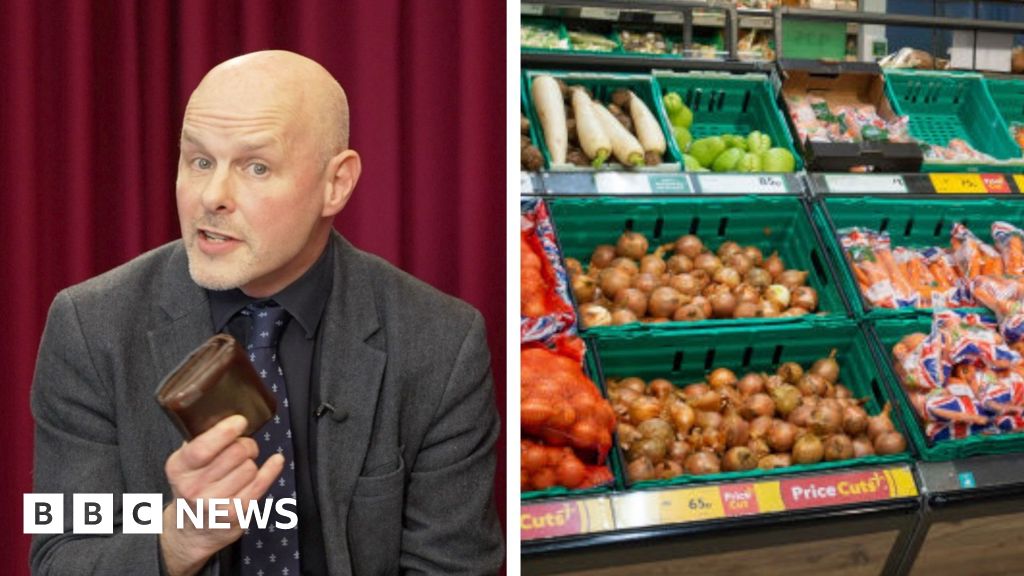
From fuel to mortgages, the BBC looks at how oil and gas prices could push up the cost of living.
Source link

An increasing number of UK adults now have a bank account with a digital-only provider, with finance management by app a common solution for fast payments, splitting bills with friends, and getting good interest rates.
Research by Finder, the comparison site, shows that almost half (49 per cent) of Britons have opened a digital-only bank, with that number significantly higher at almost two-thirds of Gen-Z (65 per cent) and Millennials (63 per cent).
The reasons for that are varied. More people bank via phone than before, with branch closures perhaps a symptom of that – or a cause leading to it, depending on who you speak to.
App-only banks have also lured in customers with attractive perks, be it higher interest rates, how fast you can open them, or better service.
And one of the fast-growing cohort of British online banks has reached more milestones in the past year: Zopa Bank. The upstart launched the ‘Biscuit’ account which is a bit of a rarity, paying interest on your current account balance.
That alone is a draw for some, but like others in the sector they’ve added the features that make online banking as a whole so attractive: multiple products in the same place, early versions of in-app AI aids and quick-linked accounts elsewhere.
It has led to further growth over the last 12 months which has seen them amass 1.7m customers in total, more than half a million higher than a year earlier. Chancellor Rachel Reeves also namechecked them as a standout in the UK fintech scene last April, along with payments firm Zilch and business lender Allica Bank.
“The long-term ambition is to be more than ten million customers and really challenging or displacing others in terms of primary banking relationships for people. That’s where we want to go to,” CEO Jaidev Janardana told The Independent.
“Success for us is when we talk to our customers and ask them who is your [main] bank, they say Zopa and have not just a current account with us but other products too.
Get a free fractional share worth up to £100.
Capital at risk.
Terms and conditions apply.
ADVERTISEMENT

Get a free fractional share worth up to £100.
Capital at risk.
Terms and conditions apply.
ADVERTISEMENT
“Today we have a product set that is probably wider than other neobanks – a consumer can choose to do almost anything with us, which is not true for all the other digital banks.”
The numbers seem to reflect an increase in that, with one in four customers holding more than one product, such as a savings and current account or an ISA.
But there’s plenty of competition, too.

Revolut just secured a full British banking licence after a years-long wait, but they have a reported 13m customers in the UK already. Monzo is even further ahead, at 14m including their notable focus on British businesses.
Within closer touching distance are perhaps Starling (4.5m customers) or Chase UK (2.5m, owned by JP Morgan). Many of these firms also regularly feature highly in customer satisfaction surveys – and that’s without considering the older high-street names and their own app-only offerings.
“I have no desire to be the next Monzo, as successful as they are and while we have admiration for them,” Mr Janardana added.
“Our path is very different to a Starling or Monzo, in terms of having built our business to start on savings. That gives us an advantage in terms of the business model.”
Instead, he references several times the importance of attempting to build long-term relationships with customers, utilising a wide-ranging product panel to essentially lock in consumers with an all-you-need offering.
However, the truth is that more and more people now choose to utilise multiple banks, or at least multiple savings pots for different goals or needs.
That means while competition is fierce, there’s little stopping someone opening an account with each if they so choose, for different spending or saving reasons – and therefore it’s an opportunity to recruit customers as much as a battle for them.
That’s perhaps a drawback to the “all you need is us” mentality – but perhaps a real positive if consumers are actively searching around for somewhere new simply based on the top rates, for example, and a name they didn’t previously know is among them.

Put to the chief executive that, given the online focus and marketing, it might be suggested that Zopa’s preferred clientele appears of a younger variety, Mr Janardana explains that both for both regional and age demographic breakdowns, the numbers actually sit close to the UK population.
Zopa say the average age of their consumer is just over 40 years old and only around 15 per cent of users are located in London – just ahead of the roughly 13 per cent population of the UK who live there.
All of those customers will be getting additional AI-based tools soon enough, with the build-in app assistant set to split bills, move money and even receive targeted support, when the government-led initiative to increase investor numbers comes online later this year.
The idea will see customers being given AI-led guidance in how to manage wealth for the long term, based on their characteristics and financial situation.
Zopa’s latest financial figures show £65m in underlying profits, up from £34.2m a year earlier, with the customer deposit base – how much clients are putting into their accounts – up by just over a sixth (17 per cent) to £6.4bn. Zopa got its British bank licence in 2020 and these figures, for 2025, show a third year of profitability.
Success a year from now would encompass “a similar trajectory in financials, and a greater number of customers,” Mr Janardana added.


India may impose up to $2/kg anti-dumping duty on spandex yarn

Virginia’s Anna Moesch wins 1st career NCAA individual title
10-yr strategy launched for Australian fashion & textile manufacturing

Stock market crash today (March 12, 2026): Nifty50 opens below 23,600; BSE Sensex down over 900 points on continuing US-Iran war – The Times of India

UK’s Topshop unveils Tolu Coker capsule collection

US ignites Iran war, but Gulf Arab states pay the price | The Express Tribune

-
Business1 week ago
Stock market crash today (March 12, 2026): Nifty50 opens below 23,600; BSE Sensex down over 900 points on continuing US-Iran war – The Times of India
-
Business1 week ago
US ignites Iran war, but Gulf Arab states pay the price | The Express Tribune
-
 Fashion1 week ago
UK’s Topshop unveils Tolu Coker capsule collection
-

 Fashion1 week ago
India’s textile recycling market may reach $3.5 bn by 2030: Report
-

 Tech1 week ago
Meta Developed 4 New Chips to Power Its AI and Recommendation Systems
-

 Sports1 week ago
Bangladesh crush Pakistan in ODI series opener | The Express Tribune
-
 Business1 week ago
8th Pay Commission: How Much Will Central Govt Employees’ Salaries Rise? What We Know So Far
-

 Entertainment1 week ago
Ed Sheeran makes surprising Benny Blanco confession after hygiene uproar