

Fashion
Ensuring I-EAEU FTA’s effective implementation a challenge: Indonesia


The agreement is scheduled to be signed during the EAEU Summit in St. Petersburg, Russia, on December 20-21, an EAEU release said.
As Indonesia prepares to welcome the signing of the Indonesia-Eurasian Economic Union Free Trade Agreement, Trade Minister Budi Santoso has said the true challenge is to ensure its effective implementation.
The pact is expected to be signed at the EAEU Summit in St. Petersburg on December 20-21.
Implementation is targeted by late 2026 or early 2027.
The FTA’s initial phase will focus on goods trade.
At the Strategic Forum on International Trade: Indonesia-EAEU FTA in Jakarta, Santoso stressed that without readiness from businesses and strong partnerships, the FTA risks becoming a mere document rather than a driver of trade.
To address this, the Indonesian Ministry of Trade is encouraging the creation of communication platforms and business partnerships between Indonesia and EAEU member states.
Indonesian exports to the bloc reached $1.9 billion in 2024, with total trade valued at $4.5 billion. Over the past five years, bilateral trade has grown at an average annual rate of 21.45 per cent.
The FTA could potentially double total trade, opening access to a vast market of nearly 200 million people, Santoso noted.
The initial phase of the FTA will focus on goods trade, while services, investment and broader cooperation may be included later.
Each EAEU member state is expected to ratify the FTA following the signing. Implementation is targeted by late 2026 or early 2027.
“Over the past three years, the landscape of our foreign trade has been completely renovated. If the EU’s [European Union’s] share of our trade turnover previously exceeded 50 per cent, it now stands at 18 per cent, while the share of BRICS+ countries has increased from 30 per cent to almost 70 per cent,” Andrey Slepnev, Minister in charge of Trade of the Eurasian Economic Commission (EEC), told a recent press conference.
Fibre2Fashion News Desk (DS)












The seasonally-adjusted S&P Global US manufacturing PMI recorded 52.3 in March. That was an improvement from 51.6 in February and indicative of a moderate rate of expansion. It was the eighth successive month that the PMI has posted above the critical 50 no-change mark.
However, with tariffs continuing to hit new export sales, US growth was principally driven by higher domestic demand. Moreover, this in part reflected some client safety stock building due to the war in the Middle East, which drove up inflation and added to supply-chain stress.
US manufacturing performance improved in March, with growth solid and picking up since February amid better gains in both output and new orders, S&P Global US manufacturing PMI data show.
However, with tariffs continuing to hit new export sales, US growth was principally driven by higher domestic demand.
Firms are hopeful that March’s overall increase in sales will be sustained over the coming months.
March’s survey signalled notable accelerations in both input and output price inflation, whilst the time taken to deliver inputs to manufacturers deteriorated to the greatest degree since October 2022, a release from S&P Global said.
Meanwhile, confidence in the outlook softened fractionally, with firms noting worries over higher energy prices and tariffs.
Employment numbers were little changed overall.
Higher output and new orders helped to support the PMI in March. In both instances, growth rates were solid.
Firms are hopeful that March’s overall increase in sales will be sustained over the coming months. Confidence in the outlook remained positive overall.
However, worries over energy prices and tariffs meant expectations softened slightly since February.
Fibre2Fashion News Desk (DS)
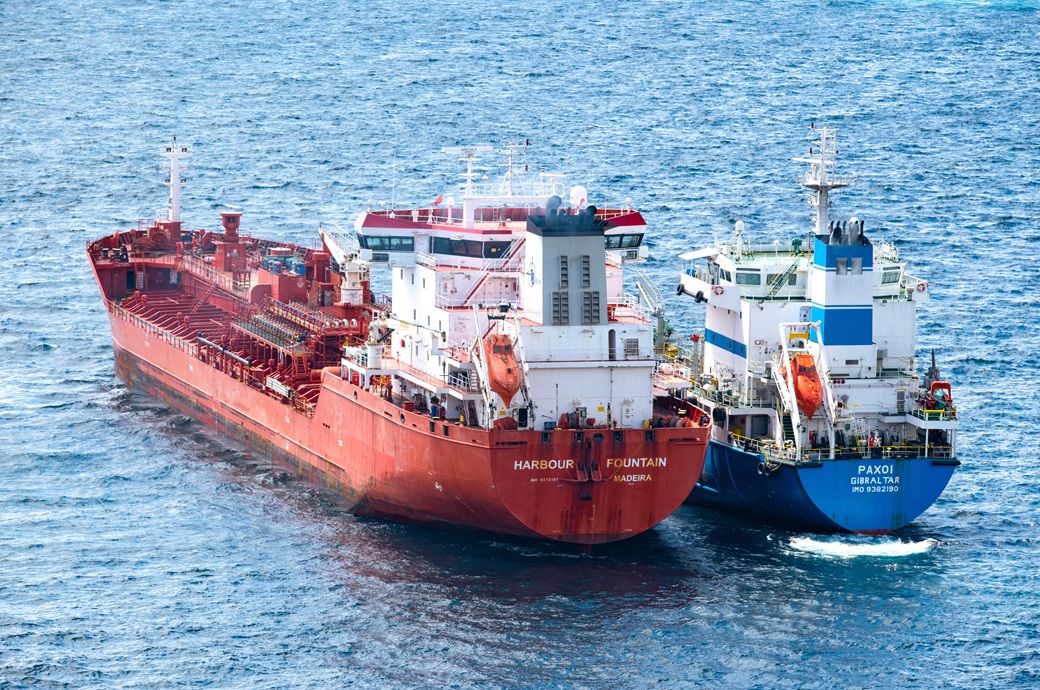
Lighterage operators complained that diesel supply from state-owned depots has dropped to nearly a fourth of the daily demand, delaying the offloading of mother vessels at the outer anchorage and affecting the entire supply chain of industrial raw materials and imported goods.
Lightering vessel operations at Bangladesh’s Chittagong Port have been hit due to a severe fuel shortage triggered by the Iran war.
Diesel supply has dropped to a fourth of the daily demand, delaying the offloading of mother vessels at the outer anchorage and hitting the supply chain of industrial raw materials and imported goods.
Offloading from mother vessels is being prioritised to avoid demurrages.
The Bangladesh Water Transport Coordination Cell (BWTCC), which regulates around 1,200 lightering vessels, the daily requirement for ships booked to offload cargo is nearly 250,000 litres.
Marine fuel dealers, however, are currently providing only 60,000 to 70,000 litres.
Operators said they are trying to prioritise the offloading process from mother vessels to avoid heavy demurrages.
However, once the goods are loaded, the vessels lack sufficient fuel to reach their inland destinations or return to the port for the next shipment, according to domestic media outlets.
BWTCC has written to the relevant ministries seeking an urgent solution, but operators say they are yet to get a response.
Fibre2Fashion News Desk (DS)

The relief covers a wide basket of chemicals, polymers, and intermediates used in fibre production and textile processing, with concessional duty rates expected to lower the effective cost of key inputs. This is particularly significant as upstream feedstocks such as PTA, MEG, and polyester melt have remained volatile due to crude-linked movements.
Sanjay K Jain, chairman of the ICC National Textile Committee told Fibre*Fashion, “The decision would create a positive sentiment. Both pricing and availability should improve for the industry.” He noted that the trickle-down impact would be visible across textiles as many of these inputs are core raw materials.


Transfer rumors, news: Four Premier League clubs want Rogers

Video: Skilled Foreign Workers Think About Leaving the U.S.

US manufacturing performance improves in March 2026

-

 Fashion1 week ago
Ho Chi Minh City bizs adjust production plans, seek new supply chains
-

 Entertainment7 days ago
Lee Sang-bo dies at 45: Funeral details revealed
-

 Sports7 days ago
Illinois defense gets tough, ousts Houston to reach Elite Eight
-

 Fashion6 days ago
EU apparel imports slump 15.48% YoY in Jan; Bangladesh hardest hit
-

 Fashion1 week ago
India’s Gen Z to drive half of fashion market by 2030: Reedseer
-

 Sports5 days ago
2026 NCAA men’s hockey tournament: Schedule, results
-
 Business7 days ago
How do you spot a fake online review?
-

 Fashion7 days ago
China rolls out tariff cuts on Congo imports from April 1