

Politics
Essential takeaways from Trump’s 20-point Gaza ceasefire blueprint


WASHINGTON: US President Donald Trump published on Monday a 20-point peace proposal for Gaza that would end the war between Israel and Hamas and require the return of all hostages living and dead within 72 hours of a ceasefire.
The plan leaves many details for negotiators to hash out and hinges on acceptance by Hamas fighters who launched the war against Israel on October 7, 2023. It refers to a redeveloped Gaza as “New Gaza.”
Here are the main elements of the plan that resulted from intense negotiations in recent weeks between Trump and his team, and Israeli and Arab leaders:
- If both sides agree to the proposal, the war will end immediately. Israeli forces will withdraw partially to prepare for a hostage release. All military operations will be suspended and battle lines will be frozen in place until conditions are met for the “complete staged withdrawal” of Israeli forces.
- Within 72 hours of Israel publicly accepting the proposal, all hostages, alive and dead, will be returned. Once all hostages are released, Israel will free 250 Palestinian prisoners serving life sentences plus 1,700 Gazans arrested after the start of the conflict on October 7, 2023. For every Israeli hostage whose remains are released, Israel will release the remains of 15 dead Gazans.
- Once all hostages are freed, members of Hamas “who commit to peaceful coexistence” and give up arms will be given amnesty. Members of Hamas who wish to leave Gaza will be provided with safe passage to receiving countries.
- Upon acceptance of this agreement, full aid will be immediately sent into the Gaza Strip, with quantities consistent with the levels mandated under a January 19, 2025, accord. Aid deliveries will proceed without interference from Israel or Hamas through the United Nations and related agencies.
- A “deradicalised” Gaza will not pose a threat to its neighbours and will be “redeveloped” for the benefit of Gazans.
- The Trump plan envisions a “Board of Peace” of international overseers led by Trump himself and including former British Prime Minister Tony Blair in an undefined role. Gaza will be governed under the temporary transitional governance of a “technocratic, apolitical” committee made up of Palestinians and international experts, to be overseen by the Board of Peace. This group will set the framework and handle the funding for the redevelopment of Gaza until the Palestinian Authority has undergone major reforms.
- A Trump economic development plan to rebuild Gaza will be created by convening a panel of experts “who have helped birth some of the thriving modern miracle cities in the Middle East.” A special economic zone will be established with preferred tariff and access rates to be negotiated with participating countries.
- Under the plan, no one will be forced to leave Gaza, which has sustained heavy damage during the war, and those who wish to leave will be free to do so and free to return. “We will encourage people to stay and offer them the opportunity to build a better Gaza,” the plan says.
- Hamas and other factions would agree to have no role whatsoever in governing Gaza, directly or indirectly. All military infrastructure, including tunnels and weapons production facilities, will be destroyed. Independent monitors will supervise the demilitarisation of Gaza.
- “New Gaza will be fully committed to building a prosperous economy and to peaceful coexistence with their neighbours,” according to the plan.
- Regional partners will work to ensure that Hamas and related factions comply with their obligations and that New Gaza poses no threat.
- The US will work with Arab and international partners to develop a temporary International Stabilisation Force to immediately deploy in Gaza.
- Israel will not occupy or annex Gaza. The Israeli Defence Forces will progressively hand over the Gaza territory it occupies to the International Stabilisation Force.
- The plan is vague on a pathway to Palestinian statehood. It says that while Gaza redevelopment advances and when the Palestinian Authority is reformed, “the conditions may finally be in place for a credible pathway to Palestinian self-determination and statehood, which we recognise as the aspiration of the Palestinian people.”
- The US will establish a dialogue between Israel and the Palestinians to agree on a “political horizon for peaceful and prosperous co-existence.”
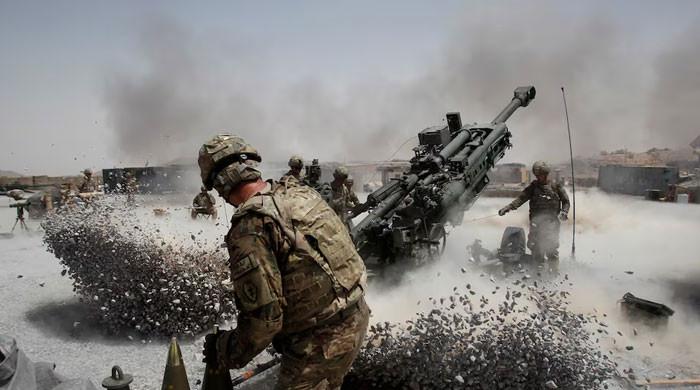
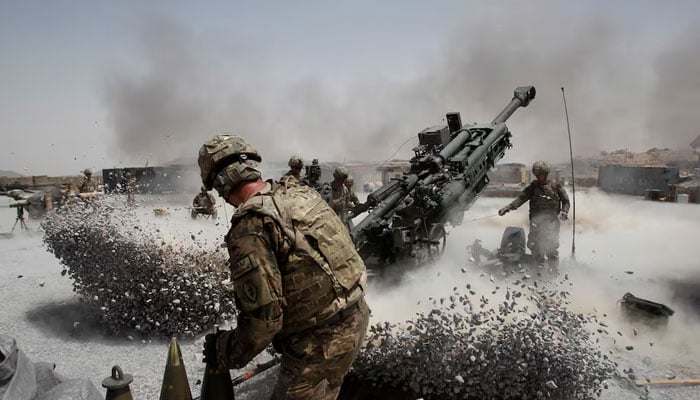
Despite promising to end United States’ involvement in costly and destructive foreign wars, President Donald Trump, together with Israel, has launched a massive military assault on Iran, targeting its leadership as well as its nuclear and missile infrastructure.
Since the September 11, 2001, attacks on New York and Washington DC, the United States has engaged in three full-scale wars and conducted bombing operations in at least 10 countries. These operations have ranged from large-scale invasions to targeted air strikes and drone campaigns, often carried out over multiple years.
In the immediate aftermath of 9/11, then-President George W Bush declared a “war on terror”, launching a global military campaign that reshaped US foreign policy.
The wars in Afghanistan and Iraq were followed by military operations in Pakistan, Syria, Yemen and other regions, as successive administrations expanded or sustained counterterrorism efforts.
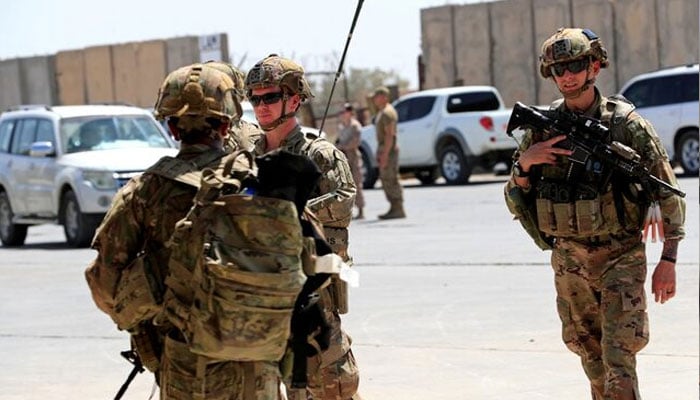
Two decades of war and its costs
Research by Brown University’s Watson Institute for International and Public Affairs estimates that US-led wars since 2001 have directly caused approximately 940,000 deaths across Afghanistan, Pakistan, Iraq, Syria, Yemen and other conflict zones, according to Al Jazeera report.
The figure excludes indirect deaths resulting from displacement, destruction of infrastructure, limited access to healthcare and food shortages, the report said.
According to the report, the United States has spent an estimated $5.8 trillion on post-9/11 wars. This includes $2.1 trillion allocated by the Department of Defence, $1.1 trillion by the Department of Homeland Security, $884 billion added to the Pentagon’s base budget, $465 billion for veterans’ medical care and roughly $1 trillion in interest payments on war-related borrowing.
In addition, the US is projected to spend at least another $2.2 trillion on veterans’ care over the next three decades, bringing the total estimated cost of its post-2001 wars to approximately $8 trillion.
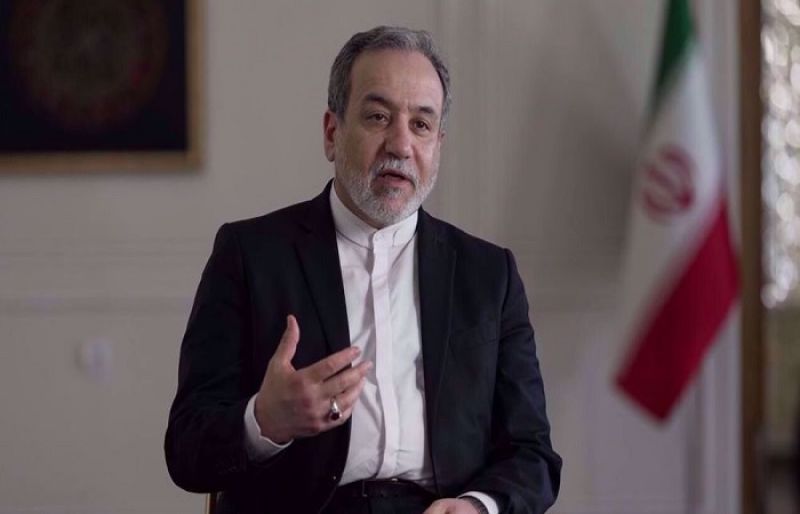

Iran’s Foreign Minister Abbas Araghchi says US President Donald Trump betrayed both the indirect negotiations with Tehran and the American people by launching unprovoked aggression against Iran.
In a post published on social media platform X on Wednesday, Araghchi said, “When complex nuclear negotiations are treated like a real estate transaction, and when big lies cloud realities, unrealistic expectations can never be met. The outcome? Bombing the negotiation table out of spite.”
“Mr. Trump betrayed diplomacy and Americans who elected him,” added the top diplomat.
Iran and the US were in the midst of indirect negotiations regarding Iran’s nuclear program, with Iranian negotiators and the Omani mediators expressing strong hope that an agreement could be reached.
On Friday, one day before the Israeli-US aggression against Iran and immediately after the third round of negotiations in Geneva, Switzerland, Omani diplomats went so far as to say that a new comprehensive agreement was closer than ever.
However, on Saturday, Israeli and US armed forces launched a series of attacks against strategic targets across Iran, killing several senior officials.
Trump’s especial envoy to West Asia Steve Witkoff, head of the US negotiating team, had earlier tried to pave the way for the US aggression on Iran by falsely claiming that it was the Iranian side that had undermined the process.
However, a diplomat familiar with the process of the negotiations told MS NOW that Witkoff’s claims are completely false and Iranians were open to a fair but comprehensive agreement with the US.
“I can categorically state that this is inaccurate,” said the diplomat, referring to Witkoff’s account.
According to the Persian Gulf diplomat, who spoke on condition of anonymity, the Iranian delegation had told Witkoff during indirect negotiations on Iran’s nuclear program that Tehran enriched the uranium after Trump pulled the US out of a 2015 nuclear agreement brokered by former President Barack Obama’s administration.
Scores of Iranian cities have been targeted in the US-Israeli aggression. Leader of the Islamic Revolution Ayatollah Seyyed Ali Khamenei was assassinated in the Saturday attack.
Since then, Iranian armed forces have swiftly and decisively retaliated against these strikes by launching barrages of missile and drones against Israeli-occupied territories as well as on US bases in region.
Iranian officials have stated that targeting US military bases in the region constitutes “legitimate self-defense.”
Referring to Article 51 of the Charter of the United Nations, they said that Iran has the legal right to defend itself against “acts of aggression” by the US or the Israeli regime.
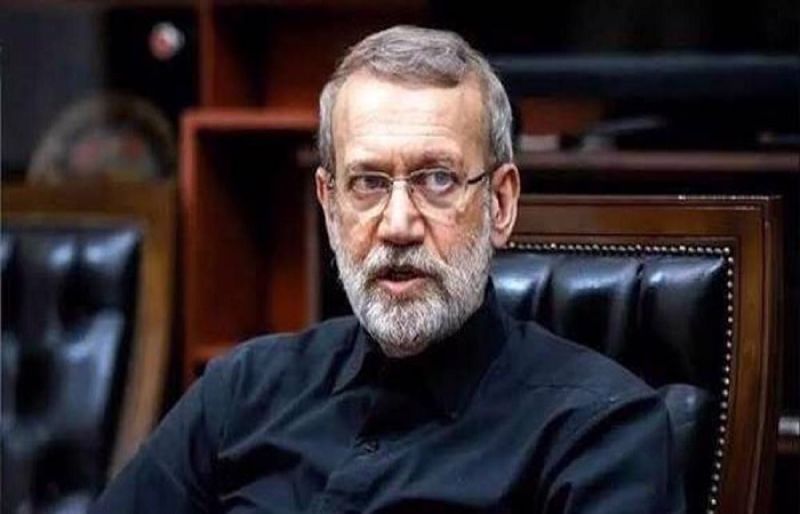

Iran’s security chief says US President Donald Trump has inflicted a heavy loss on his country by launching a war with Iran that was only the result of Israeli Prime Minister Benjamin Netanyahu’s warmongering tactics.
In a post on his X account on Wednesday, Ali Larijani, who serves as secretary of Iran’s Supreme National Security Council (SNSC), said that the United States had lost some 500 soldiers since it joined Israel in a war on Iran on February 28.
Larijani said that the heavy loss has exposed Trump’s deceitful mantra of putting America First.
“Mr. Trump, swayed by Netanyahu’s clownish antics, has dragged the American people into an unjust war with Iran.
Now he must calculate: with over 500 American soldiers killed in just the past few days, does America still come first—or Israel?” he said in the post.
The SNSC chief said that Iran will continue to inflict losses on the enemies as part of its large-scale operation to avenge the assassination of Leader of the Islamic Revolution Ayatollah Seyyed Ali Khamenei, which took place in a joint US-Israeli airstrike on Saturday.
“The story continues. The martyrdom of Imam Khamenei will exact a heavy price from you. God willing,” Larijani said.
Iran has been carrying out successive rounds of retaliatory attacks on the Israeli regime and on US assets in regional countries since the weekend.
The attacks have resulted in unprecedented damage to locations in the Israeli-occupied territories as well as US military bases in several countries bordering or near Iran.
Iranian authorities have made it clear that the attacks will continue until the aggressors are punished.


Jake Cannavale shares his bit on Bobby Cannavale, Rose Byrne’s viral pet

Judge sets May retrial date in Miami football murder case

Target is making big changes to win back customers. Here’s what shoppers can expect to see

India Us Trade Deal: Fresh look at India-US trade deal? May be ‘rebalanced’ if circumstances change, says Piyush Goyal – The Times of India

Households set for lower energy bills amid price cap shake-up

What are Iran’s ballistic missile capabilities?

-
Business6 days ago
India Us Trade Deal: Fresh look at India-US trade deal? May be ‘rebalanced’ if circumstances change, says Piyush Goyal – The Times of India
-
Business1 week ago
Households set for lower energy bills amid price cap shake-up
-
 Politics6 days ago
What are Iran’s ballistic missile capabilities?
-

 Politics7 days ago
US arrests ex-Air Force pilot for ‘training’ Chinese military
-
 Business6 days ago
Attock Cement’s acquisition approved | The Express Tribune
-

 Fashion6 days ago
Policy easing drives Argentina’s garment import surge in 2025
-

 Sports1 week ago
Top 50 USMNT players of 2026, ranked by club form: USMNT Player Performance Index returns
-

 Sports7 days ago
Sri Lanka’s Shanaka says constant criticism has affected players’ mental health