

Fashion
EU introduces €3 levy on small parcels from China


Published
December 12, 2025
The principle has been agreed, but the practical details have yet to be worked out. From July 1, a three-euro tax will be applied to small non-EU parcels entering the European Union, marking the end of the tax exemption for parcels under 150 euros, in a bid to rein in Shein and Temu.
Some 4.6 billion consignments worth less than 150 euros entered the European market in 2024, at a rate of more than 145 every second. Of this total, 91% came from China. A month ago, EU finance ministers approved scrapping, from next year, the duty-free status enjoyed by these parcels.
While this measure is intended to apply to parcels from all countries outside the EU, it is primarily aimed at stemming the flood of low-priced Chinese products into Europe, which often fail to comply with European standards, and are purchased on Asian platforms such as Shein, Temu, or AliExpress.
This influx of imported parcels with no customs duty has increasingly been denounced by European producers and retailers as a form of unfair competition.
Moreover, the volume of parcels arriving at European airports and ports is so great that customs officers are frequently unable to check whether they comply. In these circumstances, it is difficult to intercept dangerous or counterfeit products before they reach consumers.
“Four years ago, there were one billion parcels arriving from China. Today, it’s more than four billion,” noted French Economy Minister Roland Lescure. “Today, these parcels represent unfair competition for city-centre businesses which pay taxes, so it’s essential to act and act fast, otherwise we will act too late,” he told AFP.
A Herculean task
France, in the midst of a stand-off with Chinese e-commerce giant Shein following the scandal over the sale of childlike sex dolls and Category A weapons, has led this battle in Brussels to scrap the exemption from customs duties on these low-value shipments.
The measure had in fact already been planned as part of the reform of the Customs Union (the European customs system), but it is not due to apply until 2028. In November, the 27 member states agreed to implement it “as soon as possible” in 2026.
But that means finding a “simple and temporary” solution for taxing these billions of parcels, until the customs data platform provided for in the reform, which should greatly facilitate the collection of customs duties, becomes operational.
According to some members of parliament, applying the usual customs duties to small parcels from 2026 onwards- with rates varying according to product category or sub-category and the country of import- would be a Herculean task, risking clogging up already overburdened customs services even further.
Roland Lescure made it clear on Thursday that he would defend “a flat-rate tax, because we want the measures taken in Europe to have an impact,” rather than “proportional taxation,” which he believes would not be a sufficient deterrent.
A first step
However, setting up a transitional system “is not easy, because we have to do it with our existing resources,” said a European diplomat, who on Thursday declined to give an exact date for the entry into force of the provisional system.
The taxation of small parcels is just the first step in the EU’s offensive against the avalanche of Chinese products entering its territory: from November 2026, it is due to be accompanied by the introduction of handling fees on these same parcels valued at less than 150 euros. In May, Brussels proposed setting them at two euros per parcel.
This sum will help finance the development of controls and, according to the EU, together with the collection of customs duties, will help level the playing field between European products and competition “made in China.”
FashionNetwork.com with AFP
This article is an automatic translation.
Click here to read the original article.
Copyright © 2025 FashionNetwork.com All rights reserved.











The uncertainty has increased noticeably, with the ongoing conflict involving Iran weighing heavily on corporate confidence. The escalation has effectively stalled hopes of a near-term economic recovery, particularly as energy markets remain volatile, ifo said in a press release.
In the manufacturing sector, sentiment declined after showing improvement in recent months. The drop was driven largely by a significant deterioration in expectations, while firms also reported a less favourable view of their current business situation. Energy-intensive industries were particularly affected, underscoring the pressure from elevated input costs.
Germany’s business sentiment weakened in March, with the ifo business climate index falling to 86.4 from 88.4 amid rising uncertainty and the Iran conflict dampening recovery hopes.
Manufacturing saw a sharp drop in expectations, especially in energy-intensive sectors.
Trade sentiment also declined due to inflation concerns, although current conditions remained relatively stable across sectors.
The trade sector also registered a decline in sentiment, primarily due to a more pessimistic outlook. Concerns over rising inflation among German consumers have led to weaker expectations in both wholesale and retail segments, signalling subdued demand conditions ahead.
Despite the gloomier outlook, businesses in the trade sector reported a slightly improved assessment of their current situation. This suggests that while present activity remains relatively stable, confidence in future performance is deteriorating.
Fibre2Fashion News Desk (SG)
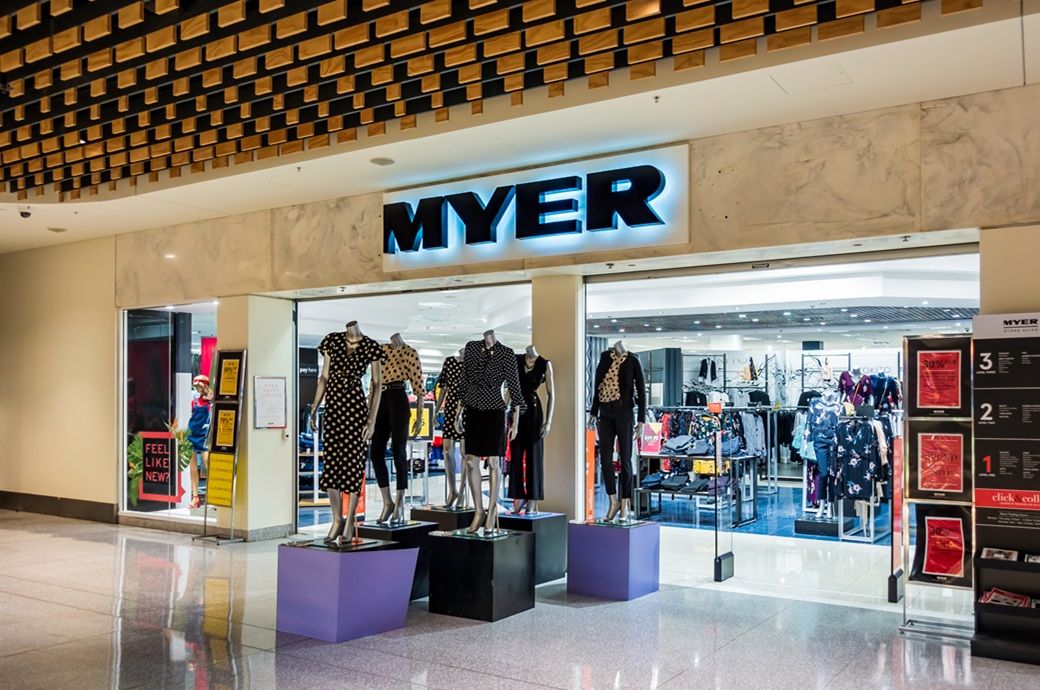
Operating gross profit surged 35.1 per cent to $886.0 million, while underlying earnings before interest and tax (EBIT) rose 10.5 per cent to $112.8 million. Underlying net profit after tax (NPAT) increased 21.7 per cent to $51.7 million, with statutory net profit after tax (NPAT) up 32.8 per cent to $40.3 million.
Myer has reported strong H1 FY26 results, with total sales rising 24.5 per cent to $2,279.5 million and NPAT up 21.7 per cent to $51.7 million.
Growth was supported by Apparel Brands integration and strategic investments.
Loyalty members reached 5.1 million.
Early H2 FY26 sales rose 1.7 per cent, though the company remains cautious amid macroeconomic pressures and weak discretionary demand.
The company maintained strong financial discipline, with cost of doing business at 27.9 per cent of total sales, within its FY26 target of around 29 per cent. Myer also reported a robust net cash position of $287 million, reflecting strong cash conversion and balance sheet flexibility, Myer said in a press release.
Myer’s ongoing transformation strategy continued to gain traction during the period, particularly through its customer engagement and brand expansion initiatives. The relaunched Myer one loyalty programme reached a record 5.1 million active members, supported by enhanced personalisation driven by AI-led data modelling.
The company also strengthened its product portfolio, introducing new exclusive brands and securing partnerships with global names such as Fenty Beauty, La Mer, Gap, and Topshop.
“Our H1 result reflects momentum across our business as we continue to implement the Myer Group Growth Strategy. Sales growth was achieved both in store and online, and our disciplined cost management allowed us to make targeted investments including in e-commerce, marketing, product, merchandise and supply chain to deliver on our plan,” said Olivia Wirth, executive chair at Myer.
“We achieved our biggest Black Friday on record for Myer Retail, and total sales for the group through the important trading months of December and January were in line with last year—a good outcome that demonstrates the resilience of the business,” added Wirth.
The integration of Myer Apparel Brands progressed steadily, with the company targeting at least $30 million in annualised synergies, alongside an additional $10 million from integrating sass & bide, Marcs, and David Lawrence.
Operationally, Myer continued to optimise its store network, closing 22 stores and opening 12 during the period, while advancing its omni-channel capabilities. The company is set to launch an expanded Myer Marketplace platform in May 2026.
Supply chain efficiency also improved, with 32 per cent of online orders fulfilled through third-party logistics and distribution centres, compared to 13 per cent a year earlier.
In the first seven weeks of the second half (H2), total sales grew 1.7 per cent YoY, with Myer Retail sales up 2.2 per cent, driven by strong performance in home and kids categories.
Despite the positive momentum, the company remains cautious amid macroeconomic uncertainty and pressure on discretionary spending.
“Given the current volatility in the wider macroeconomic environment and the ongoing pressures on discretionary spending, we are more focused than ever on delivering value for our customers,” added Wirth.
Fibre2Fashion News Desk (SG)


Transfer rumors, news: Could Foden leave Man City this summer?

Germany’s ifo index drops to 86.4 in March as uncertainty weighs on

Just Eat and Autotrader among five firms under investigation over online reviews

-
 Fashion1 week ago
Sales at US apparel, clothing accessories stores up 4% YoY in Jan 2026
-

 Entertainment1 week ago
Val Kilmer revived 1 year after death through AI
-
 Fashion1 week ago
US’ G-III Apparel’s FY26 sales fall 7% to $2.96 bn
-

 Sports1 week ago
March Madness 2026 – How to watch in SA, start time, schedule, TV channel for NCAA championship basketball tournament
-
 Business1 week ago
Brits cashing in jewellery as gold price hits record high
-

 Fashion6 days ago
China’s textile & apparel exports surge 17% to $50 bn in Jan-Feb 2026
-
 Business1 week ago
Video: The Effects of High Oil Prices
-
 Business6 days ago
Flipkart group CFO to leave co amid IPO plans – The Times of India