

Fashion
EU MEPs approve phased ban on Russian gas imports from 2026


The European Parliament has approved new legislation to phase out imports of Russian gas, aiming to safeguard the bloc’s energy security from what lawmakers describe as systematic weaponisation by the Russian Federation.
The European Parliament has approved landmark legislation to phase out Russian gas imports, banning spot-market LNG from early 2026 and ending pipeline gas imports by September 30, 2027.
The law advances phase-out timelines, introduces penalties for breaches, and tightens checks to prevent circumvention.
MEPs also secured a commitment for proposed legislation to ban Russian oil imports by late-2027.
Under the new rules, spot-market Russian liquefied natural gas (LNG) will be banned from the EU once the regulation enters into force in early 2026. Imports of Russian pipeline gas will be phased out by September 30, 2027. During negotiations, EU co-legislators agreed to bring forward the phase-out timelines for most existing import contracts.
The regulation also introduces penalties, to be enforced by member states, against operators found to be in breach of the new requirements, the European Parliament said in a release.
Alongside gas measures, Members of the European Parliament (MEPs) secured a political commitment from the European Commission to propose legislation banning all imports of Russian oil. The Commission is expected to present this proposal in early 2026, with the aim of ensuring an effective oil import ban as soon as possible and no later than late-2027. MEPs also tightened the conditions under which any temporary suspension of the ban could be granted, limiting such exemptions to genuine energy security emergencies.
To prevent circumvention, operators will be required to provide customs authorities with more detailed and robust evidence on the country of production of gas prior to import or storage in the EU.
“This is historic: the EU is taking a giant step towards a new era free of Russian gas and oil. Russia can never again use fossil fuel exports as a weapon against Europe. Now, we must act without delay to implement this agreement and turn our attention to oil imports, where we will hold the European Commission to its commitment to make a proposal early in 2026,” said lead MEP for the industry, research and energy committee (ITRE), Ville Niinisto (Greens/EFA, Finland)
“We have strengthened the European Commission’s initial proposal by introducing a pathway towards a ban on oil and its products, ending long-term contracts sooner than originally proposed, and securing penalties for non-compliance,” said Inese Vaidere (EPP, Latvia), lead MEP for the International Trade Committee.
The legislation, already agreed with the Council, was adopted by the European Parliament with 500 votes in favour, 120 against, and 32 abstentions. It now requires formal endorsement by the Council before publication in the Official Journal.
Fibre2Fashion News Desk (HU)













While rates initially jumped in early January, weak underlying demand and the potential return of vessels to the Suez Canal are creating a volatile environment for shippers, it noted.
Carriers pushed through general rate increases (GRIs) in early January this year, briefly lifting China-to-US West Coast rates above $3,000 per forty-foot equivalent unit (FEU). However, these hikes were largely unsustainable due to weak volumes, with rates quickly correcting to the $1,800-$2,200 range by mid-month, the logistics and supply chain market research firm said in an insights brief.
Asia’s ocean freight market is navigating short-term seasonal surges and long-term structural overcapacity, Ti said.
Asia’s air freight market is seeing a significant ‘post-peak’ correction following a record-breaking end to 2025.
Warehousing capacity in the Asia-Pacific is under severe strain in late January as manufacturing slows and labour shortages emerge ahead of the Lunar New Year.
Seasonal demand ahead of the Lunar New Year (starting mid-February 2026) has pushed North Europe rates to roughly $2,700 per FEU as of mid-January. This is a significant recovery from the October 2025 lows of $1,300 per FEU.
Despite a peak ahead of the holiday, Intra-Asia rates have begun to ‘cool’ in mid-January, settling at an average of $661 per 40-feet container as new services and capacity entered the market.
The Asian air freight market is witnessing a significant ‘post-peak’ correction following a record-breaking end to 2025. While rates have dropped sharply from their December highs, demand remains resilient in key high-tech sectors, and a ‘mini-peak’ is expected in late January ahead of the Lunar New Year.
Spot rates from major hubs like Hong Kong and Shanghai fell significantly in early January as year-end peak season demand evaporated.
Despite the rate correction, global air cargo tonnages jumped by 26 per cent in the first full week of January 2026 compared to the end-of-year slump, with the Asia-Pacific region seeing an 8 per cent year-on-year (YoY) increase in chargeable weight.
Volumes from Southeast Asia to the United States rose by 10 per cent YoY in early January, driven by importers continuing to diversify sourcing away from China.
Warehousing capacity in the Asia-Pacific is under severe strain in late January as manufacturing slows and labour shortages emerge ahead of the Lunar New Year.
India closed 2025 with 36.9 million sq ft of warehouse leasing (16-per cent YoY growth), a trend continuing into early 2026 with high demand in Delhi National Capital Region and Chennai.
After a period of oversupply, development pipelines are expected to drop by a third by 2027, making 2026 a critical ‘inflection point’ for occupiers to secure quality space before terms tighten again.
Fibre2Fashion (DS)
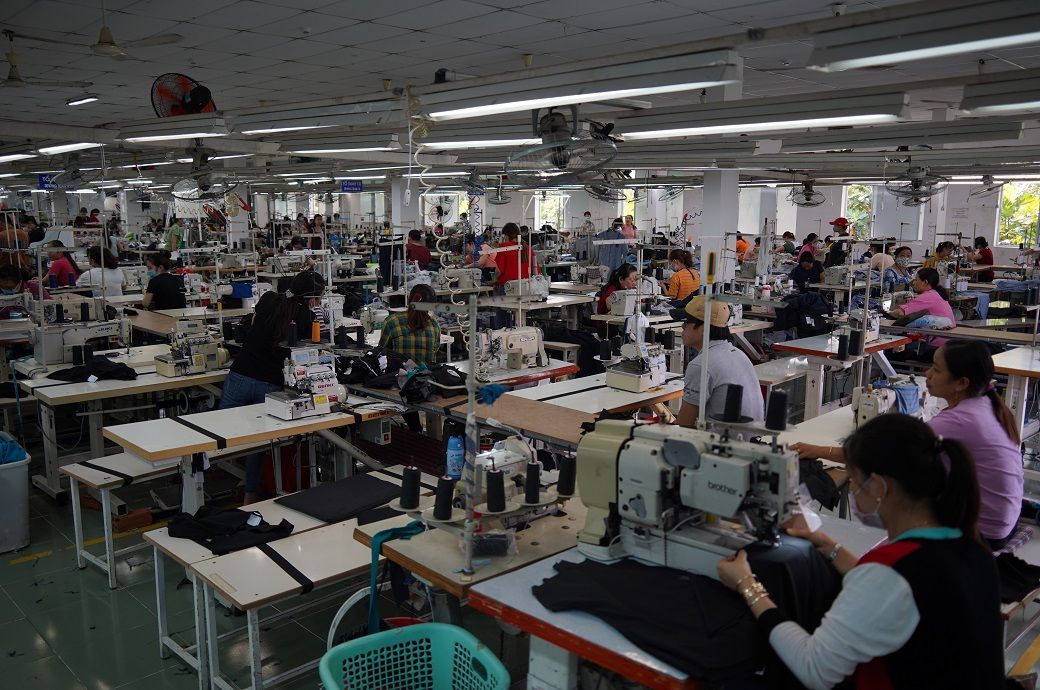
The goal, however, is challenging due to external pressures, including stricter technical barriers, reciprocal tariffs on goods exported to the United States, and the European Union’s Carbon Border Adjustment Mechanism (CBAM) for selected industrial products.
Therefore, major export industries in the country have started restructuring and adjusting strategies early in the year to seize market opportunities.
Following a record export value of $475 billion achieved in 2025—up by 17 per cent YoY—Vietnam aims at adding nearly $38 billion to the figure in 2026.
Major export industries in the country have begun restructuring and adjusting strategies early in the year to seize market opportunities.
The textile and garment sector, which earned $46 billion in 2025, has set a target of $50 billion in exports in 2026.
The textile and garment sector, which earned $46 billion in 2025, has set a target of $50 billion in exports in 2026.
The sector is focusing on strengthening domestic supply chains, raising localisation rates and making more effective use of free trade agreements (FTAs), Vu Duc Giang, chairman of the Vietnam Textile and Apparel Association (VITAS), was cited as saying by a domestic media outlet.
Exports may grow by 15-16 per cent this year, driven by market expansion and a shift towards higher-value products, according to MB Securities’ Vietnam Outlook 2026 report.
Fibre2Fashion (DS)
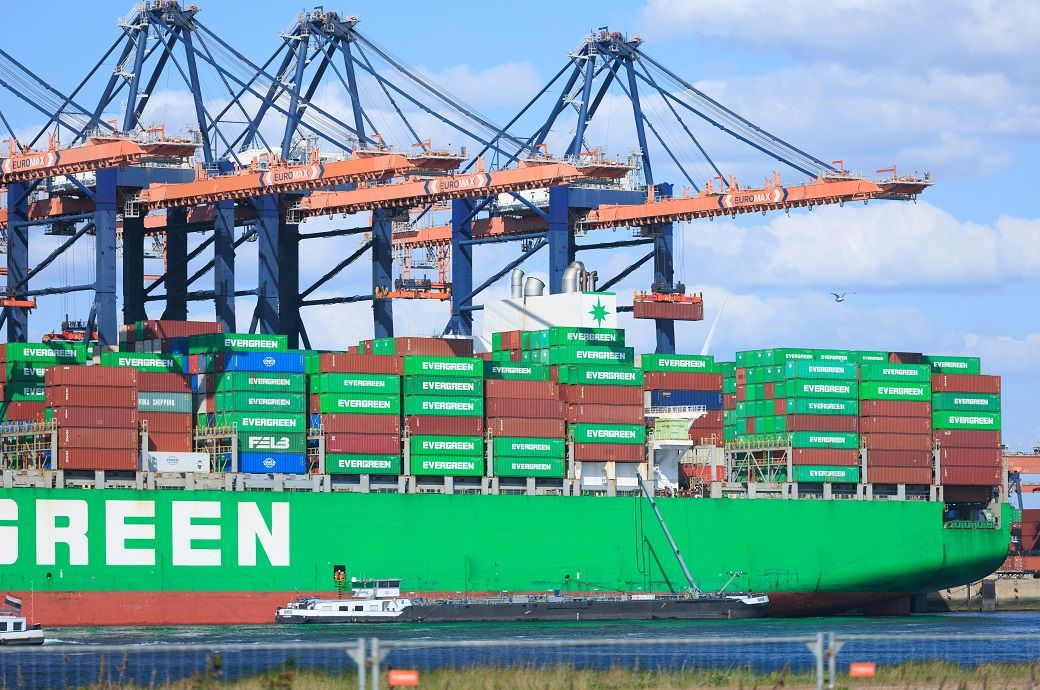
The data showed that the decline was driven mainly by weaker domestic exports, with goods produced in the Netherlands down 8 per cent YoY. In contrast, re-exports to the US rose 3.9 per cent during the period. Exports to the US have fallen every month on a YoY basis since July, CBS said in a press release.
Trade flows were influenced by uncertainty around US import tariffs. In the first half of 2025, trade between the two countries continued to grow, possibly as companies advanced shipments ahead of announced tariff measures.
Goods exports from the Netherlands to the United States fell 4.7 per cent YoY to €27.5 billion (~$33 billion) in the first ten months of 2025, driven by an 8 per cent drop in domestic exports, according to CBS.
Re-exports rose 3.9 per cent, while tariff uncertainty weighed on trade.
Imports from the US increased 1.9 per cent to €48.1 billion (~$57.7 billion).
Meanwhile, imports from the United States rose 1.9 per cent YoY to €48.1 billion (~$57.7 billion) in the first ten months of 2025.
Fibre2Fashion News Desk (SG)


Grammy host Trevor Noah receives stern response from Trump after Epstein dig

NHL outdoor game sees its 1st goalie fight between Vasilevskiy, Swayman

Gold and silver sell-off gathers steam in correction after record highs

-

 Sports6 days ago
PSL 11: Local players’ category renewals unveiled ahead of auction
-

 Entertainment5 days ago
Claire Danes reveals how she reacted to pregnancy at 44
-
 Business6 days ago
Banking services disrupted as bank employees go on nationwide strike demanding five-day work week
-

 Tech1 week ago
ICE Asks Companies About ‘Ad Tech and Big Data’ Tools It Could Use in Investigations
-

 Fashion1 week ago
Spain’s apparel imports up 7.10% in Jan-Oct as sourcing realigns
-

 Sports5 days ago
College football’s top 100 games of the 2025 season
-

 Politics1 week ago
Fresh protests after man shot dead in Minneapolis operation
-

 Sports1 week ago
Barcelona deny Madrid another trophy, but the gap is closing