

Politics
Europeans prepare military exercises in Greenland; Trump’s ambitions undeterred


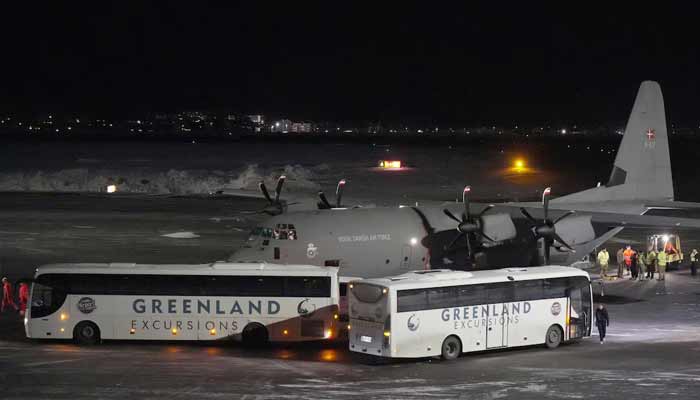
- US must own island to prevent Russia, China from occupying it: Trump.
- Germany, France sending military officers to Greenland.
- Denmark, allies prepare for exercises to assure Trump of security.
European countries were sending small numbers of military personnel to Greenland on Thursday as Denmark and its allies prepared for exercises to try to assure US President Donald Trump of its security as he pushes to acquire the island.
A meeting of officials from the United States, Denmark and Greenland on Wednesday avoided the type of public humiliation meted out to Ukrainian President Volodymyr Zelenskiy last year, but also produced no quick fix for the dispute.
“The American ambition to take over Greenland is intact,” Danish Prime Minister Mette Frederiksen said in a written comment to Reuters on Thursday, describing a “fundamental disagreement”.
“That is of course serious, and therefore we continue our efforts to prevent this scenario becoming a reality.”
Trump cites Russian and Chinese interest
Trump has said the strategically located and mineral-rich island is vital to US security and that the US must own it to prevent Russia or China occupying it. He has said all options are on the table for securing the territory, which is an autonomous territory of Denmark.
He says Denmark cannot ward off Russian and Chinese influence in the Arctic region.
Russia said Nato’s talk of Moscow and Beijing being a threat to Greenland was a myth designed to whip up hysteria and warned of the dangers of escalating confrontation in the region.
Still, any attempt to ignore Russia’s interests in the Arctic would not go unanswered, a foreign ministry spokeswoman later said.
There is currently little evidence that a large number of Chinese and Russian ships sail near Greenland’s coasts.
Greenland and Denmark say the island is not for sale, that threats of force are reckless and security concerns should be resolved among allies.
Prominent EU countries have backed Denmark, warning a US military seizure of Greenland could in effect spell the end of Nato.
Before Wednesday’s meeting in the US, Greenland and Denmark said they had begun to increase their military presence in and around Greenland in cooperation with Nato allies.
Germany, France, Sweden, Norway and the Netherlands have said they are sending military staff to begin preparations for larger drills later this year.
“The Danish Armed Forces, together with a number of Arctic and European allies, will explore in the coming weeks how an increased presence and exercise activity in the Arctic can be implemented in practice,” the Danish Ministry of Defence said.
Initial deployment appears small
Danish Foreign Minister Lars Lokke Rasmussen said on Wednesday about 200 US troops were stationed in Greenland, which has a population of around 57,000.
The scale of the planned European military build-up has not been made public, but initial deployments appear small.
The German Armed Forces were deploying a reconnaissance team of 13, first to Copenhagen, before heading on to Greenland with Danish personnel. Late on Wednesday, a Danish Air Force plane landed at Nuuk airport and personnel in military fatigues disembarked.
Sweden was sending three officers, and Norway two. Olivier Poivre d’Arvor, France’s ambassador to the Poles, said France was sending about 15 mountain specialists.
“A first team of French military personnel is already on the ground and will be reinforced in the coming days by land, air and naval assets,” French President Emmanuel Macron said.
France and the European Union as a whole must be “unyielding in upholding territorial sovereignty”, he added.
One British officer was joining the reconnaissance group. The Netherlands said it would send one officer from its navy. Poland said it would not send soldiers.
The European military deployment to Greenland sends two messages to the US administration, said Marc Jacobsen, an associate professor at the Royal Danish Defence College.
“[…] One is to deter, is to show that ‘if you decide to do something militarily, we’re ready to defend Greenland’,” he told Reuters. “And the other purpose is to say: ‘Well, we take your critique seriously, we increase our presence, take care of our sovereignty, and improve surveillance over Greenland’.”
After meeting US Secretary of State Marco Rubio and Vice President JD Vance on Wednesday, Rasmussen and Greenland’s foreign minister, Vivian Motzfeldt, said the US and Denmark would form a working group to discuss concerns regarding the island.
Greenland’s prime minister, Jens-Frederik Nielsen, reiterated on Facebook on Thursday that the island did not want to be governed by, or owned by, the United States, and that it would remain part of Denmark and the Nato alliance.
“Now is not the time for internal discussions. Now is the time for unity, calm and responsibility. I’m following the situation closely, and I stand with you to look after Greenland,” he said.
- Pentagon chief warns Iran miscalculating US ability to sustain the war.
- Says US campaign targets Iranian missiles, missile production and navy.
- Says Iran making ‘bad calculation’ believing US can’t sustain war.
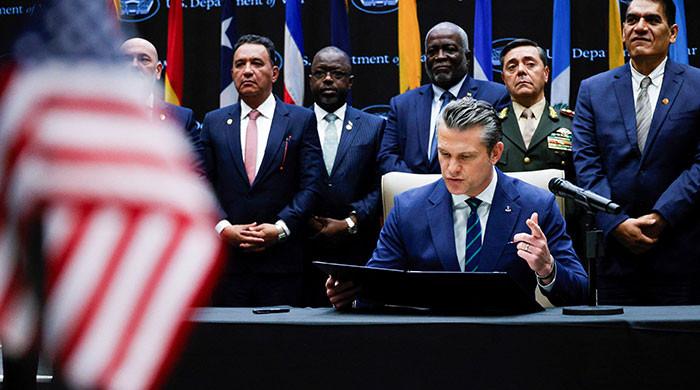
TAMPA: TAMPA: US Defence Secretary Pete Hegseth warned on Thursday that Iran was making a serious miscalculation if it believed the United States could not sustain the ongoing war, stressing that Washington had the resources and resolve to continue the military campaign for as long as necessary.
The Pentagon earlier this week said the military campaign, known as Operation Epic Fury, is focused on destroying Iran’s offensive missiles, missile production and navy, while not allowing Tehran to have a nuclear weapon.
“There’s no expansion in our objectives. We know exactly what we’re trying to achieve,” Hegseth said.
He added that Trump was “having a heck of a say in who runs Iran given the ongoing operation.”
In a telephone interview with Reuters on Thursday, Trump said the United States would have to help pick the next person to lead the country.
The US and Israeli military campaign that started on Saturday has hit targets across the country and triggered Iranian retaliatory strikes in the region as Tehran seeks to impose a high cost on the United States, Israel and their allies.
Iran has attacked countries including Israel, the United Arab Emirates and Qatar. Fire crews in Bahrain extinguished a blaze at a refinery following a missile strike.
Azerbaijan became the latest country drawn in, as it accused Iran of firing drones at its territory and ordered its southern airspace closed for 12 hours.
Hegseth said by striking countries in the region, Iran would only bring them closer to the United States.
“It’s actually firming up the unity of the resistance in order to focus exactly where we need to,” Hegseth said.
Next phase of operations
The United States has hit more than 2,000 targets in Iran, including Iranian warships.
Admiral Brad Cooper, the head of US Central Command, said US forces had destroyed 30 Iranian warships, including an Iranian drone carrier ship earlier on Thursday.
Cooper said the United States was hitting Iran’s ability to rebuild.
“As we transition to the next phase of this operation, we will systematically dismantle Iran’s missile production capability for the future, and that’s absolutely in progress,” Cooper said, adding that it would take some time.
The US military has identified the six US Army Reserve soldiers killed when a drone slammed into a US military facility in Port Shuaiba, Kuwait.
Trump and other senior officials have warned the Iran conflict will result in more US military deaths.
Hegseth, during the press conference, said Iran was making a mistake if it believed that the United States could not sustain the ongoing war, adding that Washington had just begun to fight.
“Iran is hoping that we cannot sustain this, which is a really bad miscalculation,” Hegseth said. “We set the timeline.”


WASHINGTON: The US House of Representatives rejected an effort on Thursday to stop President Donald Trump’s air war on Iran and require that any hostilities against Iran be authorised by Congress, backing the Republican president’s military campaign on the sixth day of the expanding conflict.
The vote was 219 to 212, largely along party lines, in the House, where Trump’s fellow Republicans control a narrow majority of seats. Two Republicans voted in favour of the resolution and four Democrats voted against it.
Opponents accused Democrats of taking the issue to a vote only because they oppose Trump, putting Americans at increased risk.
“We all know that we wouldn’t be here today if the president’s name wasn’t Donald Trump,” Representative Rick Crawford of Arizona, the Republican chairman of the House Intelligence Committee, said during debate on Wednesday.
Sponsors of the resolution described it as a bid to take back Congress’ responsibility to authorise war, as spelled out in the US Constitution.
The US and Israel launched attacks on Iran on Saturday, a conflict that has killed more than 1,000 people, including at least six US service members, and caused damage and instability throughout the Middle East.
Supporters said the resolution, by requiring Trump to come to Congress for a war authorisation, would force him to explain to Americans why the US is fighting and how it might end.
“This is a war of choice, launched by this administration without authorisation, without clearly stated objectives or a defined endgame, and without explaining how they intend to keep Americans safe,” said Representative Gregory Meeks of New York, the top Democrat on the Foreign Affairs Committee.
Approval would not have stopped Iran air war
Just before the resolution vote, House members from both parties overwhelmingly passed a measure “Reaffirming Iran remains the largest state sponsor of terrorism.”
The vote would not have stopped the conflict even if the House had voted yes.
To go into effect, the resolution would also have had to pass the Senate and garner the two-thirds majorities needed to override Trump’s expected veto.
The Senate, also narrowly controlled by Trump’s party, backed his military campaign against Iran in a vote on Wednesday, voting to block a bipartisan resolution similar to the measure passed by the House. The votes this week are not the end of the matter. The War Powers Resolution of 1973, which provides for votes on the resolutions, says a president can only involve the military in an armed conflict when Congress has declared war or provided specific authority or in response to an attack.
Trump and his Republicans have argued that Iran posed an “imminent threat” so that his actions were legal under that law.
However, the War Powers measure also requires unauthorised military actions to be terminated within 60 days, giving the Trump administration a deadline at the end of April to seek Congress’ approval.
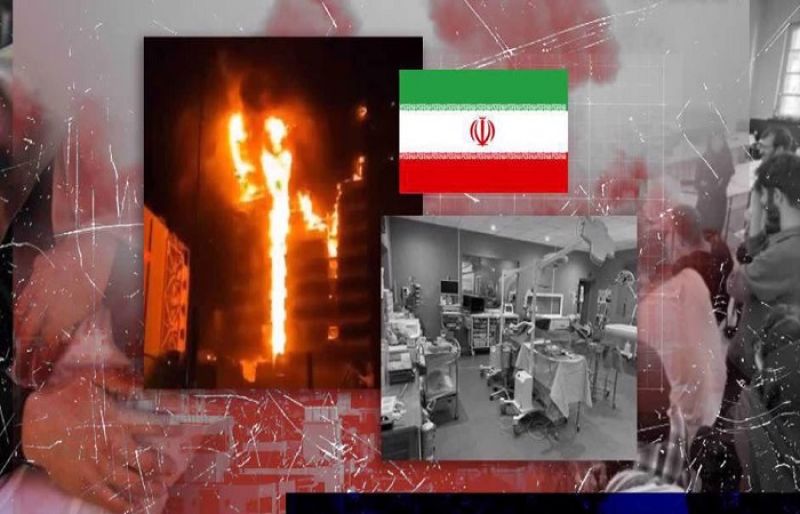

The air at the bombed-out Tehran hospital room hung thick with dust and the metallic tang of recent destruction carried out by the United States and the Israeli regime.
Against a backdrop of shattered concrete, two newborns clung precariously to life. Their breaths were being measured by the rhythmic beep of monitors connected by vital wires.
Amid the dust-choked room following the dastardly US-Israeli aggression, Iranian Red Crescent personnel worked to sever the fragile connection to the damaged infrastructure, to take the infants out of the wreckage.
The Gandhi Hospital in central Tehran, along with a nearby residential building, sustained catastrophic damage from strikes carried out by the United States and Israel late Sunday night, a day after the aggression was launched without provocation.
Immediately following the attack, harrowing footage depicted medical personnel urgently transferring the tiny newborns from their compromised incubators to ambulances.
Hope for new life, IVF centre targeted
The tragedy deepened with confirmation from hospital authorities later about the massive damage incurred by a specialized IVF center there, which lay in ruins.
The IVF centre was a sanctuary where hundreds of hopeful couples had invested their futures, their deepest desires for parenthood.
The US-Israeli aggression destroyed their dreams for future generations that had been painstakingly planned.
“The ledger of violated human rights in this war will be written in blood and shame,” Hossein Kermanpour, Health Ministry spokesman, wrote in a post on his X account.
“For the first time in my life, I am witnessing something I never even saw during the Iran-Iraq War. Patients being carried in their caregivers’ arms, fleeing into smoke-filled streets after missiles exploded beside their hospital,” Kermanpour added.
The assault was not limited to Gandhi Hospital. Reports confirmed that Khatam al-Anbiya Hospital and Motahari Hospital were also directly targeted in Tehran.
Furthermore, several missiles struck near Abuzar Hospital in the southern city of Ahvaz, forcing the immediate evacuation of 21 patients, including those in intensive care, requiring 30 ambulances to reroute them to other centers.
Images from Ahvaz captured the evacuation under dire circumstances. Emergency personnel were moving the sick through the thick plumes of smoke while the terrifying sounds of aerial bombardment still echoed overhead.
The American and Israeli regimes also targeted three emergency medical bases in Sarab, Chabahar, and Hamedan following the Abuzar attack.
A member of the Iranian Parliament said five hospitals and medical centers have been damaged or destroyed during the US-Israeli terrorist attacks on the Islamic Republic.
“Unfortunately, this illegal act of aggression resulted not only in the destruction of the buildings of hospitals and medical centers but also the injury of a number of students and local residents,” Fatemeh Mohammad Beigi, a member of the Parliament’s Health and Treatment Commission, said in a statement on Monday.
She added that a number of these medical centers have been evacuated in fear of more attacks.
Assault on life itself
Iranian President Masoud Pezeshkian denounced the US-Israeli strikes on civilian infrastructure, stating that the attacks on medical facilities “affect life itself and assaults on educational centers jeopardize the future of a nation.”
He made this reference following a US-Israeli strike on an elementary school in the southern Hormozgan Province that killed 171 girls.
He added that “targeting patients and children blatantly violates humanitarian principles.”
The Iranian president called upon the international community to censure the atrocities.
The Director-General of the World Health Organization (WHO), Tedros Adhanom Ghebreyesus, expressed extreme concern over the damage to Gandhi Hospital in Tehran.
Following the bombing, he posted on X, stating, “Reports of Tehran’s Gandhi Hospital being damaged during today’s bombardment of the Iranian capital are extremely worrying.”
Ghebreyesus reiterated that “all efforts must be taken to prevent health facilities from being caught up in the ongoing conflict,” emphasizing that “Health facilities are protected under international humanitarian law” with the hashtag “#healthisnotatarget.”
Strike on hospitals, a pattern
However, this event is part of a disturbing pattern. This is not the first time Israel has attacked medical facilities in the Islamic Republic. During the 12-day military aggression in June, nearly a dozen hospitals were targeted in clear violation of international conventions.
The Geneva Conventions, long considered the bedrock of humanitarian protection in wartime, have been repeatedly flouted by both the US and Israel.
In Gaza, an entire health system has been systematically crippled, and doctors have been killed while on duty since the genocidal war was launched in October 2023.
According to chilling WHO figures, 94 percent of hospitals in Gaza were destroyed by Israel during its two-year-long genocide.


Jayson Tatum, 10 months after Achilles injury, expected to return to Celtics Friday vs Mavericks: report

Maisie Peters surprises fans in Australia with Ed Sheeran

Trump pays tribute to Lou Holtz after legendary football coach’s death

What are Iran’s ballistic missile capabilities?

India Us Trade Deal: Fresh look at India-US trade deal? May be ‘rebalanced’ if circumstances change, says Piyush Goyal – The Times of India

Attock Cement’s acquisition approved | The Express Tribune

-

 Fashion1 week ago
Policy easing drives Argentina’s garment import surge in 2025
-
 Politics1 week ago
What are Iran’s ballistic missile capabilities?
-
Business7 days ago
India Us Trade Deal: Fresh look at India-US trade deal? May be ‘rebalanced’ if circumstances change, says Piyush Goyal – The Times of India
-
Business1 week ago
Attock Cement’s acquisition approved | The Express Tribune
-

 Politics1 week ago
US arrests ex-Air Force pilot for ‘training’ Chinese military
-
 Business6 days ago
Greggs to reveal trading amid pressure from cost of living and weight loss drugs
-

 Sports6 days ago
LPGA legend shares her feelings about US women’s Olympic wins: ‘Gets me really emotional’
-

 Fashion7 days ago
Texwin Spinning showcasing premium cotton yarn range at VIATT 2026