

Fashion
Faguo and Losanje aim high with a series of upcycled pieces


Published
December 18, 2025
In February, the French low-impact clothing brand Faguo will launch several thousand T-shirts and a sweatshirt produced by Losanje, a specialist in the industrialisation of upcycling for clothing and accessories.
For this series, Faguo has opted to produce Lugny T-shirts, featuring the brand’s tree logo on the chest, along with the Dirac hooded sweatshirt. The former, available in blue and dark green, is priced at €60, while the latter, in blue, costs €105. The pieces were made from garments collected at sorting centres in France and across Europe, then cut and assembled by Faguo’s teams.
“We felt it was important to choose our iconic pieces for this collaboration, to help shift perceptions of upcycling,” Anaïs Barry, Losanje’s marketing and communications director, tells FashionNetwork.com. “Our aim is always to dress people with the smallest possible environmental impact. With upcycling, we reduce that impact by a further 90% compared with a standard Faguo garment. But we’re also counting on the pieces appealing in their own right as products.”
For Losanje, the stakes are high. The French company, whose aim is to prove that upcycling can be an industrial alternative to producing new clothes, has delivered what could be, in Europe and worldwide, the first 100% upcycled collection produced in several thousand unique pieces, according to Simon Peyronnaud, president and co-founder of Losanje.
“We’ve already released drops with brands such as Miu Miu and Marine Serre, collaborations that involved dozens or hundreds of pieces,” explains the executive. “This time, we’re looking at genuine repeatability. It’s been a highly instructive collaboration, and one we have high expectations for, to demonstrate that we can source existing materials here at home rather than from cotton fields.”

Losanje claims to have reused over 320 tonnes of textile products in five years via upcycling, through collaborations with the SNCF, La Poste, the Comité Paris 2024 and Roland-Garros, among others. To support its growth, the company recently inaugurated a new factory in Nevers, in the Nièvre department.
“We’re moving from a 700-square-metre industrial workshop to a real 2,500-square-metre factory, purpose-built to take us to the next level,” explains Simon Peyronnaud, whose company currently employs 25 people. He hints at several ongoing projects with brands and groups keen to invest in an upcycled offering.
This article is an automatic translation.
Click here to read the original article.
Copyright © 2025 FashionNetwork.com All rights reserved.




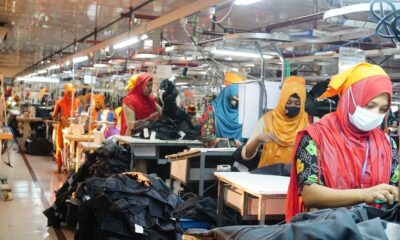








While rates initially jumped in early January, weak underlying demand and the potential return of vessels to the Suez Canal are creating a volatile environment for shippers, it noted.
Carriers pushed through general rate increases (GRIs) in early January this year, briefly lifting China-to-US West Coast rates above $3,000 per forty-foot equivalent unit (FEU). However, these hikes were largely unsustainable due to weak volumes, with rates quickly correcting to the $1,800-$2,200 range by mid-month, the logistics and supply chain market research firm said in an insights brief.
Asia’s ocean freight market is navigating short-term seasonal surges and long-term structural overcapacity, Ti said.
Asia’s air freight market is seeing a significant ‘post-peak’ correction following a record-breaking end to 2025.
Warehousing capacity in the Asia-Pacific is under severe strain in late January as manufacturing slows and labour shortages emerge ahead of the Lunar New Year.
Seasonal demand ahead of the Lunar New Year (starting mid-February 2026) has pushed North Europe rates to roughly $2,700 per FEU as of mid-January. This is a significant recovery from the October 2025 lows of $1,300 per FEU.
Despite a peak ahead of the holiday, Intra-Asia rates have begun to ‘cool’ in mid-January, settling at an average of $661 per 40-feet container as new services and capacity entered the market.
The Asian air freight market is witnessing a significant ‘post-peak’ correction following a record-breaking end to 2025. While rates have dropped sharply from their December highs, demand remains resilient in key high-tech sectors, and a ‘mini-peak’ is expected in late January ahead of the Lunar New Year.
Spot rates from major hubs like Hong Kong and Shanghai fell significantly in early January as year-end peak season demand evaporated.
Despite the rate correction, global air cargo tonnages jumped by 26 per cent in the first full week of January 2026 compared to the end-of-year slump, with the Asia-Pacific region seeing an 8 per cent year-on-year (YoY) increase in chargeable weight.
Volumes from Southeast Asia to the United States rose by 10 per cent YoY in early January, driven by importers continuing to diversify sourcing away from China.
Warehousing capacity in the Asia-Pacific is under severe strain in late January as manufacturing slows and labour shortages emerge ahead of the Lunar New Year.
India closed 2025 with 36.9 million sq ft of warehouse leasing (16-per cent YoY growth), a trend continuing into early 2026 with high demand in Delhi National Capital Region and Chennai.
After a period of oversupply, development pipelines are expected to drop by a third by 2027, making 2026 a critical ‘inflection point’ for occupiers to secure quality space before terms tighten again.
Fibre2Fashion (DS)
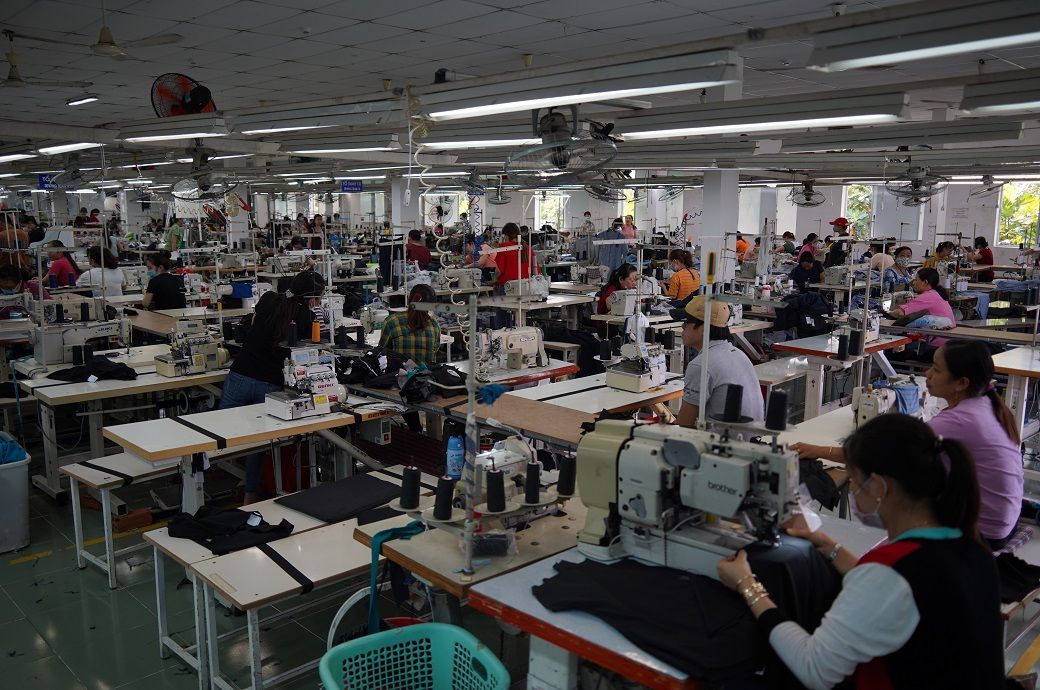
The goal, however, is challenging due to external pressures, including stricter technical barriers, reciprocal tariffs on goods exported to the United States, and the European Union’s Carbon Border Adjustment Mechanism (CBAM) for selected industrial products.
Therefore, major export industries in the country have started restructuring and adjusting strategies early in the year to seize market opportunities.
Following a record export value of $475 billion achieved in 2025—up by 17 per cent YoY—Vietnam aims at adding nearly $38 billion to the figure in 2026.
Major export industries in the country have begun restructuring and adjusting strategies early in the year to seize market opportunities.
The textile and garment sector, which earned $46 billion in 2025, has set a target of $50 billion in exports in 2026.
The textile and garment sector, which earned $46 billion in 2025, has set a target of $50 billion in exports in 2026.
The sector is focusing on strengthening domestic supply chains, raising localisation rates and making more effective use of free trade agreements (FTAs), Vu Duc Giang, chairman of the Vietnam Textile and Apparel Association (VITAS), was cited as saying by a domestic media outlet.
Exports may grow by 15-16 per cent this year, driven by market expansion and a shift towards higher-value products, according to MB Securities’ Vietnam Outlook 2026 report.
Fibre2Fashion (DS)

The data showed that the decline was driven mainly by weaker domestic exports, with goods produced in the Netherlands down 8 per cent YoY. In contrast, re-exports to the US rose 3.9 per cent during the period. Exports to the US have fallen every month on a YoY basis since July, CBS said in a press release.
Trade flows were influenced by uncertainty around US import tariffs. In the first half of 2025, trade between the two countries continued to grow, possibly as companies advanced shipments ahead of announced tariff measures.
Goods exports from the Netherlands to the United States fell 4.7 per cent YoY to €27.5 billion (~$33 billion) in the first ten months of 2025, driven by an 8 per cent drop in domestic exports, according to CBS.
Re-exports rose 3.9 per cent, while tariff uncertainty weighed on trade.
Imports from the US increased 1.9 per cent to €48.1 billion (~$57.7 billion).
Meanwhile, imports from the United States rose 1.9 per cent YoY to €48.1 billion (~$57.7 billion) in the first ten months of 2025.
Fibre2Fashion News Desk (SG)


Grammy host Trevor Noah receives stern response from Trump after Epstein dig

NHL outdoor game sees its 1st goalie fight between Vasilevskiy, Swayman

Gold and silver sell-off gathers steam in correction after record highs

-

 Sports6 days ago
PSL 11: Local players’ category renewals unveiled ahead of auction
-

 Entertainment5 days ago
Claire Danes reveals how she reacted to pregnancy at 44
-

 Tech1 week ago
ICE Asks Companies About ‘Ad Tech and Big Data’ Tools It Could Use in Investigations
-
 Business6 days ago
Banking services disrupted as bank employees go on nationwide strike demanding five-day work week
-

 Fashion1 week ago
Spain’s apparel imports up 7.10% in Jan-Oct as sourcing realigns
-

 Sports5 days ago
College football’s top 100 games of the 2025 season
-

 Politics1 week ago
Fresh protests after man shot dead in Minneapolis operation
-
 Business1 week ago
Should smartphones be locked away at gigs and in schools?