

Business
Famed director James Cameron sends scathing letter to antitrust lawmaker over Netflix-WBD deal


Canadian filmmaker James Cameron poses during a photocall for the opening of the exhibition entitled ‘The Art of James Cameron’ at the Cinematheque Francaise in Paris on April 3, 2024.
Stephane De Sakutin | AFP | Getty Images
Legendary “Titanic” director James Cameron is likening the theatrical experience to a “sinking ship” if Netflix acquires Warner Bros. Discovery’s film studio.
Cameron penned a letter last week to Sen. Mike Lee, R-Utah, that was obtained by CNBC, in which he argues Netflix’s proposed acquisition of WBD’s studio and streaming assets could lead to massive job losses in Hollywood, fundamentally alter the theatrical landscape in the U.S. and negatively affect one of America’s largest export sectors.
Lee chairs the Senate subcommittee on antitrust, competitive policy and consumer rights, which held a hearing on Feb. 3 to discuss the potential impact of the Netflix-Warner Bros. transaction. Cameron sent his letter after the hearing, during which Netflix co-CEO Ted Sarandos and WBD executive Bruce Campbell testified.
“I believe strongly that the proposed sale of Warner Brothers Discovery to Netflix will be disastrous for the theatrical motion picture business that I have dedicated my life’s work to,” Cameron wrote to Lee. “Of course, my films all play in the downstream video markets as well, but my first love is the cinema.”
Cameron has been vocal in his opposition to the proposed tie-up, and his concerns echo those of the broader filmmaking industry, which generally sees combinations of movie studios resulting in fewer releases and less work. Cameron’s letter to Lee, which has not been previously reported, escalates his concerns to the lawmakers who could potentially stand in the way of Netflix completing its acquisition.
“We have received outreach from actors, directors, and other interested parties about the proposed Netflix and Warner Brothers merger, and I share many of their concerns,” Lee said in a statement. “I look forward to holding a follow-up hearing to further address these issues.”
In response to a request for comment, a Netflix representative pointed to Netflix’s written testimony and Sarandos’ comments during the hearing.
In its written testimony, Netflix outlined its investments in the film and TV production industry and its impact on the overall U.S. economy, including $20 billion in planned film and TV spend in 2026, a majority of which it said will be spent in America.
“With this deal, we’re going to increase, not reduce, production investments going forward, supported by a stronger combined business and balance sheet,” Netflix said, noting its production facilities, such as one in New Mexico and an upcoming New Jersey-based studio.
Since the deal’s announcement, Netflix’s top brass have consistently voiced their belief that the deal would not only win regulatory approval but would be good for the media industry.
During a recent earnings call, Sarandos called the deal “pro-consumer … pro-innovation, pro-worker.”
He has said on multiple occasions that the addition of WBD’s studio would preserve jobs — even as layoffs roil the media ecosystem — and has said the assets would bring new businesses under Netflix’s umbrella.
“We’re going to need those teams, these folks that have extensive experience and expertise. We want them to stay on and run those business,” Sarandos said. “So we’re expanding content creation, not collapsing it in this transaction.”
In addition to concerns specific to filmmakers and across the theater industry, the proposed Netflix-WBD transaction has awakened other regulatory questions.
In particular, critics have raised alarm about bringing together two of the top global streaming services — Netflix with 325 million global subscribers and WBD’s HBO Max with 128 million as of Sept. 30. Lawmakers have already questioned how a merger of those services would affect consumers and prices.
Paramount Skydance has leveraged some of the same arguments in its attempt to unseat Netflix and buy the entirety of WBD through a hostile tender offer.
Sarandos and co-CEO Greg Peters have argued that competition for viewers includes various platforms — from traditional TV to streaming services to social media platforms such as YouTube — making Netflix a small part of the ecosystem.
Theatrical shifts
Cameron, who has pioneered the creation of new filming technologies during his decadeslong career, including 3D production systems, advanced visual effects and high-frame-rate display, noted that theatrical exhibition has been a critical part of his “creative vision.”
He also highlighted previous comments by Sarandos calling movie theaters “an outdated concept” and an “outmoded idea,” in addition to comments telling investors that “driving folks to a theater is just not our business.”
“The business model of Netflix is directly at odds with the theatrical film production and exhibition business, which employs hundreds of thousands of Americans,” Cameron wrote. “It is therefore directly at odds with the business model of the Warner Brothers movie division, one of the few remaining major movie studios.”
Cameron noted that WBD releases around 15 theatrical films a year, volume that movie theater operators rely on at a time when production has shrunk and consumer habits have shifted.
He also suggested that the merger would “remove consumer choice by reducing the number of feature motion pictures that are made” as well as “restrict the choices of film-makers looking for studios to invest in their projects, which will in turn reduce jobs.”
Cameron touched on recent trade policy shifts by the Trump administration that have sought to protect U.S. exports. President Donald Trump has more than once floated the idea of tariffs to protect Hollywood.
“The US may no longer lead in auto or steel manufacturing, but it is still the world leader in movies,” Cameron said. Under a Netflix-WBD merger, “That will change for the worse.”
Cameron also questioned whether Netflix would honor verbal commitments its executives have made around future theatrical releases, including how long they would play in theaters and how many theaters they would play in.
In its written testimony from earlier this month, Netflix said it plans to put Warner Bros. films in theaters with 45-day windows and would continue to employ these employees, since “we don’t have those kinds of workers at Netflix today.”
“We are not acquiring these amazing assets to shut them down, but to build them up,” according to the testimony.
Still, Cameron questioned whether those commitments would hold.
“Their pledge to support theatrical releases (a business fundamentally at odds with their core business model) is likely to evaporate in a few years,” he said.
“Once they own a major movie studio, that is irrevocable,” he added. “That ship has sailed (as I like to say, mindful that I directed ‘Titanic.’ I am very familiar not only with ships that sail, but also those that sink. And the theatrical experience of movies could become a sinking ship.)”




On Jim Continenza’s first day on the job as Eastman Kodak executive chairman in 2019, he got a call from a star Hollywood filmmaker telling him the company was making a big mistake.
The photography technology company was in the process of shutting down its acetate factory, which makes one of the key ingredients used in film. Christopher Nolan, the director behind major movies like “Inception” and “Oppenheimer,” urged Continenza to stop the process.
“He goes, ‘Do not turn this off. Please take a look.’ And I did,” Continenza, now CEO, told CNBC. “He was right. I started looking at it because I shoot 35 millimeter [film], and I’m like, ‘Why would one of the greatest directors of all time even have this conversation?'”
Continenza, a self-proclaimed “turnaround specialist,” said he quickly realized how central film was to Kodak’s roots, and how it could be one of its biggest strengths as he fought to bring the company back from teetering on the edge of bankruptcy.
Fast forward roughly seven years, and multiple 2026 Oscar-winning movies, including “One Battle After Another” and “Sinners,” were shot on Kodak film. It’s part of a bigger trend as the category sees a resurgence fueled by both a nostalgia for film in Hollywood and by younger consumers.
That road wasn’t smooth, though. The company declared bankruptcy in 2012 and reemerged a year later. Then it cautioned last year that its financial conditions “raise substantial doubt about Kodak’s ability to continue as a going concern.”
In the second-quarter earnings where it made that going concern statement, Kodak posted a 12% decrease in gross profit, with millions in debt obligations.
But Continenza said it was one step in a longer process toward rebuilding the company to its former success.
CEO of Kodak Jim Continenza speaks onstage during Kodak’s Film Awards at ASC Clubhouse on March 2, 2026 in Los Angeles, California.
Rodin Eckenroth | Getty Images
Last month, the company’s earnings report looked different. Its fourth-quarter gross profit reached $67 million, a 31% increase from the year prior. Kodak also said it had reduced its annual interest expense by roughly $40 million.
Continenza said at the time that the results were signs of the long-term plan he began executing in 2019. He told CNBC that he chose Kodak as his final company to revive before closing his chapter as a C-suite executive, having previously served in leadership roles at communication companies including AT&T and Lucent.
“Here’s what our goal is: We’re going to create jobs for the next generation. Make no mistake, we’re going to fix this company and put it on a stable foundation and put building blocks to grow all the systems,” Continenza said. “We didn’t put in what we need, we put in what we want, and that’s a difference.”
Troubled waters
In a digitally evolving society, Kodak has been fighting to keep its place and relevancy.
The company’s 2012 bankruptcy protection came after it failed to improve its finances as digital photography took off and revolutionized the industry. When it reemerged the following year as a smaller company, it shifted its primary focus to commercial printing.
Though it’s not a company that is largely covered by investors anymore, Melius Research analyst Ben Reitzes wrote in a note last year that the onset of digital technology posed a significant setback for Kodak.
“At the time, Kodak management told us that film would co-exist with digital cameras and more photos would be taken — and more would need to be printed by Kodak,” he wrote.
Still, Kodak faced its struggles. Its stock sank more than 35% in 2014, continuing to gradually fall over the next few years and hitting an all-time low of $1.55 per share during the onset of the pandemic in March 2020.
Last August, the more than 100-year-old photography company said it had roughly $155 million in cash and nearly $600 million in loans.
A Kodak spokesperson said at the time that the going concern language had to be included because Kodak did not have enough available liquidity to pay off its debt, due within 12 months. Still, the company said it was confident it would pay off a significant portion of that loan before it became due by terminating its pension plan and said the disclosure was just a required technical report.
Wall Street investors didn’t like what they heard. The stock plunged from a price of roughly $7 per share a few days prior to just over $5 per share on the day of earnings.
“We could have done a better job on it, because to us, it wasn’t as dire straits, it was more of a GAAP accounting coincidence by dates,” Continenza said, adding that it was a “timing issue” for the loans.
Rolls of Kodak Gold film hang on a shelf at the Precision Camera & Video store on Aug. 12, 2025 in Austin, Texas.
Brandon Bell | Getty Images
Continenza said Kodak’s main challenges were in its “huge tranches” of debt and a lack of communication with its shareholders and customers.
The CEO said he’s never sold a share of Kodak and instead bought stock after the company issued its going concern disclosure.
“You’ve got to put the work in and the long-term investments, and you’ve got to be methodical, but you’ve got to fix your operations, and I’ve spent seven years of doing it,” he said. “[It’s] a 130-plus year old company, right? You can imagine what’s in the attic.”
Defining success
Continenza said he’s been intentional about instituting long-term changes since he took over the company. He’s changed about 90% of the company’s leadership, paid off more than $400 million in debt and reorganized the company’s priorities to focus on print and advanced materials and chemicals.
He said it was also important to be “transparent” with his team and acknowledged that turning around the company would mean layoffs and staffing changes.
“First thing I always do is go out and get people who want to hold the company and buy them out, and that’s what we did,” he said. “I got a board and investors who love what we’re doing — we keep them informed, and they help guide us.”
As he examined what worked for the company, Continenza said he saw an opportunity with Generation Z and the resurgence of the film aesthetic. The look of photos and videos shot on film captures something that “penetrates your heart and soul,” he said.
Kodak leaned into the analog and authenticity trend, investing its resources in its film capacities and creating products that consumers, directors and filmmakers alike were interested in.
Continenza said he also refinanced the company three times and rightsized its balance sheet.
It seems to have hit the right note on Wall Street. Over the past year, Kodak’s stock has shot up nearly 100%.

Kodak 1-year chart
“We’re doing our job. The stock’s not supposed to spike, it’s supposed to crawl, because that’s how we grow,” he said. “I don’t look at our stock price. I don’t care. I couldn’t tell you what it is today. I’m a long-term investor.”
Continenza said success to him will mean continuing to improve finances and ensuring Kodak has a solid succession plan in place to continue its growth.
Though the company is well over 100 years old, he said he likes to treat Kodak as a startup, where all of the debt is paid off, the brand is well-loved and only Kodak itself could, at this point, “screw it up.”
“We don’t need to be a $5 billion or $20 billion or $80 billion company,” Continenza said. “We’re a billion-dollar global company, but one thing we have going for us is our brand recognition. And make no mistake, around the globe, it is endeared and loved, and it’ll continue to be.”
Business
From queues to QR codes: How UPI transformed India’s digital payments, now driving 49% of global real-time transactions – The Times of India

India’s financial ecosystem has undergone a major transformation in recent years, with the Unified Payments Interface (UPI) emerging as the centrepiece of the country’s digital payments revolution. Just ten years ago, financial transactions in the country were slow and largely cash-dependent but now, they are just a touch or click away, enabling instant, seamless and real-time payments across the country. The shift began with early digital infrastructure such as Real-Time Gross Settlement (RTGS) in 2004 and Immediate Payment Service (IMPS) in 2010, which enabled faster transfers but remained limited in reach. A broader transformation followed with the development of foundational systems under the JAM Trinity: Pradhan Mantri Jan-Dhan Yojana, Aadhaar and mobile connectivity, which expanded financial access and digital readiness.
UPI: India’s core digital payments achievement
Launched in 2016 by the National Payments Corporation of India, UPI has become the most significant milestone in India’s digital payments journey. It simplified transactions by linking bank accounts through a Virtual Payment Address, removing the need for account numbers and IFSC codes. Users can send or receive money instantly using only a mobile number, UPI ID and secure authentication. The system operates 24/7, processes payments in real time and works seamlessly across banks and platforms due to full interoperability. The scale of UPI has expanded rapidly. The network has grown from 216 banks in 2021 to 691 banks by January 2026, creating a unified national payments infrastructure. UPI has become the world’s largest real-time payments system by volume, processing:
- 21.70 billion transactions in January 2026 alone
- Rs 28.33 lakh crore in transaction value in January 2026
- 81% share of all retail digital transactions in India
- 49% share of global real-time payment transactions
It has achieved this scale in under 10 years, making it one of the fastest-growing financial infrastructures globally. The International Monetary Fund (IMF) has recognised UPI as the world’s largest real-time payment system by volume.Beyond scale, UPI has significantly expanded financial inclusion by reducing dependence on cash and enabling instant, low-cost transactions. It has brought millions into the digital economy, particularly small merchants, informal workers and rural users. The ecosystem has also expanded with features such as UPI Lite for small payments, UPI AutoPay for recurring transactions and Credit on UPI for access to pre-approved credit lines. Financial institutions and fintech companies have further built lending and repayment solutions on this infrastructure. Security and system strengthening UPI is supported by strong security architecture, allowing transactions without sharing sensitive banking details and providing built-in grievance redress mechanisms. Further strengthening the system, the Reserve Bank of India (RBI) has mandated two-factor authentication for digital payments from April 1, 2026. This requires multiple verification layers such as PINs, biometrics or secure tokens along with OTPs, significantly reducing fraud risks and improving trust in digital transactions. Global recognition and expansion India’s UPI model has gained international recognition from institutions such as the International Monetary Fund and the World Bank for its scale and inclusiveness. Global leaders, including French President Emmanuel Macron, have acknowledged India’s ability to process over 20 billion transactions per month through UPI, a level unmatched globally. UPI has also expanded internationally and is now operational or interoperable in countries including the United Arab Emirates, Singapore, Bhutan, Nepal, Sri Lanka, France, Mauritius and Qatar, enabling cross-border payments and supporting global remittance flows.UPI stands as India’s most significant digital financial achievement, a system that has transformed payments at scale, expanded financial inclusion and positioned India as a global leader in real-time digital transactions. Built in under a decade, it has reshaped how the country pays, saves and participates in the formal economy, emerging as a global benchmark for inclusive financial innovation.
Business
100% road tax waiver for electric cars, new rules for 2, 3 and 4 wheelers – what Delhi govt’s draft EV policy says – The Times of India
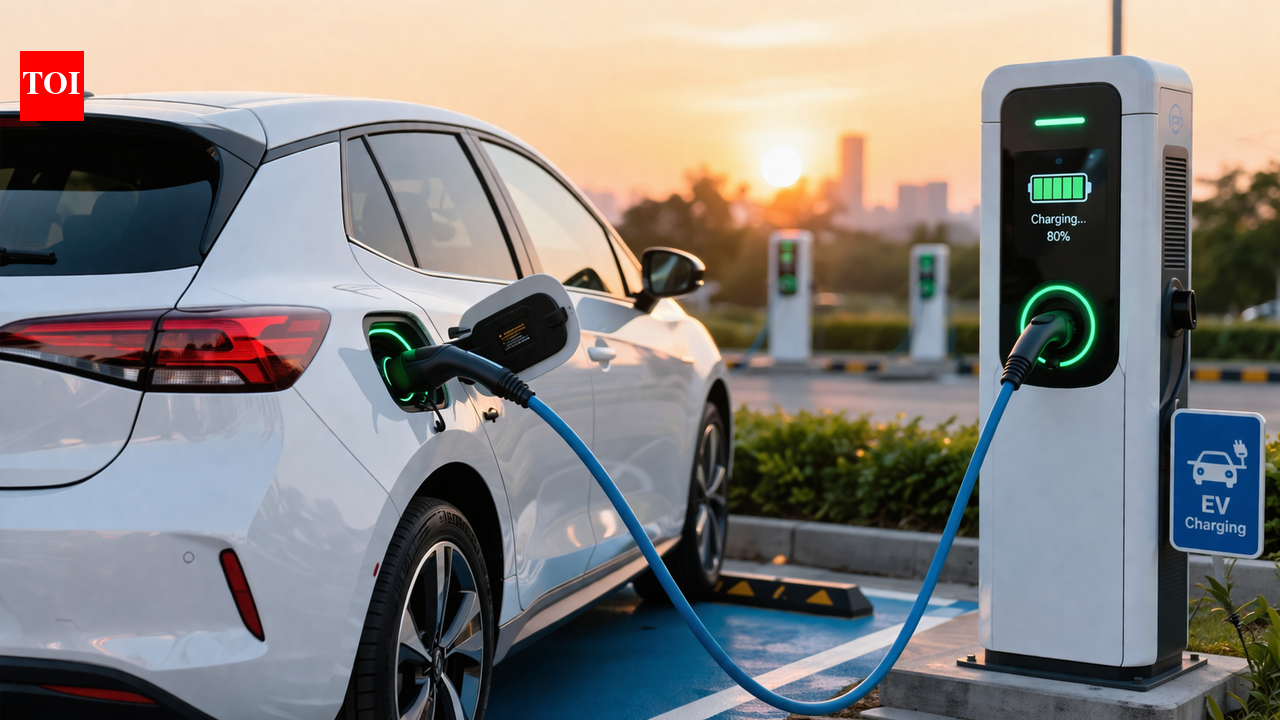
The Delhi government has unveiled the draft Electric Vehicle (EV) Policy 2026–2030, outlining a roadmap to curb air pollution and promote clean mobility in the national capital. With vehicular emissions contributing nearly 23% of the city’s pollution, the policy focuses on accelerating the shift to electric vehicles while strengthening the ecosystem needed to support their widespread adoption.The new draft builds on the earlier EV policy introduced in August 2020, which had a three-year term ending in August 2023 and has since been extended. Officials say the updated framework seeks to expand on previous efforts to curb vehicular pollution and accelerate the transition to cleaner transport. The draft offers incentives like a 100% road tax waiver for electric cars, along with benefits and updated rules for two-, three-, and four-wheelers. It also aims to expand charging infrastructure, build a stronger EV ecosystem, and encourage a gradual move away from petrol and diesel vehicles. Focused on cutting emissions, which make up about 23% of Delhi’s pollution, the policy is linked to the Right to Clean Air under Article 21, highlighting a stronger push to improve air quality in the capital.
Here’s what Delhi government’s new EV draft policy has proposed:
- Full tax exemption for affordable EV carsElectric cars priced up to Rs 30 lakh will get 100% exemption on road tax and registration fees till March 31, 2030. The policy states, “Electric cars with ex-showroom price above (Rs) 30 lakh registered in Delhi shall not be granted any exemption from road tax and registration fees.” However, vehicles priced above this threshold will not be eligible for such benefits. The draft also proposes a 50% exemption for strong hybrid vehicles.
- What’s new for 2 wheelers?
The government has also listed out intensives for two wheelers. To be eligible for incentives, the ex-factory price of an electric two-wheeler must not exceed Rs 2.25 lakh.
In the first year from the date of notification, buyers will receive Rs 10,000 per kWh, capped at Rs 30,000. This incentive reduces to Rs 6,600 per kWh (up to Rs 20,000) in the second year, and further to Rs 3,300 per kWh (up to Rs 10,000) in the third year. - Push for electric three-wheelers
From January 1, 2027, only electric three-wheelers will be allowed for new registrations in Delhi. Furthermore, the Government of National Capital Territory of Delhi (GNCTD) is also set to provide the following incentives to encourage the adoption of electric-rickshaws in the national capital:
- Slow transition to electric vehicles
The draft has proposed phased electrification of school bus fleets. This applies to all school buses, owned, leased, or hired.
10% electric within 2 years
20% within 3 years
30% by March 31, 2030Furthermore, it also mandates electrification of government fleets. All hired or leased vehicles under the Delhi government will be only electric from the date of notification, except exempted categories. New buses inducted by the
Transport Department and DTC will also be electric, with provisions for cleaner alternatives like hydrogen if introduced.Additionally, all new N1 category trucks procured by government bodies and civic agencies will be only electric. Here’s the incentive structure, based on the year of registration:
Year of Registration Incentive Year 1 (from date of notification) Rs 1,00,000 Year 2 (from date of notification) Rs 75,000 Year 3 (from date of notification) Rs 50,000 - Restrictions on conventional fleet operators
Fleet aggregators and delivery service providers will not be allowed to induct new petrol or diesel vehicles after notified timelines, with limited exceptions for certain categories till December 2026. - Expansion of EV charging and swapping infrastructure
Land-owning agencies will identify sites for public charging and battery swapping stations All new buildings and infrastructure projects must be EV charging-ready DelhiTransco Limited will handle planning, deployment, and reliability of charging networks - Battery waste management and recycling push
Strict compliance with Battery Waste Management Rules and Extended Producer Responsibility (EPR) Establishment of battery collection centres across Delhi through partnerships. - Creation of a dedicated EV Fund
A separate EV Fund will be set up under the Transport Department to finance implementation, supported by budget allocations, grants, cess, and other sources. Furthermore, a committee led by the Transport Minister will oversee implementation of the policy and management of the EV Fund. Transport Department to act as nodal agency Environment Department to track emission reductionsUrban bodies to support infrastructure rollout Education Department to ensure compliance and run awareness campaigns. - Fully digital implementation system
All processes including approvals, applications, disbursements, and grievance redressal will be conducted in a paperless digital format. - Public feedback
The government has also invited public feedback for the proposed reforms. In an official circular, the government said, “The draft Delhi Electric Vehicle (EV) Policy 2026 is hereby uploaded on the official website of Transport Department, GNCTD for the information of general public. All stakeholders including general public are invited to submit their feedback/comments within 30 days from the date of publication through the following modes: 1. By e-mail: evpolicy2026@gmail.com 2. By Post: Joint Commissioner (EV), Transport Department, Govt. of NCT of Delhi, 5/9 Underhill Road, Delhi- 110054.”
It further clarified, “All inputs/representations may kindly be submitted only through the above- mentioned modes. In this regard, the public is humbly requested to avoid visiting the office premises, as the same may cause unnecessary crowding. No objections or suggestions received after the expiry of the said period shall be considered.”Earlier this year, on March 20, CM Rekha Gupta flagged off 300 new electric buses and announced the launch of interstate bus services connecting Delhi with Ghaziabad. A foundation stone was also laid for a new Delhi Transport Corporation office near the IP depot.Meanwhile, health minister Pankaj Kumar Singh had noted the pace of adoption, stating, “After our government came to power, we registered more than 1 lakh EV vehicles. There are many reasons why EVs are not advancing further. The previous government did not provide subsidies for EVs. We are providing those subsidies, but if the previous government had given subsidies, perhaps the people of Delhi would have made more efforts to adopt EVs.“


Joe Jonas shares Coachella survival tips

Lamar Jackson hits back at critics with faithful message on social media

Journalist helped defeat New York City's pinball ban

-
Uncategorized1 week ago
[CinePlex360] Please moderate: “Trump signals p
-

 Entertainment1 week ago
Joe Jonas shares candid glimpse into parenthood with Sophie Turner
-

 Tech1 week ago
Our Favorite iPad Is $50 Off
-

 Sports1 week ago
UConn Final Four run could trigger a $50M furniture giveaway for Massachusetts-based Jordan’s Furniture
-

 Entertainment1 week ago
Blake Lively reacts to harassment claims dismissal against Justin Baldoni
-
 Business1 week ago
Video: Why Is the Labor Market Stuck?
-

 Politics1 week ago
Iran can sustain Strait of Hormuz closure for years, will cut US military logistics: Official
-
 Business1 week ago
Gold prices in Pakistan Today – April 3, 2026 | The Express Tribune