

Business
Fed Governor Lisa Cook sues Trump over his attempt to fire her

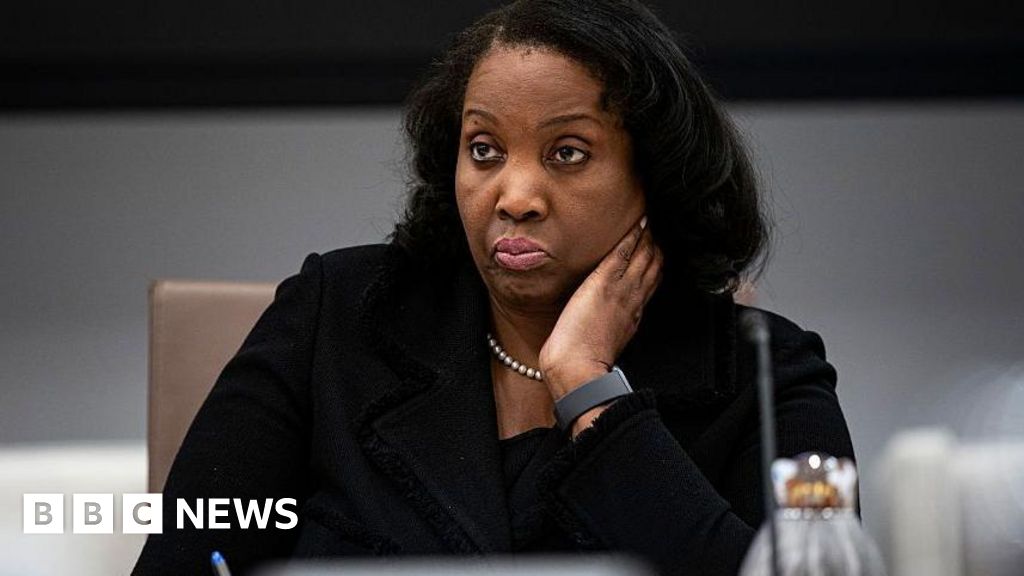
Federal Reserve governor Lisa Cook has sued President Donald Trump over his attempt to fire her, setting up a potential legal battle with implications for the US central bank’s autonomy.
Cook has asked the court to declare Trump’s firing order “unlawful and void”, and also named Fed Chairman Jerome Powell as defendant.
Trump has said there was “sufficient reason” to believe Cook had made false statements on her mortgage, and cited constitutional powers which he said allowed him to remove her. Cook previously said that “no cause exists under the law” to sack her.
The president has put increasing pressure on the Fed over what he sees as an unwillingness to lower interest rates.
Cook is part of the board responsible for setting interest rates in the US.
Thursday’s lawsuit is likely to bring up a number of legal challenges that could end up at the US Supreme Court.
“This case challenges President Trump’s unprecedented and illegal attempt to remove Governor Cook from her position which, if allowed to occur, would be the first of its kind in the Board’s history,” Abbe Lowell, Cook’s attorney, wrote in the lawsuit.
“It would subvert the Federal Reserve Act … which explicitly requires a showing of ’cause’ for a Governor’s removal, which an unsubstantiated allegation about private mortgage applications submitted by Governor Cook prior to her Senate confirmation is not,” Lowell wrote.
White House spokesperson Kush Desai told the BBC the president “exercised his lawful authority to remove” Cook.
“The President determined there was cause to remove a governor who was credibly accused of lying in financial documents from a highly sensitive position overseeing financial institutions,” he said. “The removal of a governor for cause improves the Federal Reserve Board’s accountability and credibility for both the markets and American people.”
The Federal Reserve Act does not give the president authority to remove a Fed official at will, but as Trump has said, it does allow him to do so “for cause”.
The allegations against Cook were first made in a public letter from housing finance regulator, Bill Pulte, a Trump ally. In the letter he accused Cook of falsifying records to obtain a mortgage.
The letter alleges that she signed two documents, two weeks apart, attesting that two homes in different states were both her primary residence. No charges have been brought against Cook and it is unclear if she is under investigation for these allegations.
Cook’s lawsuit does not address those allegations.
She previously denied that there was any cause to sack her and legal experts have shown scepticism in Trump’s standing.
She is one of seven members of the Fed’s board of governors, and in this position sits on the 12-member committee which is responsible for setting interest rates in the US.
Since returning to Washington, Trump has put increasing pressure on the Fed – especially Powell – over interest rates.
The US president nominates candidates for the role, so removing Cook would mean she could be replaced by someone more favourable to lower interest rates and to the Trump economic agenda.
The Fed’s decision affects the rate at which Americans can borrow money as well as the savings rates on their bank accounts. US interest rates are also closely watched by central banks who set monetary policy in other countries.
Cook voted alongside Powell and most other members of the committee to maintain US interest rates at the Fed’s last rate-setting meeting at the end of July.
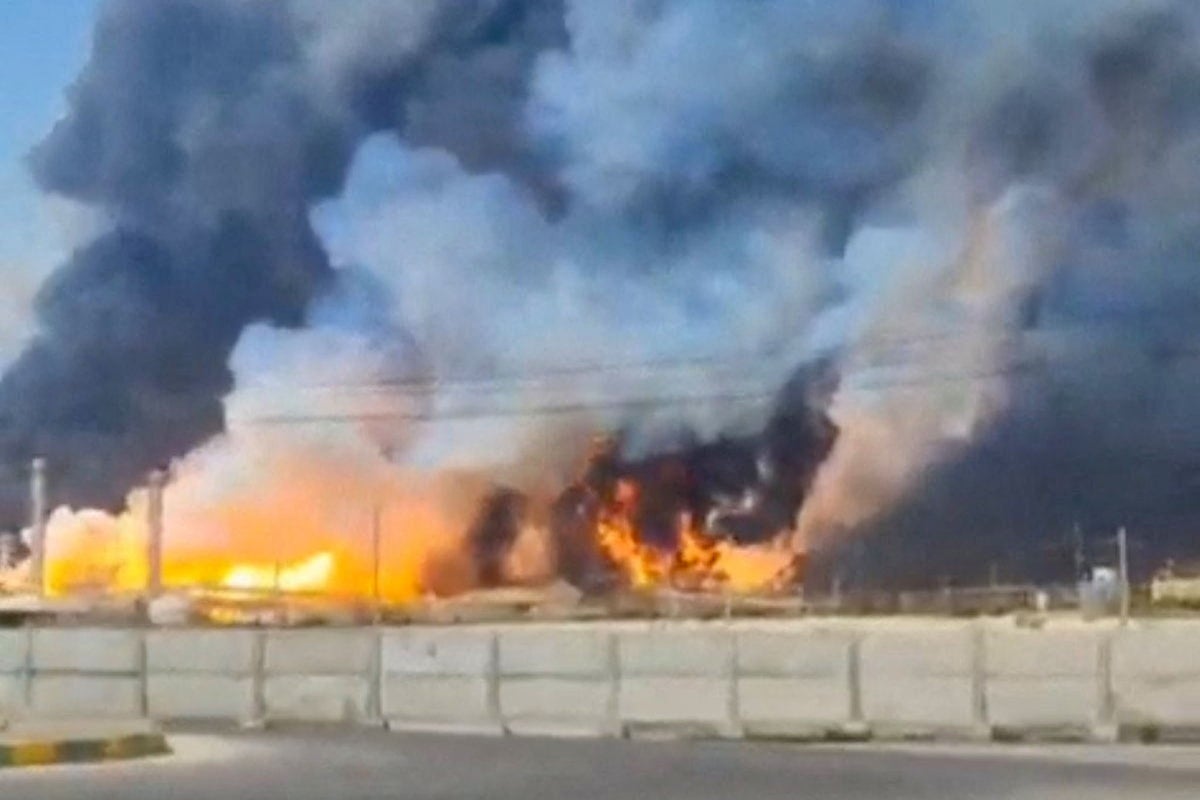
Britain is to “step up” defensive support for Gulf states after Iran attacked energy sites across the region in a “serious escalation” of the war that could push up inflation and interest rates.
The price of Brent crude climbed as high as $119 a barrel and European gas prices briefly surged by 35 per cent after Iran pounded Qatar’s Ras Laffan energy hub and other Middle Eastern oil and gas infrastructure with missiles.
Interest rates were held at 3.75 per cent instead of the previously expected cut, as the Bank of England warned that the war could push inflation as high as 3.5 per cent by July on the back of rising energy bills, and that rates could rise – creating misery for homeowners.
It came as:
- US defence secretary Pete Hegseth said “ungrateful” European allies should be thanking Donald Trump for the war
- Trump claimed he was unaware of Israel’s strike on Iran’s South Pars gas field
- Oman called the US/Israel attacks a “grave miscalculation”
- Europe’s biggest airlines warned of higher fares
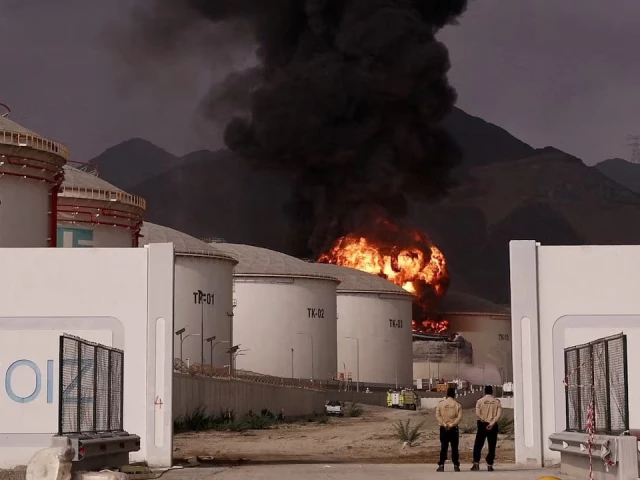
Iran’s attacks were in retaliation to an Israeli strike on the vital South Pars gas field, which drew condemnation from the Gulf states as well as Tehran. It was the first attack of the war so far on an energy production facility. Tehran fired missiles at multiple energy sites across the Gulf, including a Saudi oil refinery, Qatari gas facilities and two more oil refineries in Kuwait.
While Sir Keir Starmer and Emmanuel Macron called for de-escalation, President Trump threatened to “massively blow up” the South Pars facility if Iran did not halt its retaliatory attacks, repeating his claim that US forces had “obliterated” Iran’s navy and military, adding that the war was “substantially ahead of schedule”. He denied that plans were being made to send more American troops to the region.
John Healey, the UK defence secretary, said Tehran’s tit-for-tat responses threatened to further destabilise the region and Europe’s economies. He called them a “serious escalation”, adding: “They further destabilise the region and we will step up the defensive support that we can offer to those Gulf states.”
British forces are already deployed to the Middle East, with RAF jets flying defensive sorties against Iranian drones across the Gulf and British air defence systems protecting critical infrastructure in Saudi Arabia. UK military planners have also joined US Central Command to help formulate proposals for opening the Strait of Hormuz, a critical trade route for the world’s oil and gas.But there were signs of growing frustration towards Washington’s war aims in the Gulf states, with Oman’s foreign minister claiming that the conflict was President Trump’s “greatest miscalculation”.
In the most scathing attack on Washington’s foreign policy yet by a Gulf state, Badr Albusaidi said “this is not America’s war” and criticised Mr Trump for supporting Israel. Writing in The Economist, he called on American allies to help extricate it from the conflict, which has continued for a third week despite failing to achieve the US and Israel’s stated aim of instigating regime change in Tehran or stopping its nuclear programme.
Meanwhile, the Bank of England has warned that it may have to put up interest rates if the war continues to drive up inflation and unemployment. Its governor, Andrew Bailey, said the impact was already being felt by consumers as petrol prices surge and that he is “ready to act as necessary to ensure inflation remains on track to meet the 2 per cent target”. That would pave the way for a rate hike as early as the end of April.
Bets on the financial markets suggest a 50/50 chance that Britain will face higher interest rates from next month – and the possibility of two more rises by the end of the year.
Danni Hewson, head of financial analysis at AJ Bell, said: “Markets are now pricing in an almost 50 per cent chance that April’s meeting will see rates rise to 4 per cent with the potential for two additional rate hikes by the end of the year. But no one has a crystal ball. No one knows how long the conflict will last or the amount of damage that could be inflicted on crucial energy infrastructure by the time it ends.”
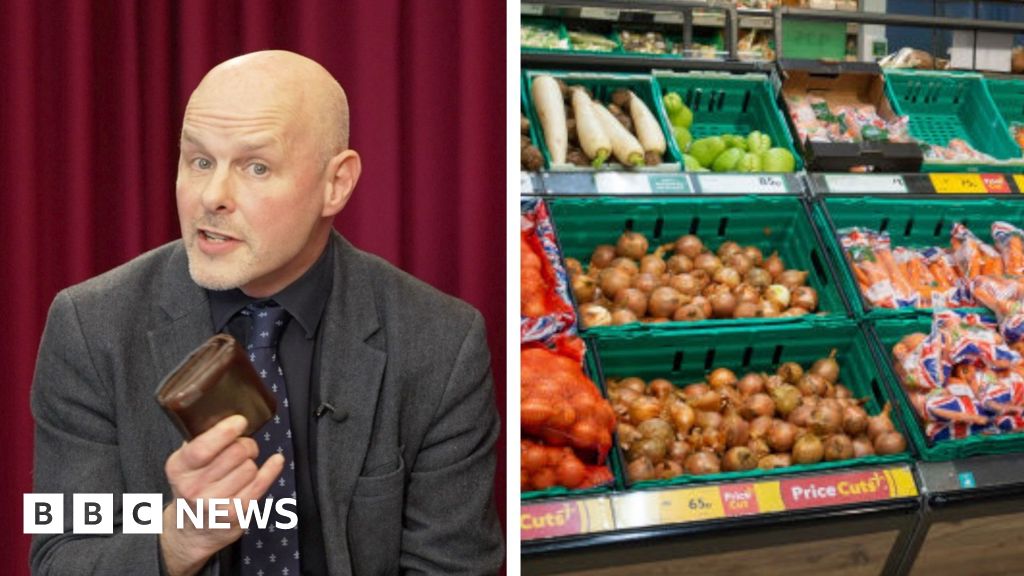
From fuel to mortgages, the BBC looks at how oil and gas prices could push up the cost of living.
Source link
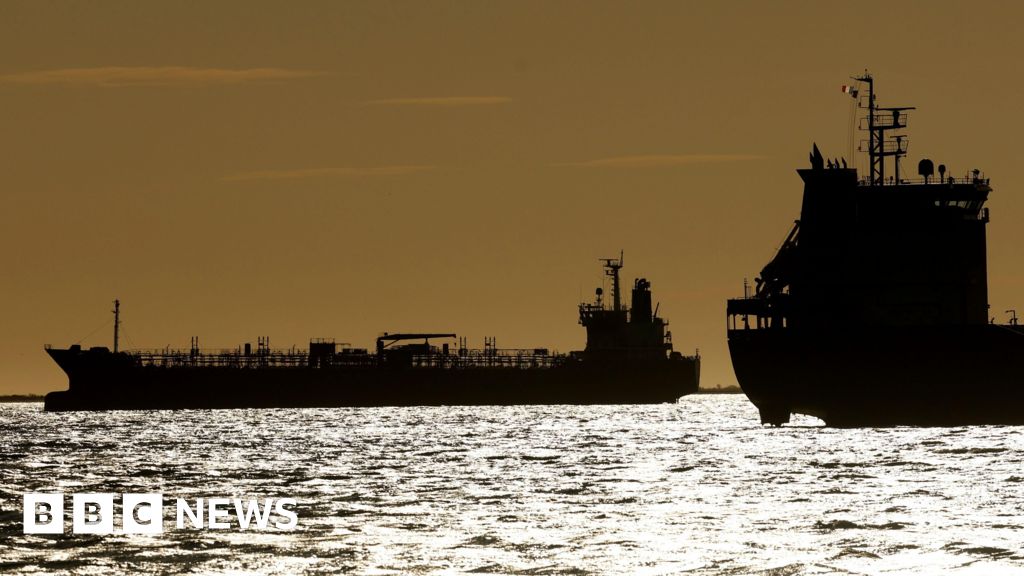
“To put it mildly, this is bananas,” said David Tannenbaum, director of Blackstone Compliance Services, a consultancy specialising in maritime sanctions. “Essentially we’re allowing Iran to sell oil, which could then be used to fund the war effort.”


FIFA clears Israeli settlement clubs but fines IFA over breaches

Prince William and Kate wow with last-minute surprise portrait drop

US Takes Down Botnets Used in Record-Breaking Cyberattacks

Stock market crash today (March 12, 2026): Nifty50 opens below 23,600; BSE Sensex down over 900 points on continuing US-Iran war – The Times of India

UK’s Topshop unveils Tolu Coker capsule collection
US ignites Iran war, but Gulf Arab states pay the price | The Express Tribune

-
Business1 week ago
Stock market crash today (March 12, 2026): Nifty50 opens below 23,600; BSE Sensex down over 900 points on continuing US-Iran war – The Times of India
-
 Fashion1 week ago
UK’s Topshop unveils Tolu Coker capsule collection
-
Business1 week ago
US ignites Iran war, but Gulf Arab states pay the price | The Express Tribune
-

 Fashion1 week ago
India’s textile recycling market may reach $3.5 bn by 2030: Report
-
 Tech1 week ago
Meta Developed 4 New Chips to Power Its AI and Recommendation Systems
-
 Business1 week ago
8th Pay Commission: How Much Will Central Govt Employees’ Salaries Rise? What We Know So Far
-

 Sports1 week ago
Bangladesh crush Pakistan in ODI series opener | The Express Tribune
-

 Tech1 week ago
Labour scarcity is forcing IT leaders to rethink automation economics | Computer Weekly