

Sports
For Nebraska’s Dani Busboom Kelly, home is where you hang a banner

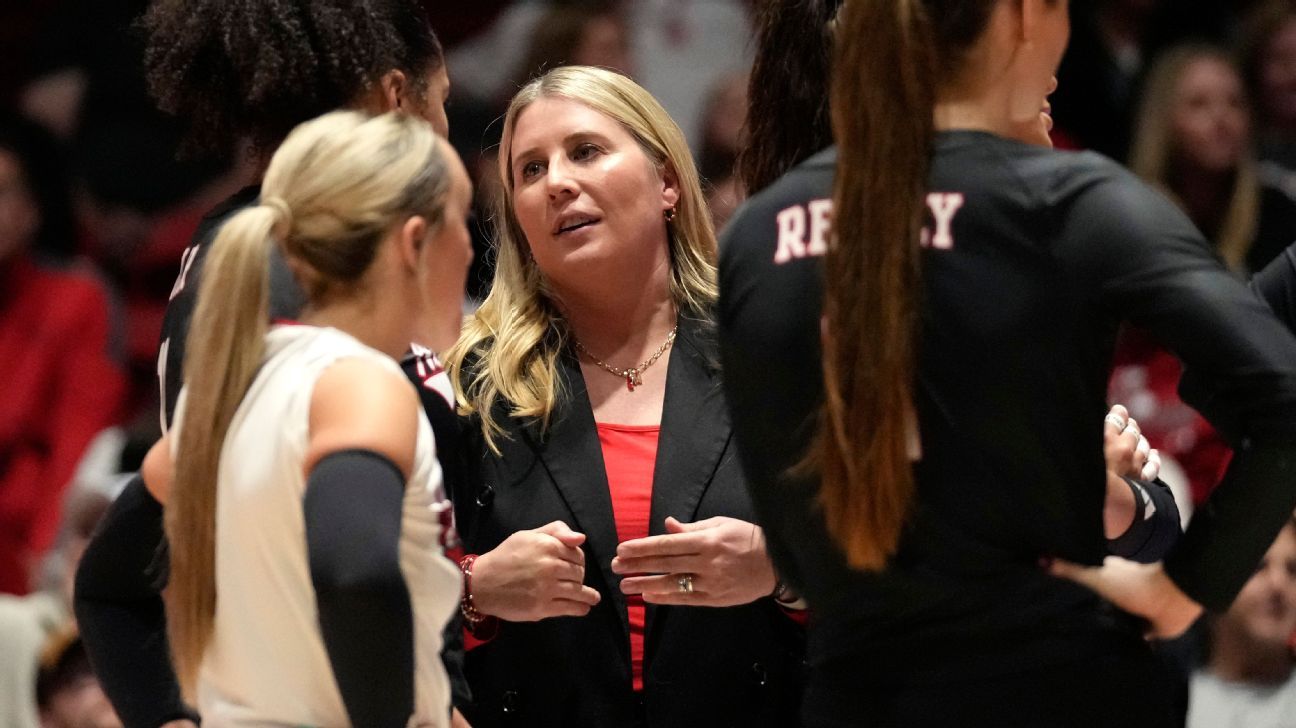
DANI BUSBOOM KELLY started wearing blazers for her biggest volleyball matches long before she took over as coach of the best program in the country.
Back in 2019, years prior to her return home to Nebraska, Busboom Kelly, in her third year as Louisville head coach, laid out an array of Cardinal red jackets for her mother’s input.
Bonnie Busboom ticked off her approval until she disapproved. I don’t know what I think about that one.
She surveyed the red sequin blazer in front of her. It struck her as audacious, brash. Her daughter’s team at that time was fine but unremarkable. Certainly not accustomed to splashy wins or deep tournament runs. Should the coach be peacocking around in sequins?
I like it. But I don’t know about wearing it.
Busboom Kelly seemed on board with her mother’s logic. She told her team she wouldn’t break it out for a big match because she couldn’t tolerate losing in sequins. Until No. 2-seeded Texas came along in the third round of the NCAA tournament.
“Then she walked out with that red sequin blazer on,” Bonnie says. “And I just thought, ‘Dani Busboom, what are you doing?'”
Here’s what: She was putting Louisville — and her own head coaching bona fides — on the map.
The Longhorns were riding a 13-year run of reaching the regional finals; the Cardinals had never made the Elite Eight. Louisville put an end to both streaks that day, winning in five sets, and Bonnie tried to imagine what must’ve gone through Texas coach Jerritt Elliott’s head when he caught sight of that blazer. “He probably thought, ‘You little s—,'” she says.
That blazer meant something, is Bonnie’s point. The blazer was the point.
“It said, ‘I’m not afraid of you. I’m not afraid of nothin’.'”
HERE ARE SOME things that Dani Busboom Kelly, by all rights, could be afraid of:
Taking over for a living legend: John Cook spent 25 years coaching volleyball in Lincoln, Nebraska, and much of that quarter century winning at historic rates — including four national championships — by the time he called it a career in January.
Taking over for a living legend at Nebraska: This volleyball program steeps itself in mystique and glory, and the relentless churn of expectations that come with both.
Taking over for a living legend at Nebraska in Nebraska: Busboom Kelly was born and raised in this place, just like her parents and their parents before them. And so on and so on. This was not a job relocation. This was a homecoming.
Dani Busboom Kelly, what are you doing?
IT’S THE EARLY days of November, and Busboom Kelly sits in her still-pretty-new office in the Devaney Center, contemplating why, exactly, these realities of hers are unique. Complex, even. But not, to her, all that daunting.
Over her right shoulder, a framed picture shows her in that sequin blazer, fist-pumping on the sideline in her Louisville days. Over her left shoulder, floor-to-ceiling windows overlook Nebraska’s home court. John Baylor, who has called play-by-play for Nebraska volleyball for three decades, calls that court the “Greatest Show on Taraflex,” and these days, it’s housed in the recently-christened John Cook Arena.
Busboom Kelly coaches under the bright lights of Cook’s name, which glow fluorescent above the Jumbotron, and a few hundred feet from his bronze likeness, thanks to the statue that was dedicated outside the arena in September. Sometimes she finds herself face-to-face with the man himself. Cook is now a Big Ten Network analyst, and he occasionally winds up interviewing his former — and Busboom Kelly’s current — players.
She works in his literal shadow. But she does not feel overshadowed.
For starters, if Cook is sacred here, then she is one of his most faithful acolytes.
“I lived this place firsthand my whole life,” she says. “I understand what he was doing every single day for our sport, for Nebraska. So it’s like, ‘Yeah, he deserves it.'”
Helping Busboom Kelly’s cause, of course, is that she has spent her first year back in Lincoln under a kind of reverse Murphy’s Law, where everything that can go right has gone ridiculously right. Her team is undefeated and sits unanimously ranked at No. 1; the Huskers didn’t drop a set for two months beginning in mid-September, a 48-set win streak that ended only a few weeks ago against UCLA. They’ve swept their way through the first two rounds of the NCAA tournament. Now they’ll take on Kansas in the Sweet Sixteen on Friday and, just maybe, face off against her old team, Louisville, in the Elite Eight.
But even short of the near-perfection Busboom Kelly has helped steer in Nebraska — and all the goodwill that engenders — she has a hard time seeing herself being cowed by Cook.
“I know him,” she says. “I’ve worked with him, and talked with him. For years.”
It’s awfully hard to feel intimidated by someone, or the shadow of someone, you know like that. Especially someone you once told to shove off.
The well-tread story goes like this: Ahead of Busboom Kelly’s senior season at Nebraska, Cook — in his sixth year as head coach — asked her to switch positions. The Huskers were fresh off losing a national title in 2005, were also losing their defensive specialist at libero, and had a young, talented setter named Rachel Holloway waiting in the wings. Holloway had been a starting setter and captain for the USA Youth National Team before committing to Nebraska; it made sense to Cook, then, for Busboom Kelly, a three-year starter at setter, to transition to the open spot. Busboom Kelly had zero warmth for the idea.
“Dani got pretty heated in the meeting and left, and I didn’t see her for three days,” Cook says. “She basically flipped me off and left my office. I thought she was gonna quit.”
Bonnie Busboom swears Cook is revising a little history here. He didn’t see Busboom Kelly for three days because it was winter break, she points out. He probably didn’t see anyone for three days. But she does offer, with a smile, that the two had a propensity for butting heads. Cook pushed Busboom Kelly, and she’d push him right back. She was a bit rebellious; he didn’t appreciate freelancing one little bit. The combination could be combustible.
“The whole thing was pride,” Bonnie says. “It was just getting beat out. Because, truthfully, Dani Busboom had never been beat out in anything.”
Busboom Kelly internalized the move to libero as a slight, which morphed into a dare. She decided she would be an elite libero — a position she had never played — and in about six months, she was. The Huskers won the NCAA championship in 2006 with Busboom Kelly anchoring their defense.
After graduation, she found a 9-to-5 office job in insurance didn’t quite take, so she decided she would be an elite volleyball coach. Busboom Kelly was so single-minded in her pursuit that she failed to mention to Lane Kelly — her husband now and longtime boyfriend then — that she had applied for an assistant coaching job at Tennessee, at least until she made the final cut. She went to Knoxville to interview and about a week later, when Lane came home from work, she told him she got the job and was heading south. “You can come if you want,” she said.
They went, and she found herself taping lines on the court and ushering feral cats out of the practice arena the team shared with ROTC. It was far from glamorous, even further from the trappings of Nebraska, but she knew she could do this and be good at it. Anywhere.
“It was about doing something on my own,” she says. “Without the Nebraska name, without that behind me.”
Assistant at Tennessee begat assistant at Louisville begat assistant at Nebraska begat head coach at Louisville, which turned into an eight-year clinic on how to author a program’s glow-up. She won 82% of her games in those eight years, nearly 90% in the last four. “When we came here in 2021 at Louisville and swept Nebraska, that wasn’t when I felt like, ‘Oh, I should be the next head coach at Nebraska’,” she says. “But it did create a bit of confidence. Like, ‘I can do this at a high level.'”
Cook watched all this unfold from afar, though never all that far. He hired Busboom Kelly as an assistant, then tried to hire her as associate head coach, once she departed for her second stint in Louisville. But long before he coached with her, then against her, Cook caught glimpses of the coach Busboom Kelly would become.
The first time Cook visited her in high school, on the farm where she grew up, 25 miles south of Lincoln, Busboom Kelly showed him the motivational quotes she had scribbled in marker along her bedroom’s cinderblock walls. “She was having big dreams, even back then,” Cook says. “She didn’t know it at the time, but she was already starting to get ready to coach.”
Their clash over shifting to libero? “That was part of her forming into what it means to be a coach,” he says. “Understanding sometimes you have to make tough decisions.”
Cook had long seen Busboom Kelly as a coach. Then he saw her as the only coach he wanted to take over Nebraska.
By last winter, Louisville had been pushing for Busboom Kelly to sign a new contract with a prohibitive buyout clause. (The contract she had in place had a buyout, but carved out an exception for one school: Nebraska.) He knew that she was expecting her second child, that the roots she had planted in Louisville were growing deeper. Cook had already begun pondering retirement and then, suddenly and urgently, the timing felt right for him. In part because of her.
Busboom Kelly was back in Nebraska for a professional volleyball tournament in January, and Cook facilitated a meeting between her and Nebraska’s athletic director, Troy Dannen. Within an hour of that meet-up, Dannen told Cook what Cook already knew: “She’s the one.”
THE DRILL, AS far as Rebekah Allick can tell, makes no sense.
Nebraska’s senior middle blocker doesn’t know where to go during a November practice, her teammates don’t either. A Huskers’ assistant coach resorts to yelling out the names of players and where they should be, but confusion abounds. Busboom Kelly, standing next to Allick, attempts to clarify.
Busboom Kelly: “Offense, you switch every five. Defense, every 10.”
Allick: “Wait a minute. You just told me the opposite.”
Busboom Kelly, embracing the absurdity of the moment, rests her head on Allick’s shoulder, and laughs. “Just give me a minute,” she says.
Dani Busboom Kelly, what are you doing?
It’s a minor bout of turbulence during an otherwise idyllic year in Nebraska volleyball. But with her coach’s head on her shoulder, Allick thinks to herself: “Dani’s human.”
“It’s an appreciation honestly,” she says. “Like, ‘Thank you for showing your humanness.’ I just feel like we can all breathe.”
The volleyball team has been so good for so long, so unyielding in its dominance, that it commands more than attention. It compels worship.
A sampling: Nebraska’s home sell-out streak dates to 2001, which makes it the longest streak in NCAA women’s sports history. This year, the Huskers lead the NCAA in average attendance (8,575); the second-highest average attendance in the nation belongs to … Nebraska, when it plays outside of Lincoln (8,151). Two years ago, they traded Devaney for Memorial Stadium for one night, and 92,003 people — a world record for a women’s sporting event — filled the football stadium for a volleyball match. In the 2022 fiscal year, there were 522 women’s athletics programs in the ACC, Big East, Big Ten, Big 12, SEC and Pac-12, but according to the Lincoln Journal Star, only one that turned a profit: Nebraska volleyball.
The devotion to the program has been rewarded: five national championships; the most wins in NCAA Division I history; the only program to be ranked in every Top 25 American Volleyball Coaches Association rankings since the weekly poll’s introduction in 1982.
Nebraska volleyball is inevitable, a forever kind of greatness. Except Nebraskans have heard that story before.
“Ultimately, what I did not want to have happen to Nebraska volleyball,” Cook says, “is what happened to Nebraska football.”
The Huskers once had a football team with that forever kind of greatness. Then forever ended. As kind as this century has been to Nebraska volleyball, it has dispensed cruelty to Nebraska football, introducing something worse than mediocrity: irrelevance.
Busboom Kelly carries the weight of shepherding Nebraska away from that scourge of ordinariness. And she’s doing it in ways that feel strange, unorthodox. With lightness.
By the end of her time in Louisville, the Cardinals were dominating at a Huskers-like pace, but winning — at least at historic clips — was still a novelty, each victory merited a celebration. Here, at Nebraska, “I go into the locker room and it’s like” — her voice goes limp, her arms droop in a lifeless wave — “‘yay, we won.’ I want to make sure we’re still enjoying the journey.”
Lane, who played football at Nebraska, once attended a Southern Cal practice while visiting an old teammate back in the Pete Carroll days. Snoop Dogg was standing on the sideline, music blared — it felt like a party. It felt light. When Lane thinks of Dani Busboom Kelly the coach, he thinks of that day with the Trojans. Nebraska’s practices have their own flavor, but it’s light there too. Busboom Kelly has been known to show up with under-eye masks still on, the little half-moons stuck firmly in place.
“I would say playing for her feels very … free,” says Harper Murray, Nebraska’s star outside hitter.
Murray didn’t take to Busboom Kelly right away, which she says had everything to do with her attachment to Cook. The two were so connected that before Cook delivered the news of his retirement to the team in January, he called Murray into his office to tell her first. Murray couldn’t wrap her head around pouring herself into a new person the way she had with Cook. But glimpses of who Busboom Kelly was — and the big and paradigm-shifting ways she was different from Cook — chipped away at Murray’s resistance.
Cook was a CEO; at times he could be rigid and unrelenting. Though Busboom Kelly is Cook’s disciple, she is not his mirror image. She doesn’t view this enterprise with grave severity and self-seriousness, and that frees her to be joyful in the process, to allow laughter to creep into practice, even when mistakes are made. She’s open to taking risks, say, when she flouts conventional wisdom with a slew of player substitutions in any match, at any point. She can be emotionally vulnerable, like when she gave the Huskers the starting lineup for the first time and confessed that it was hard, that she wished she could put everyone out there. Murray remembers thinking then that she had only seen Cook cry once, at his retirement, and it was a strange but wonderful thing to be let in this way now.
That doesn’t mean Busboom Kelly doesn’t press them sometimes, or royally annoy them at other times, or doesn’t bring her own specific brand of urgency.
“John demanded perfection,” Allick says. “Dani demands excellence.”
The daylight between those two demands has left her players unburdened. Because as much as they extol the privileges of playing this sport in this place, there’s a cost to it too.
“I want our team to feel the weight of the team,” Busboom Kelly says. “I don’t want our team to feel the weight of the state.”
BONNIE BUSBOOM PICKED up a phone call from her daughter in January.
“I’m doing it,” she said. “We’re coming home.”
News of Nebraska’s coaching earthquake — Cook’s surprise retirement; Busboom Kelly’s insta-hiring — had yet to go public, so Bonnie was sworn to secrecy. She called only her husband, Gene, who was 15 miles away working the family farm.
“Dani’s coming home,” she told him. (Gene, in a bit of Midwestern flair, responded: “Oh. Great.”)
A few days later, with the news set to break, Bonnie told a close circle of family and friends. She phoned Busboom Kelly’s childhood friend, Jenny Lempka. “She’s coming home.” She called another lifelong friend, Laura Francke. “She’s coming home.”
By the time the Huskers officially introduced Busboom Kelly as their new coach — only its fourth in program history — at a press conference in the first week of February, a healthy share of Nebraskans had worked themselves into a lather. That day, she was welcomed back to Lincoln in front of university brass and media and what, Nebraskans swear, must’ve been the whole of Gage County, where Busboom Kelly was born and raised.
The university helped her old K-12 school, Freeman, charter a pair of buses to the event; the school had to charter one more to meet demand. Andrew Havelka, the superintendent, made the trip and estimates the Freeman section was 500 strong — though he heard rumors of as many as 600 or 700. (A figure, it’s worth noting, that exceeds the 604-person population of Adams, Nebraska, the town that’s home to Freeman.)
The joke went that it would be a good day to rob the Adams Bank, though that would’ve been a real shame for Lempka, whose family has owned the bank that anchors Main Street in Adams for five generations. That’s how it works here. Everyone knows everyone else. Everyone knows Dani Busboom Kelly, or at least feels like they do.
“There’s not very many acquaintances,” she says. “It’s more like you kinda consider everybody family.”
Lempka left Adams for a stretch and joked that by the time she moved back, she could tell years had passed because she knew who drove which cars, and they were all driving new ones. Now she lives two doors down from Bonnie and Gene, who traded their house on the family farm in nearby Cortland, where Busboom Kelly grew up, for “city life” in Adams about a year ago. Havelka lives about five houses away. Gene used to coach softball at Freeman; Busboom Kelly’s sister-in-law teaches there now. Sheila Day oversees the Cortland Museum, stationed in a 142-year-old white clapboard house, and she’s family too. Day’s sister is married to Busboom Kelly’s uncle.
Day takes care to note the Busbooms’ long footprint in this town, which is preserved in the museum. There’s the museum’s new Busboom Kelly display, complete with a biography and photos of her Nebraska athletics lineage. Gerald, Gene’s father, is there too, palming a basketball in a black-and-white photograph of the 1951 Beatrice Times Dream Team.
Cortland is tiny, a village that was originally laid out in a corn field back in the 1880s and has the feel that not all that much has changed in the intervening centuries.
And so Busboom Kelly was a farm kid, like nearly all Cortland kids. Her family farm sits off State Highway 41, a mile-and-half down a dirt road, and a quarter-mile in any direction from their closest neighbor. The Busbooms farm corn and beans, and raise cattle too.
Busboom Kelly loved so much about that farm. The plot of land where she and her younger brother would play softball with Gene when he took a break from farming — if the ball landed in the hog lot, it was a home run. The pond on her grandmother’s land a few miles down the road where she’d take Lane and their friends for camping trips in college, breathers from Lincoln and what it meant to be an athlete there.
After Bonnie and Gene moved out, their son Ryan moved in, and a new generation of Busbooms will now grow to live and love the land. Busboom Kelly’s nephews are in her old room, where motivational quotes were once plastered on the walls. Her son, Boone, visits and likes to think the bulls on the property are his own.
In a post-match radio show this season, Cook took a brief break from volleyball to talk farming and combining. He may not be from Nebraska, but he earned his stripes in 25 years. Busboom Kelly chimed in to say her father had just wrapped up his harvest. Baylor, the play-by-play man, listened to their conversation and weighed in, “That’s the first post-match coach’s interview in the history of the sport where the head coach said, ‘My dad has the harvest in.'”
“It’s just … it’s moving,” he says. “If you grew up here, it moves you. You’re tied to the land.”
Busboom Kelly is not the first Nebraskan called back to this land. Scott Frost had his own homecoming here eight years ago. He, too, grew up in small-town Nebraska, went on to be a Husker, won a championship, then came back to lead his former team. He didn’t survive his fifth season as head football coach before being fired.
Busboom Kelly is not Frost, and the volleyball program she inherited is not the football program he did. About this is much, Cook is adamant: Frost simply did not come armed with the program-building experience that Busboom Kelly did. And by the time Frost returned home, Nebraska’s football team was in free fall. Busboom Kelly, on the other hand, was given the “keys to a Ferrari,” Cook says. That much was by design. He needed to set her up for success because he couldn’t abide a Nebraska football-like implosion; he couldn’t stomach another homecoming going up in smoke.
To be sure, it’s working out just fine so far for Busboom Kelly. But the specter of other homecomings gone wrong does not plague her.
“I feel like I am maybe a little bit different than a lotta Nebraskans,” she says. “I really could see myself being happy in a lot of places.”
She has roots here but doesn’t feel the need to be rooted here. And so coaching in Nebraska is not her burden. It’s her gift.
She and Lane loved their years in Louisville, enough that, after the whirlwind of coming home to Nebraska settled, she felt a twinge of something strange and unexpected: reverse homesickness.
“It was a weird feeling to process,” she says. “I’m home but I’m feeling homesick for someplace else.”
And yet, there never really could be someplace else, at least not now, and not without giving this Nebraska experiment a true run.
“If I didn’t do this,” she says, “it’d be the biggest regret of my life.”
On the family farm, there’s a rock formation in front of her childhood house. Etched onto the stone: “THE BUSBOOMS.”
She is tied to the land.
NOT FAR FROM that rock, back when the house was still Bonnie’s and Gene’s, a trampoline sat outside. Busboom Kelly would be out on the trampoline a lot, lying down, looking up at the stars at night. She couldn’t camp out on the grass because too many bugs would get her, so she’d take refuge on the trampoline, look up and think.
“Just appreciating what’s around her,” Bonnie surmises. “But thinking about whatever’s going on too.”
The trampoline is long gone, and Busboom Kelly hardly has any time for quiet reflection these days. She’s managing the No. 1 team in the country, and she has two boys at home — Boone, her toddler, and Jett, who was born just a few months after they came back to Nebraska.
“I think it’d be different if I was single, or even if I was just married without kids,” she says. “There’d be more time to sit and stew and overthink.”
Back when John Cook was hired 25 years ago, he heard from a slew of people who told him not to take the Nebraska job. What was he going to be able to do that Nebraska volleyball had not done already? He kicked off his tenure by going undefeated and winning a national championship in his first season, then added several more titles and historic dominance to their ledger along the way. So now, all these years later, that same question could be rightfully asked of Busboom Kelly. What could she possibly do?
“Maybe win back-to-back,” she says. “That hasn’t been done here. And there hasn’t been a dynasty.”
In all the decades Nebraska has been at the pinnacle of collegiate volleyball, there’s always been a handful of years between each championship. A moment, however brief, when this place that lionizes volleyball couldn’t lay claim to its crown.
“So I think that’s maybe something I could do.”
There’s no trampoline, no vast Nebraska night sky overhead. But she’s still appreciating what’s around her, still thinking about what’s going on and what is yet to come.
Dani Busboom Kelly, what are you going to do next?
-
Matt Miller
Close
Matt Miller
NFL draft analyst
- Matt Miller is an NFL draft analyst for ESPN, providing in-depth scouting on the nation’s top pro prospects. A Missouri native, Matt joined ESPN in 2021 and also contributes to SportsCenter, NFL Live and ESPN Radio. Prior to joining ESPN, Matt spent 11 years as a senior draft analyst at Bleacher Report.
-
Jordan Reid
Close
Jordan Reid
NFL draft analyst
- Jordan Reid is an NFL draft analyst for ESPN, providing in-depth scouting on the nation’s top pro prospects. Jordan joined ESPN in 2021 and also contributes to SportsCenter and ESPN Radio. He played quarterback at North Carolina Central University and then went on to coach there from 2014-18.
Multiple Authors
The main part of NFL free agency is over, so all 32 teams are now entirely focused on building out their draft boards. The 2026 NFL draft will take place April 23-25 in Pittsburgh, and will be broadcast on ESPN, ABC and the ESPN App. Teams will address remaining roster holes there across seven rounds.
Where is each roster looking to improve? We asked our NFL Nation reporters to identify the three most glaring positional needs for all 32 franchises entering the draft, ordered from largest to smallest. Then we had NFL draft analysts Matt Miller and Jordan Reid name prospects projected to be picked after Round 1 who could fill one of those needs.
Let’s get started with the Bills, who have some big holes to fill under first-time head coach Joe Brady.
Jump to a team:
ARI | ATL | BAL | BUF | CAR | CHI | CIN
CLE | DAL | DEN | DET | GB | HOU | IND
JAX | KC | LV | LAC | LAR | MIA | MIN
NE | NO | NYG | NYJ | PHI | PIT | SF
SEA | TB | TEN | WSH

AFC EAST

Top three needs: Edge, LB, WR. The Bills brought in a veteran for this edge group by signing 29-year-old Bradley Chubb, but adding to the future is important next to Greg Rousseau and Michael Hoecht. And though a big splash was made by trading for wide receiver DJ Moore, the Bills need to add at least another player to the pass-catcher group. Inside linebacker also hasn’t been addressed this offseason, and general manager Brandon Beane has spoken on the strength of this draft class at that position. — Alaina Getzenberg
Prospect to fill a need outside Round 1: Jaishawn Barham, Edge, Michigan. He is still learning the edge position after moving from linebacker, but Barham has the type of burst that the Bills have been missing. He’s a projected Round 3 prospect who could move up, depending on how many edge rushers go off the board in Round 1. — Miller
Top three needs: WR, Edge, CB. Trading Jaylen Waddle vaulted wide receiver to the top of Miami’s list of draft needs, with no No. 1 option in place. Signing Joshua Uche and David Ojabo is an improvement on the Dolphins’ pass rush, but that shouldn’t stop them from spending a first-round pick on the position. Early in the draft, Miami could also look at cornerback, which is one of the most unproven position groups on its roster despite free agent signings. — Marcel Louis-Jacques
Prospect to fill a need outside Round 1: Devin Moore, CB, Florida. The Dolphins are loaded with seven selections in the top 100 picks, but landing Moore late in Round 3 would offer an immediate boost to the secondary. At 6-foot-3, 200 pounds, he has the size and length to be a factor in the press-man scheme new coach Jeff Hafley will employ. — Miller
Top three needs: OL, Edge, LB. Team officials are optimistic about the projected starting offensive line: left tackle Will Campbell, left guard Alijah Vera-Tucker, center Jared Wilson, right guard Mike Onwenu and right tackle Morgan Moses. But they need to build better depth alongside top backup C/G Ben Brown. Also, Moses is 35 and entering his 13th NFL season; coach Mike Vrabel hinted that he’ll be managed by a reduced workload in training camp/practices.
Likewise, more depth on the edge is a need. Executive vice president of player personnel Eliot Wolf said at the combine that the draft matches up nicely for the team because of the volume of quality prospects at that position. — Mike Reiss
Prospect to fill a need outside Round 1: Gabe Jacas, Edge, Illinois. A key area of need for New England is finding speed off the edge. At 6-foot-4 and 260 pounds, Jacas is well built but also has the first-step twitch that’s missing in Vrabel’s defense. — Miller
Top three needs: WR, QB, Edge. The bulk of free agency was devoted to the defense. Now, it’s time to get a playmaker to complement wide receiver Garrett Wilson. The receivers not named Wilson have combined for only two career TDs — both by Adonai Mitchell. The low-cost acquisition of Geno Smith provides a Band-Aid at quarterback, but the Jets need to add a young arm to the mix. They could add a developmental QB on Day 3, waiting until 2027 to make the big splash — when they have three first-round picks.
They signed Joseph Ossai to replace Jermaine Johnson (traded) on the edge, but there’s still a glaring need for a speed rusher opposite of Will McDonald IV. — Rich Cimini
Prospect to fill a need outside Round 1: Drew Allar, QB, Penn State. If the Jets opt to wait until Day 2 to select a quarterback, the traits of Allar are intriguing. The 6-foot-5, 228-pounder has the biggest arm in this draft class and plus mobility. An ankle injury derailed his final college season, but Allar’s potential is high if he’s developed. — Miller

AFC NORTH

Top three needs: IOL, DT, WR. The Ravens’ biggest need is clearly fortifying the interior offensive line for quarterback Lamar Jackson. Baltimore has the major challenge of replacing Tyler Linderbaum. After the signing of longtime backup center Danny Pinter, it wouldn’t be surprising if the Ravens selected a center in the first or second round. “I think we have a pretty good history of drafting centers,” general manager Eric DeCosta said early in free agency. “So, I’m confident we can do that.”
At defensive tackle, there has been growing optimism that two-time Pro Bowl player Nnamdi Madubuike will return from his neck injury. And last season, wide receiver Zay Flowers set career highs with 86 receptions and 1,211 receiving yards; the Ravens’ other receivers combined for 51 receptions for 735 yards. — Jamison Hensley
Prospect to fill a need outside Round 1: Keylan Rutledge, G, Georgia Tech. A rugged and tough interior blocker, Rutledge fits the profile of Baltimore’s identity. He has the potential to slot in at center or guard at the next level. — Reid

Top three needs: DT, OT, WR. A perfect draft could look like this for Cincinnati: interior defensive lineman (preferably a pass rusher), an offensive tackle who could fill in as a swing guy and a slot wide receiver. Cincinnati will have a good draft slot in each of the first three rounds to add depth at each of those spots. Of course, if a player who could be an immediate starter at slot cornerback or an elite edge rusher is available at No. 10, that seems like a no-brainer. Otherwise, Cincinnati should take advantage of its poor 2025 record and take players at premium positions. — Ben Baby
Prospect to fill a need outside Round 1: Christen Miller, DT, Georgia. Miller is a potential laden and disruptive defender who slots best as a 3-technique. His skill set could thrive in a scheme that allows it’s interior players to get up field and create chaos at the first level. — Reid
Top three needs: OT, WR, QB. The Browns spent the first wave of free agency upgrading their offensive line, but they still have a glaring hole at left tackle; Dawand Jones is coming off his third consecutive season-ending leg injury and is more comfortable at right tackle. Cleveland also needs a playmaker to lift the league’s least productive receiver room in 2025. And though the Browns haven’t added another quarterback and will miss out on Fernando Mendoza, this new staff could be compelled to draft at the position. — Daniel Oyefusi
Prospect to fill a need outside Round 1: Ted Hurst, WR, Georgia State. Outside of wide receiver Jerry Jeudy and tight end Harold Fannin Jr., the Browns lack perimeter threats. Hurst could unlock the team’s downfield passing game, as he averaged 15.5 yards per reception over the past two seasons. — Reid

Top three needs: WR, IOL, S. Yes, the Steelers are doing their homework on the quarterback prospects, but that’s not necessarily a top-three need in this weak class. Instead, they need to prioritize adding another wide receiver after trading for Michael Pittman Jr. and losing Calvin Austin III. New coach Mike McCarthy’s scheme calls for more wide receiver usage than Arthur Smith’s tight end-heavy system.
The Steelers also lost starting guard Isaac Seumalo, though Spencer Anderson is developing into a solid player. And while adding Jaquan Brisker bolstered the depth of their safety group, they still need help for DeShon Elliott — and Jalen Ramsey if he continues to play safety. Last year’s signings of Juan Thornhill and Chuck Clark largely didn’t pan out. — Brooke Pryor
Prospect to fill a need outside Round 1: Germie Bernard, WR, Alabama. He isn’t shy of rolling up his sleeves and doing the dirty work, epitomizing the qualities that Pittsburgh has prioritized in previous years at receiver. Bernard can align at multiple spots in formations to use his strong hands and display how he’s an asset as a run blocker. — Reid
1:14
Michael Pittman is ‘stinking fired up’ to be a Pittsburgh Steeler
Michael Pittman joins “The Pat McAfee Show” and reflects on his time in Indianapolis as he looks forward to playing with the Steelers.
AFC SOUTH

Top three needs: IOL, DT, CB. The focus for Houston in this draft is finding budding talented players who could become starters at the interior offensive line and defensive tackle. Right now, Houston has a guard duo of Wyatt Teller and Ed Ingram, along with Jake Andrews at center. Ingram just signed a three-year deal, but Houston needs a long-term answer on the left side.
Since coach DeMeco Ryans arrived in 2023, the Texans have rotated through starting defensive tackles. It’s time for a long-term answer to pair with Danielle Hunter and Will Anderson Jr. off the edge. With cornerback, it’s more about depth, just in case Jalen Pitre, Derek Stingley Jr or Kamari Lassiter suffer an injury. — DJ Bien-Aime
Prospect to fill a need outside Round 1: Chris Johnson, CB, San Diego State. With two second-round picks and one in the third, the Texans can be serious about attacking this deep cornerback class. At 6-foot, 193 pounds, Johnson ran a 4.40 at the combine and has the length to be a nuisance for NFL wide receivers. — Miller

Top three needs: Edge, LB, WR. The Colts made revamping their front seven with “younger and faster” personnel a key part of their offseason plan. They’ve begun that process, but with departures that include linebacker Zaire Franklin and defensive end Kwity Paye, they haven’t adequately replaced the production they lost.
The Colts’ underwhelming record of drafting edge rushers is inescapable, especially in a year when they lack a first-round pick. Their history of discovering linebacker gems is much more encouraging, and they’ll need a couple of hits given the serious lack of depth there. At receiver, the trade of Michael Pittman Jr. to the Steelers has eroded depth at a key position. — Stephen Holder
Prospect to fill a need outside Round 1: Josiah Trotter, LB, Missouri. He has risen up boards since declaring for the draft has given more time to review his tape. Trotter is a big-time hitter between the tackles and has great closing speed when working downhill. He could be a dream fit in coordinator Lou Anarumo’s scheme. — Miller
Top three needs: DT, Edge, LB. The Jaguars led the NFL in rush defense in 2025 but struggled rushing the passer (ranked 27th with 32 total sacks). Other than Arik Armstead (5.5 sacks), there was minimal pressure from the interior. That put the burden on edge rushers Josh Hines-Allen and Travon Walker, who combined for 11.5 sacks.
Armstead is 32 with a $19.4 million cap figure, so there’s a chance the team moves on from him as a post-June 1 release. The biggest offensive need is adding another running back alongside Chris Rodriguez Jr. and Bhayshul Tuten. Travis Etienne Jr. signed with the Saints in free agency.— Michael DiRocco
Prospect to fill a need outside Round 1: Chris McClellan, DT, Missouri. With three picks in the third round, the Jaguars will have ample opportunity to fill their need at defensive tackle. At 6-foot-4, 313 pounds, McClellan has fantastic quickness off the snap and can use his massive, strong hands to control offensive linemen. — Miller

Top three needs: Edge, WR, C. The Titans still need to incorporate an impactful edge rusher with Jeffery Simmons and John Franklin-Myers despite trading for Jermaine Johnson. New coach Robert Saleh said he views Oluwafemi Oladejo as a legitimate defensive end, but he’s only in Year 2 and missed most of last season due to injury.
The WR room is mixed with young players Elic Ayomanor and Chimere Dike, veteran Calvin Ridley and free agent addition Wan’Dale Robinson. Tennessee could use another young playmaker for Cam Ward — maybe running back Jeremiyah Love? Center is also a question as free agent Austin Schlottmann is set to take over despite only four starts with the Giants last season. — Turron Davenport
Prospect to fill a need outside Round 1: Germie Bernard, WR, Alabama. If the Titans don’t add a receiver in Round 1, Bernard is the type of winner on crossing routes and in traffic that would immediately benefit Ward. Giving Ward easy answers on the outside, while Robinson is in the slot, would open up the offense in a hurry. — Miller
AFC WEST

Top three needs: TE, LB, DL. Other than the trade for wide receiver Jaylen Waddle, the Broncos’ approach to free agency has been to re-sign their own free agents. Denver re-signed 17 of their 21 unrestricted, restricted or exclusive rights free agents. But that means the biggest needs they went into free agency with are still their biggest needs. None bigger than tight end and linebacker.
Denver’s tight ends combined for three touchdowns last season and none averaged more than 9.8 yards per catch. They also released linebacker Dre Greenlaw, who played 348 snaps despite sitting out more half the season because of injuries and a one-game suspension. — Jeff Legwold
Prospect to fill a need outside Round 1: Eli Stowers, TE, Vanderbilt. He would be the perfect addition to coach Sean Payton’s offense. With his value primarily coming as a big receiver, Stowers has the potential to be a mismatch on second- and third-level defenders in the slot or out wide. — Reid

Top three needs: Edge, WR, DT. The Chiefs don’t have a quality pass rusher on the edge opposite George Karlaftis. And even after tight end Travis Kelce returned, the Chiefs could use another talented receiver to play alongside Rashee Rice and Xavier Worthy. As for defensive tackle, the team needs to add depth behind Chris Jones and free agent signing Khyiris Tonga. Omarr Norman-Lott, their 2025 second-round pick, sustained a season-ending torn ACL in his right knee last October. — Nate Taylor
Prospect to fill a need outside Round 1: Derrick Moore, Edge, Michigan. I’d expect the Chiefs to gravitate toward a dense and powerful edge rusher, and Moore fits the description. He has plenty of pop in his hands to set a strong edge as a run defender, plus he can routinely win as an edge rusher with overwhelming power. — Reid

Top three needs: QB, WR, DT. The Raiders have only one quarterback on the roster, Aidan O’Connell. But that’s expected to change after they select Fernando Mendoza with the No. 1 pick. The real question is what’s next? The Raiders using their Day 2 pick on either a wide receiver or a defensive tackle makes the most sense. Las Vegas is developing a nice support system for Mendoza, with center Tyler Linderbaum, running back Ashton Jeanty and tight end Brock Bowers. They have speedy receivers in Jalen Nailor and Tre Tucker as well. — Ryan McFadden
Prospect to fill a need outside Round 1: Domonique Orange, DT, Iowa State. Not only does “Big Citrus” have the best nickname in this class, but he’s also one of the best interior run defenders. The Raiders’ interior line ranked 22nd in run block win rate last season. Orange can also cloud the vision of passers by collapsing the pocket. — Reid
1:37
Should Cowboys, Eagles try to trade for Maxx Crosby?
The “Get Up” crew breaks down whether teams like the Cowboys or Eagles should attempt to trade for Maxx Crosby.

Top three needs: RG, LG, DT. The Chargers’ interior offensive line has been this team’s Achilles’ heel for the past two seasons. The Chargers will have a new interior after center Bradley Bozeman’s retirement, right guard Mekhi Becton‘s release and left guard Zion Johnson‘s departure in free agency.
L.A. signed former Commanders starting center Tyler Biadasz, but questions still remain at the guard spots. The team signed Cole Strange from Miami, but he ranked 40th out of 65 qualifying guards in pass block win rate last season. And the Chargers have a solid defensive tackle group led by Teair Tart, but they could use better pass rushers from that position. — Kris Rhim
Prospect to fill a need outside Round 1: Jalen Farmer, G, Kentucky. In an offense that will be more fast-paced under new coordinator Mike McDaniel, Farmer has the power and balance combination to slot in as a starter. He’s an underrated guard in the class and could be the Chargers’ second-round pick. — Reid
NFC EAST

Top three needs: LB, Edge, CB. The Cowboys didn’t answer all of their defensive questions in free agency. Even if they add a middle linebacker with a trade or signing, they’ll need depth. Though they traded for Rashan Gary, their other projected starter on the edge, Donovan Ezeiruaku, is coming off hip surgery and will be limited during the offseason. They added Cobie Durant at cornerback, but they have to be mindful of the health of DaRon Bland and Shavon Revel Jr. The draft still has to be about helping the defense in every way. — Todd Archer
Prospect to fill a need outside Round 1: Anthony Hill Jr., LB, Texas. Dallas is looking for speedy and playmaking ability in the middle of the defense, and that’s Hill to a tee. The three-year starter had 17 sacks and three interceptions at Texas. Hill is capable enough as a pass rusher that some scouts think he could move there full time in the future. — Miller

Top three needs: DT, G, CB The Giants desperately need to improve in the trenches. They gave up a league-high 5.3 yards per carry last season and still haven’t adequately addressed their interior defensive line. They’re also currently without a starting right guard after it didn’t work out with Alijah Vera-Tucker in free agency, and with Greg Van Roten still unsigned.
Plus, the Giants don’t have a true No. 1 cornerback. Instead, they’re banking on Paulson Adebo, whom they paid a lot of money to add last year, and Greg Newsome II on a prove-it deal with little behind them. — Jordan Raanan
Prospect to fill a need outside Round 1: Keylan Rutledge, G, Georgia Tech. Protecting Jaxson Dart and opening holes for Cam Skattebo is paramount to the Giants’ draft plans. Rutledge might be the only prospect tougher and nastier than Skattebo. He’s an elite run-game blocker and has upside in pass protection, making him a fixture at right or left guard. — Miller

Top three needs: Edge, OL, TE. The Eagles made a push to re-sign Jaelan Phillips in free agency but lost him to the Panthers. Though the addition of Arnold Ebiketie helps, there’s more work to do at that position.
Lingering injuries affected the offensive line last year, highlighting the need to pour more resources into the front — especially with right tackle Lane Johnson and left guard Landon Dickerson contemplating retirement this offseason. The return of Dallas Goedert puts a Band-Aid on the tight end position, but Philadelphia needs a long-term solution. — Tim McManus
Prospect to fill a need outside Round 1: Eli Stowers, TE, Vanderbilt. If the Eagles are thinking about their future at tight end, why not draft the player who set combine records in the broad jump (11 feet, 3 inches) and vertical jump (45.5 inches)? Stowers could open up the Eagles’ offense with the ball in his hands. And though he’s not a classic in-line blocker, he is capable of sealing off the edge against linebackers and safeties. — Miller

Top three needs: WR, CB, C. The Commanders simply need more good players, but some positions definitely need more help. They fortified their receiver depth but lack a strong No. 2 opposite Terry McLaurin — Alec Pierce and Romeo Doubs opted for other situations. At cornerback, Washington has only three players under contract who would be considered roster locks — but two of them are around 5-foot-9. The Commanders released center Tyler Biadasz and failed to sign Tyler Linderbaum. Nick Allegretti will compete for the job if nothing else but adding a center to develop later in the draft would be wise. — John Keim
Prospect to fill a need outside Round 1: Connor Lew, C, Auburn. With no Round 2 pick, the Commanders’ target at No. 71 should be Lew. An ACL tear in October is the only reason he would still be on the board at the top of Round 3, but that would be a steal for Washington if he develops into Jayden Daniels‘ new personal protector. — Miller
NFC NORTH

Top three needs: Edge, S, C. The Bears didn’t use free agency to sign a star defensive end, so all signs point toward using an early draft pick on a player to start opposite Montez Sweat. Chicago hasn’t used a first-round pick on an edge rusher since drafting Leonard Floyd at No. 9 in 2016 but given the depth of the position in this draft class, the Bears are in good position to address a major need early. With the departure of both Kevin Byard III and Jaquan Brisker, safety is another position that needs to be addressed, as is finding a center the Bears can develop over time given Garrett Bradbury has only one year left on his contract. — Courtney Cronin
Prospect to fill a need outside Round 1: Dani Dennis-Sutton, Edge, Penn State. A well-put-together edge rusher, Dennis-Sutton is a versatile prospect who checks a lot of the boxes for a Dennis Allen-led defense. His strength against the run and his traits as a pass rusher fit the scheme and provides a boost at a position of need. — Reid

Top three needs: OL, Edge, CB. After struggling to adapt to new faces on the line last season and the release of veteran left tackle Taylor Decker, Detroit can benefit from drafting an offensive tackle or O-lineman early. Adding an edge rusher to pair with Pro Bowl player Aidan Hutchinson would also be smart, as Al-Quadin Muhammad signed with Tampa Bay. Plus, their cornerback room was plagued by injuries the past couple of seasons. — Eric Woodyard
Prospect to fill a need outside Round 1: Caleb Tiernan, OT, Northwestern. He is a high-floor prospect who has the requisite attributes to be a long-term starter at either tackle spot. Tiernan showcases physicality as a run blocker and has slightly above-average range as a pass protector. — Reid

Top three needs: Edge, CB, OL. After trading Rashan Gary and losing Kingsley Enagbare in free agency (and with Micah Parsons unlikely to be ready for the start of the season), the Packers might need multiple pass rushers. At cornerback, they signed Benjamin St-Juste in free agency, but his relatively modest contract (two years, $10 million) suggests they don’t view him as a permanent starter. Also, they basically swapped him for Nate Hobbs, who was released, in a position that was already thin.
Though their starters on the offensive line appear set with Jordan Morgan taking over for Rasheed Walker at left tackle, they need depth across the entire front. — Rob Demovsky
Prospect to fill a need outside Round 1: Daylen Everette, CB, Georgia. When drafting corners, the Packers have prioritized high-end athletes and length. Everette contains both as a versatile corner with the speed and change-of-direction skills to remain consistent in man coverage. His spatial awareness in zone could also be useful for new coordinator Jonathan Gannon. — Reid

Top three needs: C, S, WR. Ryan Kelly‘s retirement left the Vikings without an obvious replacement at center. Backup Michael Jurgens started three games last season and the Vikings converted guard/tackle Blake Brandel to start five more, but it’s unclear if either is a long-term answer.
The Vikings are also considering how to replace veteran safety Harrison Smith, who at age 37 has yet to decide if he will retire or play another season. And though their top two receivers are set with Justin Jefferson and Jordan Addison, they have no proven depth Jalen Nailor’s departure to the Raiders. Tai Felton, a 2025 third-round draft pick, played only 46 offensive snaps last season. — Kevin Seifert
Prospect to fill a need outside Round 1: Sam Hecht, C, Kansas State. A quick center, Hecht is an ideal fit for teams that incorporate lots of zone scheme principles. He’s the third-best center on my rankings and would provide immediate competition for Brandel. — Reid
NFC SOUTH

Top three needs: LB, WR, DT. New president of football Matt Ryan and new coach Kevin Stefanski have both noted that this version of the Falcons is one that will want to run the football and stop the run. To do that, Atlanta must replace Kaden Elliss at inside linebacker and David Onyemata on the defensive line. Both left as free agents.
Stopping the run was the weak point of coordinator Jeff Ulbrich’s defense last season even with those two players, and Atlanta is also still searching for a true No. 2 wide receiver to complement Drake London. — Marc Raimondi
Prospect to fill a need outside Round 1: Zachariah Branch, WR, Georgia. Let’s stay in state for Atlanta and go with Branch, who posted a 4.35 in the 40-yard dash. His yards-after-catch ability from the slot would be ideal next to London and Kyle Pitts Sr. — Miller
Top three needs: S, WR, Edge. The Panthers re-signed safety Nick Scott, but he still has coverage deficiencies despite 111 tackles last season (second most on the team). Carolina also needs a more impactful receiver behind 2025 first-round pick Tetairoa McMillan and Jalen Coker.
Despite signing Jaelen Phillips in free agency and taking Nic Scourton in the second round last year, finding another impactful edge rusher to develop also remains a need. As general manager Dan Morgan has said repeatedly, you can’t have too many pass rushers. — David Newton
Prospect to fill a need outside Round 1: A.J. Haulcy, S, LSU. At pick No. 83, the Panthers’ target should be clear if Haulcy is on the board. The 6-foot, 215-pound safety rocks ball carriers, plus he posted eight interceptions over the past two seasons. — Miller

Top three needs: WR, Edge, CB. The Saints don’t have another star wide receiver next to Chris Olave, who will be playing on his fifth-year option. The Saints have a starting quarterback in Tyler Shough, so it would make sense to surround him with more talent. They already filled multiple needs in free agency, but they did not sign a free agent receiver. Plus, they lost slot cornerback Alontae Taylor to the Titans and could use another pass rusher since franchise sack leader Cameron Jordan is still a free agent. — Katherine Terrell
Prospect to fill a need outside Round 1: Chris Bell, WR, Louisville. Want to help Shough? Pair him with his former wide receiver. Bell is recovering from a torn ACL, but his tape shows examples of him running away from coverage after using his size (6-foot-2, 222 pounds) to body defenders and make tough catches. — Miller
Top three needs: Edge, LB, TE. Signing Al-Quadin Muhammad to a one-year, $4 million deal doesn’t preclude the Bucs from drafting an edge rusher, even with his production of 11 sacks last season. They did sign both Alex Anzalone and Christian Rozeboom at inside linebacker ahead of Lavonte David’s retirement, so there’s some wiggle room there. And with coordinator Zac Robinson’s frequent use of 12 personnel, they need to add another tight end who can serve as a big-play threat.— Jenna Laine
Prospect to fill a need outside Round 1: Jacob Rodriguez, LB, Texas Tech. The former quarterback turned linebacker ran a 4.57-second 40 at the combine after causing seven fumbles last season. He profiles as a better inside linebacker than the weakside playmaker David was, but his college tape is full of big-time plays in coverage, against the run or getting after the QB. — Miller
1:57
Lavonte David: ‘I’ve done enough for the game’
Lavonte David joins “The Pat McAfee Show” to detail his decision to retire and says he has “done enough for the game.”
NFC WEST

Top three needs: OL, QB, S. The Cardinals didn’t address their most important need during free agency: right tackle. Now that’s left for them to take care of during the draft, which could happen as soon as pick No. 3. After releasing Kyler Murray and signing Gardner Minshew, drafting a quarterback seems likely. This year’s quarterback class isn’t nearly as deep as next year’s, so could they trade back into Round 1 for one? With Jalen Thompson leaving in free agency and Budda Baker turning 30, Arizona also needs to start planning for the future in its deep secondary alongside Dadrion Taylor-Demerson. — Josh Weinfuss
Prospect to fill a need outside Round 1: Jude Bowry, OT, Boston College. At 6-foot-5, 314 pounds, he is a good developmental player who routinely flashes reps that generate excitement. He primarily lined up at left tackle for Boston College, but he could fit Arizona’s long-term plans at right tackle. — Reid

Top three needs: WR, OT, CB. The Rams’ top two receivers are among the best pair in the NFL and they could again use a high rate of 13 personnel (three tight ends on the field) in 2026, but they need a dependable third pass-catcher. The Rams have Rob Havenstein’s replacement at right tackle in Warren McClendon Jr. but could add depth to the position. And the Rams have room in their cornerback room despite trading for Trent McDuffie and signing Jaylen Watson from the Chiefs. — Sarah Barshop
Prospect to fill a need outside Round 1: De’Zhaun Stribling, WR, Ole Miss. In an offense that requires versatility in its receivers, Stribling’s slot and outside capabilities make him an ideal fit in coach Sean McVay’s offense. With strong hands and the ability to win across the route tree, he could go off the board as early as Round 3. — Reid

Top three needs: S, Edge, OL. The 49ers filled enough needs in free agency with the likes of wide receivers Mike Evans and Christian Kirk, defensive tackle Osa Odighizuwa and linebacker Dre Greenlaw, so they should be able to lean toward a “best player available” approach. But they could still use an upgrade at safety and more help off the edge to complete their defensive makeover.
On the offensive line, they need more competition for the left guard job vacated by Spencer Burford. And it wouldn’t hurt to be forward-thinking at tackle or center. — Nick Wagoner
Prospect to fill a need outside Round 1: Treydan Stukes, S/NB, Arizona. Stukes primarily played at nickel corner last season, but there’s belief among multiple scouts I’ve talked to that he could be a free safety in the NFL. His range and tackling ability would both be pluses in San Francisco’s secondary. — Reid

Top three needs: RB, Edge, CB. With Kenneth Walker III departing in free agency and Zach Charbonnet likely to miss much of next season after knee surgery, the Seahawks have to replace their top two rushers from 2025. They’re high on George Holani and signed Emanuel Wilson to give them a power runner, but they still need to replicate Walker’s explosiveness. And even if DeMarcus Lawrence puts off retirement for another year, Seattle has to add youth on the edge after letting Boye Mafe walk. They did the same with Riq Woolen, who was their No. 3 corner. — Brady Henderson
Prospect to fill a need outside Round 1: Mike Washington Jr., RB, Arkansas. At 6-foot-1, 223 pounds, Washington is a large running back who has ascended throughout the predraft process. Like Walker, he can puncture defenses with a mixture of explosive and tough runs. Washington had 51 rushes of 10-plus yards in 2025. — Reid
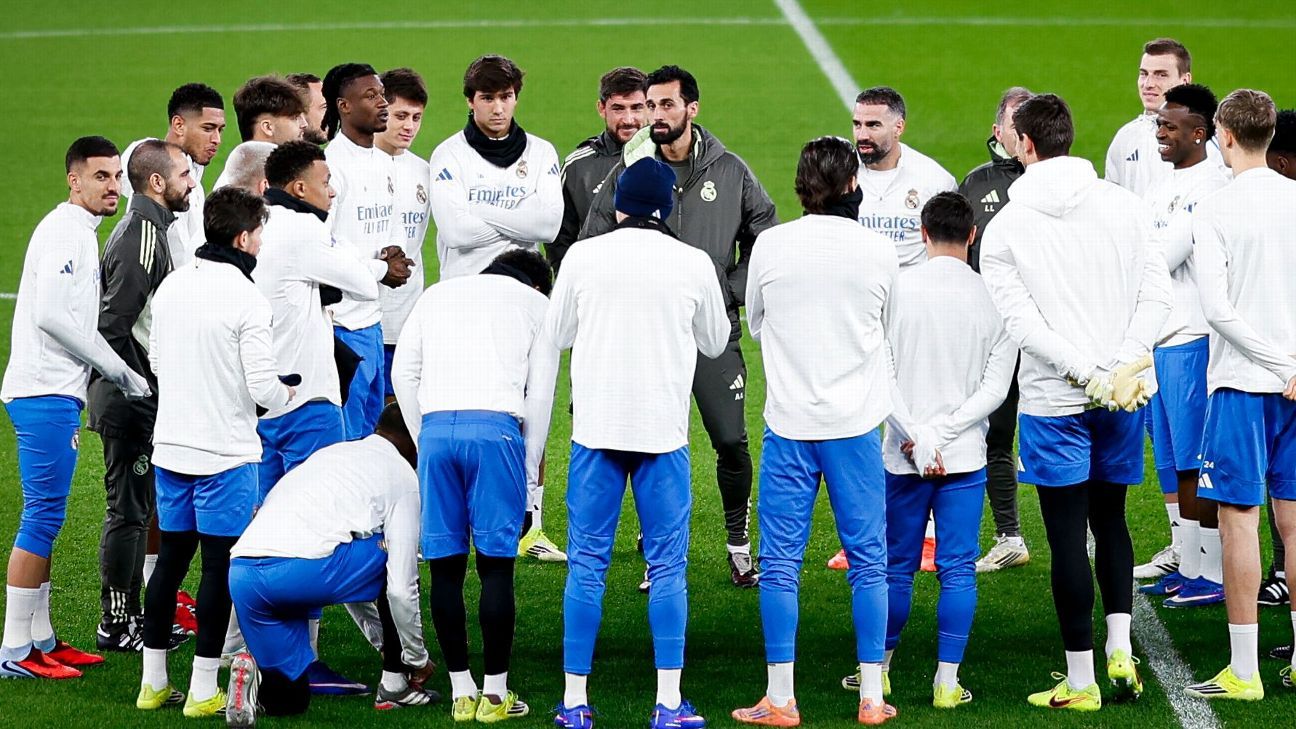
At the end of Álvaro Arbeloa’s news conference following Real Madrid‘s gutsy, gripping 3-2 win over Atlético Madrid in Sunday’s LaLiga derby, there was time for one last question.
It was a simple one. What would you say to those who doubted you? “That they didn’t know the players I had,” Arbeloa replied.
Since taking over from Xabi Alonso in January, Arbeloa has relentlessly shifted the focus on to the players, praising them, and deflecting any credit for Madrid’s turnaround in their general direction.
“I’m lucky to have him,” has been a constant refrain when the coach has been asked about Vinícius Júnior, Federico Valverde, Kylian Mbappé and others. “I’d make a statue of him and put it in my garden,” he said before the derby, when asked about defender Antonio Rüdiger.
– Stream every LaLiga match LIVE all season long on ESPN+ (U.S.)
– LaLiga Confidential: Spain’s soccer stars take ESPN’s player survey
– Sevilla, fighting relegation, are a shambles. Can Sergio Ramos save them?
Whether it’s the coach, the players, or both, Madrid have improved since Arbeloa took charge on Jan. 12. Since then, they’ve won 17 of their 21 games in all competitions, losing the other four.
In LaLiga, they’re four points behind leaders Barcelona — the same deficit as when Alonso was sacked — with a potentially decisive Clásico on May 10. In the UEFA Champions League, they will face Bayern Munich in the quarterfinals after eliminating Manchester City 5-1 on aggregate.
In just a few weeks, Arbeloa’s Madrid have beaten three teams coached by managerial greats: José Mourinho’s Benfica, Pep Guardiola’s City and Diego Simeone’s Atlético
It hasn’t all been plain sailing. Arbeloa’s debut as first-team coach saw Madrid knocked out of the Copa del Rey by Albacete. After back-to-back LaLiga defeats to Osasuna and Getafe, club sources told ESPN that barring “a miracle” or winning the Champions League — which at the time, felt like the same thing — Arbeloa would be replaced in the summer.
But results show the coach has, unquestionably, got a number of key things right, starting with his management of one of the team’s biggest — and previously most underperforming — stars.
2:00
Will Real Madrid’s comeback spark a LaLiga title push?
Luis Garcia reacts to Real Madrid’s comeback win over rivals Atletico Madrid in LaLiga.
Vinícius Júnior, back in form
Vinícius became the public face of dressing-room opposition to Alonso with his petulant on-field reaction to being substituted by the coach during last October’s Clásico.
Alonso’s doubts about the Brazil forward had been evident since last summer — ESPN reported that he considered dropping Vinícius during the FIFA Club World Cup — and the coach left him out of the team in both LaLiga and the Champions League, despite being fully fit. The result: Vinícius lost confidence, went three months without scoring, and was loudly whistled by home fans at the Bernabéu,
Negotiations over a new contract — with his current deal up in 2027 — were at a standstill. ESPN reported that Alonso was a major, perhaps insurmountable, obstacle in Vinícius’s contract renewal.
Arbeloa’s top priority after taking over was to get the former Ballon d’Or runner-up back on side. He has praised and defended Vinícius at every opportunity, making him a fixture in the starting XI again.
“I’m going to work to get the best out of Vinícius,” the coach said in January. “I’m going to demand that [the other] players look for him [with the ball]. He’s fearless. He’s one of the most dangerous players, if not the most dangerous, in the world. He embodies what a Real Madrid player is.”
Arbeloa’s faith and patience were rewarded when Vinícius scored in five consecutive games in February — matching his career-best run — and then scored back-to-back braces against City and Atlético Madrid. When he was substituted late on against Atlético, Arbeloa was waiting with a bear hug on the touchline.
“I don’t know if [Vinícius] is in the best form of his career, but he’s not far off,” the coach said on Sunday.
Speaking while on international duty with Brazil this week, Vinícius said he now wishes to stay at Madrid “for a long time.”
A new role for Valverde
If Vinícius’ transformation has been the most eye-catching of Arbeloa’s tenure, Valverde’s metamorphosis hasn’t been far behind. Valverde was another of the senior players, alongside Vinícius and Jude Bellingham, who — sources close to the dressing room told ESPN — were unconvinced by Alonso.
TV images showed the midfielder unenthusiastically warming up on the sidelines after being left out of the XI for a trip to Kairat Almaty in September, and he was frequently picked at right-back — a position he said he “wasn’t born to play” — in the absence of Trent Alexander-Arnold and Dani Carvajal.
Valverde hadn’t scored this season until January’s Spanish Supercopa. Now, under Arbeloa — and after being restored to the marauding right-wing position he thrived in under Carlo Ancelotti — he has scored six goals in a month, including a hat trick against City that made headlines around the world, and the crucial second goal against Atlético.
“Fede is everything a Real Madrid player should be,” Arbeloa said after Valverde scored a 94th-minute winner at Celta Vigo on March 6. “He has the spirit of [1980s club legend] Juanito. He has that quality which the great players in our history have had, and today he carried the team on his back.”
Liberated from right-back, and shifted out wide from a deep-lying central position which looked ill-suited to his skillset, Valverde is thriving. This is no reinvention from Arbeloa. Instead, as with Vinícius, it’s been about giving a talented player confidence, and putting them in a position to flourish.
1:31
Burley: Man City were taught a lesson by Real Madrid in UCL
Craig Burley reacts to Manchester City’s Champions League exit against Real Madrid.
Pitarch and homegrown talent
As the former coach of Madrid’s reserve side, Castilla — and before that, with the club’s youth teams — Arbeloa’s first-hand knowledge of the academy was signalled as a positive before his appointment. But the opportunities he has given to young players have been more frequent and more extensive than anybody could have predicted.
In Madrid’s 4-1 win over Elche at the Bernabéu on March 14, Madrid kicked off with one young homegrown talent, midfielder Thiago Pitarch, in the starting eleven, before Arbeloa introduced another five — Gonzalo García, Daniel Yañez, Diego Aguado, Manuel Ángel and César Palacios — off the bench. Madrid were only 2-0 up at the time, the outcome far from certain.
“I can die in peace after a night like this,” Arbeloa said, with a touch of hyperbole, afterward. “For someone who came up through the youth ranks and made it to the first team, this is a day of immense happiness and pride … It reminded me of the Madrid of the [famous 1980s homegrown team] Quinta del Buitre era.”
Arbeloa’s belief in youth has been justified. The energetic, fearless 18-year-old Thiago Pitarch has excelled, starting the team’s last six games, bringing dynamism and movement to a previously static midfield. Yañez contributed an assist against Elche.
Arbeloa has shown that he wasn’t just talking up the academy; he meant it. Sources told ESPN that senior club executives are delighted with his focus on the cantera, conscious of the resulting soaring valuations for homegrown players like Pitarch.
A compact 4-4-2 and a ‘false No. 9’
Pitarch has slotted into an athletic midfield quartet alongside Aurélien Tchouaméni — the team’s other outstanding player in recent weeks — Valverde, and Arda Güler. Vinícius has formed part of Arbeloa’s front two, starting on the left but with the freedom to step inside and take up dangerous, goal-scoring positions inside the box.
Partnering him, in the absence of Mbappé — who has been recovering from a knee sprain — has been Brahim Díaz. Díaz has often underwhelmed since joining Madrid, and made just one start in Arbeloa’s first two months in charge after returning from the Africa Cup of Nations a week into his new coach’s reign. But he has now started Madrid’s last five games, including both legs against City, playing an unshowy, hard-working ‘false No. 9’ role, and growing in stature.
“[Díaz] is understanding well what I want from him,” Arbeloa said on Sunday. “When opponents sit deep, he has a lot of freedom to move between the lines. He wanted opportunities, and just not making mistakes wasn’t enough. He’s a player who should take chances, have one-on-ones, get shots on goal and win penalties like today. That’s the Brahim we need.”
Winning over the doubters
Multiple sources close to the first-team squad have told ESPN that there is a notable improvement in the atmosphere around the Valdebebas training complex — and inside the dressing room — since Arbeloa’s arrival, a welcome sight following the fraught end to Alonso’s reign. Club executives are aware of this change, sources said, and point to it as proof that they made the right decision in removing Alonso when they did. The former coach had been focused almost exclusively on tactical solutions to the team’s problems, sources said, while Arbeloa is less concerned with on-field coaching, and more with supporting the players emotionally and putting them in a position to perform.
However, it must also be said that when results were bad — after the LaLiga losses to Osasuna and Getafe — the picture painted of Arbeloa’s management by sources close to the dressing room was much less positive. Then, some players were critical of Arbeloa’s approach and messaging, while executives said that he was almost certain to lose his job in the summer.
1:53
How will the return of Mbappé & Bellingham affect Real Madrid?
Alex Kirkland questions how Real Madrid will adapt following Kylian Mbappé and Jude Bellingham’s return from injury.
What about Mbappé and Bellingham?
The recoveries from injury of Mbappé — who made his return as a substitute against City — and Bellingham — who came off the bench against Atlético — present an opportunity, but also a significant challenge for Arbeloa. Two of the world’s best players are back and available for selection; but their inclusion risks breaking up the cohesive team unit that the coach has been able to build in their absence.
There is no doubt that top scorer Mbappé will replace Díaz, who has been an important part of the team’s success in recent weeks, while Bellingham will come in for either Pitarch or Güler. But while the two superstars possess many qualities, they may find it difficult to emulate those that their lower-profile teammates brought to the side: selfless work-rate and an acceptance of a specific, defined role to benefit the team as a whole.
After the international break, Madrid travel to Mallorca in LaLiga, before hosting Bayern Munich, one of the best teams in Europe, in the Champions League quarterfinals. Despite Arbeloa’s successes in recent weeks, club sources are still reluctant to state that he would remain in charge next season if his Madrid aren’t able to win either trophy.
“I’m not Gandalf,” Arbeloa said last month in another idiosyncratic news conference diversion, when asked about changing the team’s fortunes. “What I’m getting is what I wanted from my players: commitment and effort.”
That back-to-basics approach has worked its magic so far. Eliminating Bayern would be Arbeloa’s greatest trick yet.
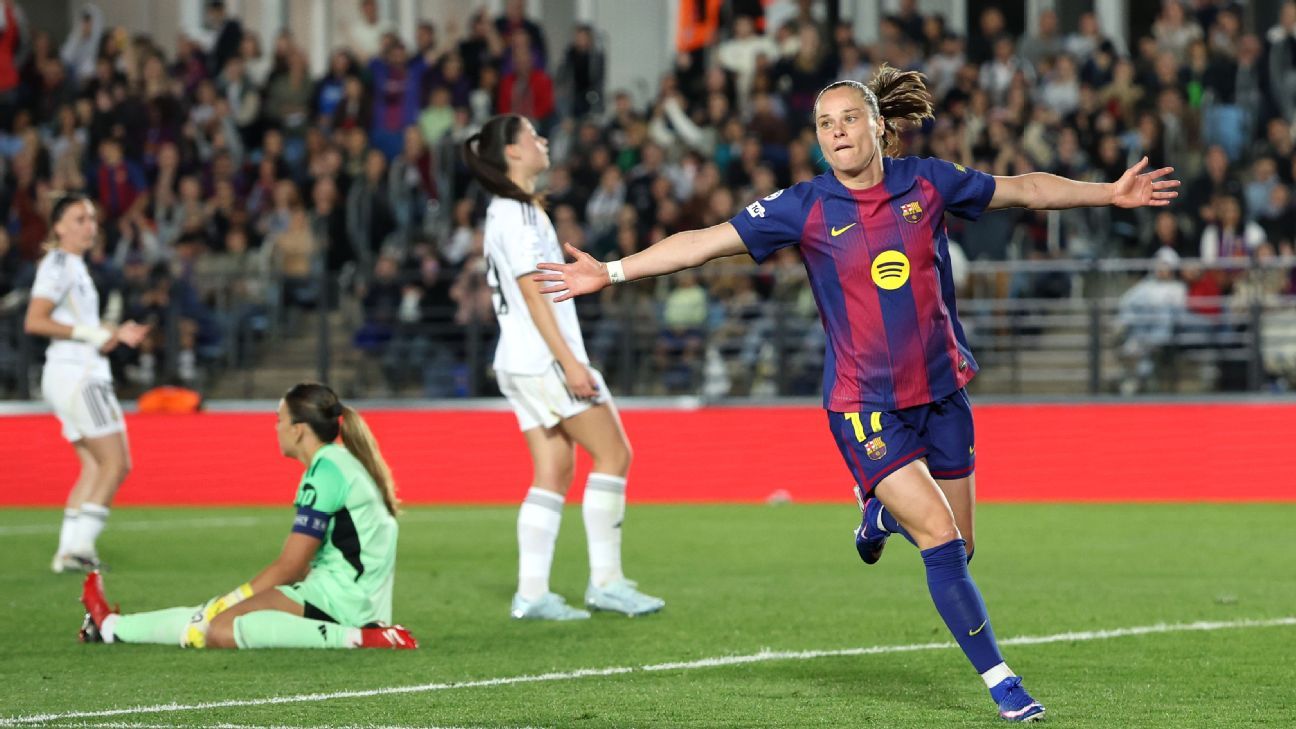
MADRID — The first of three Clásicos in eight days felt like it was over almost before it began.
Real Madrid went into this latest meeting with Barcelona — the first of two UEFA Women’s Champions League quarterfinal legs, with a Liga F game sandwiched in between — determined to show they were getting ever closer to competing on level terms with their rivals, an emerging power catching up with the dominant force in Spain and Europe.
That hope lasted just six minutes, when Ewa Pajor put Barça ahead. Seven minutes later, Esmee Brugts made it 2-0 and silenced the excited crowd at the Alfredo Di Stéfano stadium, as Barça went on to win 6-2.
“In the last three Clásicos, we’ve had chances to go ahead and we haven’t been clinical,” Madrid coach Pau Quesada said prematch. “We’ll look for 90 minutes of perfection, because 70 aren’t enough in these games.”
It proved to be an overly ambitious aim. Barcelona’s record in this fixture is near flawless — with 21 wins and just one defeat going into Wednesday’s meeting at Valdebebas — and based on this contest, there’ll be no change in that balance any time soon.
Only the supremely talented Linda Caicedo put up much resistance, her two beautifully taken goals keeping Madrid just barely in the tie. Her second-half strike, arrowed into the top corner, drew gasps and then cheers from the crowd, hopeful that there was still some life in this quarterfinal.
Overall, though, this was an often deflating experience for a Madrid side that is starting to finally feel comfortable at this level, reaching the UWCL quarterfinals for the second season in a row. But they are nowhere near matching Barcelona’s overwhelming European pedigree, perennial semifinalists and beyond.
Barça’s early opening goal came far too easily, though the final ball, Barça midfielder Patri Guijarro‘s deftly scooped assist over the defense, was expertly delivered. Pajor, a familiar nemesis for Madrid, did the rest. Their second goal was bizarre, goalkeeper Misa’s save from Brugt’s header only serving to send the ball looping high up in the air, and into the net at the far post.
Misa made up for the error four minutes later, denying Pajor in a one-on-one, and there was some hope for Madrid when Caicedo made it 2-1 with her first goal against Barcelona. Caicedo’s run was perfectly timed, and she held off the challenge of Irene Paredes, before dribbling around keeper Cata Coll, who stayed on her feet as long as she could. Caicedo waited even longer.
At last, there was some noise from the crowd at the Di Stéfano, but it was short-lived. Just two minutes later, Paredes’ unstoppable header from Clàudia Pina‘s corner made it 3-1 and effectively ended the contest.
Despite their superiority in this contest, Barcelona had only once scored five or more goals away at Madrid, in the Copa de la Reina semifinals in 2025. In the second half, when they extended their lead with another cool finish from Pajor and then another from Vicky López on 64 minutes, some of the home fans got to their feet and started heading for the exits.
Those who did missed Caicedo’s goal-of-the-week contender, but there was still time for Alexia Putellas to convert an 89th-minute penalty, putting the game — and probably the tie — well beyond Madrid’s reach at 6-2. Madrid’s progress in this fixture is undeniable. That long-awaited first win over Barça came, almost unexpectedly, in March 2025. But on nights like this, the gulf between the two still feels significant and difficult to bridge.
The 6-2 Clásico scoreline is a famous one from the men’s game. Seventeen years ago, in May 2009, Pep Guardiola’s Barça won 6-2 at the Bernabéu. Here, the women’s side had delivered their own piece of history.
“We’re happy,” Guijarro said postmatch. “It’s the first leg. We’ll go at 200% in the second leg too. I think we deserved the result.
“With this result it might seem like we’ll relax on Sunday, and that in the next game, with a four-goal lead, we’ll relax in the second leg. But quite the opposite. You know us.”
Madrid were outplayed in midfield, where Caroline Weir was unable to exert her usual influence and substituted after 65 minutes. Only Caicedo’s individual quality could compete, and that alone wasn’t enough.
At full time, Quesada gathered his players in a circle on the pitch, looking to lift his players’ spirits ahead of the two upcoming Clásicos. Madrid can’t afford to dwell on this loss, or on conceding six goals at home. They must find a way to pick themselves up and keep believing that a different outcome is possible, this weekend and next Thursday.


2026 NFL draft team needs: Depth chart holes, prospect fits

China’s coal-to-chemicals: Winning the Iran war energy crisis

King Charles hopes for peace in new message as US tour hangs in balance

-

 Fashion1 week ago
Sales at US apparel, clothing accessories stores up 4% YoY in Jan 2026
-

 Tech1 week ago
Justice Department Says Anthropic Can’t Be Trusted With Warfighting Systems
-
 Entertainment1 week ago
Val Kilmer revived 1 year after death through AI
-

 Sports1 week ago
March Madness 2026 – How to watch in SA, start time, schedule, TV channel for NCAA championship basketball tournament
-
 Business1 week ago
Stocks and pound rise as US rate call approaches
-
 Business1 week ago
Brits cashing in jewellery as gold price hits record high
-

 Politics1 week ago
Iran strikes Tel Aviv with cluster-warhead missiles in retaliation of Larijani’s martyrdom
-
 Fashion1 week ago
US’ G-III Apparel’s FY26 sales fall 7% to $2.96 bn