

Business
Formula 1 tech used to improve train Wi-Fi on GWR

Laura CressTechnology reporter
 GWR
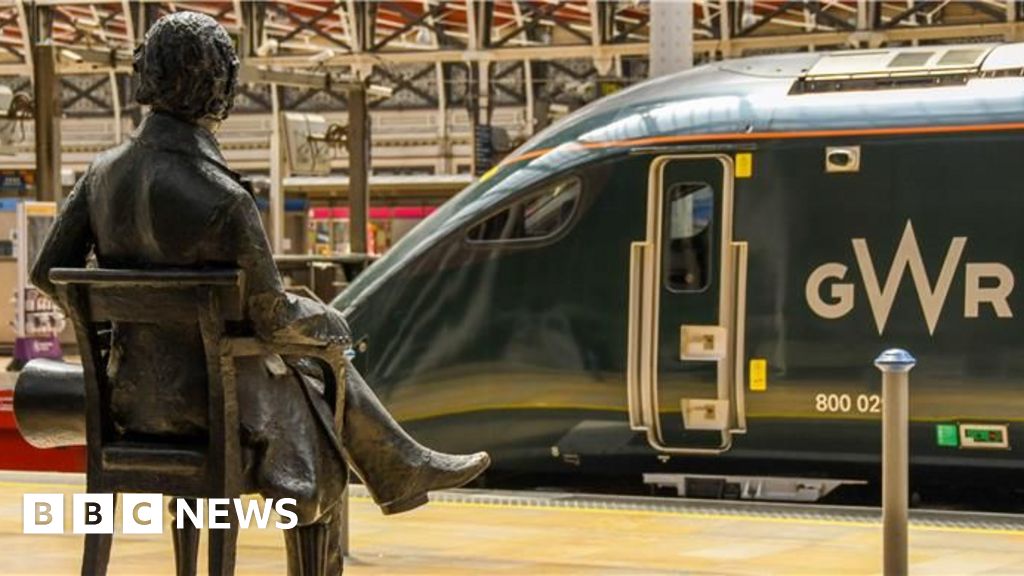
GWRA new UK-first pilot scheme is aiming to create fast and more reliable train wi-fi, using technology originally developed for Formula 1 cars.
It will see a train in the Great Western Railway fleet use a hybrid system of both signals from mobile phone masts on the ground and low earth orbit (LEO) satellites in space to create a more reliable connection.
The scheme has been developed by British tech company Motion Applied, in partnership with the transport body for Cornwall, Devon, Plymouth, Somerset and Torbay, Peninsula Transport.
The pilot will last for 60 days onboard GWR’s Intercity Express Train which runs in the South West region, having started in mid-November.
In a recent study by networking testing firm Ookla, the UK ranked 16th out of 18 major European and Asian countries for train wi-fi speed, with average download speeds at just 1.09 megabits per second, compared to Sweden’s 64.58.
Nick Fry, chairman of Motion Applied, formerly part of McLaren Group, said the issues faced in connecting to the internet from a fast moving train had “many parallels with motorsport”.
He added that by using technology originally developed for F1 cars, trains should be able to switch between ground and space-based networks such as LEO satellites to “reliably connect” without drop outs.
In the 2025 spending review, the Department of Transport secured £41m to introduce low earth orbit satellite connectivity on all mainline trains by 2030.
‘A step in the right direction’
Councillor Dan Rogerson, from the Peninsula Transport board, called the pilot a “major milestone” in its plans to modernise transport infrastructure across the South West and South Wales.
“It’s not just about passenger wi-fi,” he said. “This is about a whole new digital backbone for our transport networks”.
Bruce Williamson from the campaign group Railfuture told the BBC the scheme appeared to be “really good news”.
“We’re all increasingly connected these days, and wi-fi has become more and more of an essential service for travellers. I’m not going to hold my breath, but this is a step in the right direction.”
In May, South Western Railway launched its own, separate, “superfast” wi-fi rollout for its trains between Earlsfield and Basingstoke, using trackside poles and antennas to create a bespoke 5G rail network.


Business
China orders immediate ban on March fuel exports amid ongoing Middle East conflict: Report – The Times of India

China on Thursday ordered its refiners to immediately halt exports of refined fuel for March in a bid to manage potential domestic shortages triggered by the escalating Middle East conflict, Reuters reported citing sources.The directive was issued by the National Development and Reform Commission (NDRC) and covers shipments of gasoline, diesel and aviation fuel, four sources familiar with the matter told the news agency.The move comes as global oil prices surged again on Thursday climbing above $100 per barrel after Iranian attacks on shipping effectively disrupted traffic through the Strait of Hormuz.The strikes followed US and Israeli attacks on Iran that reportedly killed Supreme Leader Ali Khamenei, intensifying the regional conflict.In response to rising energy market volatility, the International Energy Agency on Wednesday announced that its member countries would release 400 million barrels of oil from emergency reserves to help ease supply concerns linked to the war.The release is also the sixth such coordinated action since the organisation was created to respond to major supply disruptions following the 1973 oil crisis.Meanwhile, the United States department of energy also said that it would release 172 million barrels of crude oil from the Strategic Petroleum Reserve.The department said the release would “beginning next week” and would “take approximately 120 days to deliver based on planned discharge rates,” according to a post on X.The conflict, which began on February 28, is now approaching the two-week mark and involves nearly a dozen countries, raising fears of prolonged disruption to global energy supplies.This is a developing story.
Business
Stock market crash today (March 12, 2026): Nifty50 opens below 23,600; BSE Sensex down over 900 points on continuing US-Iran war – The Times of India

Stock market crash today: Continuing the down trend, Nifty50 and BSE Sensex, crashed in opening trade on Thursday with the US-Iran war showing no signs of stopping and oil prices climbing again. While Nifty50 went below 23,600, BSE Sensex was down over 900 points. At 9:16 AM, Nifty50 was trading at 23,592.00, down 275 points or 1.15%. BSE Sensex was at 75,950.65, down 913 points or 1.19%.Market analysts are of the view that indices are likely to remain volatile as investors track developments in the West Asia conflict, fluctuations in crude oil prices and sustained overseas selling.Dr. VK Vijayakumar, Chief Investment Strategist, Geojit Investments Limited says, “External headwinds have pushed the market into a weak zone. With the war continuing to rage with no signs of let up and Brent crude again bouncing back to $100 levels, the weakness is likely to persist. Even though DIIs are continuously buying in the market, DII buying is not helping the market to recover since FIIs are sustained sellers and show no signs of reversing their strategy in this uncertain global environment.” “For investors, markets can be very frustrating during certain times. This is one such time. The lesson from market history is that attitude and temperament are important in these trying times. Experiences from previous geopolitical conflicts tell us that markets bounce back smartly once the conflicts get over. Therefore, investors should remain invested and continue with systematic investment plans. Long term investors can use market weakness to slowly accumulate high quality bluechips across sectors. This is also the right time to churn portfolios in favour of high quality stocks.”Foreign portfolio investors continued to offload domestic equities, net selling shares worth Rs 6,267 crore during Wednesday’s session. Domestic institutional investors partly offset the pressure, emerging as net buyers to the tune of Rs 4,966 crore.US stocks ended lower on Wednesday as investors looked past a relatively mild inflation reading and instead focused on intensifying hostilities and the wider implications of the US-Israeli war on Iran.Asian stocks declined on Thursday, extending what has been a volatile week in global markets. A renewed rally in oil prices and increasing stress in the private credit market added to concerns among investors.Oil prices climbed in Asian trading even after authorities announced large releases of crude from strategic reserves aimed at easing prices following the Iran conflict.Meanwhile, gold prices edged lower on Thursday as a stronger US dollar weighed on the metal. (Disclaimer: Recommendations and views on the stock market, other asset classes or personal finance management tips given by experts are their own. These opinions do not represent the views of The Times of India)

The move comes weeks after the US Supreme Court struck down a key part of Trump’s tariffs policies.
Source link


UK to scrap tariffs on 33 goods to aid offshore wind manufacturing
China orders immediate ban on March fuel exports amid ongoing Middle East conflict: Report – The Times of India

Save Up to 20% With Our Expedia Promo Codes and Deals

-

 Politics5 days ago
India let Iran warship dock the day US sank another off Sri Lanka, say officials
-

 Sports5 days ago
Pakistan set for FIH Pro League debut | The Express Tribune
-
 Business5 days ago
Restaurant group changes name after bid to buys pubs across the UK
-

 Entertainment5 days ago
Harry Styles kicks off new era with ‘One Night Only’ comeback show
-
 Business5 days ago
Home heating oil: ‘Most of my pension has gone on home heating oil’
-

 Sports5 days ago
Winners and losers of the 2026 NHL trade deadline
-

 Tech1 week ago
Google’s Pixel 10a May Not Be Exciting, but It’s Still an Unbeatable Value
-

 Entertainment5 days ago
Kanye ‘Ye’ West trips during trial: ‘Is he asleep?’