

Fashion
France’s LVMH posts $96.96 bn 2025 revenue as currency headwinds weigh

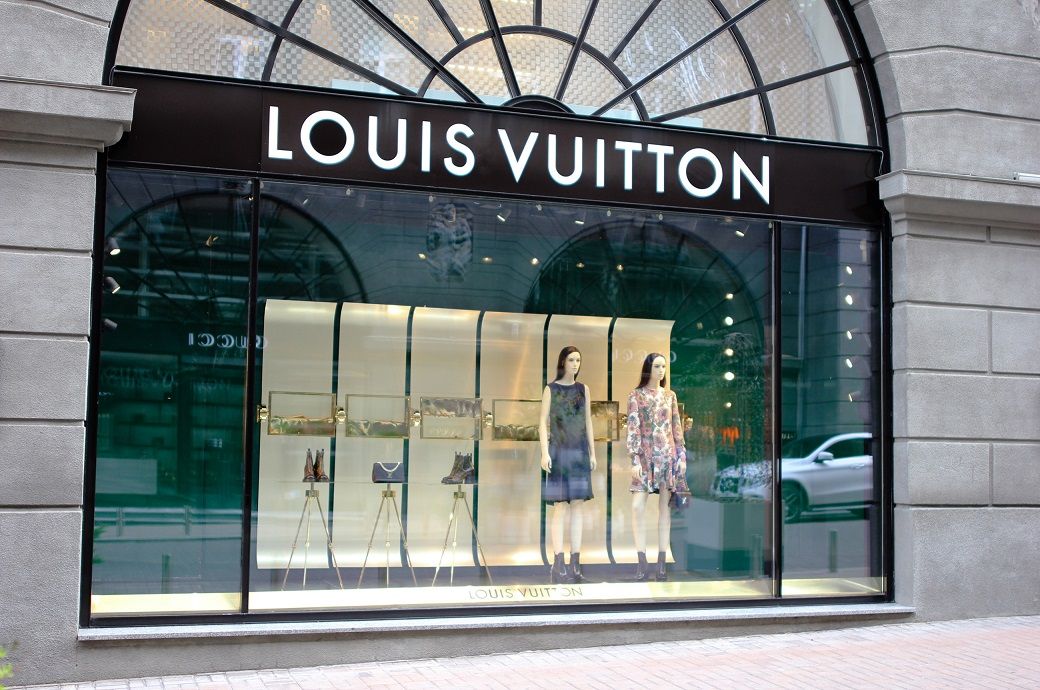
Profit from recurring operations stood at €17.8 billion, translating into an operating margin of 22 per cent, which was affected by unfavourable currency movements. Net profit attributable to the group declined 13 per cent to €10.9 billion, while operating free cash flow rose 8 per cent to €11.3 billion. Net financial debt fell sharply by 26 per cent to €6.9 billion, underscoring strong cash discipline.
French luxury group LVMH has reported €80.8 billion (~$96.96 billion) revenue in 2025, down 5 per cent reported and 1 per cent organically, amid currency headwinds.
Profit from recurring operations reached €17.8 billion, while net profit fell 13 per cent.
Performance stabilised in H2 and Q4, supported by US demand and strong cash generation, reinforcing confidence for 2026.
Region-wise, sales in Europe declined in the second half of the year, while the United States recorded growth, supported by solid local demand. Japan saw a decline compared with 2024, when tourist spending had been boosted by a much weaker yen. In contrast, Asia excluding Japan showed a ‘noticeable improvement’ compared with 2024, returning to growth in the second half, LVMH said in a press release.
Despite the full-year decline, performance improved in the second half, with organic revenue growth of 1 per cent, reflecting better trends across business groups after the slowdown seen since 2023. Fourth-quarter organic revenue growth also came in at 1 per cent, in line with the third quarter, signalling stabilisation towards year-end.
In Fashion & Leather Goods, revenue declined YoY in 2025, although LVMH reported an improvement in the second half, supported by local customers after 2024 had benefited from tourist-led demand, particularly in Japan. Profit from recurring operations fell 13 per cent, largely due to currency effects, while the division maintained a very high operating margin of 35 per cent. The group highlighted Louis Vuitton’s product and experiential strength, including The Louis in Shanghai, alongside strong brand momentum driven by fashion shows, and new store concepts. Dior’s creative reset, major store openings, and renewed creative leadership at Celine, Loewe, Givenchy and Fendi were also cited as contributing to fresh energy across the portfolio.
“Once again in 2025, LVMH demonstrated its solidity and effective strategy upheld by its highly engaged teams. The Group was buoyed by the loyalty and growing demand shown by our local customers. This momentum was once again underpinned by the powerful desirability of our brands, which embody creative passion and the pursuit of the utmost quality, and by our ambition of offering our customers extraordinary stores and cultural experiences, as demonstrated by The Louis in Shanghai, and our House of Dior stores in a number of cities around the world,” said Bernard Arnault, chairman and CEO of LVMH.
“In 2026, in an environment that remains uncertain, our Maisons’ ability to inspire dreams—coupled with the highest levels of vigilance with regard to cost management, and our environmental and social commitments—will once again be a decisive asset underscoring our leadership position in the luxury goods market. We will remain true to our entrepreneurial tradition as a forward-looking family group focused on sustainable creativity in high-quality products, exceptional spaces and the long-term future of our outstanding craftsmanship,” added Arnault.
Selective Retailing delivered 4 per cent organic revenue growth and a 28 per cent rise in profit from recurring operations, lifting operating margin by 2 percentage points to 9.7 per cent. DFS showed stabilisation, with streamlining measures improving profitability despite weak international conditions. In January 2026, LVMH signed an agreement with China Tourism Group Duty Free to acquire DFS’ business in Greater China, including the Gallerias in Hong Kong and Macao.
LVMH also reported progress under its Life 360 environmental programme, accelerating circular design initiatives. Forty-one per cent of materials used for products and packaging were sourced through recycling processes, up 8 per cent versus 2024. The proportion of certified raw materials increased further, with cotton at 84 per cent and wool at 76 per cent.
Looking ahead, LVMH said it remains confident for 2026, despite continued geopolitical and macroeconomic uncertainty. The group will continue to focus on brand development, innovation, disciplined cost management and long-term sustainability, aiming to further strengthen its global leadership position in luxury goods.
Fibre2Fashion News Desk (SG)










The upcoming official visit to Russia by Vietnamese Prime Minister Pham Minh Chinh is expected to open new opportunities to advance bilateral trade ties to a higher level, according to a domestic news agency.
Vietnam-Russia trade reached $700 million in the first two months this year—down by 5.1 per cent YoY.
The decline, however, is perceived as short-term, with the overall long-term growth trajectory being stable.
The upcoming official visit to Russia by Vietnamese PM Pham Minh Chinh is expected to open new opportunities to advance bilateral trade ties to a higher level.
To boost bilateral trade, the Vietnamese Ministry of Industry and Trade (MoIT) plans to refine and expand cooperation mechanisms, fully utilise existing agreements, particularly the Eurasian Economic Union (EAEU)-Vietnam free trade agreement (FTA), and balance trade structures.
EAEU, established in 2015, comprises Russia, Armenia, Belarus, Kazakhstan and Kyrgyzstan.
Flexible joint-venture models that maximise economic complementarity will be given priority along with vigorous trade promotion and business connectivity.
An annual Vietnam-Russia trade and investment forum will serve as a stable dialogue channel for enterprises, trade promotion bodies, commerce chambers and officials.
The ministry will also organise specialised trade and investment missions to Russia, support participation in fairs, exhibitions and seminars, and help Vietnamese firms connect with major distribution networks, especially supermarket chains and large e-commerce platforms.
Fibre2Fashion News Desk (DS)
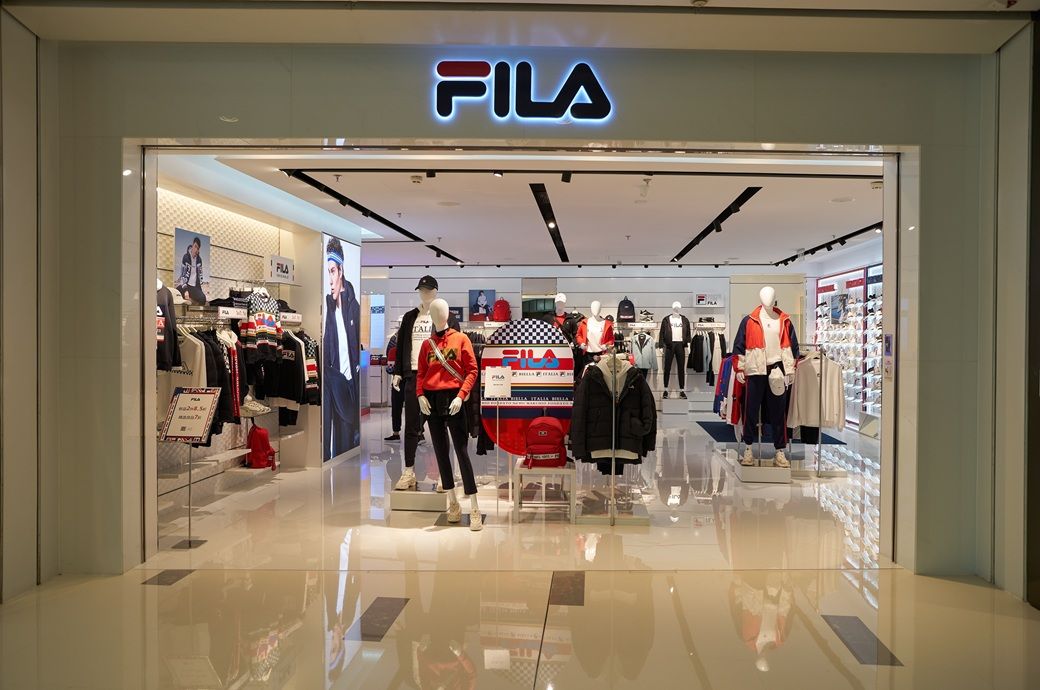
The Misto segment recorded annual revenue of KRW 829.6 billion, down 9.6 per cent YoY due to US restructuring and inventory clearance. However, operating profit rebounded to KRW 74.7 billion, signalling a strong turnaround, with the segment delivering its fourth consecutive quarter of profitability.
Misto Holdings has reported revenue of KRW 4.47 trillion (~$2.97 billion) in 2025, up 4.7 per cent YoY, with operating profit rising 31.6 per cent.
While the Misto segment declined, profitability improved.
Growth was driven by Greater China and steady Acushnet performance.
In Q4, revenue rose 6.3 per cent, led by Acushnet, while the company returned KRW 285.4 billion to shareholders.
The growth momentum was led by Greater China, which delivered triple-digit expansion in 2025 as the company scaled its presence through leading K-fashion brands such as Marithe+Francois Girbaud, Matin Kim, Rest and Recreation, and Raive. In Korea, Fila continued to benefit from stable demand in its footwear franchise models, Misto Holdings said in a press release.
The Acushnet segment maintained steady performance, supported by robust demand for golf equipment and premium positioning, contributing to overall earnings stability.
“2025 was a meaningful year in which we further clarified our identity as a global brand portfolio company following our corporate name change. Based on the expansion of our Greater China business, improved profitability in the Misto segment, and Acushnet’s solid growth, we strengthened the stability of our earnings. We will continue to enhance brand value, maintain profitability-focused management, and execute our shareholder return policy to support sustainable growth,” said Ho Yeon (Aaron) Lee, CFO of Misto Holdings.
Meanwhile, in the fourth quarter (Q4), revenue rose 6.3 per cent YoY to KRW 915.2 billion, supported by profitability-focused operations, restructuring of its US business, and continued growth at Acushnet despite macroeconomic uncertainty.
Acushnet remained a key contributor in Q4, with revenue increasing 10.9 per cent YoY to KRW 698.3 billion, driven by strong sales of Titleist T-Series irons and SM10 wedges, along with higher average selling prices for FootJoy golf shoes.
Misto Holdings also advanced its shareholder return strategy, returning approximately KRW 285.4 billion through dividends and share repurchases in 2025, achieving 57.1 per cent of its three-year target.
Fibre2Fashion News Desk (SG)

However, actual use of foreign direct investment (FDI) in the Chinese mainland declined during the same period, falling 5.7 percent year on year (YoY) to ¥161.45 billion ($23.43 billion), as mentioned in official ministry figures.
China established 8,631 new foreign-invested firms in the first two months of the year, up 14 per cent YoY, even as actual FDI inflows fell 5.7 per cent to ¥161.45 billion ($23.43 billion).
High-tech industries attracted ¥63.21 billion ($9.19 billion), rising 20.4 per cent and accounting for 39.2 per cent of total inflows, while investment from Canada and Switzerland surged sharply.
Sector-wise, FDI inflows totalled ¥47.52 ($6.90 billion) in manufacturing and ¥111.22 billion ($16.17 billion) in services, indicating continued dominance of the service sector in attracting foreign capital. High-tech industries remained a key growth area, drawing ¥63.21 billion ($9.19 billion) in investment, up 20.4 per cent year on year (YoY) and accounting for 39.2 percent of the national total.
In terms of source countries, investment from Canada and Switzerland recorded strong gains, surging 210 per cent and 41.3 per cent respectively compared with the same period last year, highlighting a shift in the composition of foreign capital entering the Chinese market.
Fibre2Fashion News Desk (JP)


Mortgage rate rises ‘coming thick and fast’

Vietnam-Russia trade down 5.1% YoY in Jan-Feb 2026; decline temporary

Gas shortages push India’s poor back to wood and coal

-

 Entertainment1 week ago
Strategic oil stocks to be released ‘immediately’ in Asia and Oceania: IEA
-
 Business1 week ago
UK looking at all options to secure Strait of Hormuz, says Ed Miliband
-

 Tech1 week ago
Early Deals From the Amazon Spring Sale That Passed Our BS Test
-
 Business1 week ago
Stocks To Watch: Tata Motors, IndiGo, Jindal Stainless, GMR Airports, Hindalco, And Others
-

 Sports1 week ago
More Iran women’s soccer players decide to leave Australia
-

 Sports1 week ago
PCB files complaint over allowing Bangladesh to take review on penultimate ball – SUCH TV
-
 Business7 days ago
Stocks and pound rise as US rate call approaches
-

 Tech6 days ago
Justice Department Says Anthropic Can’t Be Trusted With Warfighting Systems