

Business
FTSE 100 hits new high on electricity generator SSE spark and gold gains

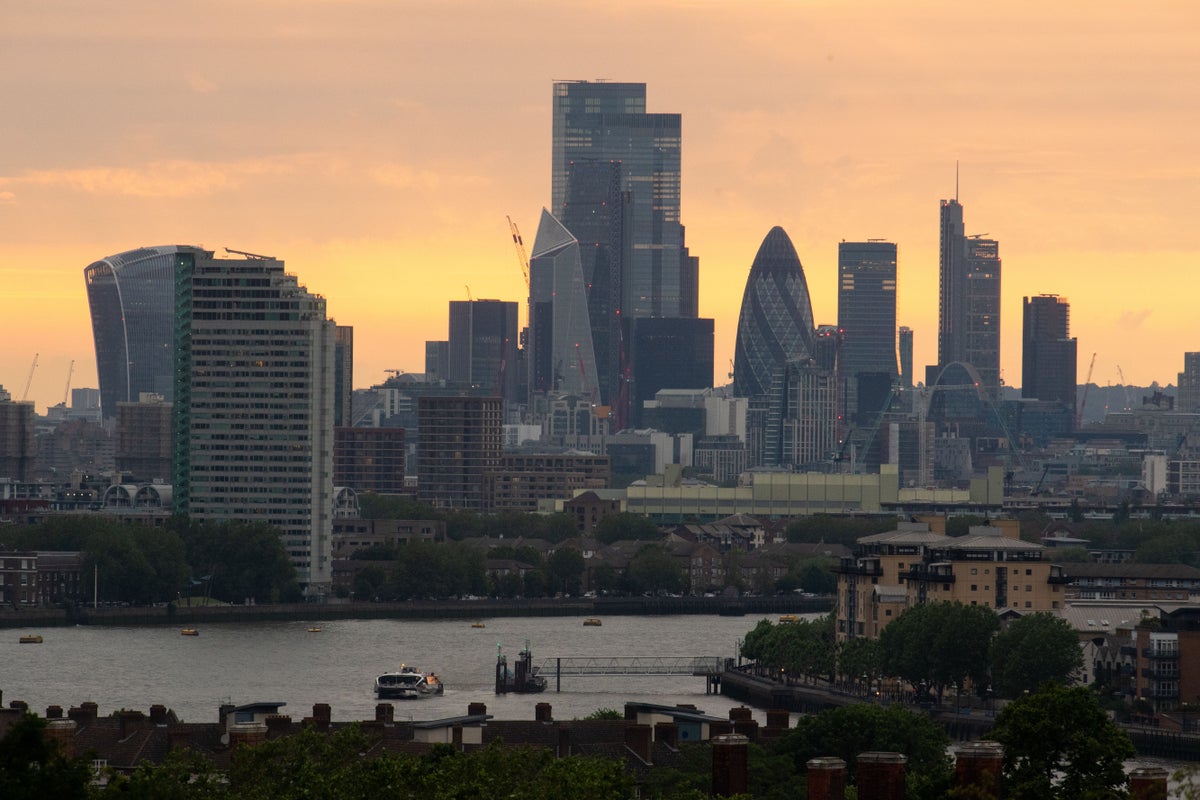
The FTSE 100 climbed to another fresh peak on Wednesday, powered by gains in electricity generator SSE and gold miners as the precious metal rose once more.
The FTSE 100 index closed up 11.82 points, or 0.1%, at 9,911.42, a record closing peak. It had earlier set a new intra-day best of 9,930.09.
The FTSE 250 ended 14.56 points lower, or 0.1%, at 22,135.32, and the AIM All-Share climbed 3.92 points, 0.5%, at 763.16.
In London, sterling took the brunt of some political to-and-fro as Prime Minister Sir Keir Starmer denied authorising briefings against potential challengers.
Health Secretary Wes Streeting was earlier forced to deny speculation about a possible coup, partly stoked by Downing Street briefings that the Prime Minister would fight any such move.
“Any attack on any member of my cabinet is unacceptable,” Sir Keir said. He added that he had “never authorised attacks on cabinet ministers” by Number 10 staff.
Sterling was quoted at 1.3134 dollars at the time of the London equities close on Wednesday, lower compared with 1.3173 dollars on Tuesday.
The euro stood at 1.1592 dollars, down slightly against 1.1594 dollars. Against the yen, the dollar was trading higher at 154.74 yen, compared with 154.02 yen.
But bond yields held steady with the UK 10-year gilt at 4.41%, up only slightly from 4.40% on Tuesday.
The speculation failed to dim demand for blue chips in London.
Joshua Mahony, analyst at Scope Markets noted that in a year that has brought “major volatility on the other side of the pond, it is interesting to see the seemingly boring and old-fashioned FTSE 100 fare particularly well”.
He noted banks, defence and mining stocks have done especially well, with the construction of the index actually benefiting from some of the key themes that have dominated 2025 so far.
“With the latest jobs report providing greater confidence over a rate cut from the Bank of England next month, there is reason to believe that we could also see more domestically focused stocks fare well amid a more accommodative monetary policy,” he suggested.
Leading the way, SSE surged 17% after announcing plans to raise £2 billion in fresh equity to help finance a £33 billion five-year investment plan, significantly increasing its exposure to UK electricity networks.
The Perth-based electricity generator said the plan for the timeframe to the financial year ending March 2030 represents a trebling of investment over the five-year period.
“This ‘transformation for growth’ investment plan is built on a once-in-a-generation opportunity to upgrade the UK electricity network and build a cleaner, more secure and more affordable energy system,” said SSE chief executive Martin Pibworth.
The generator outlined plans to grow earnings and dividends out to 2030 which were well received, while the equity issue was viewed as unsurprising.
Jefferies analyst Ahmed Farman said the plan is a “clear positive”, bringing “clarity on the balance sheet and the company’s growth outlook”.
In European equities on Wednesday, the CAC 40 in Paris closed up 1.1%, while the DAX 40 in Frankfurt jumped 1.2%.
In New York, markets were mixed.
The Dow Jones Industrial Average was up 0.7% at around the time of the London close. The S&P 500 index was 0.1% lower, while the Nasdaq Composite declined 0.5%.
Hopes remain high of an end to the federal government shutdown ahead of a key vote on Wednesday.
But analysts at TD Economics said while a resolution “finally appears in sight” this “very much feels like another patch solution” from lawmakers.
“The continuing resolution only extends funding for much of government through the end of January,” the broker noted, meaning there’s a “very real risk” of a partial government shutdown come February.
The yield on the US 10-year Treasury was at 4.07%, narrowed from 4.12% on Tuesday. The yield on the US 30-year Treasury was quoted at 4.67%, trimmed from 4.71%.
Gold traded higher at 4,184.48 dollars an ounce on Wednesday against 4,108.75 dollars on Tuesday.
The latest gains helped push Endeavour Mining and Fresnillo up 3.5% and 1.8% respectively.
Elsewhere, luxury goods manufacturer Burberry, up 4.0%, and insurer Aviva, up 1.9%, were in favour ahead of half-year results on Thursday.
Aviva is expected to unveil new financial targets and update on the progress of the Direct Line Insurance acquisition.
But Experian fell 4.5% despite raising its guidance for financial 2026 revenue growth and margin improvement, saying “AI-driven automation and personalisation” is transforming its customer relationships and internal processes.
Auto Trader was also on the back foot, down 3.7%, as Bank of America downgraded to ‘neutral’ from ‘buy’, while Hiscox fell 2.8% as Jefferies double-downgraded to ‘underperform’ from ‘buy’.
On the FTSE 250, housebuilder Taylor Wimpey fell 3.8% as it flagged softer market conditions amid budget uncertainty.
Nonetheless, the firm continues to expect 2025 UK completions excluding joint ventures of between 10,400 to 10,800 homes, and 2025 group operating profit including joint ventures of around £424 million.
Meanwhile, London-based IT-focused professional services provider FDM jumped 5.0% as Deutsche Bank upgraded to ‘buy’ from ‘neutral’.
Brent oil was quoted higher at 65.19 dollars a barrel at the time of the London equities close on Wednesday, from 65.19 dollars late on Tuesday.
The biggest risers on the FTSE 100 were SSE, up 332.5 pence at 2,307.0p, Games Workshop, up 920.0p at 16,320.0p, Burberry, up 48.5p at 1,253.5p, Endeavour Mining, up 110.0p at 3,214.0p and Airtel Africa, up 8.4p at 312.4p.
The biggest fallers on the FTSE 100 were Experian, down 156.0p at 3,323.0p, Auto Trader, down 26.8p at 702.6p, 3i Group, down 142.0p at 4,069.0p, London Stock Exchange, down 270.0p at 8,916.0p and Relx, down 91.0p at 3,136.0p.
Thursday’s global economic calendar has UK GDP, trade and industrial production data.
Thursday’s UK corporate calendar has half-year results from insurer Aviva, luxury goods manufacturer Burberry, discount retailer B&M European Retail and water utility United Utilities.
In addition, housebuilder Persimmon and aerospace and defence firm Rolls Royce will provide trading updates.
Contributed by Alliance News

A Nike logo is displayed at a Nike store in Austin, Texas, Feb. 5, 2026.
Brandon Bell | Getty Images
Shares of Nike fell in extended trading Tuesday after the retailer warned sales will fall for the rest of the calendar year, led by an expected 20% decline in its key China market during the current quarter.
Chief Financial Officer Matt Friend said during the company’s earnings call that Nike expects sales for its current fiscal fourth quarter to drop between 2% and 4%, compared with Wall Street estimates of a 1.9% increase, according to LSEG.
For the duration of the calendar year, Friend said, the company expects sales to fall by a low single-digit percentage, led by growth in North America and offset by declines in China. That outlook wasn’t comparable to estimates.
Nike beat expectations across the business on both the top and bottom lines for its fiscal third quarter, but its guidance left investors with more questions about how long its turnaround will take. Friend also cautioned that Nike’s guidance was based off of where the global economic picture stands today — and it could change given recent geopolitical volatility.
“We also recognize that the environment around us has become increasingly dynamic, and we could experience unplanned volatility due to the disruption in the Middle East, rising oil prices and other factors that could impact either input costs or consumer behavior,” said Friend. “We are focused on what we can control.”
Shares fell more than 8% in extended trading.
Here’s how the world’s largest sneaker company did for its fiscal third quarter, compared with estimates from analysts polled by LSEG:
- Earnings per share: 35 cents vs. 28 cents expected
- Revenue: $11.28 billion vs. $11.24 billion expected
The company’s reported net income for the three-month period that ended Feb. 28 was $520 million, or 35 cents per share. That’s a 35% decline from $794 million, or 54 cents per share, a year earlier. That plunge came as Nike’s gross profit margin slid 1.3 percentage points to 40.2%, “primarily due to higher tariffs in North America,” the company said.
Sales were flat at $11.28 billion, compared to $11.27 billion last year.
While Nike beat expectations on the top and bottom lines, it posted a mixed picture regionally. Nike’s largest market of North America continued to show steady growth, as revenue climbed 3% to $5.03 billion, but that was just shy of Wall Street’s expectations of $5.04 billion, according to StreetAccount.
Meanwhile, Nike’s Greater China market continued to shrink, with revenue down 7% to $1.62 billion during the quarter. Still, that total beat analyst estimates of $1.50 billion, according to StreetAccount.
Nike is continuing to work through a colossal turnaround under CEO Elliott Hill. About a year and a half into his tenure, Hill has made strides in repairing parts of the business, but has been clear that it’ll take time for the entire company to improve given the retailer’s scale and complexity.
He reiterated that expectation on Tuesday, saying in a news release that “the pace of progress is different across the portfolio.”
“The areas we prioritized first continue to drive momentum,” Hill said. “The work is not finished, but the direction is clear, our teams are moving with focus and urgency, and our foundation is getting even stronger to build the future of NIKE.”
Friend said Nike’s turnaround efforts “will continue to impact results over the balance of the calendar year.”
Nike’s recovery was already coming at a tough time as a global trade war dented its efforts to improve profitability and drive sales from inflation-weary shoppers. But now the athletic company will have to contend with a new war in the Middle East that’s already led to rising gas prices and is expected to send consumer prices even higher, which could push shoppers to cut back on nice-to-haves like new clothes and shoes to save money elsewhere.
“We continue to be encouraged by the momentum in North America. We’ve got a strong order book for summer,” Friend said. “We’re seeing positive signs and sell through. We’re not seeing a consumer reaction to what’s going on in the Middle East at this point in time, in North America.”
Hill has focused in part on revitalizing Nike’s business with wholesale partners as opposed to direct sales on its website and in stores. Wholesale revenue climbed 5% to $6.5 billion.
Meanwhile, direct sales slid 4% to $4.5 billion.
It is thought that thousands of people may have lost their jobs at Oracle, one of the world’s largest tech companies.
Source link
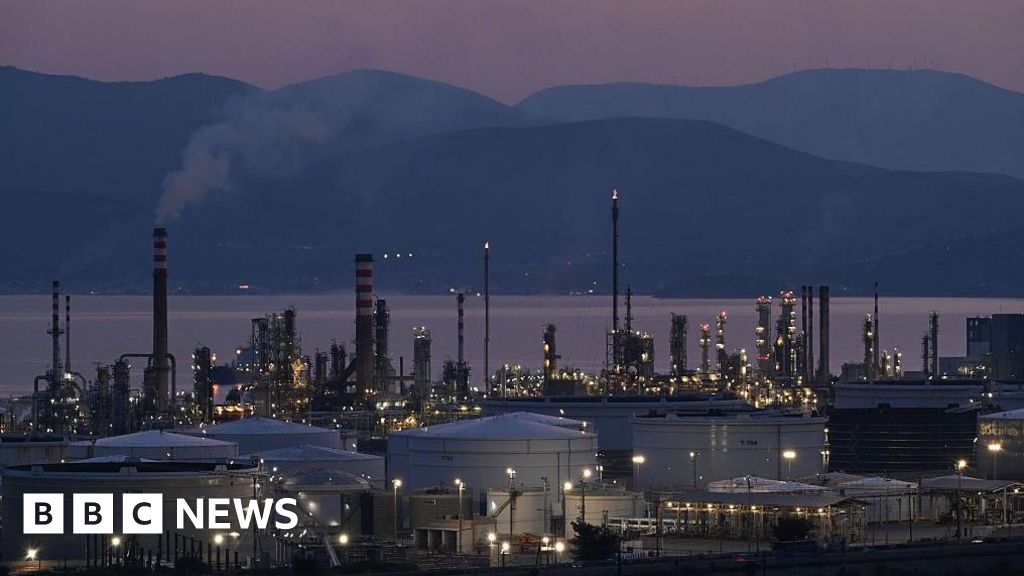
The US-Israel Iran war has halted almost all traffic in a key waterway and the price Brent crude has surged.
Source link

Nike shares fall 9% on weak outlook, expected 20% sales decline in China

Prince Harry surprises crowd by calling attendees his source of hope

Wrigley Field to host Big Ten/SEC volleyball doubleheader

-

 Politics1 week ago
Afghanistan announces release of detained US citizen
-

 Sports1 week ago
Broadcast industry CEO says consolidation is ‘essential’ to compete for NFL soaring media rights prices
-

 Tech1 week ago
Can a Home Appliance Fix the Problem of Soft-Plastic Waste?
-

 Entertainment1 week ago
UN warns migratory freshwater fish numbers are spiralling
-
 Business1 week ago
Property Play: Home flippers see smallest profits since the Great Recession, real estate data firm says
-
 Business1 week ago
Gold prices soar in Pakistan – SUCH TV
-

 Fashion1 week ago
ICE cotton slips on weaker crude, profit booking
-
 Business1 week ago
More women are entering wealth management, but few are in advisory roles, study finds