

Business
FTSE 100 posts best performance since global financial crisis recovery – and beats US

.jpeg?trim=0,0,0,0&width=1200&height=800&crop=1200:800 "FTSE 100 posts best performance since global financial crisis recovery – and beats US")
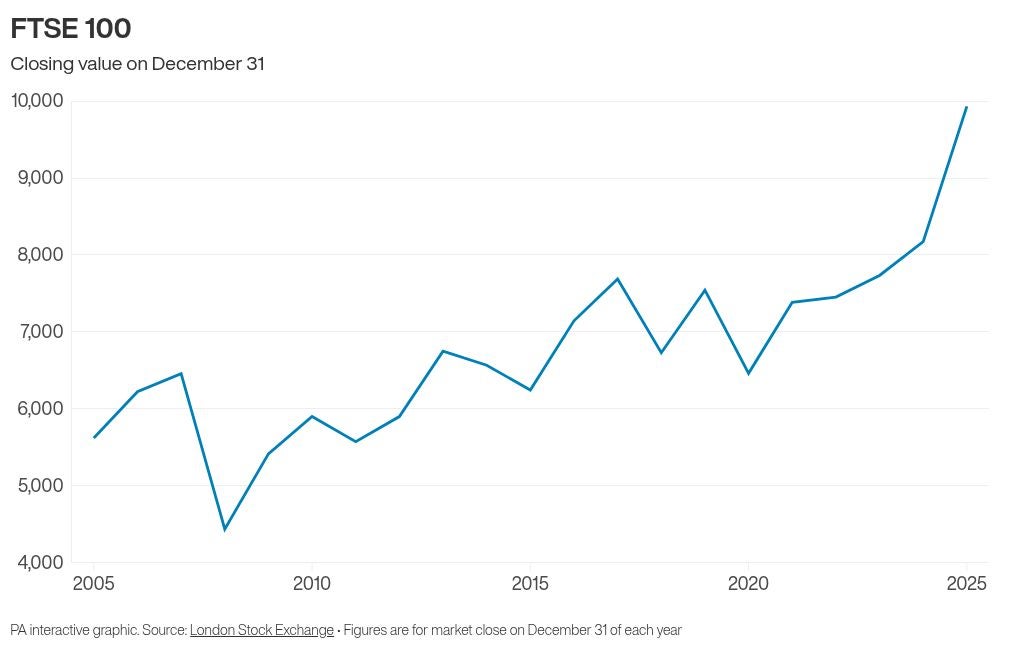
The government want more British people to start investing and could hardly have had a better advertising campaign handed to them, as the FTSE 100 – the index of the biggest firms listed on the London Stock Exchange – posted the best annual returns across 2025 since the rebound from the financial crisis.
In total, the UK’s biggest stock market index gained 1,758.36 points, or 21.5 per cent, from the last trading day of 2024 to December 31 2025.
That’s in comparison to the 16.7 per cent gains made by the collection of Europe’s biggest firms, the Stoxx 600, America’s S&P 500 which gained 17 per cent, and the tech-focused Nasdaq Composite which rose 21 per cent across the year.
The strong gains realised by the British-listed contingent in the FTSE 100 were particularly notable among many mining corporations, defence firms and finance businesses.
That came despite the backdrop of political and economic uncertainty on both a domestic and global landscape all year, which included the dramatic stock market drops from Trump tariffs being announced, the oil price shock as Iran threatened to close the Strait of Hormuz, Rachel Reeves’ delayed Budget and a worryingly stagnant British economy.
It marks a fifth-straight year of gains for the FTSE 100 and means the index has risen in eight of the last ten years, though the usual gains are rarely this outsized, as evidenced by this being the best year since 2009 when it rose 22.1 per cent in the aftermath of the global financial crash.
Over the last decade the FTSE 100 has averaged around 9 per cent gains, a far higher return for money than savings accounts will typically offer – and a notable difference when interest rates are in lowering cycles, as is the case now.
Closing 2025 at 9,931.38, the index shot past record high levels on multiple occasions through the year and teetered close to surpassing the 10,000 mark for the first time.
The year’s success for the blue-chip index has meant it has outperformed European and US peers, including France’s Cac 40 – while the gains were more or less on par with Germany’s Dax.

Get a free fractional share worth up to £100.
Capital at risk.
Terms and conditions apply.
ADVERTISEMENT
Get a free fractional share worth up to £100.
Capital at risk.
Terms and conditions apply.
ADVERTISEMENT
Investors were drawn to the steady gains of FTSE-listed firms despite broader weaknesses in the UK economy and political uncertainty prompting significant volatility in the global stock markets.
It was a particularly strong year for precious metal producer Fresnillo, whose share price soared by about five-fold over 2025, while gold miner Endeavor Mining’s shares jumped by nearly three-fold.
Defence firms Rolls-Royce and Babcock also strengthened considerably during a year where geopolitical tensions continued to rise, with their share prices roughly doubling.
Bank stocks also rallied amid elevated profits and business progress, with Lloyds Banking Group leading the charge with its share price nearly doubling as a result of steady gains over the course of the year.
Stock market turbulence came to a head in early April when investors were reacting to US president Donald Trump announcing his plans to raise tariffs for countries around the world on US imports. The FTSE 100 suffered its biggest single-day decline since the start of the Covid-19 pandemic, as did Wall Street’s S&P 500 and Dow Jones indexes, before clawing back its losses and returning to growth.
Dan Coatsworth, head of markets at AJ Bell, said the FTSE 100 “has had precisely the right ingredients desired by investors in a year full of political, trade and market uncertainty”.
“This year’s success for the blue-chip index is not a flash in the pan,” he added.
“The FTSE 100 has delivered positive returns in eight of the past 10 years, averaging 9.1% annually over that period including dividends. This kind of performance reinforces the attraction of investing over the long term.
“There may be years when performance disappoints, but history suggests it’s worth pursuing.”
Despite the FTSE 100 strengthening, 2025 has also seen a raft of listed businesses choose to abandon the London Stock Exchange (LSE) for foreign stock markets or to be taken into private hands.
Direct Line was delisted from the LSE after its takeover by rival Aviva in a £3.7 billion deal that created a major force in the UK’s insurance market.
Drinks maker Britvic was also snapped up by Carlsberg at the beginning of the year, taking it off the stock market and into the hands of the Danish brewing giant.
Meanwhile, further setbacks for the London market came as drug maker Indivior announced plans to delist from the LSE after moving its primary listing to the US’s Nasdaq last year, and British fintech Wise said it planned to switch its primary listing from London to New York.
Companies including Royal Mail’s owner International Distribution Services (IDS), Hargreaves Lansdown and industrial group Spectris were among those to be taken private in high-value takeovers completed this year.
Nevertheless, it was also a stronger year for IPO activity with 11 listings on the LSE in 2025, raising total proceeds of £1.9 billion – the most since 2021, according to analysis by PwC.
Additional reporting by PA
Business
Air India revises fuel surcharge amid energy crunch; here’s how much more you will pay – The Times of India
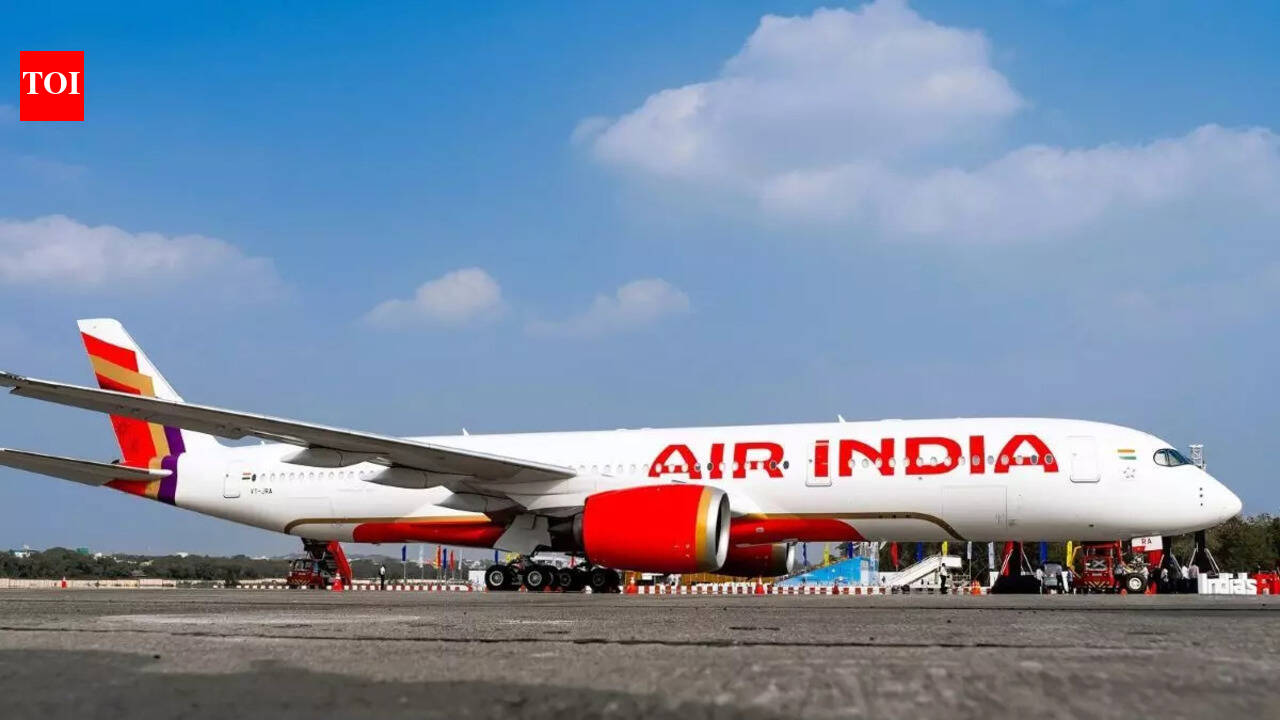
Aviation giant Air India group on Tuesday revised its fuel surcharge across domestic and international routes, as Middle East tensions continued to weigh oil supplies across the globe. The move follows the decision by the ministry of petroleum & natural gas and the ministry of civil aviation to cap the increase in domestic aviation turbine fuel (atf) prices at 25%. For domestic travel, the airline will replace its existing flat surcharge with a distance-linked structure. The revised domestic surcharge will come into effect from 0901 hrs IST on April 8, 2026, and will apply across the group, including Air India Express flights.As per the latest data released by the International Air Transport Association (IATA), the global average jet fuel price nearly doubled within a month, rising from $99.40 per barrel at the end of February to $195.19 for the week ending March 27, 2026.
Here’s how much more you will pay from Wednesday:
- Passengers flying up to 500 km will pay an additional Rs 299 per sector.
- Those travelling between 501 and 1,000 km will be charged Rs 399.
- Journeys of 1,001 to 1,500 km will attract Rs 549.
- For distances between 1,501 and 2,000 km, the surcharge will be Rs 749.
- The surcharge will further increase to Rs 899 for sectors beyond 2,000 km.
On the international front, the airline has introduced steeper revisions, citing the lack of similar price controls on ATF. Effective from 0901 hrs IST on April 8, 2026, passengers flying to SAARC destinations (excluding Bangladesh) will pay a surcharge of $24 per sector. Charges for the Middle East have been set at $50, while routes to China and Southeast Asia (excluding Singapore) will attract $100. The surcharge for Singapore stands at $60, and for Africa at $130.For flights to Europe, including the United Kingdom, the surcharge has been fixed at $205. Meanwhile, passengers travelling to North America and Australia will be charged $280 per sector, with these rates taking effect from 0001 hrs IST on April 10, 2026.
Why Air India introduced the surcharge?
The airline pointed out that the increase is not limited to crude oil prices alone. Refinery margins, referred to as ‘crack spread’, have also surged sharply, climbing from $27.83 per barrel for the week ending February 27 to $81.44 by March 27. This combination has intensified cost pressures for airlines worldwide. Air India stated that even after the revision, the updated international fuel surcharge does not fully offset the rise in fuel costs, and a substantial portion continues to be absorbed by the airline. The airline added that revisions for flights to and from Bangladesh, along with Far East destinations such as Japan, Hong Kong and South Korea, will be announced later, subject to regulatory approvals. Air India clarified that tickets issued before the revised timelines will not be subject to the new surcharge unless passengers make changes to their travel plans that require a recalculation of fares.
Business
Supreme Court: No personal oral hearing needed before labelling bank accounts as fraud: SC | India News – The Times of India
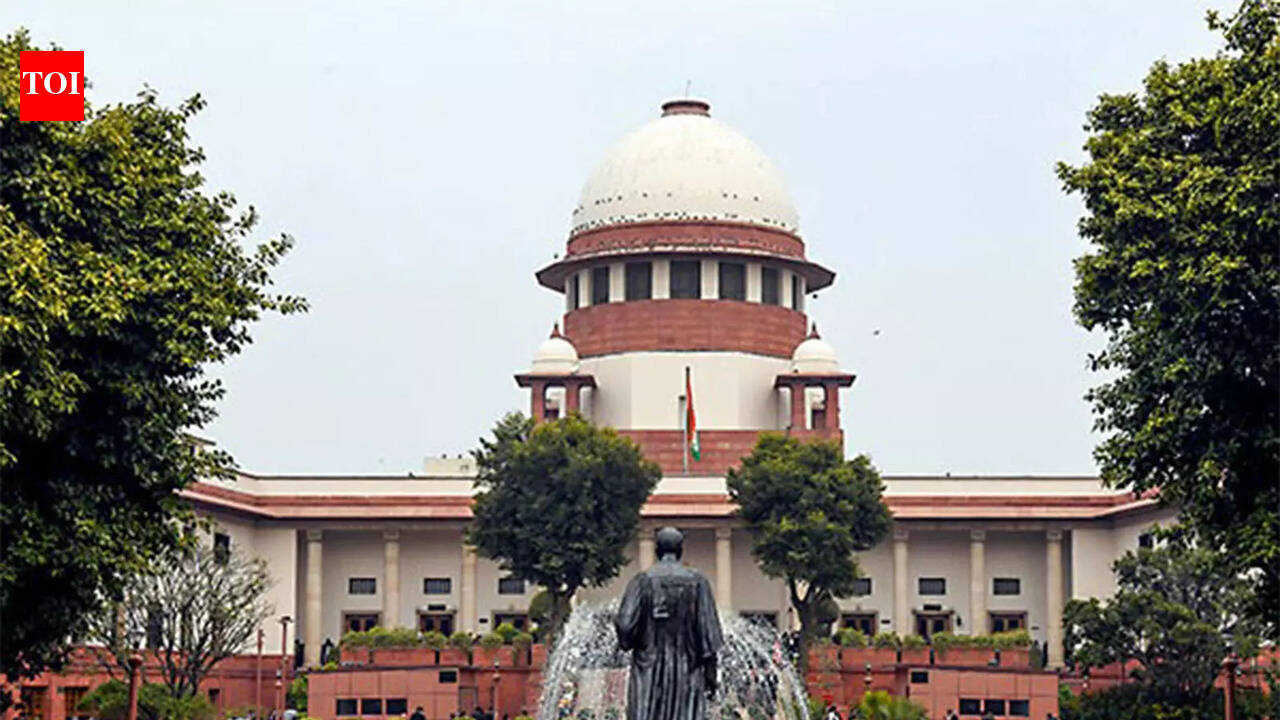
The Supreme Court, on Tuesday, issued a decision regarding the classification of bank accounts as fraud. The apex court ordered that banks are not obligated to grant customers a personal oral hearing before declaring their accounts as fraud. However, prior to labelling them, banks must provide customers with a forensic audit report.The ruling follows submissions made earlier this year by the Reserve Bank of India (RBI) and State Bank of India (SBI), which argued that conducting personal hearings in every case would not be feasible given the scale of fraud in the banking system.Earlier, appearing for SBI, solicitor general Tushar Mehta had told the court that the volume of fraud cases has risen sharply, making individual hearings difficult to implement. He said that introducing such a requirement could disrupt the process of identifying and declaring fraudulent accounts.
Poll
Do you agree with the Supreme Court ruling that banks are not obligated to grant personal oral hearings for fraud declarations?
The court was informed that around 60,000 instances of bank fraud were recorded over the past two financial years, involving Rs 48,244 crore. Breaking down the figures, Mehta said there were 36,060 cases in 2023–24 and 23,953 in 2024–25. The amount involved in 2024–25 stood at Rs 36,014 crore, reflecting a 194 per cent increase from Rs 12,230 crore in the previous year.A bench of Justices J B Pardiwala and K V Viswanathan had earlier questioned the absence of personal hearings, noting that such a step is generally linked to principles of natural justice. In response, Mehta maintained that banks do not offer personal hearings in these situations, as it may defeat the purpose of the classification process. He added that there could also be circumstances where providing such hearings is not possible.
Business
Stock market today: Nifty50 opens below 22,800, Sensex tumbles over 800 points as oil prices stay above $110 – The Times of India

Stock market today: Dalal Street opened in red on Tuesday, with benchmark indices slipping 0.9% as oil prices continued to rise and US President Donald Trump’s deadline for Iran nears. While Nifty50 began the day below 22,800, Sensex fell over 800 points in early trade to touch 73,282.41. As of 9:20 am, Nifty50 was trading at 22,765.45, down 202.80 or 0.88%. BSE Sensex made slight recovery, down 694.03 points or 0.94% to 73,412.82.This fall comes after a sharp rebound in the previous session, when both Sensex and Nifty recovered strongly, erasing early losses triggered by rising crude oil prices as tensions continued to intensify in the Middle East. Traders attributed the rise to intense buying in banking and IT stocks, along with a strengthening rupee, that lifted investor’s confidence.During the volatile session on Monday, the 30-share BSE Sensex surged 787.30 points, or 1.07%, to settle at 74,106.85. During intraday trade, it had jumped 887.91 points, or 1.21%, to touch 74,207.46. Market breadth remained firmly positive, with 3,207 stocks advancing, 1,147 declining and 190 remaining unchanged on the BSE.The 50-share NSE Nifty also ended higher, rising 255.15 points, or 1.12%, to close at 22,968.25. Rupee, however, stayed firm on Tuesday, opening at 93.0025 per US dollar, rising 0.06% from its previous close of 93.06 against the greenback.In global markets, oil prices climbed while equities showed a mixed trend as investors assessed Donald Trump’s latest deadline for Iran to reopen the strategic Strait of Hormuz or face being “decimated”.West Texas Intermediate rose 2.6% to $115.34 per barrel, and Brent North Sea crude gained 1.3% to $111.24 per barrel. Across Asia, Tokyo’s Nikkei 225 slipped 0.2% to 53,323.41 in early trade, while Shanghai’s Composite index rose 0.5% to 3,899.09. Hong Kong’s Hang Seng Index remained closed for a holiday.In currency markets, euro weakened to $1.1530 from $1.1543 on Monday, while the pound dipped to $1.3216 from $1.3236. The dollar strengthened against the yen to 159.86 from 159.68. The euro also edged lower against the pound to 87.25 pence from 87.27 pence. In the US, the Dow Jones Industrial Average ended 0.4% higher at 46,669.88, while London markets were closed for a holiday.


BKMEA urges Bangladesh govt to change amended labour law

Gap & Awake NY to launch ’90s-inspired streetwear line
Air India revises fuel surcharge amid energy crunch; here’s how much more you will pay – The Times of India

-
Uncategorized1 week ago
[CinePlex360] Please moderate: “Further tariff
-
Uncategorized5 days ago
[CinePlex360] Please moderate: “Trump signals p
-

 Tech4 days ago
Our Favorite iPad Is $50 Off
-

 Entertainment4 days ago
Joe Jonas shares candid glimpse into parenthood with Sophie Turner
-

 Fashion6 days ago
China’s Anta Sports posts record $11.62 bn revenue in 2025
-
 Business6 days ago
UPI transactions hit record Rs 29.53 lakh crore in March; volumes cross 22.6 billion – The Times of India
-

 Politics1 week ago
Trump considers asking Arab allies to help to pay for Iran war
-

 Sports3 days ago
UConn Final Four run could trigger a $50M furniture giveaway for Massachusetts-based Jordan’s Furniture