

Business
FTSE 100 tops 10,400 as Beazley and Entain soar

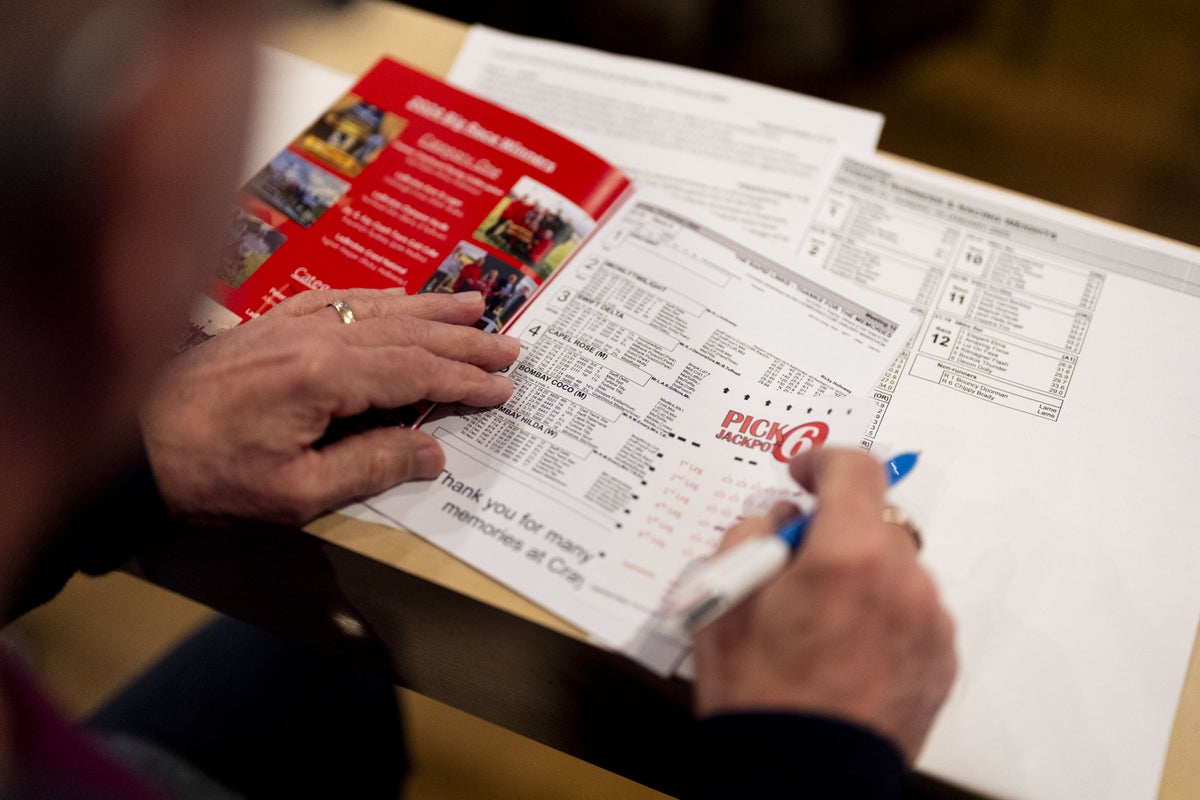
The FTSE 100 surged to a fresh high on Wednesday, spurred by strong trading updates and as insurer Beazley said it has accepted a possible £8 billion bid.
The FTSE 100 index closed up 87.75 points, 0.9%, at 10,402.34, a new record close. It had earlier set a new intra-day high of 10,481.54.
The FTSE 250 ended up 42.78 points, 0.2%, at 23,333.15, and the AIM All-Share closed down 3.98 points, 0.5%, at 814.35.
Entain led the blue-chip risers in London as its 50% owned BetMGM business in the US had a “record year” in 2025, helped by a fourth quarter revenue surge amid a “particularly strong December”.
BetMGM’s 2025 performance “exceeded expectations”. Net revenue jumped by a third to 2.80 billion dollars, helping the joint venture swing to a net income of 175 million dollars, from a loss of 291 million dollars in 2023.
Entain, which also owns Ladbrokes, soared 10% in response.
Analysts at Davy Research noted the market has clearly been “extremely concerned” about the potential impact of prediction markets on regulated online sports betting.
The broker felt the update should “reassure a very nervous market”.
DCC was also in demand, up 8%, after it said adjusted operating profit, on a continuing basis, grew strongly in the quarter to December, compared with the prior year.
Peel Hunt analyst Christopher Bamberry said: “With strong market positions, a solid balance sheet and cash generation, we believe DCC is well positioned to deliver its (financial 2030) Energy Ebita target of £830 million.”
Beazley rose 6.9% after it said it has agreed to a possible takeover offer from Zurich Insurance that values the UK company at around £8 billion.
The London-based insurer released a joint statement with its larger Swiss peer, which noted that the Beazley board is “minded to accept” Zurich’s offer were it to be made firm.
Zurich has offered Beazley shareholders 1,310p per share in cash before allowed dividends, which takes the total value per share up to 1,335p.
It is lower than a previous approach from Zurich, which Beazley had spurned back in June. That offer was the last of three made at the time, which valued Beazley at 1,315p per share, or £8.4 billion in total.
GSK was another stock in favour, up 6.9%, after its fourth quarter results beat forecast.
The London-based pharmaceuticals company reported pre-tax profit of £1.48 billion in the three months that ended December 31, up 15% from £1.29 billion a year prior and ahead of the company compiled-consensus of £1.37 billion.
Core operating profit rose 14% to £1.63 billion from £1.43 billion, with core earnings per share up 9.9% to 25.5p from 23.2p, both ahead of consensus of £1.53 billion and 23p, respectively.
Turnover increased 6.2% to £8.62 billion from £8.12 billion, ahead of the £8.5 billion market consensus.
But European peer Novo Nordisk slumped 17% as guidance fell short of hopes in another blow for the Danish drugs maker best known for its weight loss drugs.
In European equities on Wednesday, the CAC 40 in Paris closed up 1%, while the DAX 40 in Frankfurt fell 0.7%.
Stocks in New York were mixed. The Dow Jones Industrial Average was up 0.7%, the S&P 500 index was 0.3% lower, and the Nasdaq Composite declined 1.6%.
On Wall Street, Eli Lilly, which competes in the weight loss drug arena with Novo, leapt 9.8% after results beat expectations.
Citi analyst Geoffrey Meacham called it a “blowout quarter, with a stunning 2026 guide”.
But chip maker Advanced Micro Devices plunged 17% as higher operating expenditure offset solid results.
Goldman Sachs analyst James Schneider said: “We expect the stock to trade down following a strong revenue quarter and guidance driven by upside in the Datacenter segment, offset by significantly higher-than-expected OpEx guidance.”
The broker said it sees “limited near-term operating leverage given AMD’s significant software and systems investments tied to its AI infrastructure ramp.”
The yield on the US 10-year Treasury was quoted at 4.28%, trimmed from 4.29%. The yield on the US 30-year Treasury was quoted 4.92%, unchanged from Tuesday.
Back in London, figures showed the UK’s service sector activity growth was slower than expected in January, although still well above December’s levels.
The S&P Global UK services purchasing managers’ business activity index climbed to 54 points in January from 51.4 in December, but lower than the first estimate of 54.3 points.
In the US, reports from S&P Global and the Institute for Supply Management showed the US services sector continued to expand, although pricing pressures remained elevated.
The expansion comes amid a “backdrop of stubborn price pressure amid a tepid labour market,” analysts at Wells Fargo said.
Meanwhile, the US private sector added fewer jobs than expected last month, according to numbers from payroll processor ADP on Wednesday, in a reading that will be under greater focus after a short government shutdown cancelled the publication of the official nonfarm payrolls data.
ADP said US private sector employment increased by 22,000 jobs in January, slowing from 37,000 in December. December’s reading was downwardly revised from 41,000.
The reading for January was shy of the FXStreet-cited forecast of 48,000.
The pound was quoted lower at 1.3656 dollars at the time of the London equities close on Wednesday, compared to 1.3695 dollars on Tuesday.
The euro stood lower at 1.1798 dollars, against 1.1818 dollars. Against the yen, the dollar was trading higher at 156.69 yen compared to 155.73 yen.
Back in London, housebuilder Berkeley jumped 5.5% as JPMorgan upgraded to “overweight” from “neutral”.
“In recent years, London’s housebuilding has collapsed amidst a ‘perfect storm’ of regulatory and affordability issues but we now see reason for trends to inflect with policy support on the horizon,” JPM said.
JPM highlighted a “highly attractive setup in the London rental market” and “a highly compelling capital allocation framework”.
Gold was quoted lower at 4,916.04 dollars an ounce on Wednesday, down against 4,971.16 dollars at the same time on Tuesday.
Brent oil was quoted at 67.41 dollars a barrel on Wednesday, up from 67.15 dollars late on Tuesday.
The biggest risers on the FTSE 100 were Entain, up 61.4p at 648p; DCC, up 370p at 5,010p; GSK, up 134.5p at 2,080p; Beazley, up 80p at 1,240p; and BT, up 11p at 205p.
The biggest fallers on the FTSE 100 were Antofagasta, down 241p at 3,627p; Rightmove, down 18.6p at 450.5p; Anglo American, down 140p at 3,560p; Barclays, down 18.3p at 483.2p; and Fresnillo, down 126p at 3,776p.
Thursday’s global economic calendar includes interest rate decisions in the UK and Europe, eurozone retail sales figures and a slew of construction PMIs.
Thursday’s UK corporate calendar has third-quarter results from telco BT, while industry peer Vodafone issues a trading statement. Miner Anglo American also updates on trading, while oil major Shell releases full-year results.
Contributed by Alliance News.

When you think of an investor, what kind of person comes to mind? What are their interests, their job? Are they an older man wearing a pin-striped suit and a bowler hat?
It might surprise you that the average investor age in the UK is 49 years old – down from 55 years old over the last five years.
And with more than 13 million DIY investor accounts in the UK, it’s likely that the average investor looks more like one of your mates than someone out of The Wolf of Wall Street.
The UK is historically quite wary of investing, and it’s been something that the financial industry and governments have been trying to tackle for years.
We’re starting to see the fruits of these efforts trickle through; latest Boring Money data reveals that DIY investing accounts grew over 19 per cent in the last year. Roughly one-third of the population now invests, up from about a quarter in 2020, and it’s becoming more mainstream by the day.
Start small, stay consistent – let the market do the work
It’s a common misconception that you need to have a lot of money to be an investor. The median amount invested by DIY investors is around £15,000, but you can start with as little as £1.
Neither does it have to be done in one big hit. Lots of providers allow you to set up regular investing – often £25 a month minimum, but a few let you regularly invest less.
Setting up these direct debits can also be a good idea – you drip feed into markets and average out the price which you buy at, so smoothing out any ups and downs along the way.
And you don’t have to be a maths genius or obsessively checking the markets – there are plenty of tools and account types that can do this for you.
Get a free fractional share worth up to £100.
Capital at risk.
Terms and conditions apply.
ADVERTISEMENT

Get a free fractional share worth up to £100.
Capital at risk.
Terms and conditions apply.
ADVERTISEMENT

Robo-advisors are automated, algorithm-driven financial planning and investment services requiring little to no human supervision. A typical robo-advisor asks questions about your financial situation and future goals when you set up the account, then will match you to one of their ready-made portfolios and automatically invest for you.
Find your investment “playlist”
If you don’t want to go down the robo-route, but aren’t sure which to pick, you can take a look at some of last year’s best-selling funds for inspiration. These four funds below appeared on multiple investment platforms’ best-selling lists every month in 2025.
They are all low-cost global collections of shares which are well diversified. Think of them like an investment playlist curated for you to serve up a bundle of shares in one easy-to-buy package.
The idea is that you can buy one product which is very broadly spread around lots of different companies which minimises the risk of any one thing going horribly wrong.
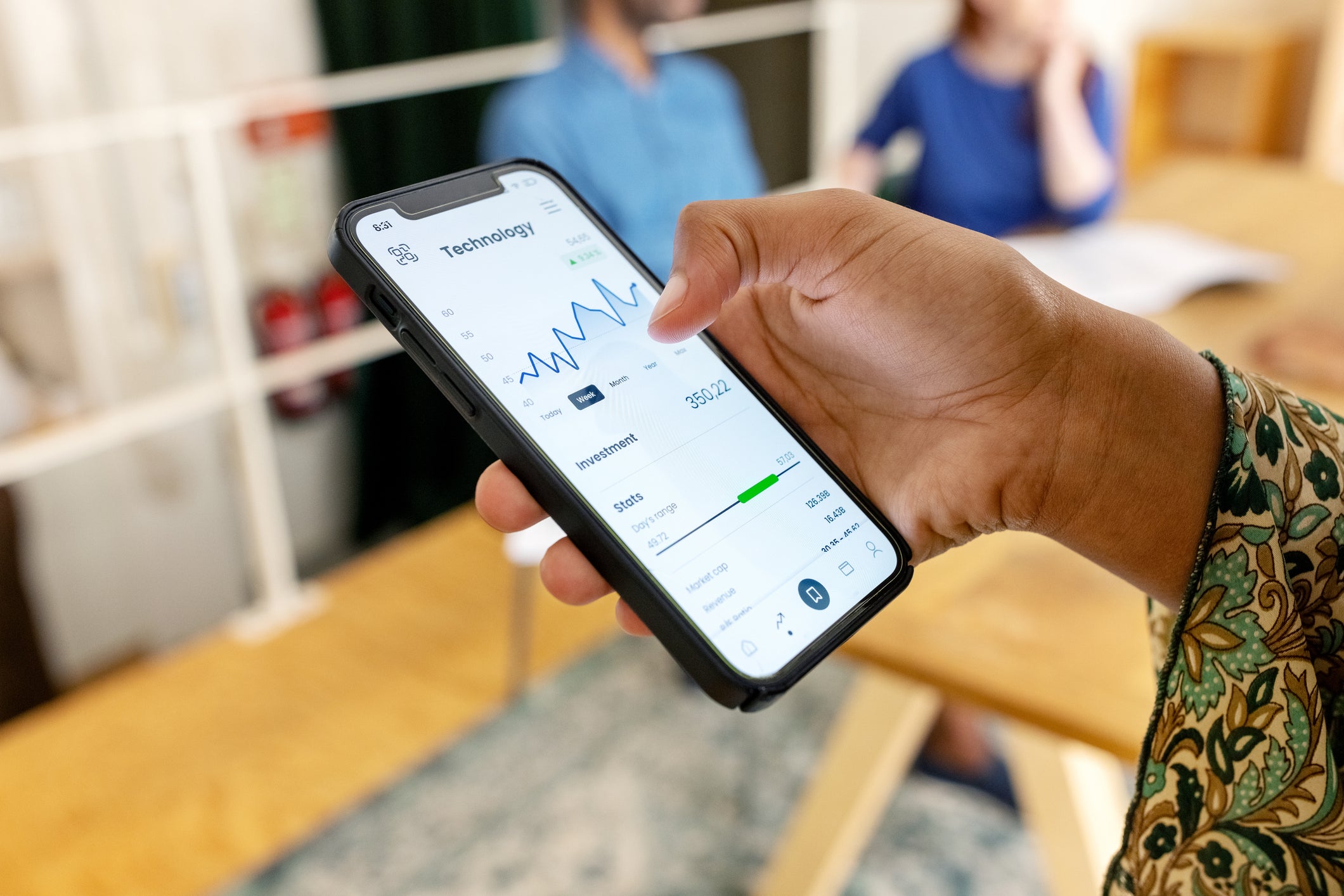
Fidelity Index World: a very cheap way to buy about 1,300 of the world’s largest companies in one go, pre-wrapped into one single investment product which costs about £1.20 a year for every £1,000 invested here.
HSBC FTSE All-World Index: a similar global option with over 3,000 companies and emerging markets too, so you get exposure to India, China and Brazil too, for example. Good if you don’t want too much exposure to the US.
Vanguard FTSE Global All Cap Index: a very diversified option. It has shares in about 7,000–8,000 companies with a small proportion in smaller companies, about 10 per cent in emerging markets, and slightly less in the US than some peers – a bit pricier than some trackers but still really good value – about £2.30 a year for every £1,000 invested here.
Vanguard LifeStrategy 100% Equity: one with a heavier British weighting – about 20 to 25 per cent invested in the UK.
Starting from scratch
If you’re a total beginner and want one of these global options to get started, you could compare platforms which will let you buy funds and won’t cost a lot for a small amount. Hargreaves Lansdown and AJ Bell are good options if you have small balances and want to buy a fund like the above. Or you can open an ISA with Vanguard and pop one of their ready-made ‘LifeStrategy’ funds into it.
If you prefer to buy and sell shares or exchange traded funds then Trading 212 and Freetrade are good low-cost ISA providers for smaller balances.
Investing has never been easier.
The average investor age is dropping, the amount you need to invest is low, and people are investing less, but more regularly. There are plenty of different platforms, things to invest in and ways to invest.
People talk about “time in the market, not timing the market” – that means if you’re in it for the long-haul, and can afford to invest small amounts regularly, you’ll be in a great place further down the line. The most important thing is to just get started and build up over time.
When investing, your capital is at risk and you may get back less than invested. Past performance doesn’t guarantee future results.

Britain’s competition watchdog has vowed to tackle fake and misleading online reviews “head on” as it launched investigations into firms including Just Eat and Autotrader.
The Competition and Markets Authority (CMA) said reviews are used by 90% of consumers when they buy over the internet and play a large part in the UK’s over £200 billion online retail sector.
But up to 50% of online reviews are fake, according to recent research by tech firm Truth Engine.
The CMA said its latest action against firms comes as part of a clampdown on fake and misleading reviews as shoppers increasingly rely on customer feedback when shopping online.
Emma Cochrane, executive director for consumer protection at the CMA, told the Press Association: “It’s so important that consumers can have trust in those reviews because we know that nine in 10 of us rely on them when we’re shopping, and that retail shopping in the UK is billions of pounds worth a year.
“It’s so important that consumers can have trust and confidence when they’re shopping online.”
Here are the CMA’s tips for spotting and avoiding fake reviews:
– Read the reviews
Shoppers often get taken in by five-star ratings without actually reading what people have to say about a product or service.
“You’ll be surprised at how many reviews sound dubious, overly vague or even totally unrelated to the item they’re supposedly endorsing,” the CMA said.
– Be alert to AI-generated reviews
Artificial intelligence (AI) can be used to make fake reviews sound fluent, polished and highly convincing.
“If a review feels a bit too slick, reads like it’s been perfectly crafted, or uses very similar wording to others, it may not reflect a real customer’s experience,” the CMA warned.
– Take a look at the other ratings
Look beyond the five-star ratings.
Three or four-star reviews are less likely to be fake, and they can be more useful to give a genuine, overall assessment.
– Check out multiple sites
Looking across several sites can help shoppers see patterns and provide a more consistent picture.
“Check a few different review sites. If you’re seeing the same kind of reviews coming up again and again, it’s more likely to be fake,” said Ms Cochrane.

The UK’s competition watchdog says it is looking at five firms in its investigation into misleading online reviews.
Source link

It has never been easier to start investing. As more take advantage, should you?

Skip the TSA Line: Where to Find Travel by Bus, Train, and Boat

Illinois defense gets tough, ousts Houston to reach Elite Eight

-

 Entertainment1 week ago
Val Kilmer revived 1 year after death through AI
-

 Fashion6 days ago
China’s textile & apparel exports surge 17% to $50 bn in Jan-Feb 2026
-
 Business6 days ago
Flipkart group CFO to leave co amid IPO plans – The Times of India
-
 Business1 week ago
Video: The Effects of High Oil Prices
-

 Sports7 days ago
Rating Adidas’ 2026 World Cup away shirts: Argentina, Spain, Mexico and more
-

 Sports7 days ago
American Conference Commissioner Tim Pernetti thanks Trump for Army-Navy game executive order
-
Tech1 week ago
The Corsair 4000D RS PC Case Keeps Your System Cool
-

 Fashion1 week ago
The hidden $1.62 war tax now embedded in every garment you source