

Politics
Furious Trump imposes new 10% tariff after Supreme Court upends his global levies

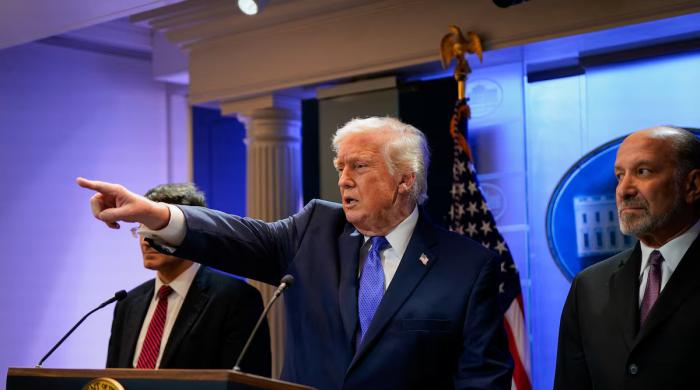
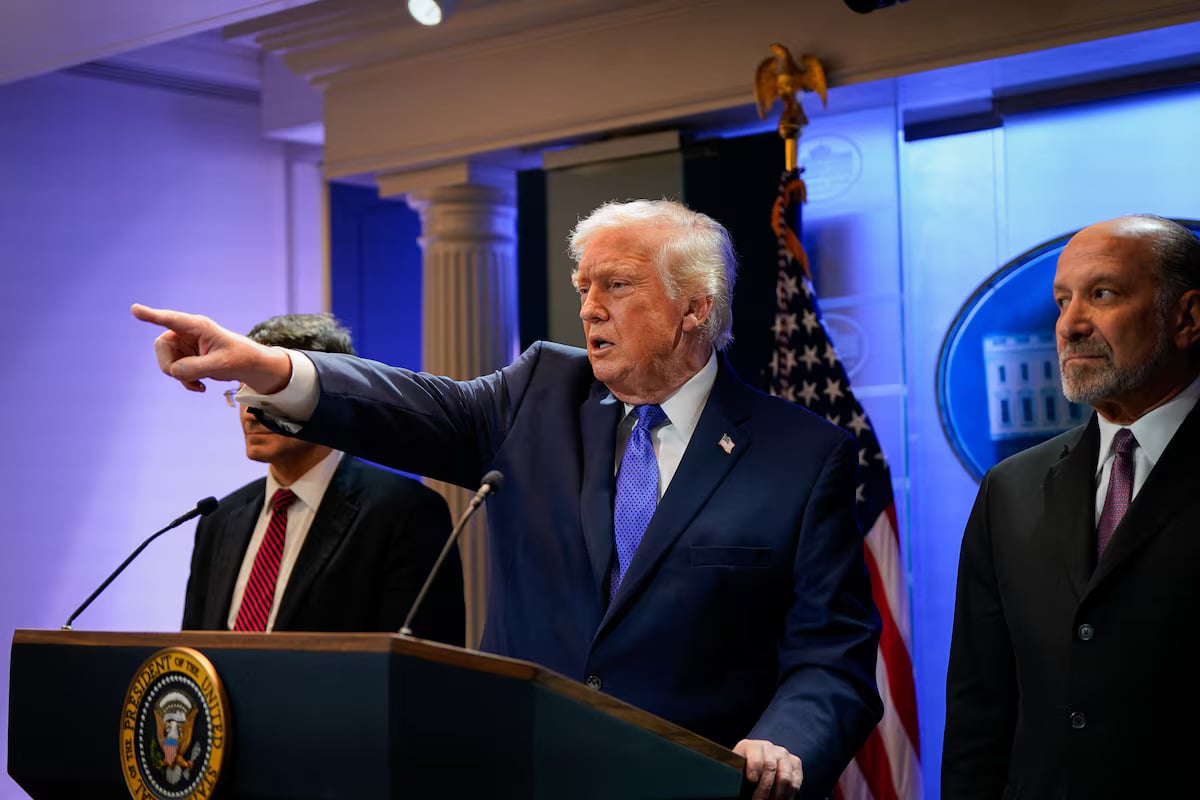
- Trump signs signs executive order repealing struck down tariffs.
- President imposes new 10% tariff on imports from all countries.
- Investors lament new dose of uncertainty.
US President Donald Trump responded with fury to Friday’s Supreme Court ruling that he lacked the power to unilaterally set tariffs on imports, denouncing individual justices as he vowed to continue a global trade war that has kept the world on edge for a year.
Saying he was undeterred by what he repeatedly called a ridiculous ruling, Trump announced an immediate new 10% tariff on imports from all countries, on top of any existing tariffs, and then issued a proclamation putting them into effect. The law allows him to impose a levy of up to 15% for 150 days, although it could face legal challenges.
The court’s landmark 6-3 ruling upended the leverage Trump and his trade envoys have wielded over foreign governments at negotiating tables to reshape diplomatic relations and global markets.
The ruling briefly sent US stock indexes surging, before ending modestly higher as analysts warned of renewed confusion in global markets while they await Trump’s next moves.
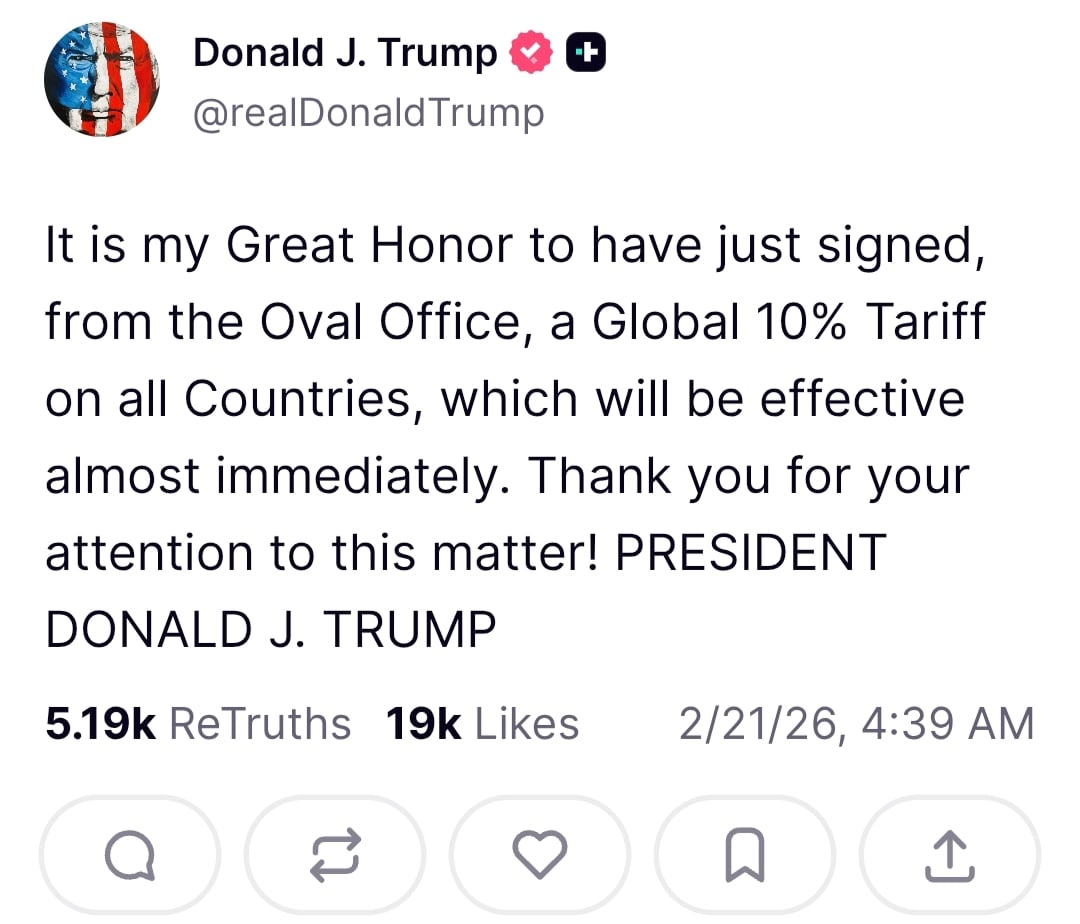
Hours after the ruling, Trump signed an executive order repealing the tariffs that the court struck down, and he also issued a proclamation imposing a 10% duty on most goods imported into the US for 150 days, granting exemptions for certain items including critical minerals, metals and energy products, the White House said.
Trade deals, revenue in question
The ruling called into question the trade deals Trump’s envoys have negotiated in recent months under the threat of high tariffs. It left open the fate of the $175 billion Trump has collected from US importers under what the court said was his incorrect reading of the law.
“I’m ashamed of certain members of the court, absolutely ashamed, for not having the courage to do what’s right for our country,” Trump told reporters at the White House, complaining that foreign countries were ecstatic and “dancing in the street”.
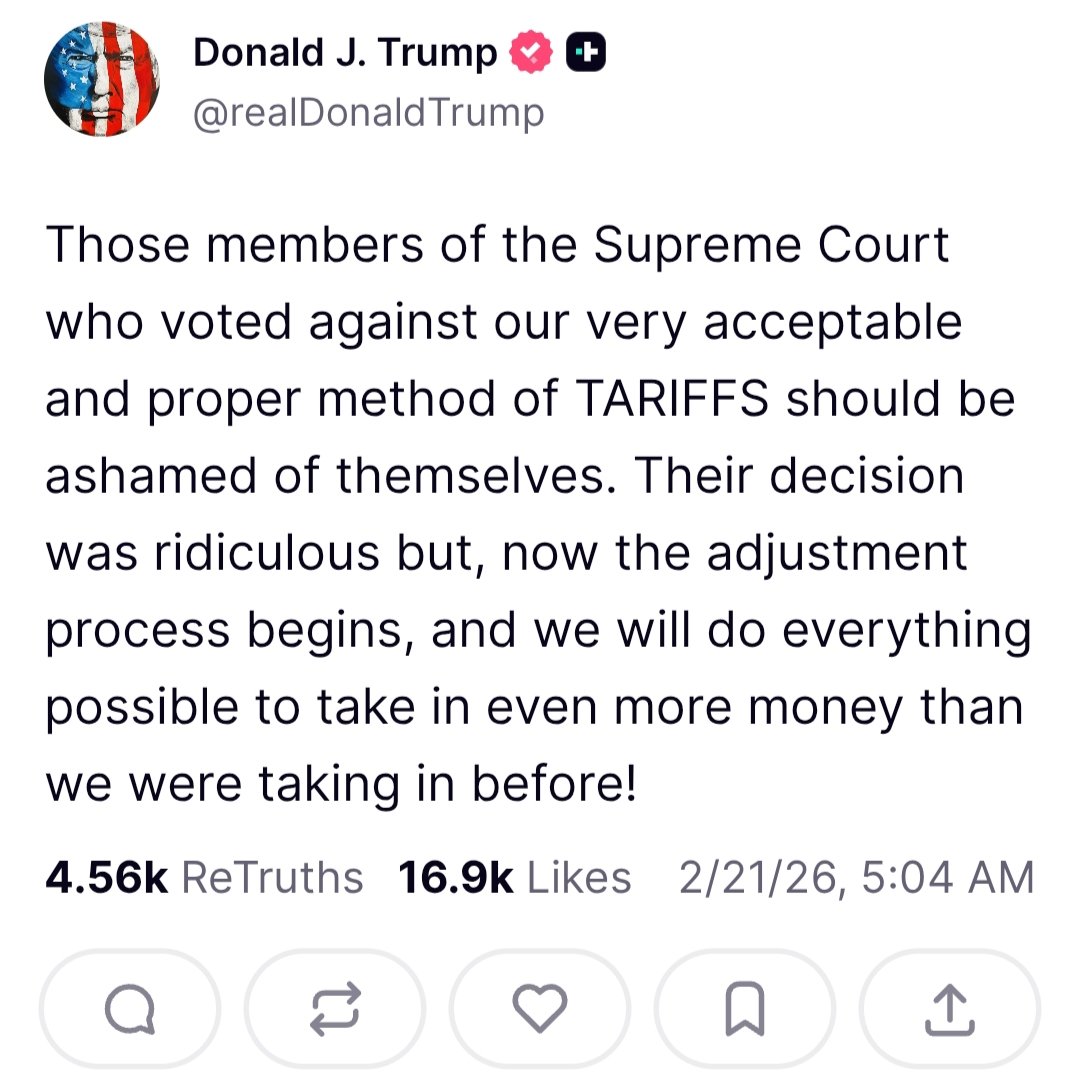
He insinuated, without evidence, that the majority of the court caved to foreign influence: “They’re very unpatriotic and disloyal to our Constitution. It’s my opinion that the court has been swayed by foreign interests and a political movement that is far smaller than people would ever think.”
Since returning to the White House 13 months ago, Trump has said he had what the court summarised as the “extraordinary power to unilaterally impose tariffs of unlimited amount, duration, and scope.” Citing a national emergency, he said the International Emergency Economic Powers Act (IEEPA) meant he could set tariffs at any rate he chose.
The court grounded its opinion, which was written by Chief Justice John Roberts, with a quote from the US Constitution: “The Congress shall have Power To lay and collect Taxes, Duties, Imposts and Excises.”
The argument by the Trump administration that it had identified a war-like emergency to justify a loophole failed to persuade the court.
“The Government thus concedes, as it must, that the President enjoys no inherent authority to impose tariffs during peacetime,” Roberts wrote.
“And it does not defend the challenged tariffs as an exercise of the President’s warmaking powers. The United States, after all, is not at war with every nation in the world.”
Despite the court’s bluntness in ruling the president had exceeded his authority, Trump told reporters: “It’s ridiculous, but it’s OK, because we have other ways, numerous other ways.”
Economic uncertainty rises
After a year of Trump’s often ad hoc tariff announcements whipsawing markets and the global economy, the ruling and Trump’s response reintroduced a hefty dose of uncertainty that economists, investors and policymakers had hoped was in the rearview mirror.
“I think it will just bring in a new period of high uncertainty in world trade, as everybody tries to figure out what the US tariff policy will be going forward,” said Varg Folkman, analyst at the European Policy Centre think tank.
US Treasury Secretary Scott Bessent said the court ruling could have mixed results.
“The Supreme Court has taken away the President’s leverage, but in a way, they have made the leverage that he has more draconian because they agreed he does have the right to a full embargo,” Bessent told “The Will Cain Show” on Fox News.
“We will get back to the same tariff level for the countries. It will just be in a less direct and slightly more convoluted manner,” he said.
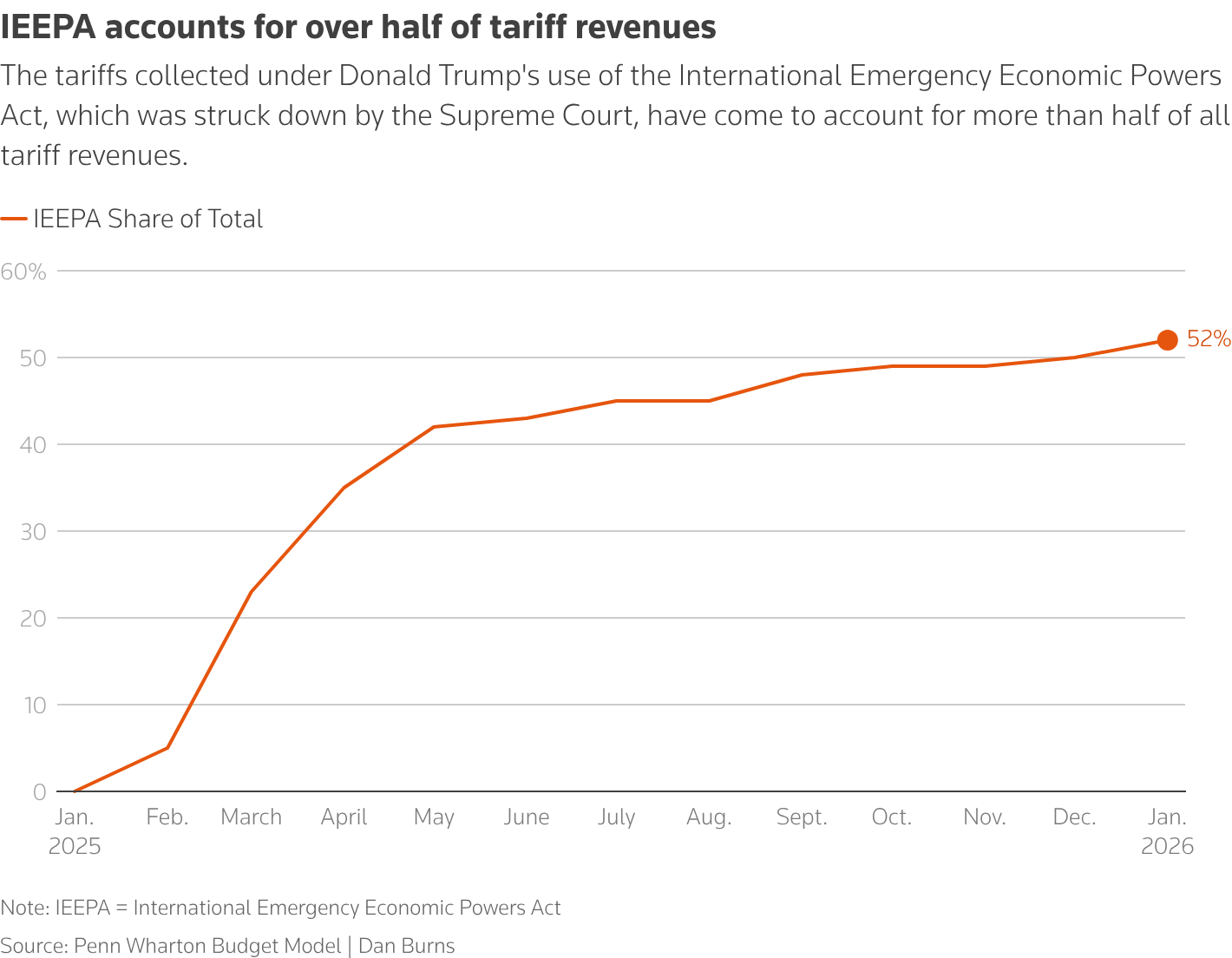
In announcing his new temporary 10% tariff, Trump became the first president to invoke Section 122 of the Trade Act of 1974, which allows the president to levy tariffs of up to 15% for up to 150 days to fix “fundamental international payments problems.” That, too, could draw legal challenges. Such tariffs can only be extended with Congress’ authorisation.
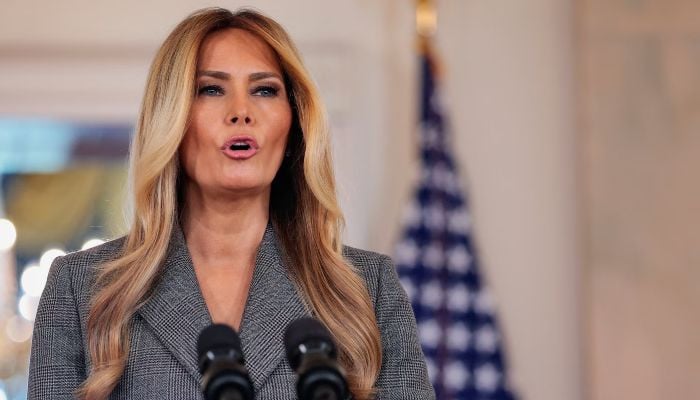
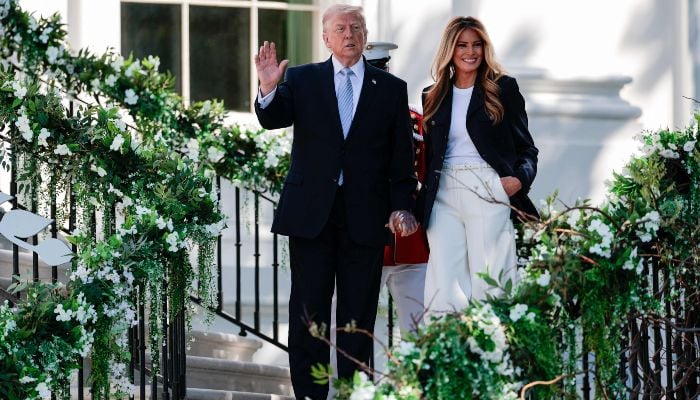
WASHINGTON: First lady Melania Trump denied on Thursday that she had any relationship with Jeffrey Epstein and said she was not one of his victims, thrusting the Epstein matter back into the spotlight after her husband had sought to put it behind him.
She denied online speculation that the disgraced financier and sex offender had introduced her to Donald Trump, saying she had met her husband at a New York City party in 1998, two years before crossing paths with Epstein at another event she attended with Trump.
She also urged Congress to hold public hearings for Epstein victims to tell their stories under oath, raising the prospect of further public attention on an issue the president wants to go away.
“The lies linking me with the disgraceful Jeffrey Epstein need to end today,” Melania Trump said, reading a statement and declining to take questions from reporters.
“I am not Epstein’s victim,” she said, responding to what she said were false smears against her.
Her extraordinary address, delivered under the presidential seal in the White House foyer, renews scrutiny of the Epstein case that has roiled Donald Trump’s presidency as even some supporters say his administration mishandled disclosures from government files.
Last week, the president fired Attorney General Pam Bondi, who had drawn the ire of Trump loyalists over the Justice Department’s slow release of millions of Epstein‑related files.
Trump, a onetime friend of Epstein who said he cut ties with the financier in the early 2000s, is among many famous people – celebrities, politicians and intellectuals – named in the government files.
Melania Trump did not say why she chose to speak out on Thursday, resurrecting an issue that had largely slipped from the headlines amid the US-Israeli war against Iran.
But Marc Beckman, her senior adviser, told Reuters in a statement: “First Lady Melania Trump spoke out now because enough is enough. The lies must stop.”
A spokesperson for the first lady said Trump’s aides were made aware of her plans for Thursday’s statement.
“This took guts”
While first ladies have occasionally addressed the nation on political issues, Melania Trump’s statement was exceptional.
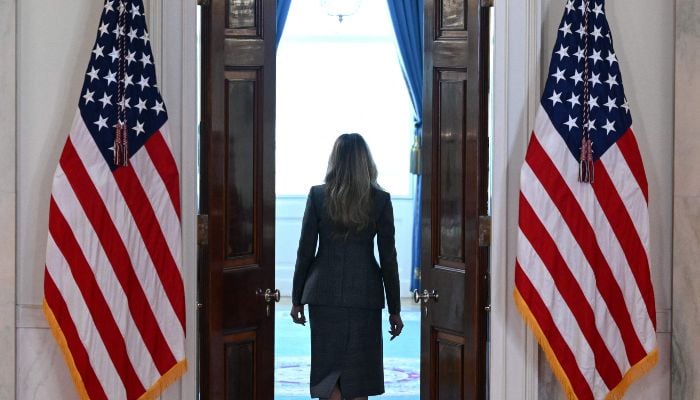
“A first lady in contemporary times has not publicly addressed controversy in this way, and certainly never from the state floor of the White House, so this took guts,” said Michael LaRosa, former press secretary to first lady Jill Biden.
“Melania is very intentional and deliberative on the frequency of her appearances, and I think this event is going to speak so loudly that I don’t think she will need to address this again,” LaRosa added in an interview.
The first lady said she had never had a relationship with Epstein or his convicted associate Ghislaine Maxwell, with whom she said she had only a casual correspondence.
Melania Trump said she first “crossed paths” with Epstein in 2000 at an event she attended with Donald Trump, five years before their marriage.
“At the time, I had never met Epstein and had no knowledge of his criminal undertakings,” she said.
Epstein, who pleaded guilty in 2008 to two Florida felonies, including procurement of a minor for prostitution, was facing federal charges of sex-trafficking minors in 2019, when he died in jail in what was ruled a suicide.
“I have never been friends with Epstein,” Melania Trump said. “Donald and I were invited to the same parties as Epstein from time to time, since overlapping in social circles is common in New York City and Palm Beach.”
The first lady sidestepped a question this year about the victims of Maxwell at an event with former captives of Hamas in Gaza.
The president has sought for months to move past discussions about Epstein.
“I think it’s really time for the country to get on to something else, really, now that nothing came out about me,” Trump said in February.
Release of the files
The Trump administration, under pressure from the president’s political base, ordered the US Justice Department to release files tied to criminal probes of Epstein in compliance with a transparency law passed by Congress.
The files include a 2002 email from Melania Trump to Maxwell about a New York Magazine piece on Epstein.
“Nice story about JE in NY mag. You look great on the picture,” the email reads. “Give me a call when you are back in NY.”
On Thursday, Melania Trump described her email to Maxwell as just “casual correspondence,” and “a trivial note.”
A Reuters/Ipsos poll in January showed only 21% of respondents approved of Trump’s handling of the Epstein files.
A separate Reuters/Ipsos poll in February showed three-quarters of Americans – including two-thirds of Republicans – believe the federal government is hiding information about the alleged clients of Epstein.
Around a dozen Epstein survivors opposed Melania Trump’s proposal for public hearings, saying in a statement they had already done enough to publicise Epstein’s crimes through testimony and reports and that it was up to the US Justice Department to follow through. They also called on the Trump administration to comply with the Epstein Files Transparency Act.
- Khamenei tells southern neighbours told to choose “right side”.
- Adds Strait of Hormuz management to enter a new phase soon.
- Public urged to stay active despite ceasefire announcement.
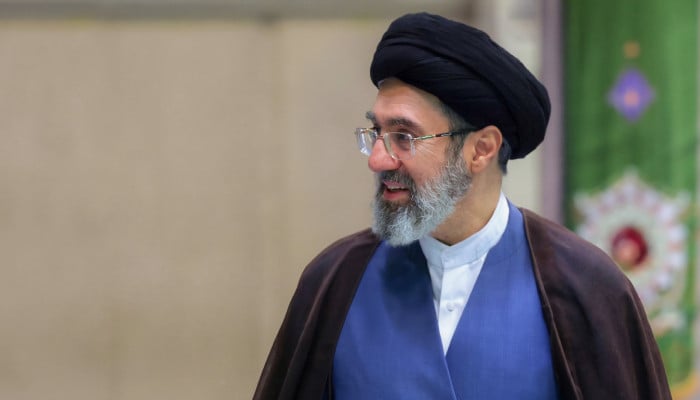
TEHRAN: Iran’s new supreme leader Mojtaba Khamenei said in his latest written message that his nation did not want war with the United States and Israel, but would protect its rights as a nation, state television reported Thursday.
“We did not seek war and we do not want it,” he said in the message read out on state TV, weeks after his father, Ayatollah Ali Khamenei, was martyred on February 28, the first day of the war.
“But we will not renounce our legitimate rights under any circumstances, and in this respect, we consider the entire resistance front as a whole,” he added, in an apparent reference to Lebanon where Israel is fighting with Tehran’s ally Hezbollah.
“All must know that, by Almighty God’s will, we definitely won’t allow the criminal aggressors who attacked our country to go unpunished.”
Iran this week agreed to a fragile two-week ceasefire with the United States that could lead to peace negotiations after threats of annihilation from US President Donald Trump.
The supreme leader also urged the country’s southern neighbours to carefully observe ongoing regional developments, describing them as a “miracle” and calling for a clear and informed stance.
He said that Iran will move the management of the strategic Strait of Hormuz into a new phase.
Khamenei told Iranians that they must “not imagine that taking to the streets is no longer necessary” despite the announcement of the ceasefire.
“Your voices in public squares are undoubtedly influential in the outcome of the negotiations,” he said.
Likely wounded in the strike that martyred his father, Mojtaba Khamenei, has still not been seen in public since his leadership appointment.
He has issued written declarations, most of them read out by presenters on state television.
US President Donald Trump has even speculated that he could be dead, but Iran’s state television said he is recovering from his injuries and posts photos of him, without specifying when they were taken.
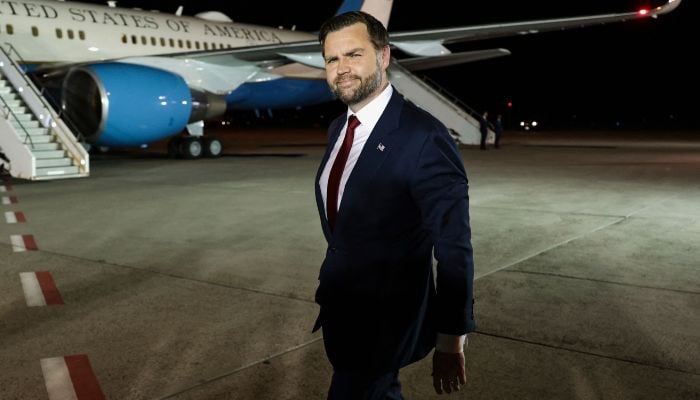
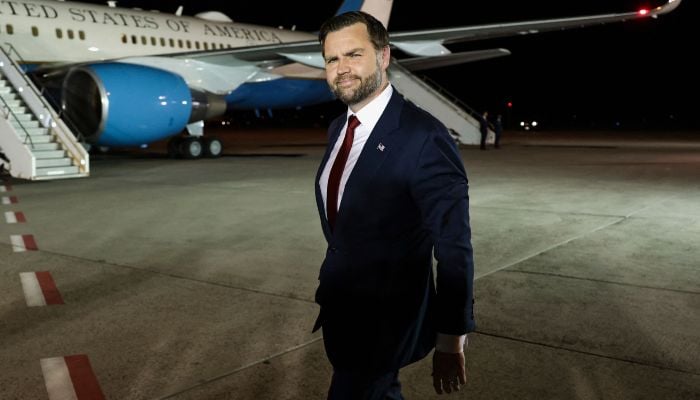
WASHINGTON: It was a war JD Vance never wanted. Now the US vice president has been tasked with ending it.
Vance heads to Pakistan this week with orders from President Donald Trump to turn the shaky Iran ceasefire into a lasting peace deal.
For the 41-year-old Vance, who has kept a notably low profile during the Middle East conflict, it will be one of the biggest moments of his career.
But the man widely regarded as a leading contender in the 2028 US presidential election will face huge challenges too when talks begin Saturday in Islamabad.
“I cannot think of a case where the vice president ran formal negotiations like this,” Aaron Wolf Mannes, a lecturer at the University of Maryland School of Public Policy and an expert on the American vice presidency’s role in foreign policy, told AFP.
“This is high risk, high reward.”
Vance built his political brand as an avowed anti-interventionist who wanted to keep America out of any more foreign wars, like in Iraq, where he served as a US Marine.
That has made for a difficult balancing act after Trump launched the Iran war on February 28.
Vance has publicly backed the conflict but has kept out of the limelight. When the ceasefire was announced, Vance happened to be far away in Hungary, supporting Prime Minister Viktor Orban’s electoral campaign.
The New York Times reported this week that in discussions behind closed doors in the weeks before the war, Vance argued against military action, saying it could cause regional chaos and split Trump’s MAGA coalition.
But Vance now suddenly finds himself as Trump’s diplomatic closer for an Iran deal.
“My key role was, I sat on the phone a lot,” Vance told reporters as he left Hungary this week. “I answered a lot of phone calls. I made a lot of phone calls. And again, I’m happy about where we are.”
Announcing the Islamabad talks this week, White House Press Secretary Karoline Leavitt said Vance played a “very significant and key role in this since the very beginning.”
Not always diplomatic
Vance will be accompanied by special envoy Steve Witkoff and Trump’s son-in-law Jared Kushner as he becomes the first US vice president to visit Pakistan since Joe Biden in 2011.

The White House said Vance, Secretary of State Marco Rubio, Witkoff and Kushner “have always been collaborating on these issues.”
“The President is optimistic that a deal can be reached that can lead to lasting peace in the Middle East,” Principal Deputy Press Secretary Anna Kelly said in a statement to AFP.
One theory is that the Iranians may view Vance as a more likely partner for diplomacy given his widely reported opposition to the war, and general doubts about US interventionism.
After Tehran expressed fury over Israel’s continued attacks on Lebanese cities despite the ceasefire deal, Vance appeared to take a softer tone, saying there may have been a “legitimate misunderstanding” from Iran that Lebanon would be included.
He hasn’t always been so diplomatic.
A long-term sceptic of support for Ukraine, Vance notoriously kicked off the Oval Office row between Trump and President Volodymyr Zelensky in February 2025.
And for the ambitious Vance, a soon-to-be father of four and Catholic convert, politics is always in the background.
Since Trump’s return to power, Vance has been unusually prominent in a tough job that is simultaneously one heartbeat away from the presidency yet also, in the words of one former veep, “not worth a bucket of warm spit.”
His crucial role in the Iran talks comes against the backdrop of a looming potential battle with Rubio to be the Republican heir to Trump in two years’ time.
“If he can get something that papers it over without dealing with real issues, that’s probably enough,” said Mannes.
“But if nothing good comes of this, it raises questions about his competence, which is not going to help him electorally. And of course Rubio’s right there as a potential rival for 2028.”


Spring/Summer stockpile: Discounts loom amid war delays
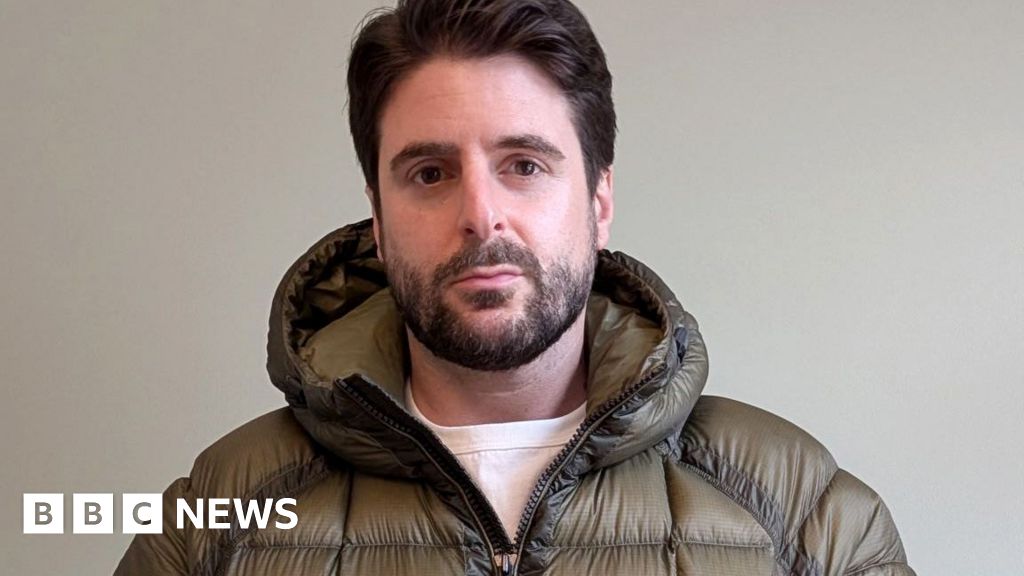
He paid $248 in illegal tariffs for this coat. Will he ever get it back?

Bangladesh garment exports down, March sees steeper drop

-
 Business1 week ago
Jaguar Land Rover sees sales recover after cyber attack
-
Uncategorized1 week ago
[CinePlex360] Please moderate: “Trump signals p
-

 Entertainment7 days ago
Joe Jonas shares candid glimpse into parenthood with Sophie Turner
-

 Tech6 days ago
Our Favorite iPad Is $50 Off
-

 Sports6 days ago
UConn Final Four run could trigger a $50M furniture giveaway for Massachusetts-based Jordan’s Furniture
-

 Entertainment6 days ago
Blake Lively reacts to harassment claims dismissal against Justin Baldoni
-
 Business1 week ago
Gold prices in Pakistan Today – April 3, 2026 | The Express Tribune
-

 Sports7 days ago
PSL 11: Lahore Qalandars defeat Multan Sultans in rain-shortened clash