

Politics
Ghislaine Maxwell won’t answer questions during congressional deposition, says lawmaker

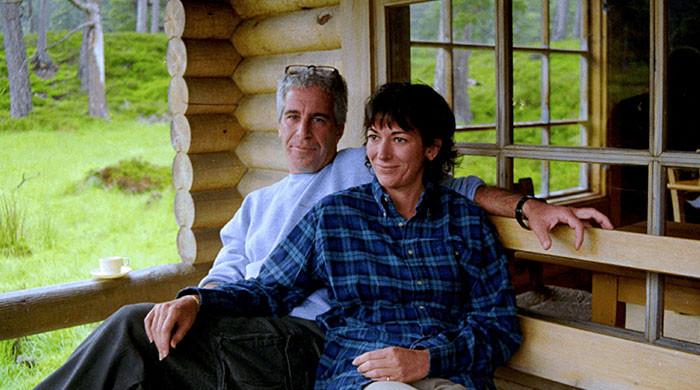
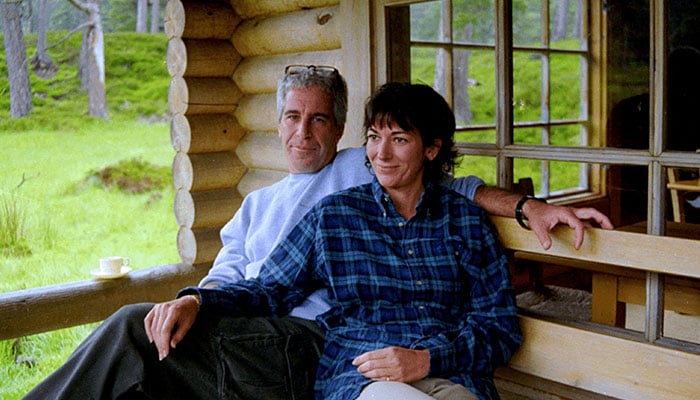
Jeffrey Epstein associate Ghislaine Maxwell intends to refuse to answer questions at a Monday deposition before the House’s Committee on Oversight and Government Reform, according to a Sunday letter from US Representative Ro Khanna.
Maxwell, who was found guilty in 2021 for her role in helping Epstein sexually abuse teenage girls and is currently serving a 20-year prison sentence, plans to invoke her Fifth Amendment privilege against self-incrimination and decline to answer all substantive questions, according to Khanna’s letter to Representative James Comer, the committee chair.
Maxwell’s attorney did not immediately respond to a request for comment on Sunday.
Instead of answering individual questions, Maxwell plans to read a prepared statement at the beginning of her deposition, Khanna, who serves on the committee, said without detailing the source of his information.
“This position appears inconsistent with Maxwell’s prior conduct, as she did not invoke the Fifth Amendment when she previously met with Deputy Attorney General Todd Blanche to discuss substantially similar subject matter,” Khana, a California Democrat, wrote in his letter seeking clarification on her testimony.
Maxwell’s deposition comes as the US Department of Justice has released of millions of internal documents related to Epstein.
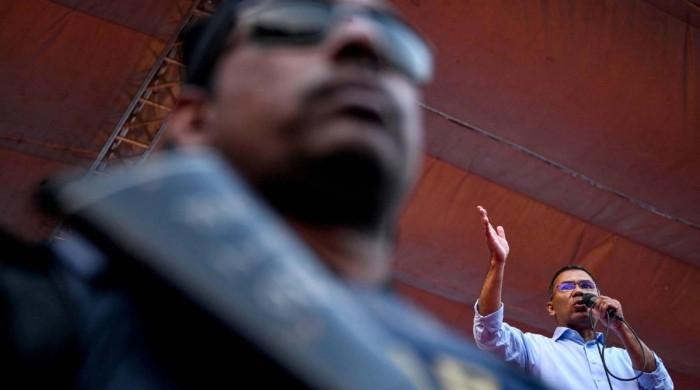
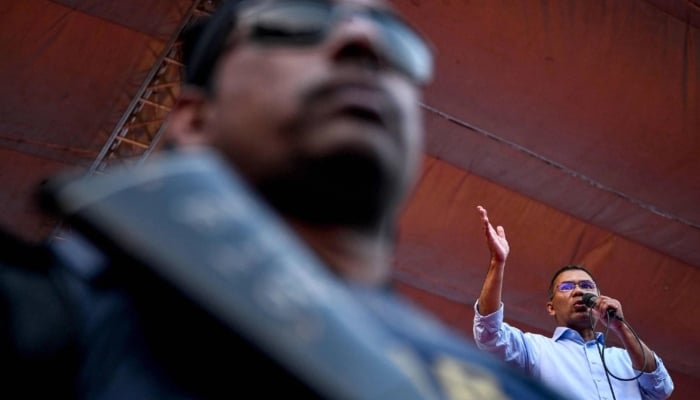
Voters in Bangladesh elect a new government on February 12, but analysts warn their choice is threatened by a coordinated surge of disinformation, much of which originates from neighbouring India.
The Muslim-majority nation of around 170 million people is preparing for its first election since a 2024 student-led uprising toppled Sheikh Hasina — who fled to neighbouring India, where she has been hosted since by the Hindu-nationalist government.
Authorities say the scale of online manipulation — including sophisticated AI-generated images — has become so severe that a special unit has been created to curb false content.
Interim leader and Nobel Peace Prize winner Muhammad Yunus said in January that there had been a “flood of misinformation surrounding the elections” when he called UN rights chief Volker Turk seeking help.
“It is coming from both foreign media and local sources,” he said.
Much of that centres around claims of attacks against Bangladesh’s minorities — around 10% of Bangladesh’s population is non-Muslim, most of them Hindu.
That has seen a mass posting of claims online that Hindus are under attack, using the hashtag “Hindu genocide”.
According to police figures released in January, out of 645 incidents involving members of minority groups in 2025 — only 12% were classified as having a sectarian motive.
‘Coordinated Indian disinformation’
The US-based Centre for the Study of Organised Hate said it had tracked more than 700,000 posts — generated by more than 170,000 accounts on X, that made claims of a “Hindu genocide” between August 2024 and January 2026.
“We have tracked coordinated Indian disinformation online, falsely alleging large-scale violence against Hindus in Bangladesh,” said Raqib Naik, head of the think tank.
“More than 90% of this content originated from India, with the remainder linked to associated Hindu nationalist networks in the UK, US, and Canada,” he told AFP.
Examples debunked by AFP Fact Check, some of them shared tens of thousands of times, include an AI-created video of a woman who had lost her arm, appealing not to vote for the Bangladesh Nationalist Party (BNP), seen by many as a frontrunner.
In another computer-generated video, a Hindu woman alleges that people who follow the same religion have been told to vote for Jamaat-e-Islami, or they will be exiled to India.
Of the hundreds of AI-generated videos documented by AFP Fact Check teams on social media platforms — YouTube, Facebook, TikTok and Instagram — few are marked with an AI disclaimer.
The surge has also come after years of repression under Hasina, when opposition was crushed and outspoken voices silenced.
“We are noticing a huge amount of fake information compared to other times,” said Miraj Ahmed Chowdhury, head of the Dhaka-based research organisation Digitally Right, saying free AI tools made creating sophisticated fakes easier.
In another AI-generated video, Bangladeshis appear to praise Hasina — now a fugitive who was sentenced to death in absentia for crimes against humanity.
In India, social media outrage by Hindu fundamentalists about the lone Bangladeshi cricket player in India’s domestic IPL league resulted in his club cancelling his contract — a furore that escalated to Bangladesh’s national team pulling out of this month’s T20 World Cup in India.
But while analysts say much of the disinformation originates from India, there is no evidence that the large-scale media posts were organised by the government.
New Delhi’s foreign ministry says they have recorded a “disturbing pattern of recurring attacks on minorities” by “extremists in Bangladesh”, but also emphasise they have “consistently reiterated our position in favour of free, fair, inclusive and credible elections”.
‘Big threat’
Bangladesh Election Commission spokesman Md Ruhul Amin Mallik said they were working with Facebook’s parent company, Meta, and set up a unit to monitor social media posts — but coping with the sheer volume online is a never-ending task.
“If our team detects any content as harmful and misleading, we instantly announce it as fake information,” Mallik said.
Election expert Jasmine Tuli, a former election commission official, said that AI-generated images carried an extra risk for Bangladesh.
More than 80% of urban households have at least one smartphone, and nearly 70% of rural areas, according to government statistics — but many people are still relatively new to the technology.
“It is a big threat for a country like Bangladesh, since people don’t have much awareness to check the information,” Tuli said.
“Due to AI-generated fake visuals, voters get misguided in their decision.”
- Did not have “mental health” required to make decisions: Tarrant.
- Tarrant opened fire on two mosques during Friday prayers.
- Convict serving life sentence in prison without parole.
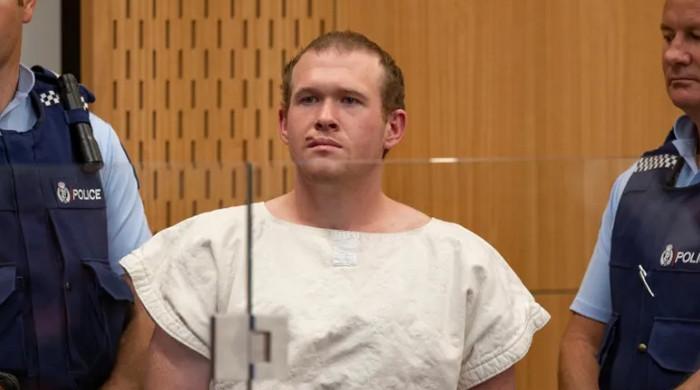
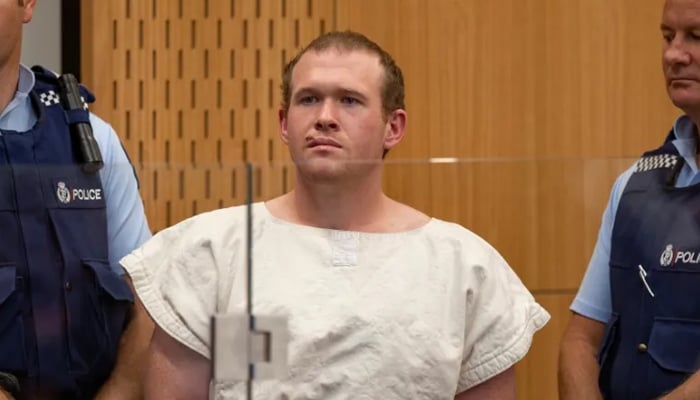
A white supremacist who killed 51 Muslim worshippers at two mosques in New Zealand seven years ago said on Monday that he was irrational when he pleaded guilty, local media reported, as he sought to overturn his conviction in a New Zealand court.
Brenton Tarrant, 35, who appeared in a court in Wellington via a video link, is seeking to appeal his guilty pleas.
Tarrant, an Australian national, opened fire on two mosques in Christchurch in March 2019 during Friday prayers in the deadliest mass shooting in New Zealand’s history.
He released a racist manifesto shortly before the attack, where he used military-style semi-automatic weapons and livestreamed the killings on Facebook with a head-mounted camera.
Tarrant initially denied all charges and was preparing to stand trial after the attack but entered guilty pleas a year later to 51 charges of murder, 40 counts of attempted murder and one charge of committing a terrorist act.
Tarrant told the court that harsh prison conditions had deteriorated his mental health while awaiting trial, and that he was essentially not fit to plead guilty, according to a report in the New Zealand Herald.
“I did not have the mind frame or mental health required to be making informed decisions at that time,” Tarrant said.
“I think the issue is, did I really know what I wanted to do or what would be a good idea? No, I didn’t actually … I was making choices, but they were not choices made voluntarily and they were not choices made rationally due to the (prison) conditions.”
Counsel acting for Tarrant have their names and identities suppressed by order of the Court and could not be reached for comment.
A court document showed the Court of Appeal would check if Tarrant was incapable of making rational decisions when he entered his guilty pleas “as a result of the conditions of his imprisonment, which he says were torturous and inhumane”.
He is serving a life sentence in prison without parole — the first time a New Zealand court imposed a sentence requiring a person to spend the rest of their life in prison.
The appeal hearing is set down for five days, and is expected to finish on Friday.
If the appeal court declines to grant the application to vacate the guilty pleas, a hearing later in the year will consider the appeal on his sentence. If the appeal is accepted, the case will be sent back to the High Court for Tarrant to stand trial on the charges.
- Bangladesh faces its most competitive vote since 2009.
- Ousted PM Hasina’s Awami League party banned.
- BNP, Jamaat in close race with big economic, geopolitical stakes.
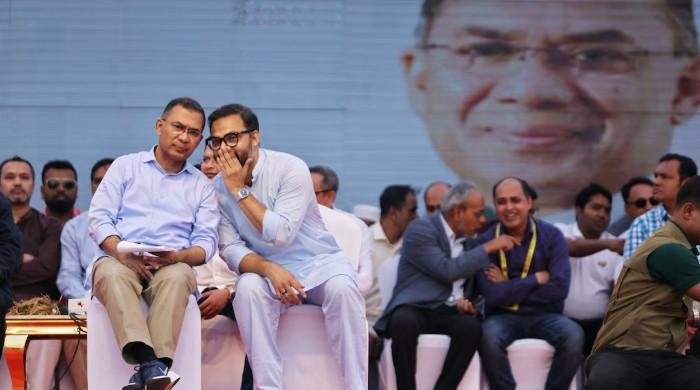
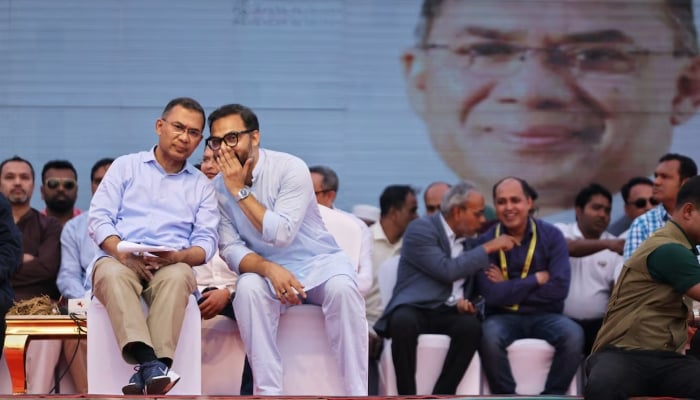
DHAKA: For years under former Prime Minister Sheikh Hasina, Bangladesh’s opposition had little presence on the streets during elections, either boycotting polls or being sidelined by mass arrests of senior leaders. Now, ahead of Thursday’s vote, the roles have reversed.
Hasina’s Awami League is banned, but many young people who helped oust her government in a 2024 uprising say the upcoming vote will be the Muslim-majority nation’s first competitive election since 2009, when she began a 15-year-rule.
The Bangladesh Nationalist Party (BNP) is widely expected to win, although a coalition led by the Islamist Jamaat-e-Islami is putting up a strong challenge. A new party driven by Gen-Z activists under the age of 30 has aligned with Jamaat after failing to translate its anti-Hasina street mobilisation into an electoral base.
BNP chief Tarique Rahman told Reuters his party, which is contesting 292 of the 300 parliamentary seats at stake, was confident of winning “enough to form a government”.
Analysts say a decisive result in the February 12 vote, instead of a fractured outcome, is vital for restoring stability in the nation of 175 million after Hasina’s ouster triggered months of unrest and disrupted major industries, including the garments sector in the world’s second‑largest exporter.
The verdict will also affect the roles of rival regional heavyweights China and India in the South Asian nation.
“Opinion polls suggest the BNP has an edge, but we must remember that a significant portion of voters are still undecided,” said Parvez Karim Abbasi, executive director at Dhaka’s Centre for Governance Studies.
“Several factors will shape the outcome, including how Generation Z – which makes up about a quarter of the electorate – votes, as their choices will carry considerable weight.”
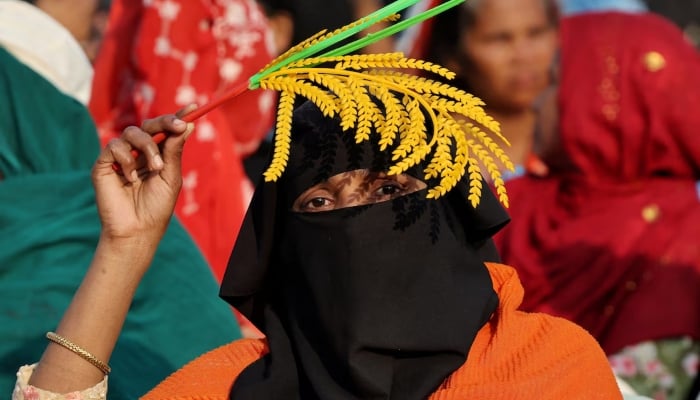
Across Bangladesh, black‑and‑white posters and banners bearing the BNP’s “sheaf of paddy” symbol and Jamaat’s “scales” hang from poles and trees and are pasted on roadside walls, alongside those of several independent candidates. Party shacks on street corners, draped in their emblems, blare campaign songs.
It marks a sharp contrast with past elections, when the Awami League’s “boat” symbol dominated the landscape.
Opinion polls expect the once-banned Jamaat to have its best electoral performance even if it does not win.
China’s influence increases as India’s wanes
The election verdict will also influence the roles of China and India in Bangladesh in the coming years, analysts have said. Beijing has increased its standing in Bangladesh since Hasina was seen as pro-India and fled to New Delhi after her ouster, where she remains.
While New Delhi’s influence is on the wane, the BNP is seen by some analysts as being relatively more in tune with India than the Jamaat.
A Jamaat-led government might tilt closer to Pakistan, a fellow Muslim‑majority nation and a long‑standing rival of Hindu‑majority India, analysts say. Also, Jamaat’s Gen-Z ally has said “New Delhi’s hegemony” in Bangladesh is one of its main concerns, and its leaders met Chinese diplomats recently.
Jamaat, which calls for a society governed by Islamic principles, has said the party is not inclined towards any country.
BNP’s Rahman has said that if his party formed the government, it would have friendly relations with any nation that “offers what is suitable for my people and my country”.
Bangladesh, one of the world’s most densely populated countries with high rates of extreme poverty, has been hit by high inflation, weakening reserves and slowing investment, which has pushed it to seek large-scale external financing since 2022, including billions of dollars from the International Monetary Fund and the World Bank.
Corruption is the biggest concern among the 128 million voters, followed by inflation, according to a survey by Dhaka-based think tanks Communication & Research Foundation and Bangladesh Election and Public Opinion Studies.
Analysts say Jamaat’s clean image is a factor in its favour, much more than its Islamic leanings.
“Voters report high intention to participate, prioritise corruption and economic concerns over religious or symbolic issues, and express clear expectations for leaders who demonstrate care, competence and accountability,” said the survey.
Nevertheless, BNP’s Rahman, son of former Prime Minister Khaleda Zia, is seen as the frontrunner to lead the next government. But if the Jamaat-led coalition emerges ahead, its chair, Shafiqur Rahman, could be in line for the top job.
Mohammad Rakib, 21, who is set to vote for the first time, said he hoped the next government would allow people to express their views and exercise their franchise freely.
“Everyone was tired of (Hasina’s) Awami League. People couldn’t even vote during national elections. People had no voice,” he said. “I hope the next government, whoever comes into power, will ensure this freedom of expression.”


UNIDO, Ghana to build Circular Econ Innovation, Textile Testing Centre
Ice dance will incorporate queer culture unlike in any other Olympics

‘Flood’ of disinformation ahead of Bangladesh election

-

 Entertainment3 days ago
How a factory error in China created a viral “crying horse” Lunar New Year trend
-

 Tech1 week ago
How to Watch the 2026 Winter Olympics
-
 Business1 week ago
Post-Budget Session: Bulls Push Sensex Up By Over 900 Points, Nifty Reclaims 25,000
-

 Entertainment1 week ago
The Traitors’ winner Rachel Duffy breaks heart with touching tribute to mum Anne
-

 Tech1 week ago
I Tested 10 Popular Date-Night Boxes With My Hinge Dates
-
 Business7 days ago
New York AG issues warning around prediction markets ahead of Super Bowl
-

 Fashion7 days ago
Canada could lift GDP 7% by easing internal trade barriers
-
 Business1 week ago
Investors suffer a big blow, Bitcoin price suddenly drops – SUCH TV