

Business
Global Capital Is Doubling Down On NCR’s Commercial Assets; What’s Fuelling The Rush?

Last Updated:
Net office absorption in NCR jumped 61% year-on-year in 2024, the sharpest increase among major cities, to touch 9.5 million sq. ft.
Of the $8.87 billion in real estate investments that entered India in 2024, global investors accounted for nearly two-thirds.
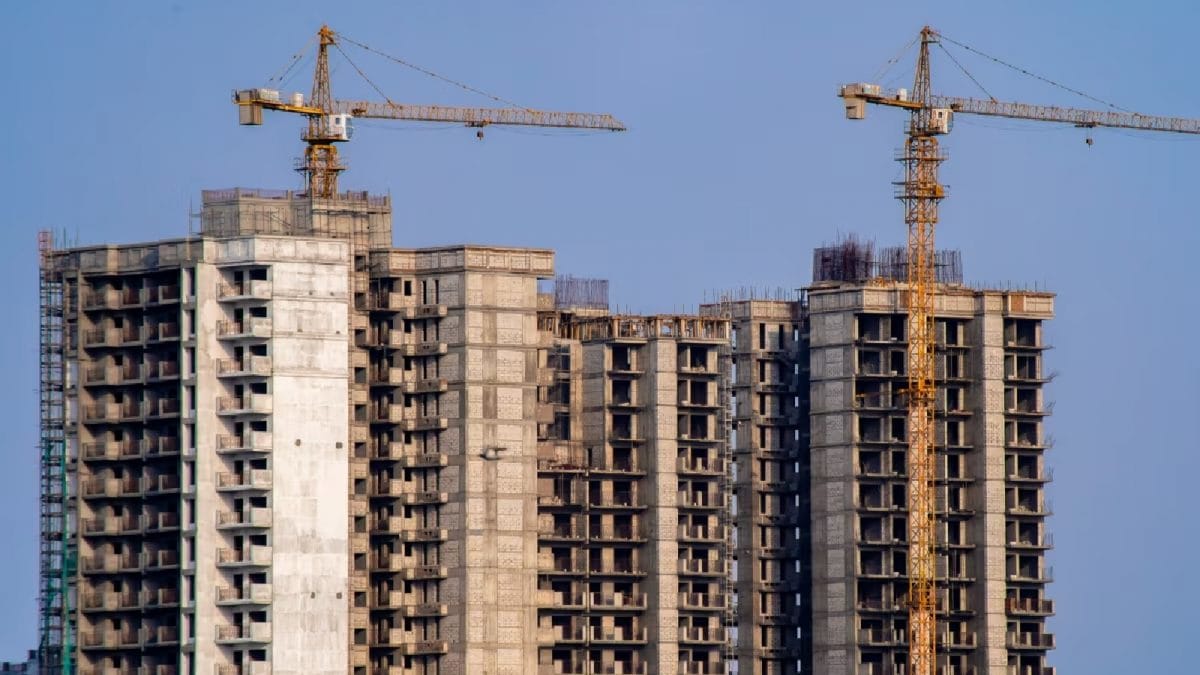
Delhi-NCR has entered a phase of commercial real estate activity that is beginning to stand apart even in an otherwise buoyant Indian property cycle. Over the past few years, the region has experienced rapid real estate growth, infrastructure development, and corporate expansion, attracting global capital at an unprecedented speed and scale. Institutional investors, pension funds, sovereign wealth entities, and private equity platforms treat NCR as one of Asia’s more reliable commercial markets, rather than a speculative bet.
The change is visible in the numbers: net office absorption in NCR jumped 61% year-on-year in 2024, the sharpest increase among major cities, to touch 9.5 million sq. ft. Despite substantial new supply, vacancy levels have eased 2.6% to 22.6%, while rentals across key micro-markets have strengthened by about 5% on average, with pockets like Noida Expressway and Golf Course Extension Road seeing a far steeper climb over the past five years. Prime retail assets tell a similar story, with vacancy in premium malls having slipped to 8.3%, and trading densities continue to rise.
This resilience explains why NCR has become a preferred deployment zone for foreign institutional investors. Of the USD 8.87 billion in real estate investments that entered India in 2024, global investors accounted for nearly two-thirds, and a disproportionate share found its way into Delhi–NCR’s office, retail, and mixed-use portfolios. Their interest is not episodic. Capital managers view NCR as a deep, maturing market, large enough to absorb sustained inflows without the volatility that characterized earlier cycles.
Mohit Goel, managing director of Omaxe Limited, said, “Global capital is showing unprecedented confidence in NCR’s commercial real estate, and we see this reflected strongly in emerging hubs like Faridabad and Dwarka, Delhi. Over the last two years, institutional investments in NCR’s Grade-A commercial and retail assets have risen by an estimated 30–35%, driven by stronger connectivity, infrastructure upgrades, and sustained demand from organized retail and new-age businesses. Our developments in Dwarka and Faridabad are directly benefiting from this momentum. Investors are now prioritizing long-term, stable, income-generating assets, a shift that underscores the structural transformation taking place in the NCR market.”
The momentum is driven by a combination of structural and cyclical factors. Multi-national companies are scaling their Global Capability Centres, which have evolved from back-office support roles to high-value engineering and digital functions. This shift has materially changed the nature of demand. NCR’s strong engineering workforce, proximity to decision-making centres, and established social infrastructure make it a preferred base for complex, high-skill GCC operations.
Sandeep Chhillar, founder and chairman of Landmark Group, said, “NCR has reached a maturity level where global investors feel comfortable committing long-term capital. The region offers depth, diverse occupiers, a large GCC presence, and rental resilience across cycles. What stands out today is the consistency of demand in office and retail assets. Infrastructure upgrades have unlocked several micro-markets, reducing risk and widening opportunity. Institutional investors recognize this stability, and that is why we expect inflows into NCR’s commercial assets to accelerate over the next few years.”
Another easily recognizable trend is the predilection for “return-ready” commercial assets. This inherently places NCR in pole position, given its sheer stock of Grade A assets. At rentals averaging INR 340 per sq. ft. per month in prime pockets, Delhi NCR is the APAC region’s sixth most-expensive office market with clearer income visibility than many competing Asian cities.
Ishaan Singh, director of AIPL, said, “What differentiates NCR today is the depth of its demand base. From Grade-A office occupiers to global retail brands, the region attracts tenants looking at long-term consolidation. This stability, supported by strong consumption and infrastructure, has made NCR very attractive for global capital. Quality assets will continue to outperform, and institutional investors are increasingly seeking exposure in Grade A projects. Moreover, we expect this momentum to sustain for a long time period.”
Mohit Batra, regional director of Realistic Realtors, said, “NCR’s commercial landscape is going through a structural transformation backed by growth in consumption, expansion by corporates, and a preference for organized retail formats. The market has demonstrated resilience even when global conditions were uncertain. The investor community sees footfall, spending power, and high-quality mixed-use developments coming together. As retail-led destinations become community meeting points and offices increasingly see experiential spaces, NCR presents an interesting case for long-term yield-driven investment.”
As per industry estimates, GCCs alone may lease 50-55 million sq. ft. nationally by FY27, with NCR capturing a significant share. Due to this, NCR is no longer competing with domestic markets alone; it is competing with regional Asian cities for capital, and increasingly, it is winning. Global funds are convinced that India’s multi-decade growth cycle has enough momentum to support long-tenure commercial returns. NCR, with its expanding corporate footprint and maturing urban form, finds itself at the centre of this shift, and there is little sign of the momentum cooling.
 Click here to add News18 as your preferred news source on Google.
December 27, 2025, 15:42 IST
Read More
Business
UPI transactions hit record Rs 29.53 lakh crore in March; volumes cross 22.6 billion – The Times of India

Unified Payments Interface (UPI) transactions touched a record high in March, with both value and volume hitting new peaks, driven by festive spending and financial year-end activity, according to PTI.Data released by the National Payments Corporation of India (NPCI) showed that UPI transactions totalled Rs 29.53 lakh crore in value during March, up 19 per cent from Rs 24.77 lakh crore in the same month last year.On a month-on-month basis, transaction value rose 10 per cent from Rs 26.84 lakh crore recorded in February.In volume terms, UPI registered 22.64 billion transactions during the month, marking a 24 per cent increase from 18.3 billion transactions a year ago. The volume was 20.39 billion in February.Average daily transactions stood at 730 million, with an average daily value of Rs 95,243 crore, as spending picked up during festivals such as Holi and Eid.“The sustained growth in the digital payment ecosystem in India is an affirmation of the penetration of real-time payment systems in the day-to-day life of the people. UPI processed 22.64 billion transactions worth 29.53 lakh crore in March 2026, marking its emergence as one of the trusted payment systems in the country,” said Anand Kumar Bajaj, MD & CEO of PayNearby.UPI now accounts for around 85 per cent of all digital transactions in India and contributes nearly 50 per cent of global real-time digital payments.The platform is operational in seven countries, including the UAE, Singapore, Bhutan, Nepal, Sri Lanka, France and Mauritius, with its entry into France marking its first expansion into Europe.NPCI, an initiative of the Reserve Bank of India and the Indian Banks’ Association, operates UPI, enabling real-time peer-to-peer and merchant payments across the country.

But Spencer says his business is being squeezed from every angle – as well as minimum wage, he has had increases in business rates, national insurance, and statutory sick pay. He also expects energy bills to go up because of the war in the Middle East.

Visa Inc. signage on the floor of the New York Stock Exchange (NYSE) in New York, US, on Wednesday, Jan. 28, 2026.
Michael Nagle | Bloomberg | Getty Images
Visa is launching six new tools using artificial intelligence to modernize the process of disputing credit card charges, the company told CNBC exclusively.
The digital payments company said the tools are designed to reduce the costs and frustration of “outdated” dispute processes for multiple entities involved in the payments process: merchants, issuers and acquirers.
“Some of the challenges are these back-office systems are still largely manual,” Andrew Torre, Visa’s president of value-added services, told CNBC. “We really had to think differently about how we approach this at scale.”
In 2025, Torre said, Visa processed more than 103 million charge disputes globally, marking a 35% increase since 2019.
“Our goal is to streamline this as much as possible,” Torre said. “We’d love to be able to see that growth rate come down.”
Visa’s new tools are part of a larger push by major banks and financial institutions to incorporate AI into their businesses — both internally and in consumer-facing applications. JPMorgan Chase and Goldman Sachs have both said they’re already using AI to hire fewer people. BNY spent $3.8 billion on technology in 2025, or about 19% of its revenue.
Visa said three of its six new tools focus on merchants, allowing them to address potential disputes before they escalate, managing disputes with generative AI responses and providing a deeper level of detail on order insights to manage confusion over unfamiliar charges.
For example, Torre said, many disputes are borne out of cardholders not recognizing a specific charge on their statements. With the new tool, Visa will be able to provide further details to financial institutions to show cardholders that data at a deeper level, according to the company.
The other three tools are built for issuers and acquirers, using predictive AI models to aid in case-by-case analysis, analyzing documents for summaries and auto fill and establishing an AI-powered dispute platform to manage the entire process in one location, Visa said.
“We’ll be able to get them insights and data so they can move from being reactive to proactive,” Torre said.
Torre said Visa’s new AI tools are part of a broader host of solutions for consumers, including a subscription manager announced last week that allows cardholders to cancel unnecessary subscriptions directly on the manager.
The automation will save time, money and unnecessary confusion for both parties, he added. Most of the tools will be generally available later this year, the company said.
“We really believe that disputes in this solution makes it much easier to manage and resolve,” Torre said. “We think it has better outcomes for everyone.”


The New Era of Militia Influencers
UPI transactions hit record Rs 29.53 lakh crore in March; volumes cross 22.6 billion – The Times of India

Taylor Swift, Travis Kelce wedding planning comes to life: Details

-

 Politics1 week ago
Afghanistan announces release of detained US citizen
-

 Tech1 week ago
Can a Home Appliance Fix the Problem of Soft-Plastic Waste?
-

 Sports1 week ago
Broadcast industry CEO says consolidation is ‘essential’ to compete for NFL soaring media rights prices
-

 Entertainment1 week ago
UN warns migratory freshwater fish numbers are spiralling
-
 Business1 week ago
Property Play: Home flippers see smallest profits since the Great Recession, real estate data firm says
-
 Business1 week ago
Gold prices soar in Pakistan – SUCH TV
-

 Fashion1 week ago
ICE cotton slips on weaker crude, profit booking
-
 Business1 week ago
More women are entering wealth management, but few are in advisory roles, study finds