

Politics
‘Good progress’ made in latest round of indirect talks with US, ‘clear path’ ahead: Iran FM

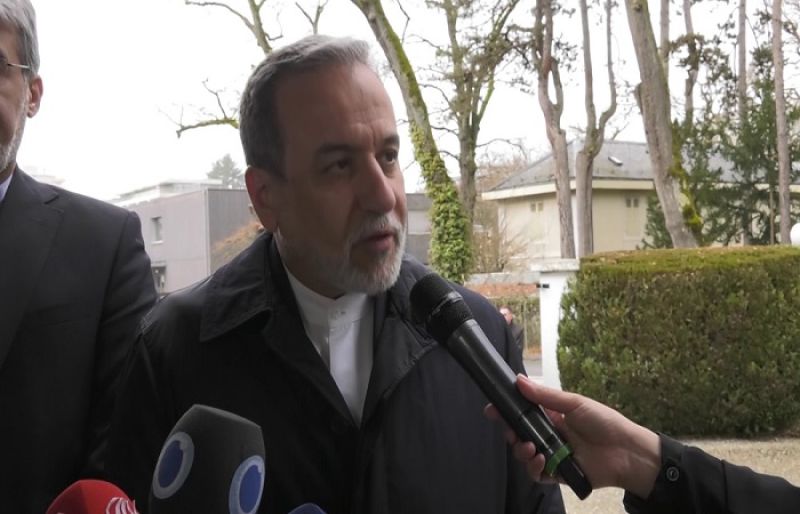

Iranian Foreign Minister Abbas Araghchi has announced that the latest round of negotiations on sanctions removal with the United States concluded with an agreement on a set of guiding principles that will shape future discussions toward a potential deal.
Speaking to an IRIB reporter in Geneva on Tuesday shortly after the talks ended, Araghchi described the discussions as “serious” and more constructive than the previous round, with various proposals presented and thoroughly examined.
“Finally, we were able to reach an agreement on a set of guiding principles based on which we will move forward and discuss the text of a potential deal,” he said.
He cautioned that reaching a final agreement will not be immediate, noting that the technical work on the text will be more detailed and complex. Nevertheless, he emphasized that “good progress” has been made and that a clearer and more positive path has now emerged.
When asked about the next round of talks, Araghchi stated that no date has been set. “The parties agreed to work on the texts of a potential agreement and exchange them before agreeing on the date of the next round of talks.”
The minister concluded that while no formal roadmap yet exists, both sides now have a clearer picture, although differences remain that will require time to bridge.
The latest round of indirect talks between Iran and the United States lasted approximately three hours and took place at the residence of the Omani ambassador.
Araghchi led the Iranian delegation, accompanied by his Deputy for Political Affairs, Majid Takht-Ravanchi, Deputy for Legal and International Affairs, Kazem Gharibabadi, Deputy for Economic Diplomacy, Hamid Ghanbari, and Foreign Ministry spokesperson Esmaeil Baghaei.
Technical, legal, and economic experts were also part of the Iranian negotiating team in the Tuesday round.
The talks follow the resumption of indirect nuclear negotiations on February 6 in the Omani capital, Muscat, led by Araghchi and US envoy Steve Witkoff.
The negotiations are taking place amid heightened regional tensions. US President Donald Trump has ordered additional military deployments to the region, including an extra aircraft carrier, thousands of troops, warplanes, and guided-missile destroyers, according to US officials.
In late January, Trump spoke of “another beautiful armada” of warships heading towards Iran and said failure to reach a deal would bring consequences “far worse” than the illegal strikes of June 2025 on Iranian nuclear facilities.
Tehran has declared that it would respond decisively to any military adventurism, as in the case of the June US attacks, which prompted a ballistic missile barrage against Al Udeid, Washington’s most important regional airbase located in Qatar
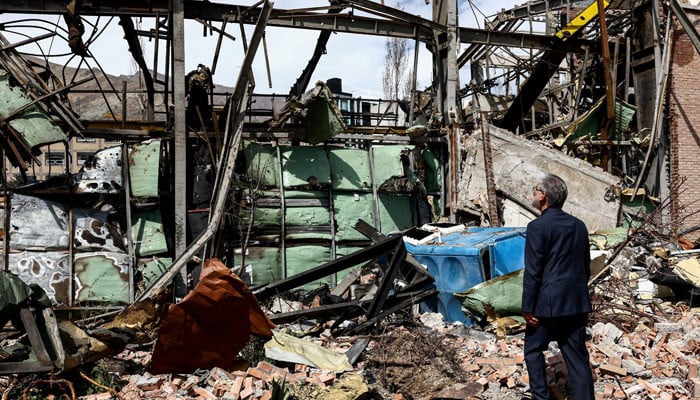
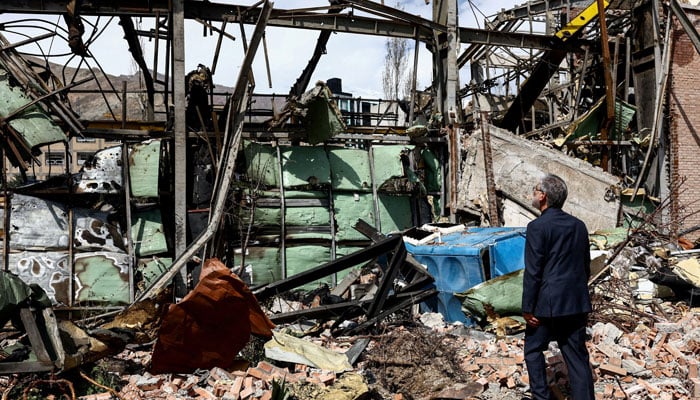
- Iran rejects demands permanent end to conflict via Pakistan.
- Iran’s response includes lifting sanctions, safe passage in Hormuz.
- Trump threatens severe action if Iran does not agree to deal.
Iran said on Monday it wanted a lasting end to the war with the US and Israel, and pushed back against pressure to swiftly reopen the Strait of Hormuz under a temporary ceasefire as the Americans and the Iranians weighed a framework plan to cease their five‑week-old conflict.
Iran conveyed its response to the US proposal for ending the war to Pakistan, rejecting a ceasefire and emphasising the necessity of a permanent end to the war, the official IRNA news agency said on Monday.
The Iranian response consisted of 10 clauses, including an end to conflicts in the region, a protocol for safe passage through the Strait of Hormuz, lifting of sanctions, and reconstruction, the agency added.
President Donald Trump, who has threatened to rain “hell” on Tehran if it did not make a deal by 8pm EDT Tuesday (midnight GMT) to open the vital route for global energy supplies, rejected the Iranian proposal on Monday and said his deadline was final.
“They made a proposal, and it’s a significant proposal. It’s a significant step. It’s not good enough,” Trump told reporters at an annual White House Easter event, referring to Iran.
Iran responded to US and Israeli attacks in February by effectively closing Hormuz, a conduit for about a fifth of the world’s oil and natural gas supply. The waterway’s stranglehold on the global economy has proved a powerful Iranian bargaining chip and on Monday it showed reluctance to relinquish it too easily.
The Pakistani-brokered framework for ending the war emerged from intense overnight contacts and proposes an immediate ceasefire, followed by talks on a broader peace settlement to be concluded within 15 to 20 days, a source aware of the proposals said on Monday.
Chief of Army Staff (COAS) and Chief of Defence Forces (CDF), Field Marshal Asim Munir, was in contact “all night long” with US Vice President JD Vance, special envoy Steve Witkoff and Iranian Foreign Minister Abbas Araqchi, the source said.
Iran’s foreign ministry spokesperson Esmaeil Baghaei said on Monday that Tehran’s demands “should not be interpreted as a sign of compromise, but rather as a reflection of its confidence in defending its positions.” He added that earlier US demands, such as a 15-point plan, were rejected as “excessive”.
Ceasefire proposal ‘one of many ideas’
“This is one of many ideas, and (Trump) has not signed off on it. Operation Epic Fury continues,” White House official told Reuters, referring to the US name for the operation against Iran.
Brent crude futures LCOc1 were up 0.5% to $109.60 a barrel at 1545 GMT.
In a post laden with expletives on his Truth Social platform on Sunday, Trump threatened further strikes on Iranian energy and transport infrastructure if Iran failed to make a deal and reopen the Strait by Tuesday.
Anwar Gargash, an adviser to the president of the United Arab Emirates, said any settlement must guarantee access through Hormuz. He warned that a deal that failed to rein in Iran’s nuclear programme and its missiles and drones would pave the way for “a more dangerous, more volatile Middle East”.
Fresh aerial strikes were reported across the region on Monday, more than five weeks since the US and Israel began pounding Iran in a war that has killed thousands and damaged economies by sending oil prices surging.
Iranian state media said the Revolutionary Guards’ intelligence chief, Majid Khademi, has died. Israel on Monday claimed responsibility for his death.
A US-Israeli attack hit the data centre at Sharif University of Technology in Tehran, damaging infrastructure underpinning the country’s national artificial intelligence platform and thousands of other services, Fars News Agency said on Sunday.
Iran continues to fight back
Iranian weekend strikes on petrochemical facilities and an Israeli-linked vessel in Kuwait, Bahrain and the UAE underscored the country’s ability to fight back despite Trump’s repeated claims to have knocked out its missile and drone capabilities.
Israel saw a heavy day of rocket volleys on Monday, with the sounds of sirens and missile interception booms ringing out across the country throughout the day.
Israel’s military told Reuters there had been 20 missile launches from Lebanon and five from Iran during the day. Several of the attacks resulted in impacts, although it was unclear whether it was from falling missile debris or direct strikes.
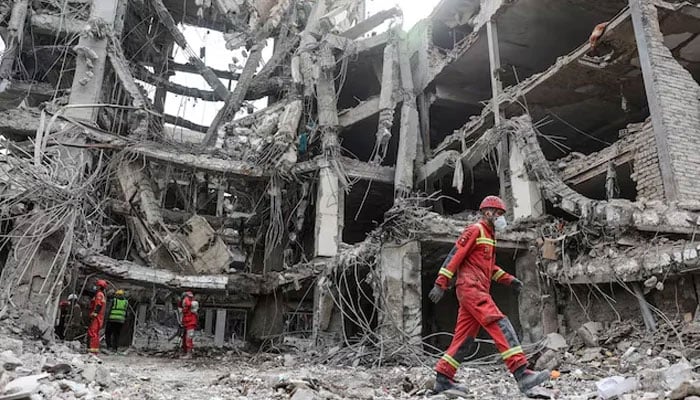
A missile hit Haifa overnight, tearing a building apart and killing four under the rubble, taking the death toll in Israel to 23, according to Israel’s ambulance service.
Yemen’s Iran-aligned Houthis said on Monday that they also carried out missile and drones attack against Israel.
About 3,540 people have been killed in Iran in the war, including at least 244 children, said US-based rights group HRANA.
Israel has also invaded southern Lebanon and struck Beirut in a fight against Iran-backed Hezbollah that has become the most violent spillover of the war on Iran.
Lebanon’s heavy casualties include 1,461 killed, including at least 124 children, Lebanese authorities say.
Thirteen US service members have died and hundreds of others have been wounded.
Politics
‘Sprit of resistance will continue’: Iran officials condemn Israeli assassination of IRGC intel. chief
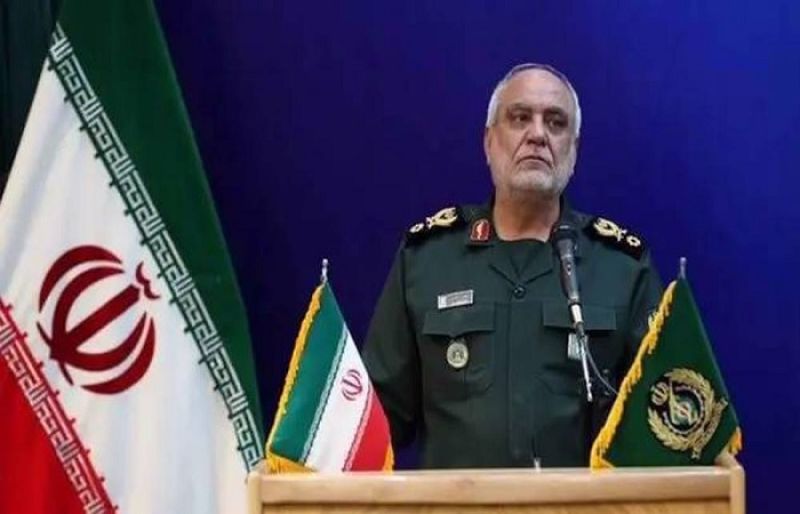
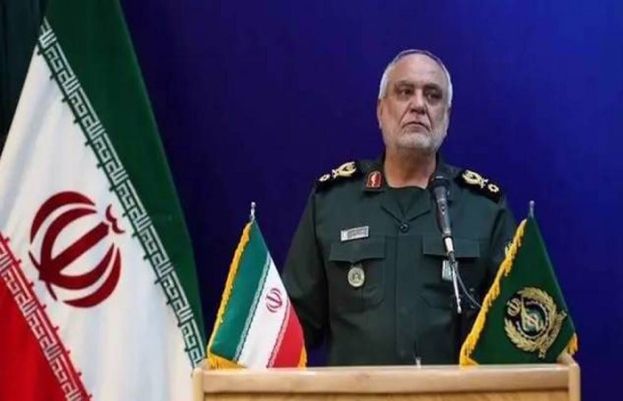
Messages of condolences pour in after the head of the Intelligence Organization of the Islamic Revolution Guards Corps (IRGC), Major General Majid Khademi, was assassinated in a US-Israeli terror strike in Tehran.
In a statement on Monday, the IRGC Public Relations Department said General Khademi, an elite commander, was martyred in the terrorist attack in the early hours of the day.
Major General Ali Abdollahi, commander of Iran’s Khatam al-Anbiya Central Headquarters, praised Khademi for his great endeavors to protect Islamic values and defend national security. He was martyred, Abdollahi said, by the “most vicious American-Israeli terrorists”.
The American and Zionist enemies must know that the martyrdom of such devoted commanders will make the Iranian nation and armed forces even “more resilient and determined” to keep on the path of the martyrs, General Abdollahi said.
‘Assassination will not undermine Iran’s national coherence’
Commander-in-chief of the Iranian Army Major General Amir Hatami said the barbarism put on global display by the American-Israeli enemy will fail to influence the “spirit of resistance of the proud Iranian nation”.
Iran’s adversaries, he said, are under the delusion that they can make any achievement through such wicked and blind moves. But the blood of martyrs only strengthens national will.
“This painful loss will not weaken the morale of the great Iranian people but rather strengthen national resolve and unity toward safeguarding independence and dignity”.
‘Enemies must await harder blows’
Parliament Speaker Mohammad Baqer Qalibaf said the martyrdom of the head of the IRGC Intelligence Organization is proof that the Israeli regime and the US are desperate.
The US-Israeli enemies are going to great lengths to make up for their weakness on the battlefield through cowardly assassinations, he said.
“This blind conspiracy of global arrogance is always doomed to failure, and even harsher blows await them”.
The illegal, imposed war of aggression by the United States and Israel began on February 28 when they assassinated Leader of the Islamic Revolution Ayatollah Seyyed Ali Khamenei, along with several senior military commanders.
In response, Iranian Armed Forces have launched decisive, devastating attacks against US and Israeli interests in the occupied territories and across West Asia.
As the war entered its sixth week, Iran continues to have an upper hand on the battlefield. The enemy is looking for an off-ramp amid heavy human and material loss.
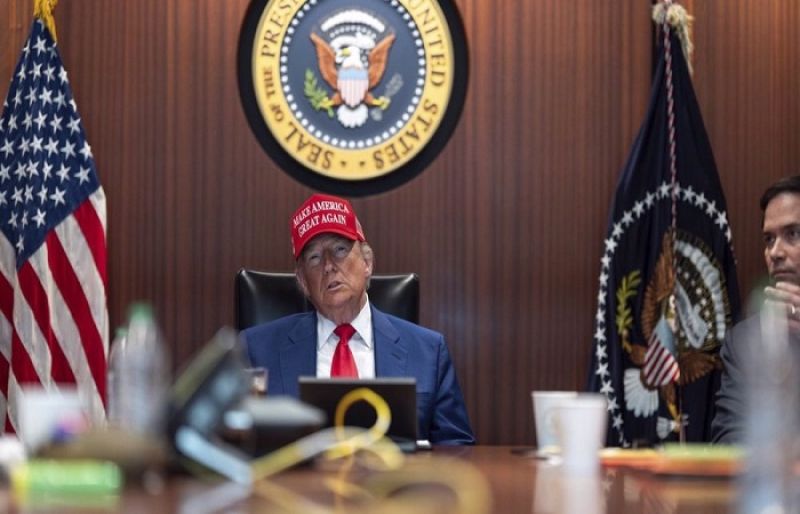
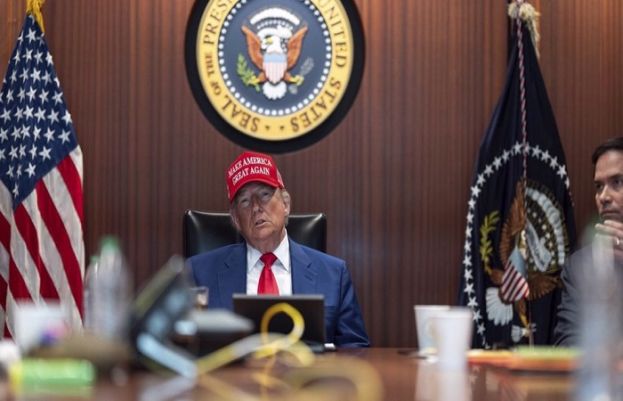
A growing number of lawmakers, experts, and commentators have called for Trump’s immediate removal from office by invoking the 25th Amendment, denouncing him for launching an unprovoked and unnecessary war against the Islamic Republic of Iran.
The 25th Amendment to the US Constitution, ratified in 1967, establishes the process for removing a president who is unable to perform his duties. Section 4, which has never been invoked, allows the vice president and a majority of the cabinet to declare the president “unable to discharge the powers and duties of his office.”
The US president’s Easter message, posted on the completion of one-month of the US-Israeli war on Iran, has drawn sharp rebuke for its content and tone.
US politicians, including some of Trump’s former allies and staunch opponents, described the statement as “psychotic,” “unhinged,” and evidence of a severe mental decline.
Senator Bernie Sanders (I-Vt.) was among the first to sound the alarm, saying the president’s words on the war against the Islamic Republic were more than just troubling.
“One month after starting the war in Iran, this is the statement of the President of the United States on Easter Sunday,” Sanders wrote. “These are the ravings of a dangerous and mentally unbalanced individual. Congress has got to act NOW. End this war.”
Representative Jim McGovern (D-Mass.) echoed Sanders’ concerns with even stronger language, directly questioning the president’s mental state.
“This is psychotic,” McGovern stated bluntly. “The President of the United States needs to get help. Totally unhinged and extremely dangerous.”
The calls for action were not limited to the US Congress. Several commentators and former political figures focused on the 25th Amendment to have Trump removed from office.
Former Republican Congressman Joe Walsh, once a Trump supporter turned fierce critic, pointed to the irony of the timing.
“His Easter morning post. And just 2 days ago, one of his ‘religious advisors’ compared him to Jesus Christ,” Walsh wrote. “He will forever be a stain on this country. And the world. 25th Amendment. Now. And to everyone else who, unlike Trump, understands & celebrates today – Happy Easter.”
The sentiment was shared by author and attorney Seth Abramson, who posed a straight question about the Republican Party’s inaction.
“I’m not saying this rhetorically—I’m speaking literally here,” Abramson said. “At what point do Republicans admit that Trump has lost his mind and replace him with Vance through the 25th Amendment? Never? Do we need to see a nuclear weapon dropped on a city of 10 million innocent civilians first?”
Concerns about the president’s mental fitness also came from medical professionals. Harry Sisson cited the reaction of Dr. Vin Gupta, a respected pulmonologist and health expert.
“Dr. Vin Gupta, a highly respected medical expert, has reacted to Trump’s insane Easter message amid ongoing questions about his health,” Sisson posted.
“‘The President is exhibiting all the signs of dementia.’ Trump has gone crazy and he’s showing it on the world stage.”
Other Democratic lawmakers and political activists questioned why the president’s own cabinet has remained silent so far, pointing to complicity in his actions.
Representative Yassamin Ansari (D-Ariz.) did not mince words, unequivocally calling the US president a threat to American national security.
“The 25th Amendment exists for a reason,” Ansari wrote. “The President of the United States is a deranged lunatic, and a national security threat to our country and the rest of the world.”
Representative Melanie Stansbury (D-N.M.) also weighed in, invoking a classic metaphor to describe the US president’s apparent lack of self-awareness.
“The emperor has no clothes,” Stansbury wrote. “Time for the #25thAmendment. Congress and the Cabinet must act.”
Senator Chris Murphy (D-Conn.) addressed the gravity of the situation as the US losses in the war against Iran pile up, emphasizing the deadly consequences of Trump’s erratic behavior.
“If I were in Trump’s Cabinet, I would spend Easter calling constitutional lawyers about the 25th Amendment,” Murphy wrote. “This is completely, utterly unhinged. He’s already killed thousands. He’s going to kill thousands more.”
Activist Melanie D’Arrigo said the Trump cabinet’s inaction in the face of war against Iran is a deliberate choice, pointing to potential personal gain as a motive for their silence.
“If you’re wondering why Trump’s cabinet isn’t invoking the 25th Amendment after yet another unhinged post announcing war crimes in the war he started that his family and donors are personally profiting from…” D’Arrigo wrote.
“It’s because they’re happily complicit and compromised.”
Journalist and social media influencer Candace Owens called it “a satanic administration.”
“We all realize that satanic Zionists occupy the White House and Congress needs to move to have the Mad King Trump removed,” she wrote.
“All of our lives may depend upon other countries realizing that Trump is deeply unwell and surrounded by religious fanatics who have convinced him that he is a messiah. We are in uncharted territory. Leaders worldwide need to act accordingly.”
Former San Jose Mayor Sam Liccardo said the American public has now seen enough to demand action, placing the burden squarely on the Trump cabinet.
“Our President posted this message to the world on Easter Sunday,” Liccardo said.
“The public now clearly knows that Trump is no longer mentally fit to hold office. Each member of his cabinet has a moral and professional duty to act under the authority of the 25th Amendment; remove him.”


Golfers react to Tiger Woods’ absence at Augusta National during Masters week: ‘It’s unfortunate’

Lil Nas X provided kind options by Judge assault case
[CinePlex360] Please moderate: “Disgraced ex-Sp

-

 Sports1 week ago
USMNT handed reality check by Doku, Belgium ahead of World Cup
-

 Sports1 week ago
2026 NCAA men’s hockey tournament: Schedule, results
-
Uncategorized4 days ago
[CinePlex360] Please moderate: “Trump signals p
-
Uncategorized1 week ago
[CinePlex360] Please moderate: “Further tariff
-

 Tech3 days ago
Our Favorite iPad Is $50 Off
-

 Entertainment3 days ago
Joe Jonas shares candid glimpse into parenthood with Sophie Turner
-

 Politics7 days ago
Trump considers asking Arab allies to help to pay for Iran war
-
 Sports7 days ago
Fakhar Zaman denies ball-tampering charge in PSL match | The Express Tribune