

Business
Goods exports rise 7%, but trade deficit at 8-month high – Times of India

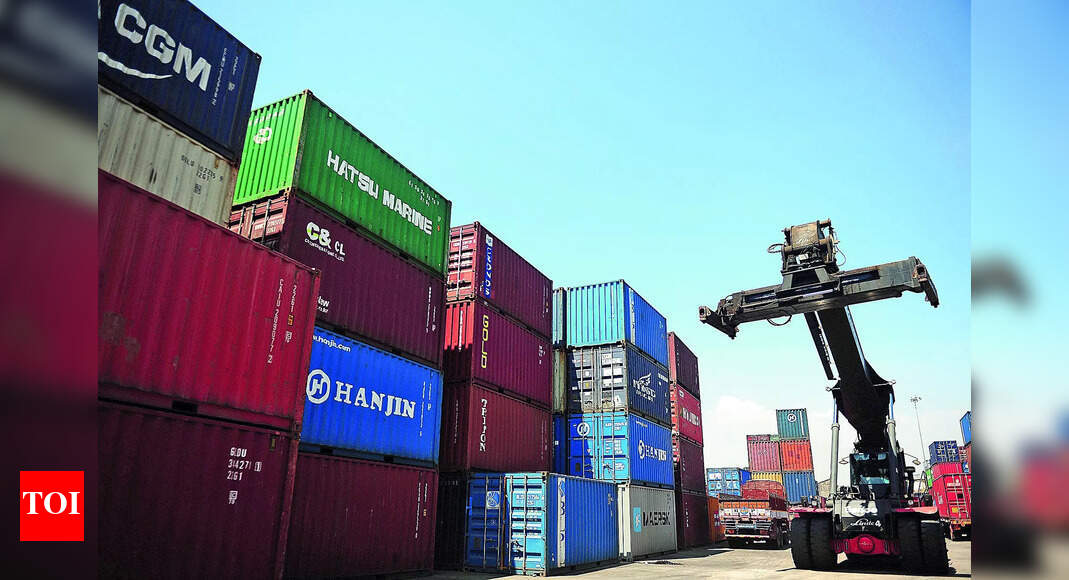
NEW DELHI: India’s goods exports rose 7.2% to $37.2 billion in July, snapping a two-month declining trend, while imports increased 14.7% to $64.6 billion. As a result, the trade deficit widened to $27.4 billion, the highest since last Nov.Although petrol, diesel and jet fuel exports fell 25% to $4.3 billion, it was more than offset by a surge in the shipments of electronics (34%), gems & jewellery (29%), engineering goods, and pharma (14% each).While some of it may have been due to “frontloading” of shipments to the US ahead of imposition of reciprocal tariffs, no clear trend was visible in the data from April-July. During the first four months of the year, exports to the US were 21.6% higher, at $33.5 billion.“Despite an uncertain global policy environment, India’s exports, both goods and services, have grown substantially in July, and so far this financial year. It is much higher than global export growth,” commerce secretary Sunil Barthwal said.
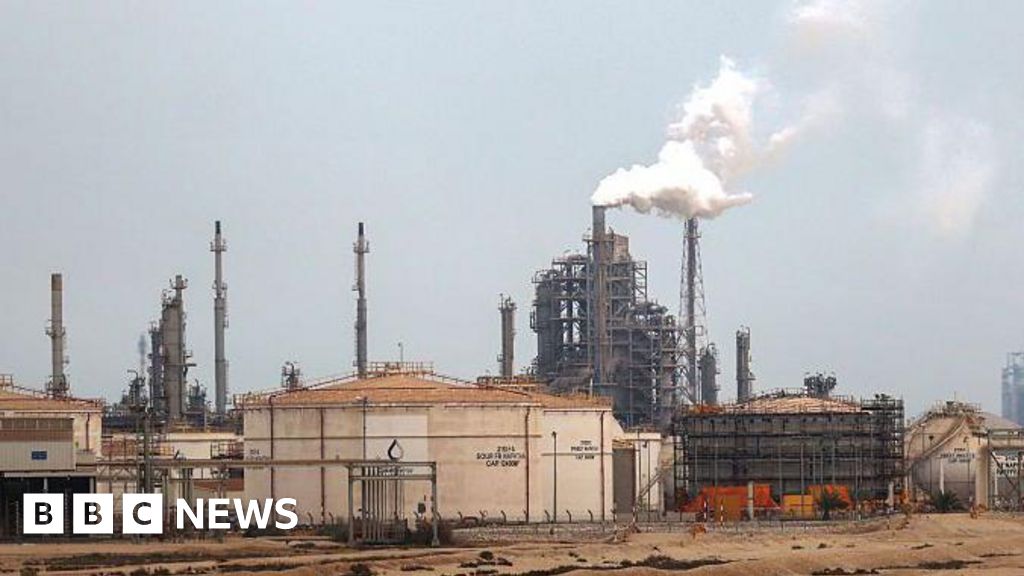
Energy Minister Saad al-Kaabi says oil could hit $150 a barrel if the Iran conflict continues over the coming weeks.
Source link
Business
Us India Oil Waiver: ‘Releases the pressure on other refineries’: US says India’s Russian oil waiver is a short-term step to stabilise global prices – The Times of India

The United States has said its decision to grant India a temporary waiver to purchase certain Russian oil supplies is a short-term move aimed at stabilising global crude prices amid supply disruptions linked to tensions in the Middle East.US energy secretary Chris Wright said the measure is intended to quickly bring oil stored in floating reserves into the global market and ease immediate supply constraints.
Speaking to ABC News Live, Wright said large volumes of Russian crude are currently stored in tankers around southern Asia and that Washington had encouraged India to buy these cargoes.“We need to get oil on the market in the short term. In the long term, supplies are abundant. There’s no worry there,” Wright said, adding that the temporary step was necessary as oil prices were rising due to constraints in shipments passing through the Strait of Hormuz.“As oil gets bid up a little bit because of those constraints coming out of the Straits of Hormuz, we’re taking a short-term action to say all this floating Russian oil storage that’s around southern Asia,” he said.Wright said the US had asked India to absorb those cargoes. “We’ve reached out to our friends in India and said, ‘Buy that oil. Bring it into your refineries.’ That pulls stored oil immediately into Indian refineries and releases the pressure on other refineries around the world,” he added.He stressed that the waiver does not represent a shift in Washington’s stance toward Moscow. “This is no change in policy towards Russia. This is a very brief change in policy just to keep oil prices down a little bit better than we could otherwise,” Wright said.Earlier in the day, US treasury secretary Scott Bessent announced a 30-day waiver allowing Indian refiners to purchase Russian oil cargoes stranded at sea.“To enable oil to keep flowing into the global market, the treasury department is issuing a temporary 30-day waiver to allow Indian refiners to purchase Russian oil,” Bessent said in a post on X.
Indian refiners step up purchases
Following the waiver, Indian refiners have begun purchasing large volumes of Russian oil floating in Asian waters, reported news agency PTI, citing sources.The companies have snapped up around 20 million barrels of crude, mostly from non-sanctioned entities, though they are seeking legal clarity on whether the exemption also allows purchases from sanctioned firms.The US Treasury’s Office of Foreign Assets Control has issued a licence permitting the delivery and offloading of Russian crude loaded on vessels before March 5, 2026, with transactions allowed until April 4, 2026.The move comes as the widening West Asia conflict disrupts energy shipments through the Strait of Hormuz, through which nearly 40–50 per cent of India’s crude imports typically pass.India, which holds reserves covering roughly 25 days of crude demand, has turned to Russian cargoes at sea to ensure domestic fuel supplies remain stable. Indian refiners had already been importing about one million barrels of Russian oil per day in recent months.Industry estimates cited by PTI suggest around 15 million barrels of Russian crude are currently floating in the Arabian Sea and the Bay of Bengal, while additional cargoes are waiting near Singapore and other routes that could reach Indian ports within weeks.Analysts say the waiver provides short-term relief for India’s energy security, though competition from other buyers, particularly China, may limit the volume of additional Russian oil available.
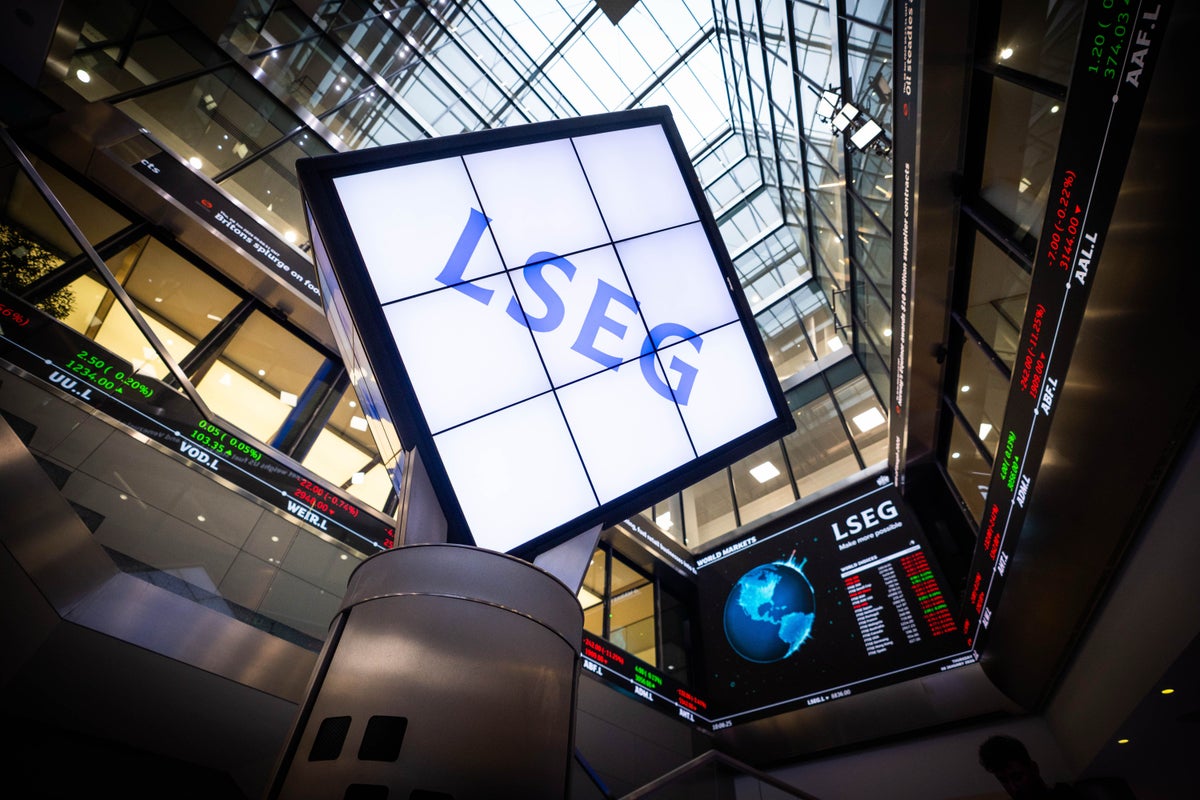
Global stock markets have continued to take a hammering as oil prices rocketed in their biggest weekly gain for six years, with no sign of a swift resolution to the conflict in the Middle East.
London’s FTSE 100 Index slumped 1.6% lower at one stage before closing about 130 points, or 1.2%, lower at 10,284.75 on Friday.
Declines were compounded by heavy falls on Wall Street, with the S&P 500 and Dow Jones indexes down about 1.1% after European markets had closed.
Gloomy jobs data in the US were adding to market woes, and there were similar declines across Europe as the Dax in Germany and France’s Cac 40 were both 1.5% down at one stage, before paring back some of the losses to close 0.9% and 0.7% lower, respectively.
By Friday evening, benchmark Brent crude prices shot up by as much as another 10% to 94 US dollars a barrel, reaching levels not seen for three years, after Kuwait reportedly joined Qatar and said it was beginning to halt energy production.
The sharp gains since the US-Israel war with Iran began on Saturday mean oil prices have risen by more than 25% so far this week – the biggest weekly gains since early 2020 at the height of the Covid-19 pandemic.
Comments from US President Donald Trump that there would be no end to the conflict until an “unconditional surrender” of the Iranian regime has further dashed hopes of a de-escalation.
Kathleen Brooks, research director at XTB, said: “There is not much to stop (oil) from hitting 100 dollars per barrel in the near term.
“Until the oil price stabilises it’s hard to see how stock markets and bond prices can recover.”
She cautioned over further stock market falls next week.
“If the war continues to escalate over the weekend, we think that markets will continue to sell off, especially after the rapid increase in oil prices today,” she said.
UK Government borrowing costs have also risen sharply this week due to inflation fears.
The yields on 10-year government bonds, also known as gilts, have jumped from 4.27% at the start of the week to 4.62% on Friday, with fears that soaring fuel and energy bills will put paid to further interest rate cuts.
“The rapid repricing of monetary policy expectations and the UK’s history of high energy prices means that UK gilts are particularly vulnerable to this energy price spike,” Ms Brooks said.


Spain, France lead World Cup 2026 Power Rankings, 100 days out

This Jammer Wants to Block Always-Listening AI Wearables. It Probably Won’t Work

MGK bluntly corrects paparazzi over daughter Cassie, Megan Fox mix-up

Attock Cement’s acquisition approved | The Express Tribune

India Us Trade Deal: Fresh look at India-US trade deal? May be ‘rebalanced’ if circumstances change, says Piyush Goyal – The Times of India

Policy easing drives Argentina’s garment import surge in 2025

-
Business1 week ago
Attock Cement’s acquisition approved | The Express Tribune
-
Business1 week ago
India Us Trade Deal: Fresh look at India-US trade deal? May be ‘rebalanced’ if circumstances change, says Piyush Goyal – The Times of India
-
 Fashion1 week ago
Policy easing drives Argentina’s garment import surge in 2025
-

 Politics1 week ago
What are Iran’s ballistic missile capabilities?
-

 Politics1 week ago
US arrests ex-Air Force pilot for ‘training’ Chinese military
-

 Sports1 week ago
LPGA legend shares her feelings about US women’s Olympic wins: ‘Gets me really emotional’
-

 Sports1 week ago
Sri Lanka’s Shanaka says constant criticism has affected players’ mental health
-

 Fashion7 days ago
South Korea’s Misto Holdings completes planned leadership transition