

Tech
Grado’s Signature S750 Headphones Sound Modern but Feel Like the ’70s

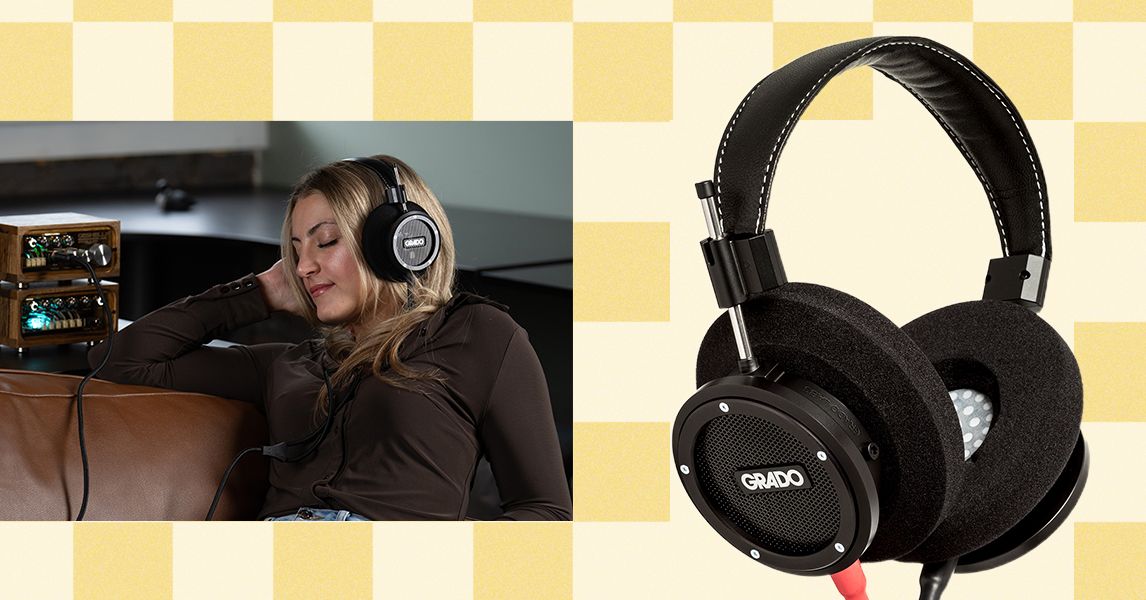
The friction-pole mechanism for headband adjustment is no less agricultural, for all its familiarity where Grado headphone designs are concerned. And while the detachable cable is a fair bit more flexible than some older Grado models, that’s not the same as saying it’s meaningfully flexible. If there’s a more willfully unhelpful length of cable in all of headphone-land, I’ve yet to encounter it.
On the subject of the cable: Grado provides 180-ish centimeters of it with a 6.3-mm termination at the end. When you’re charging this sort of money for headphones, it’s not outlandish to imagine your customer might have a device that accepts a balanced connection. Frankly, why there isn’t a choice of cables in the packaging is, frankly, beyond me. It’s something that the overwhelming majority of Grado’s rivals provide as a matter of course, and though the company’s website suggests there are forthcoming cable options “including a variety of lengths, as well as balanced terminations such as 4-pin XLR and 4.4mm,” these have been “forthcoming” for quite some time now, and will have a cost attached.
Photograph: Simon Lucas
I’m in no position to doubt the effectiveness of the “B” ear cushions where sound quality is concerned. After all, the Signature S750 sound superb, and Grado suggests the cushion design is a contributing factor. What I do feel qualified to say, though, is that the raw-feeling foam of the ear cushions is not especially comfortable, and that it retains and returns the wearer’s body heat with something approaching glee. “Premium” and “luxurious” are not words that apply.
Ultimately, it depends on what your priorities are. There’s certainly no arguing with the way the Signature S750 sound. They’re uncomplicatedly impressive and periodically quite thrilling to listen to, depending on the mix. But unless you’re one of those hair-shirt hi-fi fundamentalists from back in the day, one of those listeners who somehow doesn’t believe outstanding sound quality is valid unless there’s some suffering attached, there may well be too many shortcomings to overlook when it comes to these Grados. “Hand-assembled in Brooklyn, USA” notwithstanding.









Tech
Two Titanic Structures Hidden Deep Within the Earth Have Altered the Magnetic Field for Millions of Years

A team of geologists has found for the first time evidence that two ancient, continent-sized, ultrahot structures hidden beneath the Earth have shaped the planet’s magnetic field for the past 265 million years.
These two masses, known as large low-shear-velocity provinces (LLSVPs), are part of the catalog of the planet’s most enormous and enigmatic objects. Current estimates calculate that each one is comparable in size to the African continent, although they remain buried at a depth of 2,900 kilometers.
Low-lying surface vertical velocity (LLVV) regions form irregular areas of the Earth’s mantle, not defined blocks of rock or metal as one might imagine. Within them, the mantle material is hotter, denser, and chemically different from the surrounding material. They are also notable because a “ring” of cooler material surrounds them, where seismic waves travel faster.
Geologists had suspected these anomalies existed since the late 1970s and were able to confirm them two decades later. After another 10 years of research, they now point to them directly as structures capable of modifying Earth’s magnetic field.
LLSVPs Alter the Behavior of the Nucleus
According to a study published this week in Nature Geoscience and led by researchers at the University of Liverpool, temperature differences between LLSVPs and the surrounding mantle material alter the way liquid iron flows in the core. This movement of iron is responsible for generating Earth’s magnetic field.
Taken together, the cold and ultrahot zones of the mantle accelerate or slow the flow of liquid iron depending on the region, creating an asymmetry. This inequality contributes to the magnetic field taking on the irregular shape we observe today.
The team analyzed the available mantle evidence and ran simulations on supercomputers. They compared how the magnetic field should look if the mantle were uniform versus how it behaves when it includes these heterogeneous regions with structures. They then contrasted both scenarios with real magnetic field data. Only the model that incorporated the LLSVPs reproduced the same irregularities, tilts, and patterns that are currently observed.
The geodynamo simulations also revealed that some parts of the magnetic field have remained relatively stable for hundreds of millions of years, while others have changed remarkably.
“These findings also have important implications for questions surrounding ancient continental configurations—such as the formation and breakup of Pangaea—and may help resolve long-standing uncertainties in ancient climate, paleobiology, and the formation of natural resources,” said Andy Biggin, first author of the study and professor of Geomagnetism at the University of Liverpool, in a press release.
“These areas have assumed that Earth’s magnetic field, when averaged over long periods, behaved as a perfect bar magnet aligned with the planet’s rotational axis. Our findings are that this may not quite be true,” he added.
This story originally appeared in WIRED en Español and has been translated from Spanish.
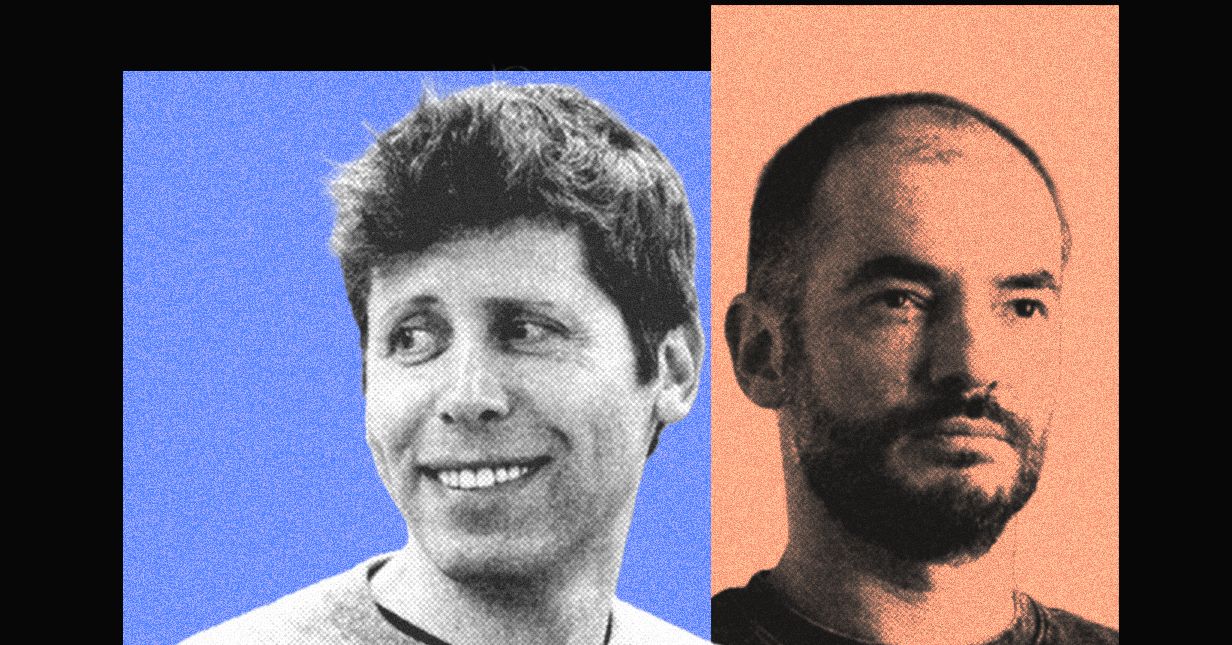
Since the middle of last year, there have been at least three major AI “acqui-hires” in Silicon Valley. Meta invested more than $14 billion in Scale AI and brought on its CEO, Alexandr Wang; Google spent a cool $2.4 billion to license Windsurf’s technology and fold its cofounders and research teams into DeepMind; and Nvidia wagered $20 billion on Groq’s inference technology and hired its CEO and other staffers.
The frontier AI labs, meanwhile, have been playing a high stakes and seemingly never-ending game of talent musical chairs. The latest reshuffle began three weeks ago, when OpenAI announced it was rehiring several researchers who had departed less than two years earlier to join Mira Murati’s startup, Thinking Machines. At the same time, Anthropic, which was itself founded by former OpenAI staffers, has been poaching talent from the ChatGPT maker. OpenAI, in turn, just hired a former Anthropic safety researcher to be its “head of preparedness.”
The hiring churn happening in Silicon Valley represents the “great unbundling” of the tech startup, as Dave Munichiello, an investor at GV, put it. In earlier eras, tech founders and their first employees often stayed onboard until either the lights went out or there was a major liquidity event. But in today’s market, where generative AI startups are growing rapidly, equipped with plenty of capital, and prized especially for the strength of their research talent, “you invest in a startup knowing it could be broken up,” Munichiello told me.
Early founders and researchers at the buzziest AI startups are bouncing around to different companies for a range of reasons. A big incentive for many, of course, is money. Last year Meta was reportedly offering top AI researchers compensation packages in the tens or hundreds of millions of dollars, offering them not just access to cutting-edge computing resources but also … generational wealth.
But it’s not all about getting rich. Broader cultural shifts that rocked the tech industry in recent years have made some workers worried about committing to one company or institution for too long, says Sayash Kapoor, a computer science researcher at Princeton University and a senior fellow at Mozilla. Employers used to safely assume that workers would stay at least until the four-year mark when their stock options were typically scheduled to vest. In the high-minded era of the 2000s and 2010s, plenty of early cofounders and employees also sincerely believed in the stated missions of their companies and wanted to be there to help achieve them.
Now, Kapoor says, “people understand the limitations of the institutions they’re working in, and founders are more pragmatic.” The founders of Windsurf, for example, may have calculated their impact could be larger at a place like Google that has lots of resources, Kapoor says. He adds that a similar shift is happening within academia. Over the past five years, Kapoor says, he’s seen more PhD researchers leave their computer-science doctoral programs to take jobs in industry. There are higher opportunity costs associated with staying in one place at a time when AI innovation is rapidly accelerating, he says.
Investors, wary of becoming collateral damage in the AI talent wars, are taking steps to protect themselves. Max Gazor, the founder of Striker Venture Partners, says his team is vetting founding teams “for chemistry and cohesion more than ever.” Gazor says it’s also increasingly common for deals to include “protective provisions that require board consent for material IP licensing or similar scenarios.”
Gazor notes that some of the biggest acqui-hire deals that have happened recently involved startups founded long before the current generative AI boom. Scale AI, for example, was founded in 2016, a time when the kind of deal Wang negotiated with Meta would have been unfathomable to many. Now, however, these potential outcomes might be considered in early term sheets and “constructively managed,” Gazor explains.
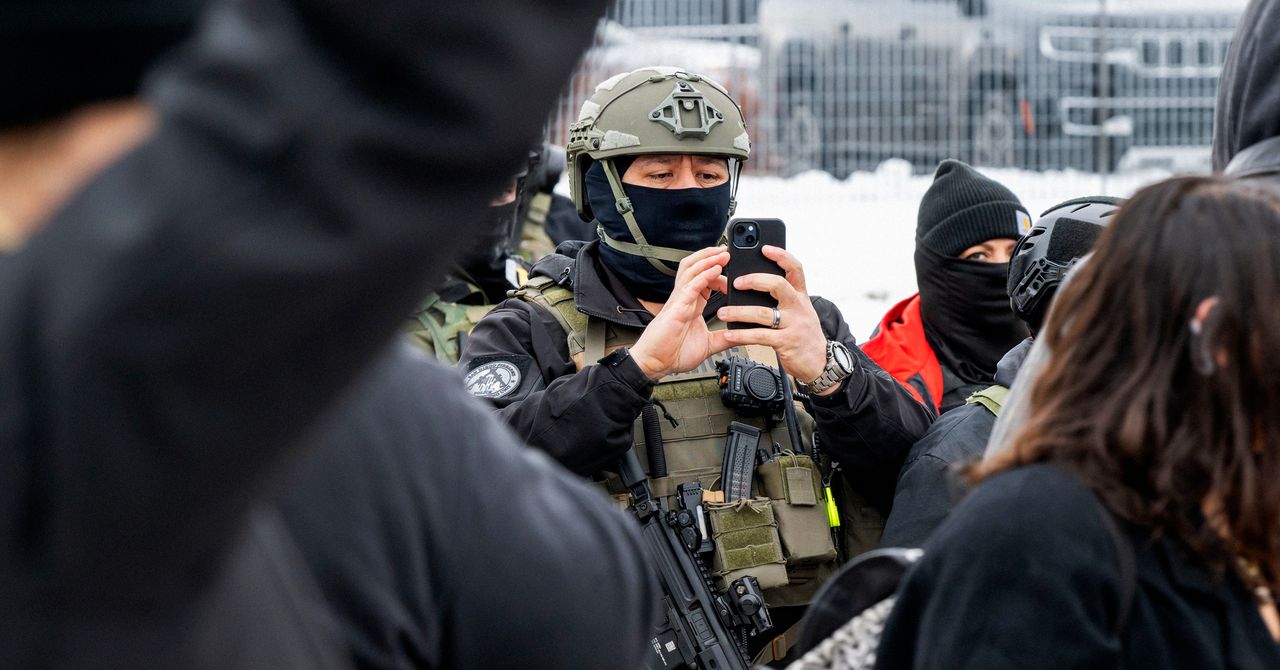
The face-recognition app Mobile Fortify, now used by United States immigration agents in towns and cities across the US, is not designed to reliably identify people in the streets and was deployed without the scrutiny that has historically governed the rollout of technologies that impact people’s privacy, according to records reviewed by WIRED.
The Department of Homeland Security launched Mobile Fortify in the spring of 2025 to “determine or verify” the identities of individuals stopped or detained by DHS officers during federal operations, records show. DHS explicitly linked the rollout to an executive order, signed by President Donald Trump on his first day in office, which called for a “total and efficient” crackdown on undocumented immigrants through the use of expedited removals, expanded detention, and funding pressure on states, among other tactics.
Despite DHS repeatedly framing Mobile Fortify as a tool for identifying people through facial recognition, however, the app does not actually “verify” the identities of people stopped by federal immigration agents—a well-known limitation of the technology and a function of how Mobile Fortify is designed and used.
“Every manufacturer of this technology, every police department with a policy makes very clear that face recognition technology is not capable of providing a positive identification, that it makes mistakes, and that it’s only for generating leads,” says Nathan Wessler, deputy director of the American Civil Liberties Union’s Speech, Privacy, and Technology Project.
Records reviewed by WIRED also show that DHS’s hasty approval of Fortify last May was enabled by dismantling centralized privacy reviews and quietly removing department-wide limits on facial recognition—changes overseen by a former Heritage Foundation lawyer and Project 2025 contributor, who now serves in a senior DHS privacy role.
DHS—which has declined to detail the methods and tools that agents are using, despite repeated calls from oversight officials and nonprofit privacy watchdogs—has used Mobile Fortify to scan the faces not only of “targeted individuals,” but also people later confirmed to be US citizens and others who were observing or protesting enforcement activity.
Reporting has documented federal agents telling citizens they were being recorded with facial recognition and that their faces would be added to a database without consent. Other accounts describe agents treating accent, perceived ethnicity, or skin color as a basis to escalate encounters—then using face scanning as the next step once a stop is underway. Together, the cases illustrate a broader shift in DHS enforcement toward low-level street encounters followed by biometric capture like face scans, with limited transparency around the tool’s operation and use.
Fortify’s technology mobilizes facial capture hundreds of miles from the US border, allowing DHS to generate nonconsensual face prints of people who, “it is conceivable,” DHS’s Privacy Office says, are “US citizens or lawful permanent residents.” As with the circumstances surrounding its deployment to agents with Customs and Border Protection and Immigration and Customs Enforcement, Fortify’s functionality is visible mainly today through court filings and sworn agent testimony.
In a federal lawsuit this month, attorneys for the State of Illinois and the City of Chicago said the app had been used “in the field over 100,000 times” since launch.
In Oregon testimony last year, an agent said two photos of a woman in custody taken with his face-recognition app produced different identities. The woman was handcuffed and looking downward, the agent said, prompting him to physically reposition her to obtain the first image. The movement, he testified, caused her to yelp in pain. The app returned a name and photo of a woman named Maria; a match that the agent rated “a maybe.”
Agents called out the name, “Maria, Maria,” to gauge her reaction. When she failed to respond, they took another photo. The agent testified the second result was “possible,” but added, “I don’t know.” Asked what supported probable cause, the agent cited the woman speaking Spanish, her presence with others who appeared to be noncitizens, and a “possible match” via facial recognition. The agent testified that the app did not indicate how confident the system was in a match. “It’s just an image, your honor. You have to look at the eyes and the nose and the mouth and the lips.”


Gold, Silver ETFs Sink Up To 10% As Precious Metals Rout Deepens; What Should Investors Do Now?

Is India the next big luxury fashion market?

Epstein fallout triggers resignations, probes

-
 Business1 week ago
PSX witnesses 6,000-point on Middle East tensions | The Express Tribune
-

 Tech1 week ago
The Surface Laptop Is $400 Off
-

 Tech1 week ago
Here’s the Company That Sold DHS ICE’s Notorious Face Recognition App
-

 Tech4 days ago
How to Watch the 2026 Winter Olympics
-

 Tech6 days ago
Right-Wing Gun Enthusiasts and Extremists Are Working Overtime to Justify Alex Pretti’s Killing
-
 Business1 week ago
Budget 2026: Defence, critical minerals and infra may get major boost
-

 Entertainment1 week ago
Peyton List talks new season of "School Spirits" and performing in off-Broadway hit musical
-
 Business6 days ago
Labubu to open seven UK shops, after PM’s China visit