

Fashion
HOFF begins new era with star design chief and Alexa Chung campaign


Published
October 9, 2025
Spanish sneaker brand HOFF had big news Thursday with the appointment of a creative chief for the first time along with a major brand relaunch and a campaign starring Alexa Chung.
The eight-year-old company (founded and still run by Fran Marchena) has been seeing strong growth in recent periods and 2025 is proving no different. But it’s now entering a new chapter with a “pivot into a truly design-led fashion-forward positioning”.
And it’s aiming to achieve that status with the appointment of David Tourniaire-Beauciel to its creative helm as head of design.
It said that “few designers have shifted the sneaker landscape as decisively as Tourniaire-Beauciel. From early roles at Chloé and Jean Paul Gaultier to cult-defining work at Maison Martin Margiela, Givenchy, Ferragamo, and Balenciaga (where he created the Triple S and pioneered the sock-sneaker hybrid) – his career has been a series of bold statements grounded in craft and experimentation. He is widely credited with accelerating the maximalist sneaker movement that reshaped global culture”.
In a sneaker market dominated by some massive global names, it’s a big appointment and a bold ambition for a company that has scaled from a small Spanish start-up but whose turnover remains below €100 million for now (although ongoing high double-digits growth should soon change that).

The company currently has over 30 stores and 1,200 wholesale partners, attracted by its formula that blends Spanish craftsmanship with contemporary, design-driven sneakers. It’s opening new stores too with a second UK location (after London’s Regent Street) due in Covent Garden, more stores in key countries and a recent move into the US.
Of its new design chief, it said the “new era builds on the dual fluency: Marchena’s growth-driven, community-anchored business model meets Tourniaire-Beauciel’s couture-coded, sculptural design ethos. The return is a purpose-driven sneaker brand that fuses Spain’s shoemaking heritage with a bold, contemporary fashion lens. More than product, it signals transformation – Hoff’s evolution into a global design powerhouse where shoes are not just functional, but cultural objects”.
View from the top

Ahead of the announcement, FashionNetwork.com spoke to the dynamic duo of Marchena and Tourniaire-Beauciel to find out more about the thinking behind its plans and the leadership team’s new vision. First, Marchena.
FashionNetwork.com: Can you explain the thinking behind the changes happening at Hoff and the new appointment?
Fran Marchena: For the past two years, we’ve been working on a strategic plan through 2028 built around three main pillars: brand elevation, from local to global, and community. Among them, brand elevation is probably the most crucial. I believe HOFF had completed a first stage marked by very fast growth, an intense distribution strategy, and a solid market fit between our product and our audience. Now it’s time to begin a new chapter — one that continues to be design-driven but ready to reach the next level. Fortunately, the brand is now well-positioned, being present in some of the best retailers in the world. The arrival of David marks another step forward in that strategic pillar of brand elevation, helping us move toward this new stage.
FNW: Where is the company at as we speak? How big is it overall.
FM: Right now, the company is generating around €70 million in revenue, and we expect to close our fiscal year in April at around €80 million. Around 90% of our business is currently in Europe. We’ve just started in the US with a local partner to open key strategic accounts, which we expect will bring results soon.
Within Europe, our five main markets are Spain, Germany, Benelux, France, and the UK. Performance across wholesale and online is quite balanced, while Spain still leads in retail, representing around 75% of total retail sales thanks to our store network.
FNW: And where do most of your sales come from?
FM: At the moment, wholesale represents 45% of our business, retail 35%, and online 20%. What’s most relevant here is the evolution of the brand: two years ago, wholesale represented 60%. This shift reinforces our strategic move towards strengthening our direct-to-consumer channels through retail expansion. This year alone, we opened our first flagship store in Madrid — over 600 sq m — followed by openings in London, Amsterdam, and Mexico City. We’re also looking at Paris and Milan for the near future.
The brand is going through a very exciting moment, with several important announcements coming up — among them, of course, the arrival of David Tourniaire-Beauciel, which marks one of the most significant milestones for HOFF so far. We’re now a team of over 300 people, with more than 80 based at our headquarters, and we’re completing a 360º transformation of the company. Over the past months, we’ve built a first-class executive team and are fully focused on turning HOFF into a globally relevant sneaker brand.
FNW: You’re opening a second UK store, how important is that market to you?
FM: It is growing very fast. In the UK specifically, our Regent Street store is performing extremely well, with like-for-like growth above 70% year-on-year, and our online business already accounts for over 20% of total UK sales. We’re also thrilled to launch with Browns this Spring/Summer season — a milestone that will further strengthen our positioning in the UK market. And of course, having Alexa Chung as the face of our campaign for David Tourniaire-Beauciel’s ‘SEVEN’ model will help us take brand awareness to the next level.
The creative’s view

FNW: So David, what appealed to you about HOFF?
David Tourniaire-Beauciel: Before starting to collaborate with HOFF, I knew the brand, but for me, it was perceived a little bit as a ‘follower’ brand — in the trend, but not. So the first collaboration I had with HOFF and Fran I was supposed to bring a little bit of newness in the construction of the collection. I had a great time. I found the energy of the brand super-fresh, very young.
FNW: It must have been a change from some of the luxury and storied brands you’ve worked with?
DTB: For me, it was very interesting not to be obliged to go in the archives, because the brand is super-new, super-young. It’s a new approach. I need to to build from almost zero. I can’t jump in the archives. I find this challenge very interesting and I thank Fran also to give me this opportunity to work with him in order to build the brand, not just around the product, but also in terms of image and direction.

FNW: So is it literally going back to the drawing board?
DTB: There are so many designers because of ego when they arrive — boom, they kill everything done before. I prefer to understand what is the DNA of the brand, what is good, and where they are strong at the moment. And I try to capitalise on this. I don’t want to to to destroy what is good. Then I try to analyse, with Fran [and] with everybody. What are the weaknesses? What are the possibilities? And then I bring my experience, and I start to get deeper into the project. It’s to bring an evolution before a revolution. We need to connect, slowly but surely much more to the trend, to be on top of the trend, and to be more ahead, not followers. [But] what I want is when I when someone is looking at HOFF shoes, they know it’s a HOFF shoe, because I respected the DNA.
FNW: You sound like you want to take a collaborative approach?
DTB: I want to respect the DNA but to add my experience and my knowledge. [The team] will help me, because they bring me freshness, energy, newness and possibility to do everything. But I need also to bring them my my knowledge, my experience and my connection with fashion. The idea is to create a win-win situation.
FNW: Will the extra trend element mean HOFF also becomes more expensive, more exclusive, more ‘fashion’?
DTB: I like the democratic positioning of the brand. I really appreciate that the idea is to bring also design to a lower price position, because for me, it’s important not to be always in the €1,000 sneaker proposal. I also want to work on this more democratic price position. It’s very important.
I want to respect that, and it’s part of my job to connect all these points together. You will see a new interpretation of the shoe. Of course, it will be a little bit different, [but] a smooth evolution. So basically, more trend. There is this flat sneaker trend at the moment so it’s perfect for us. We need to swim in this world.
FNW: What other trends will you be tapping into?
DTB: What I like also is the comeback to ‘small feet’. For a few years — [Balenciaga] Triple S is a perfect example — it was the ‘big foot’ and now we are back with the more refined and elegant sneaker. And I really love that with Hoff. I want to take the technical element from sport and to mix [it] with more refined and elegant material and lines.

FNW: Hoff isn’t known as a ‘sport’ brand, is that something that will change?
DTB: It’s an urban brand — we use the sports element, but we are not a performance brand. We need to bring sport in terms of techniques. The techniques need to help the design. Working with technical material can help [shoes] to be more comfy when you work all day.
FNW: Earlier you mentioned Hoff’s weaknesses and strengths, what would you say they are?
DTB: Maybe to be afraid to propose newness. Sometimes, you need to say, Okay, if you want to be in front of the of the trend, you need to have the courage to say ‘it’s new. I can’t compare it with anyone else, because it’s completely new’.
But the brand is very young. They made a super-big success in a very few years. The brand is fresh, new. Fran is very energetic too. [And] there is also this link with Spain. I love this place. I love the sun, the sky, the energy of this country. [Hoff’s] strength is to be super-serious in the business. They are super-rational, not crazy, like fashionistas!
Copyright © 2025 FashionNetwork.com All rights reserved.





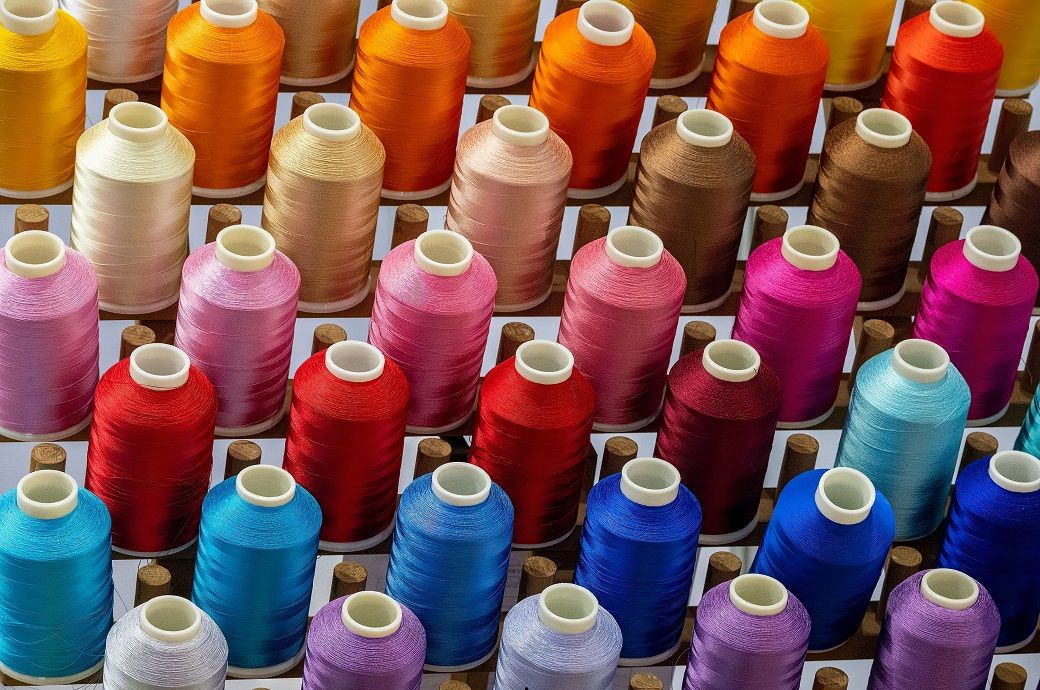
Following earlier increases in purified terephthalic acid (PTA), melt and PSF, Indian producers have now raised PFY prices. POY, FDY and PTY prices have been increased by ****;* per kg across all deniers and lustres with effect from March *, reflecting rapid cost pass-through amid heightened volatility in crude-linked value chains, according to the market sources.
In the previous weekly revision effective February **, ****, PTA was increased by ****;*.** per kg to ****;**.** per kg, while monoethylene glycol (MEG) was retained at ****;**.** per kg. Polyester melt prices were raised by ****;*.** per kg to ****;**.** per kg. Downstream PSF prices were also revised upward by ****;*.** per kg from March *.
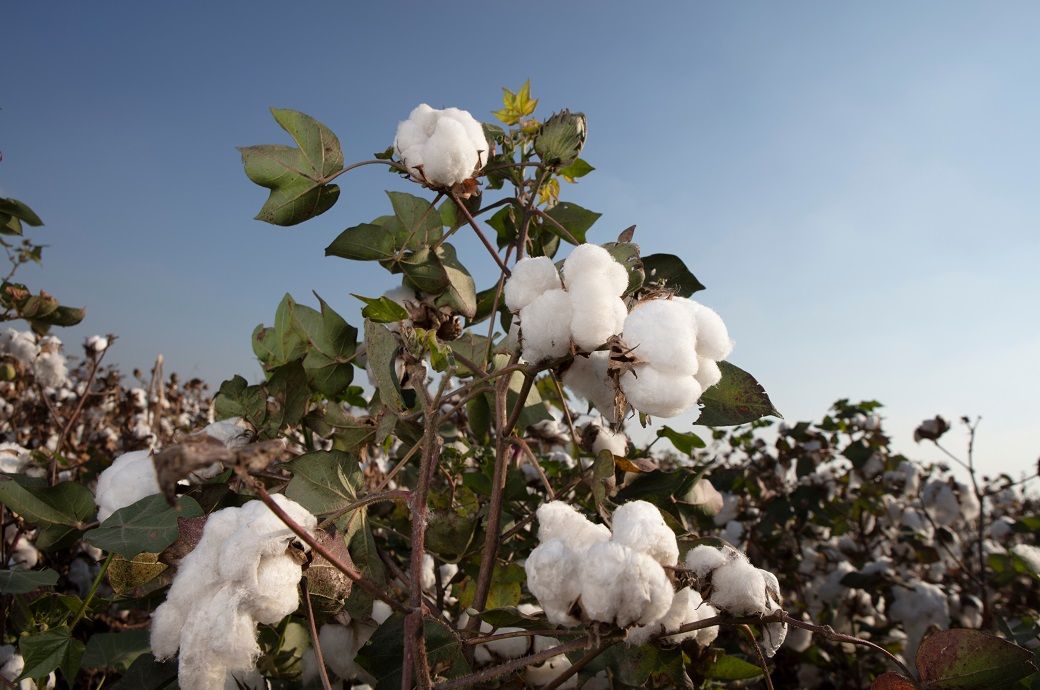
May 2026 cotton settled at 64.59 cents per pound, down 1.02 cents. This marked the lowest settlement price for May contract since February 20, effectively erasing all gains made over that period.
Cotton futures on Intercontinental Exchange (ICE) fell over 1 per cent, with May 2026 settling at 64.59 cents/lb, the lowest since Feb 20, amid Middle East tensions and a stronger US dollar.
Rising inventories and risk aversion pressured prices.
Speculators cut net shorts, while crude oil surged.
ICE cotton traded mixed in early Indian hours today.
Total trading volume for the session came in at 73,225 contracts. ICE-certified deliverable No. 2 cotton inventory rose to 126,178 bales as of February 26, up from 119,457 bales the previous trading day.
The US dollar climbed to its highest level in over a month, making dollar-denominated commodities like cotton more expensive for international buyers and reducing export demand.
Market analysts stated that the Middle East conflict is putting significant pressure on cotton and that a broader risk-aversion tone is affecting the market.
On March 2, Iran continued launching attacks on US military bases across multiple countries in the Middle East, with explosions reported in several locations. An advisor to the Iranian Islamic Revolutionary Guard Corps commander announced that the Strait of Hormuz had been closed, with Iran threatening to strike any vessels attempting to pass through it.
US President Trump indicated that military action against Iran could last four to five weeks, while also expressing readiness for operations to extend considerably longer.
Major Wall Street indices declined on Monday as the conflict raised fears of disrupted global trade routes and renewed inflationary pressures. Analysts warned that investors appear to be rebuilding short positions in cotton, suggesting continued downward price pressure in the near term. The earlier May contract low of 62.86 cents per pound as a key support level that could be tested again.
CFTC data released the prior Friday showed that speculators reduced their net short positions in ICE cotton futures and options by 26,508 contracts in the week ending February 24, bringing net shorts to 48,922 contracts.
International crude oil and natural gas prices surged sharply on Monday following US and Israeli strikes on Iran, with retaliatory actions forcing the closure of several energy facilities in the region.
This morning (Indian Standard Time), ICE cotton for May 2026 was traded at 64.75 cents per pound (up 0.16 cent), cash cotton at 62.59 cents (down 1.02 cent), the March 2026 contract at 62.59 cents ((down 1.02 cent)), the July 2026 contract at 66.75 cents (up 0.14 cent), the October 2026 contract at 68.18 cents (down 0.49 cent) and the December 2026 at 69.04 cents (up 0.12 cent). A few contracts remained at their previous closing levels, with no trading recorded so far today.
Fibre2Fashion News Desk (KUL)
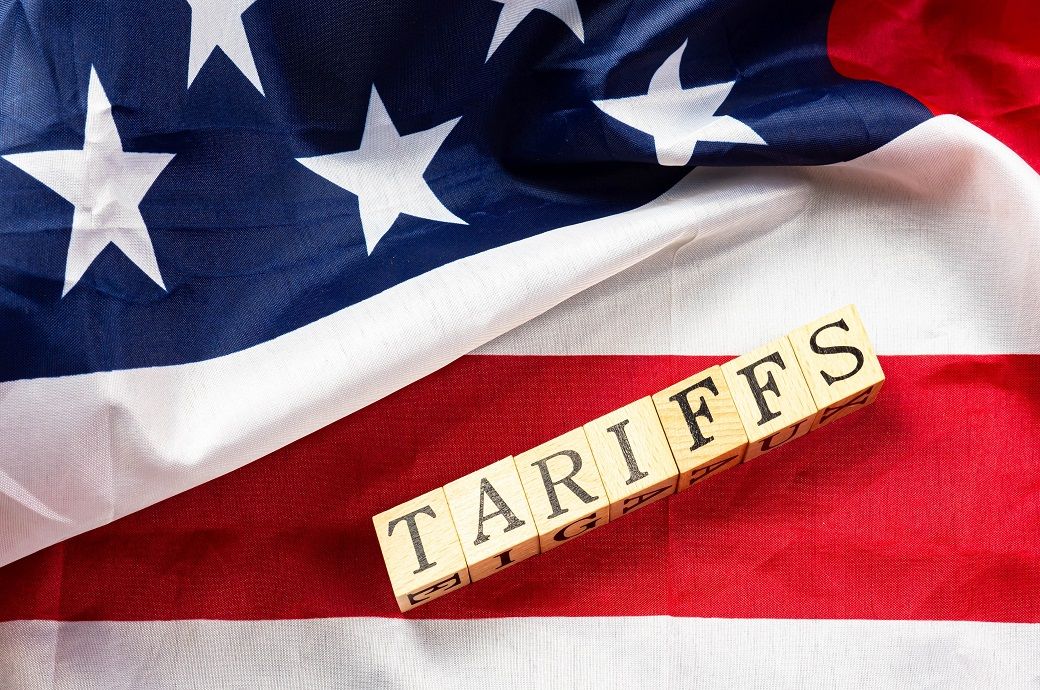
If the US administration imposes a 15-per cent levy, the US ETR would rise to 11.3 per cent.
President Donald Trump reinstated tariffs immediately following the US Supreme Court’s February 20 ruling that invalidated the reciprocal tariffs imposed under the International Emergency Economic Powers Act (IEEPA). The new blanket 10-per cent tariff rate is authorised under Section 122 of the Trade Act of 1974 and expires in 150 days unless extended by Congress.
The 10-per cent blanket reciprocal tariff imposed by the US on most trading partners has reduced the US effective tariff rate (ETR) to 9.4 per cent from 12.7 per cent, Fitch Ratings said.
If a 15-per cent levy is imposed, the ETR would rise to 11.3 per cent.
China has the highest ETR among trading partners, followed by Vietnam, Japan and Brazil.
China’s ETR is around 19 per cent from 29 per cent earlier.
Section 122 permits a maximum rate of 15 per cent but does not allow for tariff adjustments for individual countries.
Prior to the court decision, China was subject to two reciprocal tariffs: a fentanyl tariff of 10 per cent that applied to all imports and a 10-per cent reciprocal tariff on an import base subject to carveouts. The two tariffs have been consolidated into the 10-per cent blanket tariff, reducing China’s ETR to around 19 per cent from 29 per cent, Fitch said in a release.
China still has the highest ETR among major trading partners, followed by Vietnam, Japan and Brazil. Of the United States’ 31 largest trading partners, 26 will see their ETRs decline. Brazil benefits the most, with its ETR decreasing by 18 percentage points (pp) to 11 per cent from 29 per cent.
ETRs for most countries largely remain unchanged following the switch in tariff regimes, and no country will see an increase in its ETR if the Section 122 tariff rate remains at 10 per cent.
Fibre2Fashion News Desk (DS)


Demi Lovato, Keke Palmer question relationship with older men

Iran Conflict: Middle East tensions: Global insurers exit Iranian waters as conflict deepens – The Times of India

Barcelona gets bigger spending cap, opens door on new signings

-

 Politics6 days ago
What are Iran’s ballistic missile capabilities?
-

 Politics6 days ago
US arrests ex-Air Force pilot for ‘training’ Chinese military
-
 Business7 days ago
Households set for lower energy bills amid price cap shake-up
-

 Sports1 week ago
Top 50 USMNT players of 2026, ranked by club form: USMNT Player Performance Index returns
-

 Sports6 days ago
Sri Lanka’s Shanaka says constant criticism has affected players’ mental health
-
 Business1 week ago
Lucid widely misses earnings expectations, forecasts continued EV growth in 2026
-

 Fashion5 days ago
Policy easing drives Argentina’s garment import surge in 2025
-

 Fashion5 days ago
Texwin Spinning showcasing premium cotton yarn range at VIATT 2026