

Business
Home Depot cuts earnings outlook as home improvement demand falls short of expectations


Home Depot on Tuesday cut its full-year profit forecast and missed Wall Street’s earnings expectations for the third straight quarter as it saw weaker home improvement demand, tepid consumer spending and lower than usual storm activity.
The retailer said it now expects full-year sales will climb about 3% and comparable sales, which take out the impact of one-time factors like store openings and calendar differences, to be slightly positive. That compares to its previous expectations for full-year sales to grow by 2.8% and comparable sales to increase by 1%.
The revised outlook includes an estimated $2 billion in incremental revenue from GMS, a building-products distributor that Home Depot acquired earlier this year. The company’s sales were not part of its previous full-year guidance.
Home Depot expects full-year adjusted earnings per share to decline by about 5% from the year-ago period, compared to its prior expectations that they would fall by about 2%
In a CNBC interview, Chief Financial Officer Richard McPhail said the retailer previously expected home improvement activity would increase. It also anticipated higher sales of roofing materials, generators and other supplies that typically sell before and after seasonal storms.
Neither dynamic materialized, he said, putting pressure on the business.
“When we set guidance, we had anticipated that demand would begin to accelerate gradually in the back half of the year as interest rates and mortgage rates eased,” he said. “But what we saw was that ongoing consumer uncertainty and continued pressure in housing are disproportionately impacting home improvement demand.”
Here’s what Home Depot reported for the fiscal third quarter compared with Wall Street’s estimates, according to a survey of analysts by LSEG:
- Earnings per share: $3.74 adjusted vs. $3.84 expected
- Revenue: $41.35 billion vs. $41.11 billion expected
Home Depot’s stock dropped about 2% in premarket trading Tuesday. As of Monday’s close, the company’s shares are down about 8% so far this year. That trails the S&P 500’s 13% gains during the same period.
For Home Depot, housing turnover typically sparks larger and more lucrative projects as customers fix up their homes before or after moving. Those big projects, however, have dropped in frequency as higher interest rates have led to steeper mortgage rates and borrowing costs for loans, which a homeowner may use to pay for a kitchen remodel or major addition.
Since roughly the middle of 2023, McPhail has told CNBC that homeowners have been in a “deferral mindset.” That’s led to a bit of a waiting game for Home Depot, as it awaits either lower mortgage rates or a shift by consumers who get used to higher mortgage rates as the new normal.
In the most recent three-month period, that waiting game continued. McPhail told CNBC that demand was “stable” from the fiscal second quarter to the third quarter when adjusting for the lack of hurricanes.
But, he added, “at this point, it’s hard to identify near-term catalysts that would lead to acceleration.”
Home Depot’s net income for the three-month period that ended Nov. 2 dropped to $3.60 billion, or $3.62 per share, from $3.65 billion, or $3.67 per share, in the year-ago quarter. Revenue decreased from $40.22 billion in the year-ago quarter.
Average ticket, the typical amount spent by customers at the store or on the company’s website, rose 1.8% year over year in the quarter. However, customer transactions fell 1.6% year over year.
A bright spot in the quarter was online sales, which rose by 11% year over year, McPhail said.
Compared to other big-box retailers, Home Depot’s customers tend to be more financially stable. About 90% of its do-it-yourself customers own their homes and the home professionals who shop at the retailer tend to get hired by homeowners.
Even so, McPhail said Home Depot’s weaker outlook came in part because shoppers across income groups are reluctant to take on high-dollar projects. He said a slower housing market and the higher cost of borrowing has contributed to the trend.
He said other factors may also be having a chilling effect, including the prolonged government shutdown, an uptick in corporate layoff announcements and a decline in home values in some markets.
As do-it-yourself customers postpone bigger projects, the company has tried to attract more business from contractors, roofers and other professionals.
The company has made two key purchases of pro-related companies. Last year, it bought Texas-based SRS Distribution for $18.25 billion — the largest acquisition in its history. The company sells supplies to professionals in the landscaping, pool and roofing businesses. Earlier this year, Home Depot announced it was buying GMS.
Like other retailers, Home Depot has felt the pinch of higher costs on some imported items because of tariffs. McPhail said in May that the company was diversifying the countries where it sourced its goods and intended to “generally maintain our current pricing levels across our portfolio.”
However, company leaders warned in August that it may have to hike prices in some categories because of higher tariffs.
McPhail told CNBC that Home Depot has increased some items’ prices, but said “where there were price actions, they were modest.”
He said Home Depot has kept prices the same for some key items or even been able to reduce them. For example, he said, its best-selling seven-and-a-half foot Grand Duchess Christmas tree and many of its strings of lights for trees have dropped in price.






Business
India-US trade deal back in focus: Indian delegation to visit Washington next week for talks – The Times of India

India-US trade deal update: Months after India and the US announced an interim trade agreement that reduces tariffs on India to 18%, an official Indian delegation is set to travel to Washington next week for discussions with US authorities, a government source said on Wednesday.According to a PTI source, the visit is scheduled for next week. The agreement had originally been expected to be signed in March, but developments in the Donald Trump tariff regime following a ruling by the Supreme Court of the United States have changed the circumstances.
In this light, the talks between trade representatives of India and the United States are seen as particularly significant. Officials had earlier indicated that the deal would be concluded only after clarity emerges on the revised tariff structure in the United States.In February, the two countries had announced that they had finalised the framework for the first phase of their bilateral trade pact. As part of this understanding, the US had agreed to bring down tariffs on Indian goods to 18 per cent.However, the tariff environment in the US shifted after the court struck down sweeping reciprocal tariffs introduced by President Donald Trump. Subsequently, the US administration imposed a uniform 10 per cent tariff on imports from all countries for a period of 150 days starting February 24.Amid these changes, a planned meeting between the chief negotiators from both sides was deferred last month. The two countries had been scheduled to meet in February to finalise the legal text of the agreement.At the time the framework was agreed, India enjoyed a relative advantage over competing nations. That edge has since narrowed, as all US trading partners are now subject to the same 10 per cent tariff.The upcoming talks will also be crucial in the context of two ongoing investigations initiated by the Office of the United States Trade Representative under Section 301.On March 12, the USTR launched a probe covering around 60 economies, including India and China. The investigation aims to assess whether policies or practices related to the enforcement of bans on goods produced using forced labour are unreasonable or discriminatory, or whether they restrict US trade.A day earlier, on March 11, the USTR had initiated another Section 301 investigation focusing on the policies and industrial practices of 16 economies, including India and China.

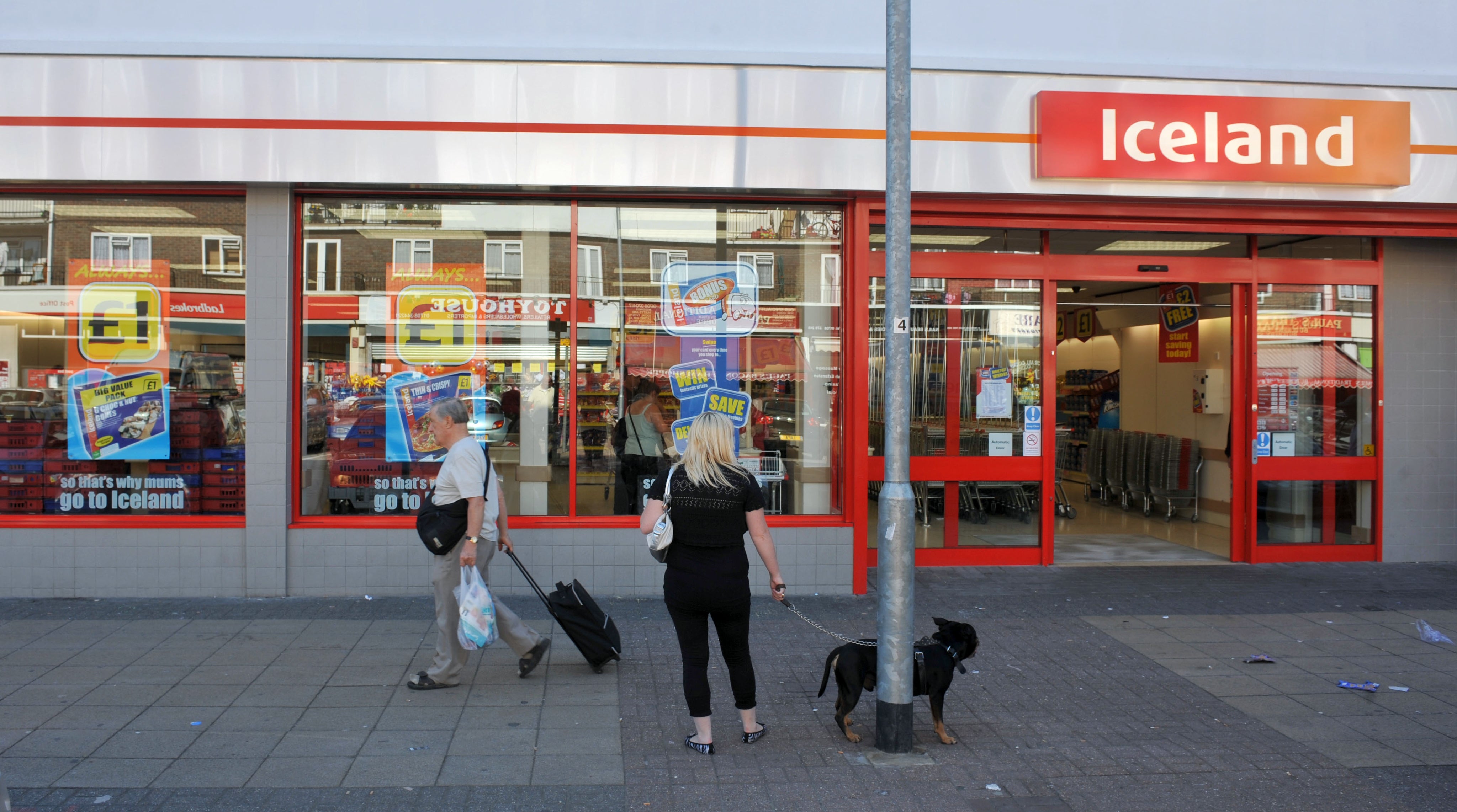
Ads for supermarkets Lidl and Iceland have become the first to be banned under new rules governing “less healthy” food and drink.
The rules, which came into effect at the beginning of the year, are part of Government efforts to tackle childhood obesity by preventing ads for food and drink that is high in fat, salt and sugar (HFSS) appearing on television between 5.30am and 9pm, and online at any time.
The new ban applies to products that fall within 13 categories considered to play the most significant role in childhood obesity, including soft drinks, chocolates and sweets, pizzas and ice creams, but also breakfast cereals and porridges, sweetened bread products, and main meals and sandwiches.
Products that fall into these categories are than also assessed as to whether they are “less healthy” based on a scoring tool that considers their nutrient levels and whether products are high in saturated fat, salt or sugar.
Only products that meet both of the two criteria are included in the restrictions.
The Advertising Standards Authority (ASA) said an Instagram post for Lidl Northern Ireland by influencer Emma Kearney featured the grocer’s cheese pretzel, which was not categorised as HFSS and therefore did not fall within the restrictions, and its Pain Suisse product, which was classified as both HFSS and a sweetened bread product and was therefore banned under the new rules.
Lidl said the ad had been removed and they had liaised with their marketing agency to ensure that all future ads complied with the new rules.
In a separate case, Iceland confirmed that two ads included a tub of Swizzles Sweet Treats, a packet of Chupa Chups Laces, a bag of Chooee Disco Stix and a bag of Haribo Elf Surprises, which were all classified as HFSS.
They also provided nutrient profile information from their supplier which confirmed that Pringles Sour Cream & Onion crisps, also included in the ads, were not an HFSS product.
Iceland’s Luxury Aberdeen Angus Beef Roasting Joint, Vegetable Spring Rolls, Sticky Chicken Skewers and Lurpak Spreadable Butter, which were also included in the ads, did not fall within the new restrictions.
The ASA did not uphold a complaint against an Instagram post by influencer John Fisher – known to many as Big John – which featured him promoting menu items at a new German Doner Kebab outlet because the specific items shown in the ad were not classified as less healthy foods.
The watchdog also cleared a TV ad for On The Beach promoting free airport lounge access which featured a boy approaching a buffet and taking a chocolate ring doughnut.
The ASA said viewers would see the ad as showing an example of what was available in the lounge rather than for the doughnut itself, meaning it did not break the rules.
ASA chief executive Guy Parker said: “As the ad regulator, our role is to remain impartial and independent, making sure our new LHF rules, which reflect the law, are applied fairly and consistently.
“These initial rulings are an important step in building a clearer picture of how the rules are applied in reality.
“We’ll be continuing to play our role in administering and enforcing them, including by using tech-assisted proactive monitoring.”
An Iceland spokesman said: “The products highlighted were part of a bigger range in the specific display ad and were featured due to a technical fault with a data feed from a third-party supplier.
“As the ASA has pointed out, these initial rulings are helping to build a clearer picture of how the new rules are applied, following the initial confusion and debate around the regulations.”

At a meeting of the local authority’s executive on Tuesday, MacBeath said the scheme aimed to move beyond emergency aid by helping families become more financially “resilient”, offering advice on managing money, accessing benefits, reducing debt and finding work.


Australian business confidence plunges in March amid uncertainty: NAB

Transfer rumors, news: Bayern eye move for Newcastle’s Gordon
India-US trade deal back in focus: Indian delegation to visit Washington next week for talks – The Times of India

-

 Fashion1 week ago
India’s exports face reset as EU links trade to carbon metrics: EY
-

 Entertainment1 week ago
Queen Elizabeth II emotional message for Archie, Lilibet sparks speculation
-

 Tech7 days ago
As the Strait of Hormuz Reopens, Global Shipping Will Take Months to Recover
-

 Entertainment1 week ago
Lamar Odom shocking response to Khloé Kardashian account of his overdose
-

 Tech7 days ago
Azure customers up in arms over ‘full’ UK South region | Computer Weekly
-

 Fashion1 week ago
CII submits 20-pt agenda to Indian govt to back firms hit by Iran war
-

 Tech6 days ago
This AI Button Wearable From Ex-Apple Engineers Looks Like an iPod Shuffle
-

 Tech1 week ago
A Single Strike Won’t Shut Off the Gulf’s Desalination System