

Business
Households braced for ‘awful April’ as council tax and water bills soar

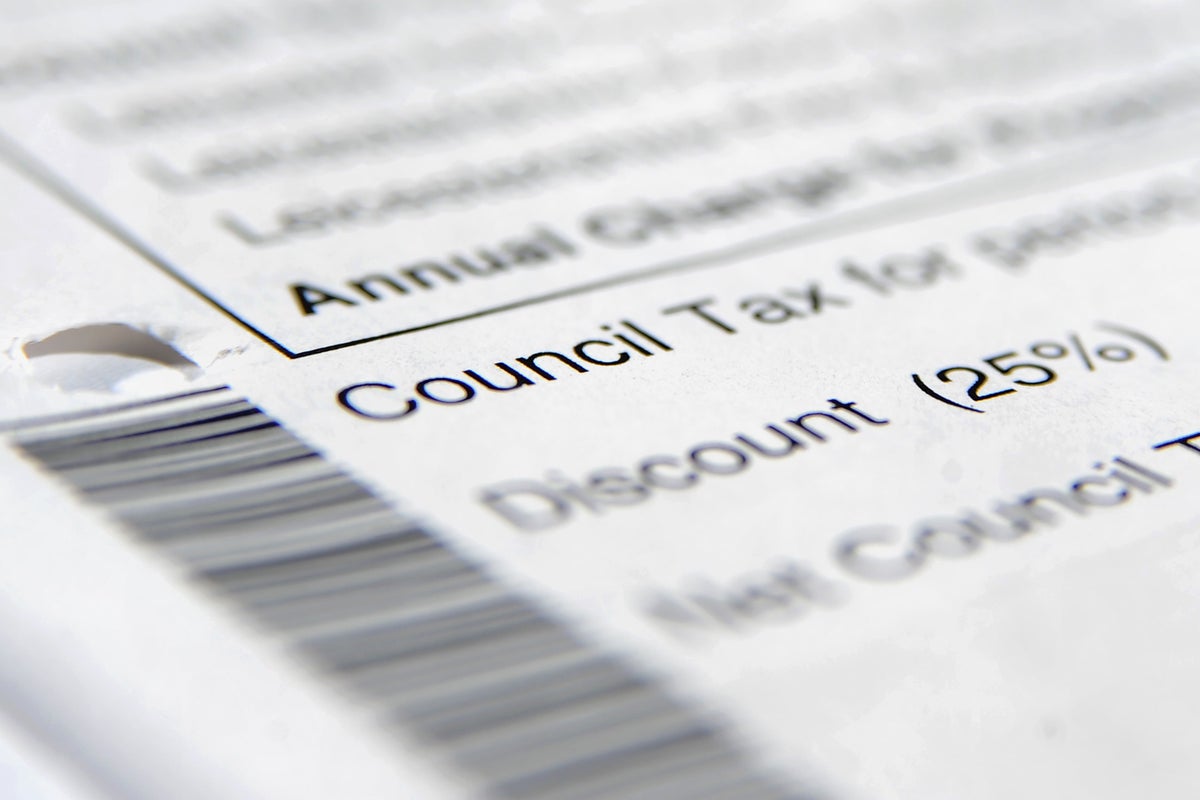
Households are facing near across-the-board increases in their bills as yet another “awful April” takes effect.
While energy bills are falling – for the time being at least – hikes to council tax, water, broadband and mobile phone costs are threatening to stretch many households to breaking point, charities have warned.
Across England, the average Band D council tax in 2026/27 will be £2,392 – an increase of £111 or 4.9% on 2025-26, according to the Ministry of Housing, Communities & Local Government.
The figures include all additional charges, including adult social care, parish precepts and costs levied by police, fire and regional authorities where appropriate.
It is the fourth year in a row that the England-wide increase has averaged around 5%.
Household water bills across England and Wales are to rise by an average of 5.4%, equating to £33 a year for the average household.
There is significant regional variation in bill increases, with Severn Trent customers seeing a 10% increase, Sutton and East Surrey imposing an 11% increase, Bristol Water a 12% rise and Affinity Water (central region) customers warned they have a 13% jump coming.
Around 2.5 million households are eligible for social tariffs, with savings of around 40%.
A host of broadband providers are hiking prices by almost £50 per year, with one in four customers (28%) free to leave and already paying between £7 and £9 a month more than in-contract customers.
Totally Money said “millions” of people are out of contract with their mobile phone provider, and so also free to leave and find a better deal – with some SIM only deals available for less than £5 a month.
In a sliver of good news, the price most households pay for energy will fall by 7% from April 1, driven by promised Government cuts to bills.
Ofgem’s price cap will drop from the current £1,758 to £1,641 – a reduction of £117 or around £10 a month for the average household using both electricity and gas.
However, the reduction is lower than the average £150 cut to bills pledged by the Chancellor in November, when she moved 75% of the cost of the renewables obligation from household bills onto general taxation and scrapped the energy company obligation (Eco) scheme.
And of increasing concern is the amount energy bills could rise by from July as a result of the Middle East conflict, with latest predictions suggesting this could be by well over £300 a year.
In the meantime, consumer groups have urged households to send in meter readings ahead of April 1 to ensure their energy usage is billed at the lowest possible rate, and investigate fixed rate deals.
TotallyMoney spokesman James McCaffrey said: “With around 22 million households on their supplier’s standard variable rate, most are paying the maximum allowed by the regulator.
“Check your current contract, and if you haven’t switched in the past year, it’s likely you’ll be free to leave – and you could save up to £917.”
He added: “One in four broadband customers are out of contract, paying up to £9 per month more than those in contract. To add salt to the wound, BT, EE, Plusnet and Virgin Media are all hiking broadband prices by £4 a month, Sky by £3, and Vodafone by £3.50 – adding nearly £50 more per year to bills.
“If you’re out of contract, then you’re free to leave and find a better deal. If you want to stay with your current provider, pick up your phone and haggle for a new deal.
“They won’t want to lose you to a competitor, and should offer you a better deal.”
Citizens Advice chief executive Dame Clare Moriarty said: “Many households never saw the back of the last cost-of-living crisis, with millions of people still unable to make ends meet.
“With key bills such as council tax and water rising from April and global instability threatening further price shocks, we’re concerned about those who have exhausted every option to keep pace.
“So far this year, we’re helping someone every 30 seconds with crisis support – that’s food bank referrals and charitable grants. And average debt owed is hitting record levels.
“Those struggling most need a lifeline. This should include better targeted energy bill support for people on low incomes, help with soaring rent costs, and support to help people get out of debt.”

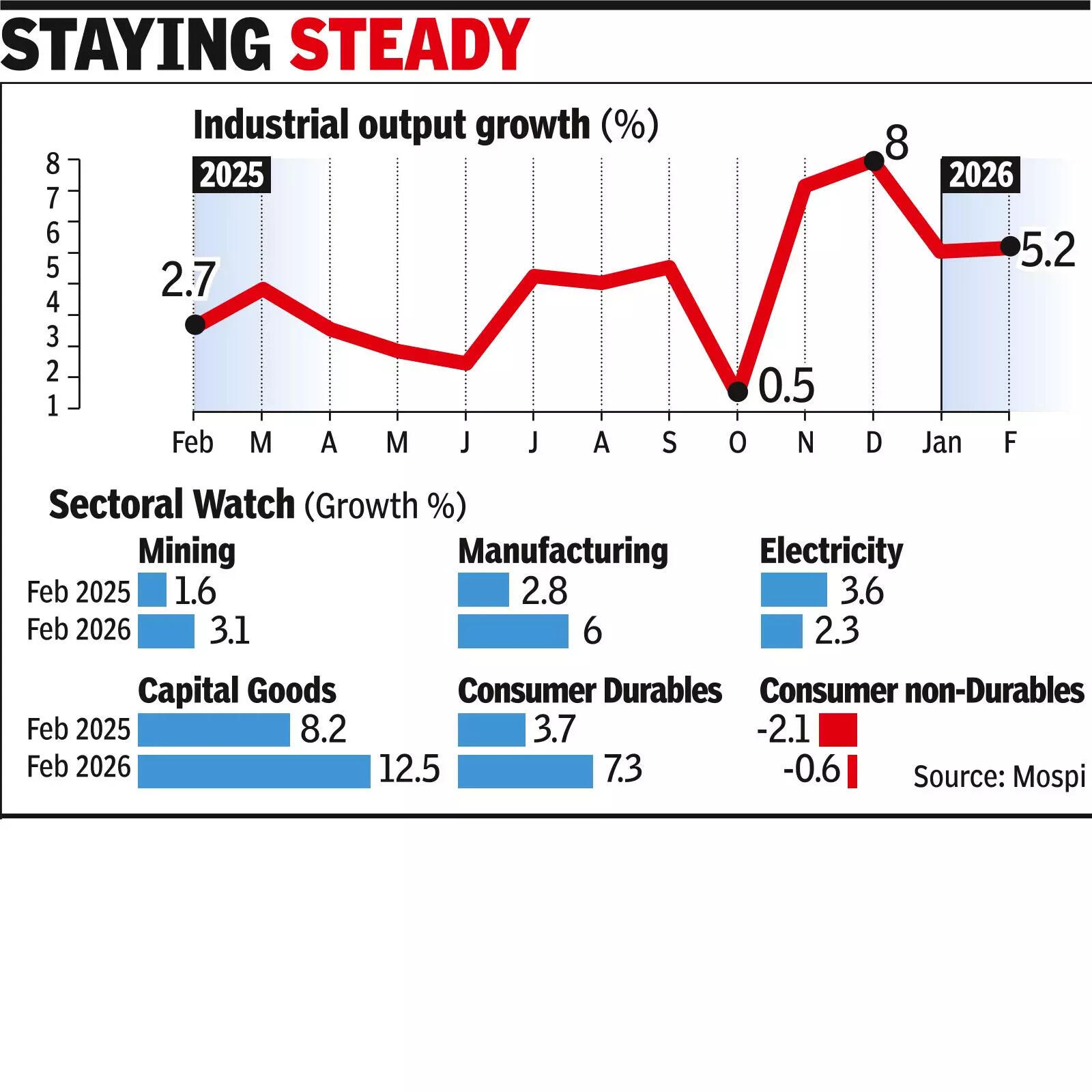
NEW DELHI : The country’s industrial output growth accelerated in Feb, led by a recovery in the manufacturing sector, but the West Asia conflict is expected to weigh heavily on the crucial sector in the months ahead.Data released by the National Statistics Office (NSO) on Monday showed the index of industrial production rose 5.2 per cent in Feb, a tad higher than the upwardly revised 5.1% in Jan. The manufacturing sector rose 6 per cent in Feb, higher than 2.8 per cent in Feb last year and above the 5.3 per cent in Jan.Within the manufacturing sector, 14 out of 23 industry groups grew in Feb compared to the same month a year earlier. The top three positive contributors in Feb were — manufacture of basic metals (13.2 per cent), manufacture of motor vehicles, trailers and semitrailers (14.9 per cent) and manufacture of machinery and equipment (10.2 per cent), according to the statistics office. The electricity and mining sectors remained sluggish, rising 2.3 per cent and 3.1 per cent respectively.Experts expect the West Asia conflict to hurt factory sector expansion. Aditi Nayar, chief economist, ICRA, said the agency expects IIP growth to decelerate to 3 per cent-4 per cent in March, amid the unfolding adverse impact of the West Asia crisis on some manufacturing segments, both through the price and availability channels, and weaker electricity performance in the month.

Oil markets have been sensitive to Donald Trump’s comments on the war. But are traders growing less responsive?
Source link

Russell Findlay has promised to cut taxes permanently for businesses in Scotland if his party wins the Holyrood election.
The Scottish Conservative leader pledged to overhaul business rates and reverse what his party described as “damaging cliff-edge” tax rises set for this April.
Under his plans, properties valued under £20,000 would pay no tax at all.
For higher-valued premises, businesses would pay tax only above the £20,000 threshold, with the same principle applied each time a property enters a higher tax band.
Speaking ahead of a Confederation of British Industry roundtable event in Edinburgh, Mr Findlay said Scottish businesses were over-taxed and that he was committed to growing the country’s economy and creating more jobs.
The Scottish Conservative manifesto has pledged to end “extreme” business rates by capping the maximum rise that can happen each cycle.
It comes as the Scottish Retail Consortium (SRC) warned that medium and larger shops in Scotland will pay £162 million more than their English counterparts over the next three years.
The Tories have also promised to introduce a new Bill in partnership with businesses that would allow them to apply for regulations to be scrapped or amended, with a final decision resting with ministers.
The party also wants to establish Canary Wharf-style enterprise zones where councils or ministers could streamline planning rules, provide tax breaks and acquire land to invest in declining parts of the country.
The Conservative manifesto will also commit to using Apprenticeship Levy funding paid by businesses to set up a new fund that would increase support for apprenticeships and be demand-led.
Mr Findlay said: “As the party of business, the Scottish Conservatives are committed to creating a positive environment for firms to thrive – which would create jobs and increase prosperity.
“Scottish businesses and workers are being relentlessly hammered by SNP and Labour taxes.
“My party would fundamentally overhaul Scotland’s business rates system to make them fair and transparent.
“We’d also work with business to cut costly red tape and ensure that apprenticeships are properly funded after being short-changed by the SNP.
“An SNP majority would be a disaster for Scotland’s economy, but voters can stop this nightmare scenario by backing the Scottish Conservatives on their peach ballot paper.”
The SRC has also been campaigning for reforms to the way businesses in Scotland are taxed.
The industry body welcomed the Scottish Government’s rates relief for smaller retail, hospitality and leisure firms but said it was still lower than the levels seen in England, where they are uncapped.
And it said there was no such relief for the more than 2,000 premises in Scotland with a rateable value of more than £100,000.
These shops will pay the higher rate of 54.8p in the pound from April 1 – far above the 43p rate in England. The SRC said Scots firms were paying £54 million a year more than those down south, or £162 million over the three-year rates period.
David Lonsdale, director of the SRC, said: “As it stands, Scotland risks becoming a materially less competitive place to operate shops and our fear is this could see a shift in investment down south.
“Continued investment in stores is essential to keep them viable and attractive to customers and to minimise the number of shuttered shops.
“It is not in the interests of Scotland’s economy for shop owners to be incentivised to invest in Berwick-upon-Tweed over Bothwell, Buckhaven, or Blairgowrie.
“A far more ambitious approach is required from those political parties seeking to form the next Scottish Government, one that at the very least ensures a competitive level playing field with England and which delivers on the industry’s vision to make Scotland the best place in the UK to grow a retail business.”
Calum Kerr, SNP candidate for Midlothian South, Tweeddale & Lauderdale, said: “John Swinney’s strong leadership is firmly on the side of Scottish business – with Labour’s hike to employer’s national insurance and rising energy bills ruining jobs, our range of rates reliefs is a lifeline for many.
“We’ve lifted 100,000 businesses out of rates, GDP figures show we outperformed the UK, Scotland has the highest levels of foreign direct investment outside of London and two global credit rating agencies have given Scotland a high investment grade – that’s what you get with an SNP government on Scotland’s side.
“Russell Findlay backed Liz Truss every step of the way as she wrecked the economy while the Tories’ disastrous Brexit has hammered Scottish business – that’s the reality of Westminster and, through a fresh start with independence, we can escape that broken system for good.”
Scottish Liberal Democrat finance and economy spokesperson Jamie Greene MSP said: “The Tories like to talk the big talk on business, but when it comes down to it, the Lib Dems actually get stuff done for Scotland’s hard-pressed SMEs.
“When they had the chance to ease the pressures felt by businesses because of crushing rates rises, the Scottish Tories simply shouted from the sidelines.
“They never had a seat at the negotiating table because they choose to play party politics over pragmatism.
“By contrast, I used those budget negotiations as leverage to squeeze the SNP for every penny I could and, as a result, secured £178 million in rates relief for pubs, clubs, restaurants, hotels and self-caterers.
“The Tories got nothing, they didn’t even try.
“If you want more Scottish Liberal Democrat MSPs who will fight tooth and nail to get stuff done, you should back us on your peach, regional ballot paper in May.”


ITCPE Guangzhou 2026 to showcase next-gen embroidery innovations
Industrial output grows 5.2 per cent as manufacturing rebounds – The Times of India

Sources: Kentucky targeting Jackson State’s Mo Williams for staff

-

 Politics7 days ago
Afghanistan announces release of detained US citizen
-

 Sports7 days ago
Broadcast industry CEO says consolidation is ‘essential’ to compete for NFL soaring media rights prices
-

 Entertainment7 days ago
UN warns migratory freshwater fish numbers are spiralling
-

 Tech7 days ago
Can a Home Appliance Fix the Problem of Soft-Plastic Waste?
-
 Business7 days ago
Property Play: Home flippers see smallest profits since the Great Recession, real estate data firm says
-

 Fashion7 days ago
ICE cotton slips on weaker crude, profit booking
-
 Business7 days ago
More women are entering wealth management, but few are in advisory roles, study finds
-
 Business7 days ago
Centre plans to cut broken rice share in PDS, boost ethanol feedstock supply – The Times of India