

Fashion
ICE cotton hits 11-month high on weak dollar, drought fears


The most traded May 2026 contract settled at 73.26 cents per pound, up 1.59 cent or 2.22 per cent. The contract has broken the key 73-cent resistance level, showing strong buying interest. December 2026 contract settled at 76.87 cents per pound, with gains of 1.40 cent. Most active contracts across the board gained between 80 and 174 points.
ICE cotton surged to an 11-month high, breaking the 73-cent level, driven by a weaker US dollar and drought concerns in key growing regions.
Strong trading volumes and speculative interest reinforced bullish sentiment.
Despite bearish USDA data, weather risks and rising crude oil prices supported cotton as a preferred fibre in the near term.
Market movement defied earlier “oversold” expectations, showing strong reversal and aggressive buying activity.
Trading volume remained exceptionally high at 143,973 contracts during the session, ranking as the 5th highest volume ever recorded. Previous session volume was even higher at 156,255 contracts (3rd highest ever), confirming sustained heavy participation and strong speculative trade interest. In 2026 so far, trading volume has exceeded 120,000 contracts in 7 out of 12 sessions, highlighting consistently elevated market activity.
US dollar index declined to near a one-month low, making US cotton cheaper for overseas buyers and boosting export competitiveness.
Crude oil prices rose approximately 3 per cent due to concerns over continued restrictions in the Strait of Hormuz, increasing polyester production costs and indirectly supporting cotton demand as an alternative fibre.
Market analysts noted prices dipped overnight but rebounded due to weaker dollar and drought concerns, highlighting weather as a key driver.
USDA weekly export sales data showed net sales of 319,600 bales for the current marketing year for week ending April 2, down 14 per cent from previous week but up 25 per cent compared to the 4-week average. Export data initially pressured prices but overall market sentiment remained supported by supply concerns.
ICE certified deliverable stock of No. 2 cotton futures remained unchanged at 128,213 bales as of April 8, indicating no immediate tightness from stock movement.
USDA increased global cotton production forecast for 2025-26 by 900,000 bales while raising global consumption by 560,000 bales.
Analysts said that although demand is improving, supply is rising at a faster pace (bearish factor), but adverse US growing conditions are currently providing stronger support to prices. The market is currently reacting more to weather risks than to bearish fundamental data, indicating short-term sentiment dominance
In broader commodity markets, CBOT wheat, corn, and soybean futures rebounded from previous session lows and moved higher during the day. CBOT May soybean futures closed slightly higher, supported by gains in soybean meal and soybean oil along with cross-market strength.
Cotton market showed a strong bullish breakout above 73 cents backed by heavy volume, weak dollar, and weather concerns, with price action clearly overriding bearish USDA supply projections, indicating continued weather-driven strength in the near term.
This morning (Indian Standard Time), ICE cotton for May 2026 traded at 73.16 cents per pound (down 0.10 cent), cash cotton at 71.26 cents (up 1.59 cent), the July 2026 contract at 75.25 cents (down 0.07 cent), the October 2026 contract at 77.10 cents (up 0.15 cent), the December 2026 contract at 76.79 cents (down 0.08 cent) and the March 2027 contract at 77.54 cents (down 0.08 cent). A few contracts remained at their previous closing levels, with no trading recorded so far today.
Fibre2Fashion News Desk (KUL)












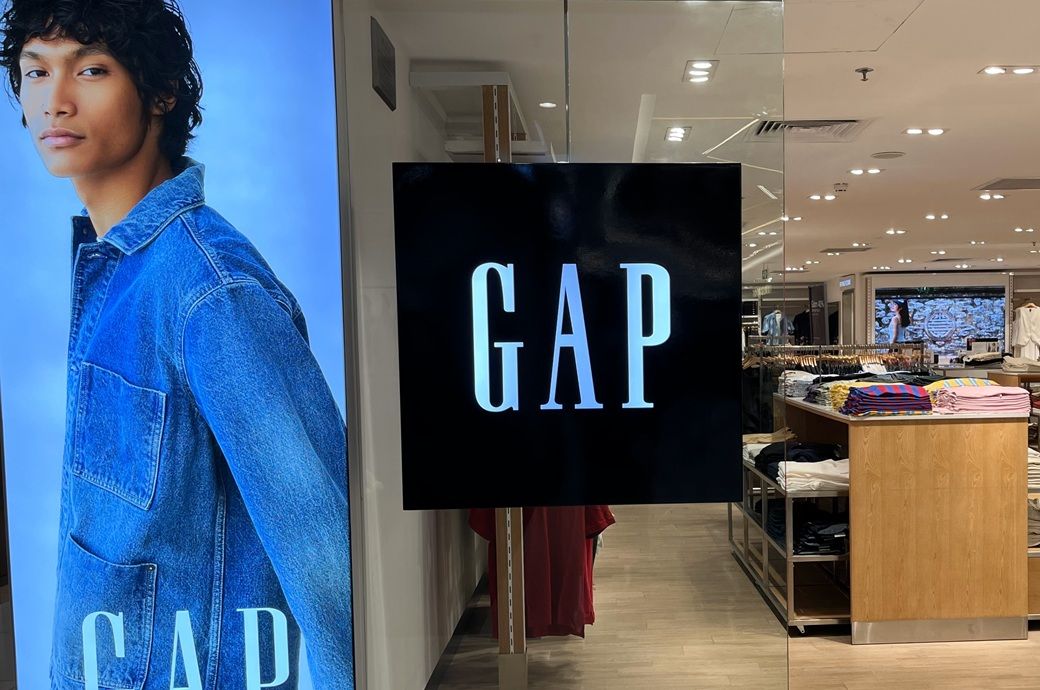
Gap Inc. (NYSE: GAP), the parent company of Old Navy, Gap, Banana Republic and Athleta, introduced two new AI technologies designed to make online shopping simpler and more confident for customers: personalised fit guidance from Bold Metrics’ Agent Sizing Protocol and support for Google’s new Universal Commerce Protocol (UCP), to enable more seamless conversational and agentic commerce experiences.
Gap Inc. is integrating AI across its digital ecosystem, introducing personalised fit recommendations and conversational checkout through Google’s UCP.
By embedding predictive sizing and enabling seamless purchases within AI platforms like Google Search and Gemini, the company aims to reduce friction, boost confidence, and enhance end-to-end online shopping experiences.
As many retailers continue to test isolated AI use cases, Gap Inc. has rebuilt its digital foundation to support AI end-to-end. Built on unified Google Cloud data, AI-ready architecture, and disciplined governance, the company is scaling intelligence across every journey – not as a side initiative, but as part of its operating model.
“We are not pursuing AI for novelty,” said Sven Gerjets, Chief Technology Officer, Gap Inc. “These partnerships are about solving real customer problems; helping shoppers feel confident about fit and making it easier to complete a purchase. They also reflect the holistic AI strategy we have built to scale intelligence across the enterprise in a disciplined way that drives measurable value over time.”
Uncertainty about size remains a major barrier to buying apparel online. Through Bold Metrics, Gap Inc. is embedding predictive fit guidance directly into AI-driven shopping flows.
Instead of relying on static charts, customers receive personalised size recommendations within conversational experiences, at the moment they are ready to buy. By integrating fit intelligence into the purchase path, Gap Inc. is making sizing a core capability of agentic commerce.
As shopping shifts from traditional search engines to AI-powered answer engines, Gap Inc. is ensuring its brands appear accurately and transaction-ready within conversational AI experiences.
Through Universal Commerce Protocol (UCP), Gap Inc. will meet their customers wherever they choose to shop, with products ready for seamless checkout across emerging AI-native environments. Customers will be able to purchase products from Gap while using and searching in AI Mode in Google Search and the Gemini app.
Note: The headline, insights, and image of this press release may have been refined by the Fibre2Fashion staff; the rest of the content remains unchanged.
Fibre2Fashion News Desk (MS)

The agreement was finalised during a meeting between Bangladesh Commerce Minister Khandaker Abdul Muktadir and visiting UK Trade Envoy Baroness Rosie Winterton, an official release said.
The UK and Bangladesh have agreed to reactivate the bilateral trade and investment dialogue to further consolidate economic ties and explore new avenues for strategic cooperation.
This was decided when visiting UK Trade Envoy Baroness Rosie Winterton met Commerce Minister Khandaker A Muktadir.
Muktadir urged the UK to ensure the continued provision of preferential market facilities under the DCTS scheme.
Winterton praised the administration’s focus on investment-friendly policies and its clear initiatives aimed at securing stable, long-term growth. These steps are vital for building investor confidence, she observed.
Muktadir urged the UK government to ensure the continued provision of preferential market facilities for Bangladesh products under the UK’s Developing Countries Trading Scheme.
Fibre2Fashion News Desk (DS)
“Just because retailers don’t import a lot of merchandise from the Middle East doesn’t mean the US supply chain isn’t affected by the turmoil there,” said Jonathan Gold, NRF vice president for Supply Chain and Customs Policy.
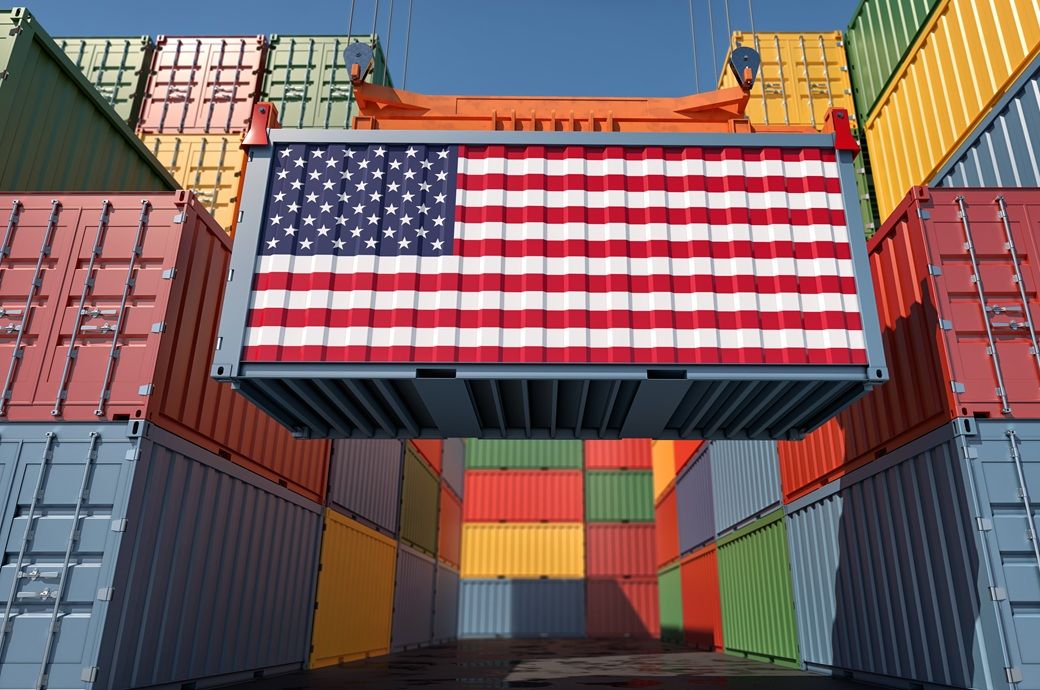
US container imports remain largely unaffected by the Iran conflict, though rising fuel costs are increasing shipping expenses.
Tariffs and policy uncertainty continue to pressure trade, while global supply chain disruptions pose indirect risks.
February volumes fell 7.5 per cent MoM to 1.95 million TEU.
Despite short-term fluctuations, imports in H1 2026 are projected to decline 1.8 per cent YoY.
He added that the supply chain is global and disruptions anywhere along it can have ripple effects whether it’s rerouting of vessels, equipment out of position, higher fuel costs for shippers or rising gas prices that leave less money in consumers’ pockets.
“Retailers are monitoring the situation on a daily basis and working with their transportation partners to minimize any impact,” he said, adding retailers continue to face rising tariffs and continued trade policy uncertainty, which put downward pressure on imports and upward pressure on prices.
Hackett Associates Founder Ben Hackett said volume at US container imports has been slowed by tariffs but is not being significantly affected by the situation in Iran because little US container cargo comes from the region. Nonetheless, the blockage of the Strait of Hormuz is driving up the price of fuel for container ships worldwide at the same time consumers are paying more for gasoline, he said.
In addition, ports in Asia depend on fuel from the Persian Gulf and could see shortages if the conflict is not resolved soon. It is too soon to assess the impact of the two-week ceasefire announced on Tuesday, Hackett further said.
“The United States is less impacted operationally as there is no shortage of fuel at US ports, but the price of fuel here is based on international pricing,” added Hackett. “Higher fuel costs drive up the price of shipping a container for either import or export and ultimately have an inflationary impact on consumers and other end users.”
The report noted that US ports covered by Global Port Tracker handled 1.95 million Twenty-Foot Equivalent Units (TEU)—one 20-foot container or its equivalent—in February, although the Port of New York/New Jersey has not yet reported its data. That was down 7.5 per cent from January and down 4.2 per cent year over year (YoY). February is traditionally the slowest month of the year because of Lunar New Year factory shutdowns in Asia.
Ports have not reported March numbers, but Global Port Tracker projected the month at 1.97 million TEU, down 8.3 per cent YoY. April is forecast at 2.08 million TEU, down 5.6 YoY; May at 2.09 million TEU, up 7.3 per cent; June at 2.1 million TEU, up 6.9 per cent; July at 2.2 million TEU, down 8 per cent, and August at 2.18 million TEU, down 6 per cent.
Those numbers would bring the first half of 2026 to 12.3 million TEU, down 1.8 per cent from 12.53 million TEU during the same period in 2025. The YoY increases in May and June are largely because of the sharp drop-off in imports during those months last year after ‘Liberation Day’ tariffs were announced in April 2025.
Imports totalled 25.4 million TEU in 2025, down 0.3 per cent from 25.5 million TEU in 2024.
Fibre2Fashion News Desk (SG)


Afrika Bambaataa, hip-hop pioneer and founder of Universal Zulu Nation, dies at 68

Sights and sounds from the second round of the Masters

US inflation jumps to highest level in almost two years

-
 Business1 week ago
Jaguar Land Rover sees sales recover after cyber attack
-
Uncategorized1 week ago
[CinePlex360] Please moderate: “Trump signals p
-

 Entertainment7 days ago
Joe Jonas shares candid glimpse into parenthood with Sophie Turner
-

 Tech7 days ago
Our Favorite iPad Is $50 Off
-

 Sports7 days ago
UConn Final Four run could trigger a $50M furniture giveaway for Massachusetts-based Jordan’s Furniture
-
 Business7 days ago
Video: Why Is the Labor Market Stuck?
-

 Entertainment7 days ago
Blake Lively reacts to harassment claims dismissal against Justin Baldoni
-

 Politics7 days ago
Iran can sustain Strait of Hormuz closure for years, will cut US military logistics: Official