

Entertainment
IEA announces record 400 million barrel oil release amid Middle East tensions


The International Energy Agency (IEA) has authorised the historic release of 400 million barrels of oil to address the shortage caused by supply disruptions amid intensifying tensions in the Middle East.
The decision comes after Iran announced the closure of the Strait of Hormuz, a critical passage through which much of the world’s oil supply passes, following U.S.–Israeli joint military strikes on Iran.
The announcement, made on Wednesday, did not set out a timeline for the release of oil stocks. However, it added that the oil would be released in appropriate time depending on the circumstances of the 32 member states.
For context, IEA was formed in 1974 to maintain global energy security in response to the 1973 Arab oil embargo. It primarily consists of advanced economies from Europe, North America and Northeast Asia.
Speaking at the organisation’s headquarters in Paris, the IEA Executive Director Fatih Birol said that considering the significant impacts of the conflict in the Middle East on global oil, gas markets, energy security and global economy for oil, “I can now announce that IEA countries have unanimously decided to launch the largest-ever release of emergency oil stocks in our agency’s history.”
The agency holds over 1.2 billion barrels of oil in public emergency reserves, along with around 600 million barrels of industry stocks held under government obligations
Birol said the release would help mitigate immediate effects of the closure of the Strait of Hormuz.
The normal flow of traffic from the Strait is needed to bring oil and gas flows back to the global market.
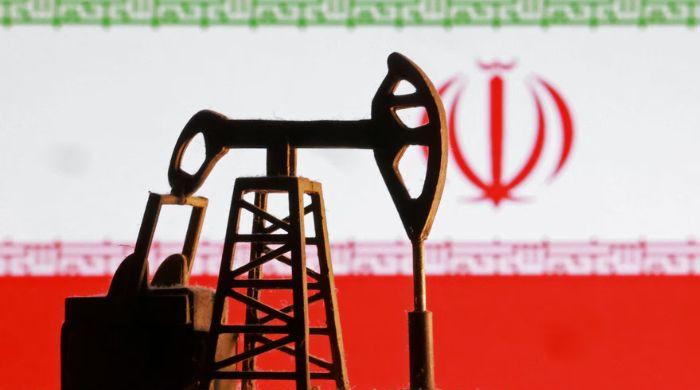
Iranian authorities have issued a stark warning that oil prices could skyrocket to $200 per barrel as the Islamic Republic escalates its military campaign in the strategic Strait of Hormuz, vowing to halt all petroleum shipments to the U.S. and its allies.
The warning follows as at least three vessels were struck by projectiles in the vital chokehold on Wednesday, March 11.
The price rise to $200 per barrel has impacts beyond geopolitical sabre-rattling, directly affecting household budgets globally.
The most immediate impact hits drivers worldwide.
It is expected that the gas prices could surge in the United States past $6 per gallon. Europeans, already paying $6 to $8 per gallon with taxes, can see prices reaching $10 or more.
In developing nations of the region, the fuel costs could become unbearable, forcing families to choose between commuting and eating.
In addition to oil prices, fertilizer prices are also at risk. The World Food Programme warns that every dollar increase in oil prices pushes millions closer to hunger.
Heating homes and electricity demand will follow crude prices upwards.
For Europe, which is currently in the grip of an energy crisis, heating costs in winter may no longer be affordable for millions of people.
For developing countries, where governments often heavily subsidize electricity costs, it may mean severe cuts in other areas of public expenditure or even power outages.
Air conditioning in sweltering summers in the Middle East and South Asia may no longer be affordable.
The conditions can create a ripple effect affecting everything, everywhere, all at once.
Manufacturing grinds slower when energy costs soar. With high energy prices, manufacturing grinds to a halt.
In China, factories are already facing impossible margins.
Retailers from Lagos to London raise prices. Airlines tack on fuel surcharges, making travel prohibitive for ordinary families.
Additionally, ride-hailing services are becoming too expensive, and delivery apps are adding fees.
The International Monetary Fund (IMF) issued a stark warning that sustained $200 oil could shave 1.5 to 2% points off global GDP, which is enough to tip multiple economies into recession.
Although the conflict lies between the U.S., Israel, and Iran, the whole world is paying the price.

The royal family’s untiring couple, Duchess Sophie and Prince Edward, pulled at the heartstrings of sports fans with their charm and support at the MilanoCortina2026 Winter Paralympic Games.
The Duke and Duchess of Edinburgh spread love and harmony as they cheered on ParalympicsGB.
Sophie, 61, looked stunning as she wore a striking red Adidas puffer jacket while engaging in conversation with an athlete.
On Wednesday, the royal family’s official Instagram account shared candid moments of the couple watching British athletes in action across multiple events and met members of the team competing in the Games.
The Duke of Edinburgh celebrated his 62nd birthday at the Paralympic Winter Games in Cortina D’Ampezzo, Italy, where he was joined by his wife Sophie.
The royal couple appeared in good spirits as they mingled with attendees at the Paralympic village.
Edward, who has served as Patron of the British Paralympic Association since 2003, dressed warmly in official event merchandise for the occasion.
The event kicked off on Friday, March 6 and will run through this Sunday, March 15. Buckingham Palace posted the video to social media over the weekend.
The couple’s joint outing comes days after Edward was forced to withdraw due to illness from a ceremony and reception for the 2026 Queen Elizabeth Prizes for Education at St. James’s Palace, where he had been expected to appear alongside King Charles, Queen Camilla, Princess Anne, and the Duke and Duchess of Gloucester.
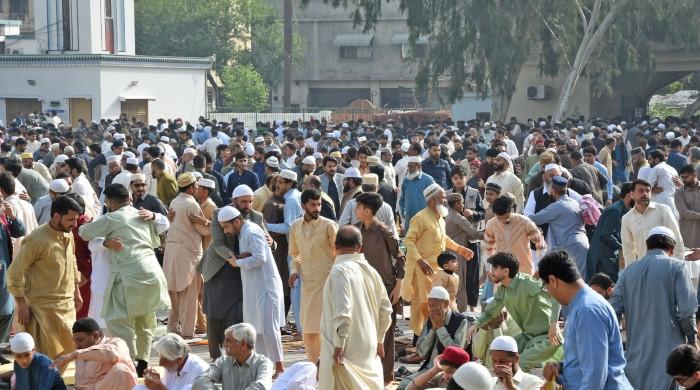
Eid ul Fitr 2026 is likely to fall on March 21 in Pakistan after a 30-day Ramadan, with experts saying the chances of sighting the Shawwal crescent on the evening of March 19 are low.
“The new moon of Shawwal 1447 AH is expected to be born on March 19, 2026, at 06:23 PST,” the Pakistan Space and Upper Atmosphere Research Commission (Suparco) said on Wednesday.
“At the time of sunset on March 19, 2026, the age of the new moon will be approximately 12 hours and 41 minutes, with an estimated 28-minute interval between sunset and moonset along Pakistan’s coastal belt,” it added.
Based on these astronomical parameters, the Suparco said, the chances of sighting the Shawwal crescent on the evening of March 19 were “low”.
The first Shawwal is therefore anticipated to fall on Saturday, March 21, marking the conclusion of the holy month of Ramadan.
However, Suparco said the Central Ruet-e-Hilal Committee of Pakistan will make the final decision regarding the sighting of the crescent and the commencement of Eid ul Fitr across the country.
The Muslim world welcomes Eid ul Fitr with deep religious devotion, after over a billion believers fast for a month to practice patience, self-discipline, and generosity.
Pakistan began the first fast of Ramadan 2026 on February 19, following the announcement of the crescent moon sighting by Central Ruet-e-Hilal Committee Chairman Maulana Abdul Khabeer Azad.
Islamic months last 29 or 30 days, with their start and end determined by the sighting of the crescent moon, so Ramadan does not fall on the same Gregorian date each year.
As the ninth month of the 12-month Islamic calendar — which is about 10 days shorter than the Gregorian year due to its lunar basis — Ramadan shifts annually across the Gregorian calendar.


Rob Gronkowski calls out Logan Paul for potential fight at upcoming flag football game: ‘I’ll whoop his a–‘

Home heating oil theft leaves family home ‘a biohazard’ as prices keep rising

Gas, food, household prices explained

-

 Sports5 days ago
Pakistan set for FIH Pro League debut | The Express Tribune
-
 Politics4 days ago
India let Iran warship dock the day US sank another off Sri Lanka, say officials
-
 Business5 days ago
Restaurant group changes name after bid to buys pubs across the UK
-

 Entertainment4 days ago
Harry Styles kicks off new era with ‘One Night Only’ comeback show
-
 Business5 days ago
Home heating oil: ‘Most of my pension has gone on home heating oil’
-

 Sports5 days ago
Winners and losers of the 2026 NHL trade deadline
-

 Entertainment5 days ago
Kanye ‘Ye’ West trips during trial: ‘Is he asleep?’
-

 Tech1 week ago
Google’s Pixel 10a May Not Be Exciting, but It’s Still an Unbeatable Value