

Fashion
In Paris, Europe’s fashion industry closes ranks against ultra-fast fashion


Published
September 17, 2025
A rare group photo. Some twenty* representatives of Europe’s textile and clothing sectors met in Paris on September 16 to sign a declaration committing their various bodies to a joint fight against ultra-fast fashion, and calling on national and European authorities to take action in the face of competition from Shein and Temu.
The signing took place in Villepinte, where the Première Vision Paris trade show runs from September 16 to 18. Behind the expected conviviality among industry peers, a palpable tension surfaced, as the professionals gathered shared a sense of urgency in the face of ultra-low-cost Chinese competition evading all oversight, including customs checks.
This feeling was reinforced by what already looked like a countermove: Shein France announced an agreement with a first French brand that very morning. The announcement had initially been scheduled for Monday, September 15.
In the text signed by the federations, the European institutions are urged to swiftly abolish the duty exemption for small non-EU parcels worth under 150 euros. The federations would also like to see a levy applied to these parcels to fund inspections, alongside VAT collection. The signatories further call for accelerated investigations and penalties under the Digital Services Act and the Digital Markets Act, and for the establishment of a dialogue with the Chinese authorities, whose sustainability objectives diverge from the practices of local platforms.
The document also calls on Member States to adopt national measures to curb, as in France, the marketing activities of ultra-fast-fashion players, while actively supporting textile and clothing companies investing in sustainability, quality and innovation. Consumers are not overlooked in this effort. The joint declaration invites them to favour sustainable products, and to support companies and brands taking part in the sustainable transition of the textile and clothing industry.
“The fashion industry can’t and won’t wait,” warned Pierre-François Le Louët, president of UFIMH (Union Française des Industries Mode & Habillement), who initiated the event.
“We need this battle to be waged country by country, for our federations to take this issue to legislators and the press, and, at EU level, to press the European Commission to move faster,” he continued, noting that France has already passed a “Fast Fashion Law” that now legally defines a business model deemed harmful.
Mario Jorge Machado, president of the European textile industry confederation Euratex, pointed out that this event will help the industry make its voice heard by the European Commission.
“We have to stop being naive and pretending not to see what’s happening to our market: these players are exploiting the fact that we play by the rules,” insisted the industry representative. \
“They take advantage of our brands as well as our consumers. You cannot destroy creativity and intellectual property in this way: it’s unacceptable. Our industry is known for its innovation, quality and design. So we have a lot to defend.”

“Enough is enough,” said Olivier Ducatillion, president of UIT (Union Française des Industries Textiles).
“We are all suffering from this situation. Every time we propose solutions at the local level, we’re told it won’t work because these players will find workarounds at the European level. So we have to find new ways and set our sights wider. Today’s signature is not an end point; it’s a starting point.”
Representatives from the Italian, Portuguese and Dutch sectors took turns at the microphone, each reaffirming the need for action that is as swift as it is coordinated across the sector.
“There was no representative of the European Commission among us this morning, and that’s not down to the organisers,” noted Ralph Kamphöner, who represents the German Textil+Mode federation in Brussels.
The federations estimate that 4.5 billion parcels were imported into Europe last year via Chinese low-cost platforms, a volume that they say now accounts for 5% of clothing sales in Europe and 20% of online clothing sales.
*UFIMH (Union Française des Industries Mode & Habillement), UIT (Union Française des Industries Textiles), Euratex, ATP (Portugal), Chambre du Commerce de Services, Confindustria Moda (Italy), Finnish Textile & Fashion (Finland), TOK (Bulgaria), Modint (Netherlands), WKO (Austria), SEPEE (Greece), LATIA (Lithuania), DM&T (Denmark), Swiss Textiles (Switzerland), Consejo Intertextil Español (Spain), Fedustria (Belgium), Textil+Mode (Germany), ANIVEC-APIV (Portugal), TEKO (Sweden), Creamoda (Belgium), European Flax and Hemp Alliance, and PIOT (Poland).
This article is an automatic translation.
Click here to read the original article.
Copyright © 2025 FashionNetwork.com All rights reserved.












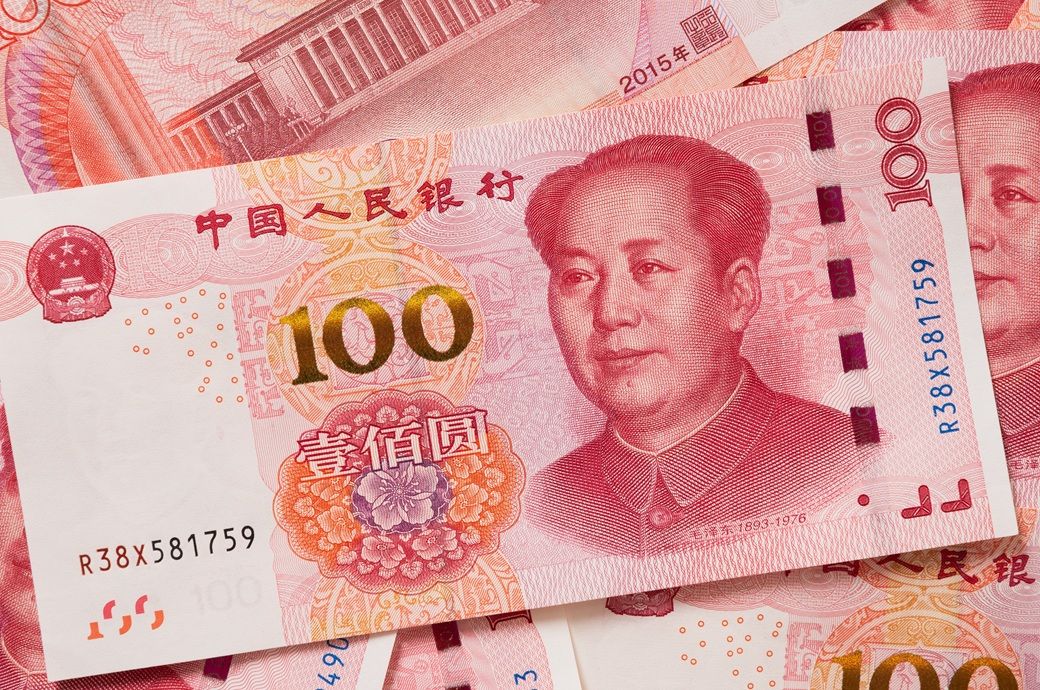
However, actual use of foreign direct investment (FDI) in the Chinese mainland declined during the same period, falling 5.7 percent year on year (YoY) to ¥161.45 billion ($23.43 billion), as mentioned in official ministry figures.
China established 8,631 new foreign-invested firms in the first two months of the year, up 14 per cent YoY, even as actual FDI inflows fell 5.7 per cent to ¥161.45 billion ($23.43 billion).
High-tech industries attracted ¥63.21 billion ($9.19 billion), rising 20.4 per cent and accounting for 39.2 per cent of total inflows, while investment from Canada and Switzerland surged sharply.
Sector-wise, FDI inflows totalled ¥47.52 ($6.90 billion) in manufacturing and ¥111.22 billion ($16.17 billion) in services, indicating continued dominance of the service sector in attracting foreign capital. High-tech industries remained a key growth area, drawing ¥63.21 billion ($9.19 billion) in investment, up 20.4 per cent year on year (YoY) and accounting for 39.2 percent of the national total.
In terms of source countries, investment from Canada and Switzerland recorded strong gains, surging 210 per cent and 41.3 per cent respectively compared with the same period last year, highlighting a shift in the composition of foreign capital entering the Chinese market.
Fibre2Fashion News Desk (JP)

In 2023, 73 per cent of APAC CEOs were optimistic about global economic prospects; however, it was down to 64 per cent in 2025. Globally, only 68 per cent of CEOs remain upbeat about this—the lowest level seen in four years.
APAC CEOs reported much more optimism in 2025 about the growth prospects of their own economies over the next three years, while confidence in global economic prospects dropped, KPMG said.
Optimism about their own country’s prospects was the highest in Australia and lowest in India last year.
About four-fifths of APAC CEOs also saw substantial growth opportunities for their organisations and industries.
Optimism about their own country’s prospects was the highest in Australia (90 per cent) and lowest in India (71 per cent) last year, a KPMG release said citing its latest annual ‘APAC CEO Outlook’.
The declining confidence of APAC CEOs in the global landscape also reflects ongoing uncertainty and volatility that has plagued the global markets, stemming from an evolving geopolitical landscape, persistent supply chain constraints and intensifying scrutiny on sustainability, KPMG noted.
Furthermore, about 80 per cent of APAC CEOs also saw substantial growth opportunities for their organisations and industries, in line with the global average.
In fact, in 2025, executives appear more certain that their companies are on an upward trajectory compared to the previous year: 61 per cent of respondents expect earnings to increase by more than 2.5 per cent this year, compared to just 52 per cent in 2024.
CEOs in Japan (76 per cent) are particularly optimistic about their earnings outlook compared to global and regional peers, reflecting its solid domestic demand and stable GDP performance.
This positivity is driving many in APAC to continue investing in their businesses, with executives noting that there is strong appetite for increased hiring (92 per cent) and mergers and acquisitions (87 per cent) over the next three years, and a substantial number (82 per cent) of APAC CEOs expecting to spend more than 10 per cent of their budgets on artificial intelligence (AI) in the next 12 months.
This clearly indicates that subdued global outlook has not dampened optimism around companies’ prospects in APAC, KPMG remarked.
Confidence in the growth prospects of the global economy is lowest among Chinese companies (58 per cent). This likely reflects, in part, the impacts of an uncertain tariff environment. Strained relations with its main export partner and uncertainty around global demand are likely some areas of concern among firms in China.
Global trade risks topped the minds of APAC CEOs last year, especially as geopolitical tensions and trade realignments dominated headlines. These trends have persisted in 2025, with supply chain resilience remaining a top three driver of organisational decision-making in the short term.
However, the landscape is shifting with the arrival of emerging technologies like generative AI. AI integration is the top issue driving APAC executives’ short-term decision-making, a notable contrast with global peers who are more focused on cybersecurity issues and supply chain resilience, KPMG added.
Fibre2Fashion News Desk (DS)

Strait of Hormuz disruption has unleashed a cascading cost shock across the textile value chain, from crude to fibre.
Indian PSF has surged 26.5 per cent while naphtha prices have spiked nearly 90 per cent, inflating feedstock costs.
The cotton–polyester spread has tightened to multi-year lows, while 31 force majeure declarations across Asian petrochemical plants intensify supply risks.
Source link


How Jaxon Smith-Njigba’s contract extension impacts Seahawks

China sees rise in new FDI firms despite lower inflows
Vets to be legally required to publish price lists and cap prescription fees

Strategic oil stocks to be released ‘immediately’ in Asia and Oceania: IEA

Transfer rumors, news: Real Madrid open to Camavinga exit, as Premier League clubs circle

New Income Tax Act 2025 To Take Effect From April 1: 10 Key Changes That Will Affect Your Money

-
 Entertainment1 week ago
Strategic oil stocks to be released ‘immediately’ in Asia and Oceania: IEA
-
Business1 week ago
New Income Tax Act 2025 To Take Effect From April 1: 10 Key Changes That Will Affect Your Money
-
 Sports1 week ago
Transfer rumors, news: Real Madrid open to Camavinga exit, as Premier League clubs circle
-
 Business7 days ago
Stocks and pound rise as US rate call approaches
-

 Tech6 days ago
Justice Department Says Anthropic Can’t Be Trusted With Warfighting Systems
-

 Sports6 days ago
March Madness 2026 – How to watch in SA, start time, schedule, TV channel for NCAA championship basketball tournament
-

 Sports1 week ago
PCB files complaint over allowing Bangladesh to take review on penultimate ball – SUCH TV
-

 Tech1 week ago
Early Deals From the Amazon Spring Sale That Passed Our BS Test