

Business
Increase in minimum wage rates announced


Minimum wage rates are to increase next year, giving a pay rise for millions of workers, the Government has announced.
Chancellor Rachel Reeves said she had accepted recommendations from the Low Pay Commission so that those on low incomes are “properly rewarded” for their work.
From next April the National Living Wage will rise by 4.1% to £12.71 an hour for eligible workers aged 21 and over, which the Government said will increase gross annual earnings of a full-time worker on the rate by £900, benefiting around 2.4 million low-paid workers.
The National Minimum Wage rate for 18 to 20-year-olds will increase by 8.5% to £10.85 an hour, narrowing the gap with the National Living Wage.
This will mean an annual earnings increase of £1,500 for a full-time worker, which the Government said marks further progress towards its goal of phasing out 18 to 20 wage bands and establishing a single adult rate.
The National Minimum Wage for 16 to 17-year-olds and those on apprenticeships will increase by 6% to £8 an hour.
The Chancellor said: “I know that the cost of living is still the number one issue for working people and that the economy isn’t working well enough for those on the lowest incomes.
“Too many people are still struggling to make ends meet, and that has to change.
“That’s why today I’m announcing that we will raise the National Living Wage and also the National Minimum Wage, so that those on low incomes are properly rewarded for their hard work.
“These changes are going to benefit many young people across our country, getting their first job.”
The increases will benefit a total of 2.7 million young and older workers, said the Government, adding that by seeking expert and independent advice, it was able to ensure that the right balance is struck between the needs of workers, the affordability for businesses and the opportunities for employment.
The Chancellor said that in tomorrow’s Budget, she will deliver the Government’s mandate for change, adding that she was determined to cut the cost of living for everyone.
TUC general secretary Paul Nowak said: “The Government is delivering on its promise to make work pay.
“With living costs stubbornly high, an above-inflation pay rise will make a real difference to the lowest paid.
“Putting more money in people’s pockets is good for workers and good for the economy as it goes straight back into our high streets and local businesses.”
Baroness Philippa Stroud, who chairs the Low Pay Commission said: “The recommendations published today are a product of diligent study of the evidence, careful reflection and significant negotiation.
“Our advice balances the Government’s ambitions with the need to protect the economy and labour market, with rates that are fair and realistic.”
Kate Nicholls, who chairs UKHospitality, said: “Increases to minimum wage rates are yet another cost for hospitality businesses to balance, at a time when they are already being taxed out.
“These additional costs make action at the Budget to reduce hospitality’s tax burden even more important, especially if businesses are expected to sustain this level of annual wage increase.
“Hospitality businesses have reached their limit of absorbing seemingly endless additional costs. They will simply all be passed through to the consumer, ultimately fuelling inflation.”
Katherine Chapman, director of the Living Wage Foundation, said: “The boost to the legal minimum wage is a really positive move that will ease some of the pressure on low paid workers hit by sharp price rises over the last year.
“It will still fall short of the voluntary real living wage which is the only wage rate based solely on the cost of living.”
The real living wage is currently £13.45 an hour in the UK and £14.80 in London.
Ross Holden, the GMB union’s head of Research and Policy, said: “A much-needed pay rise keeping pace with cost of living is fantastic news for millions of low-paid workers across the country.
“As well as lifting people out of poverty pay, it’s more cash in people’s pockets to spend on their high street, boosting local economies and growth.
“GMB has long campaigned for ‘wages not based on ages’ – and the higher increase for young workers looks like another positive step towards equal pay for equal work, no matter your age.”
Jane Gratton, deputy director of public policy at the British Chambers of Commerce, said: “People are at the heart of every thriving business, and employers want to ensure their workforce is happy, engaged and well paid.
“However, every above-inflation wage increase leads to higher business costs, lower investment and fewer opportunities for individuals. Making employment more expensive risks deepening the jobs crisis among young people.
“There’s a limit to how much additional cost employers can bear without something having to give.
“With unemployment rising, the Government needs to use tomorrow’s Budget to ease cost pressures for business. Crucially, there must be no new tax increases for businesses.”
Last Updated:
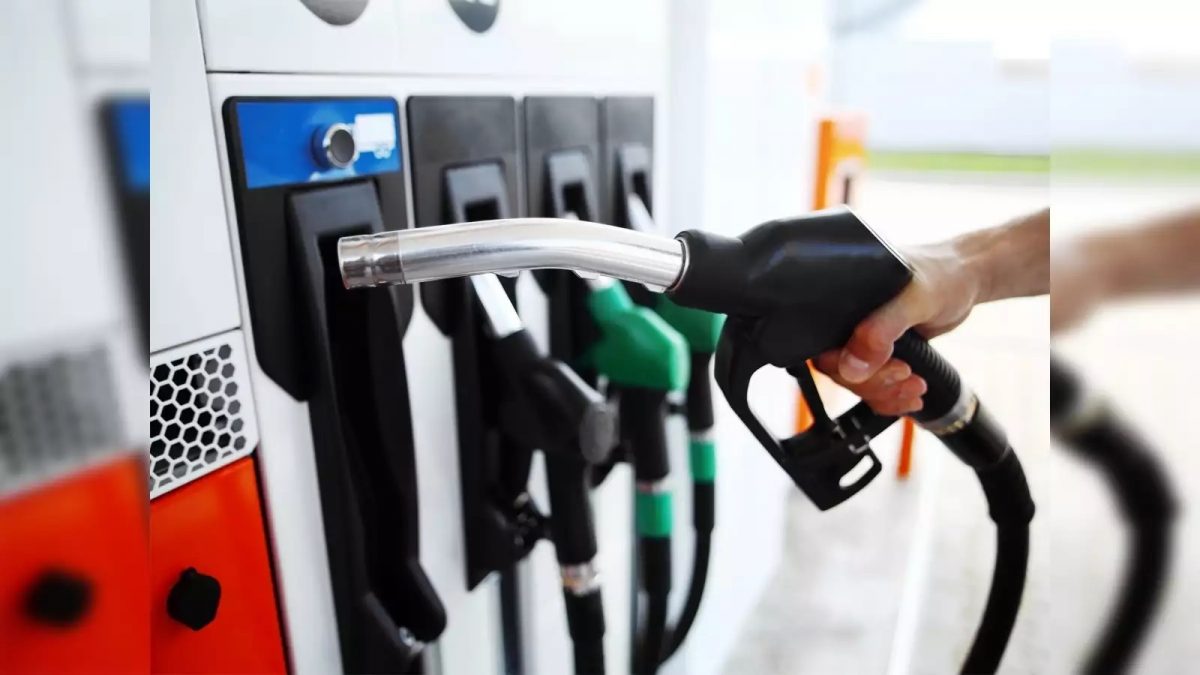
Petrol, Diesel Price On March 4: Check City-Wise Rates Across India Including In Delhi, Mumbai and Chennai.




Petrol, Diesel Prices On March 4.
Petrol and Diesel Prices on March 4, 2026: OMCs update petrol and diesel prices daily at 6 AM, aligning them with fluctuations in global crude oil prices and currency exchange rates. This daily revision promotes transparency and ensures consumers have access to the most up-to-date and accurate fuel prices.
Petrol Diesel Price Today In India
Check city-wise petrol and diesel prices on March 4:
| City | Petrol (₹/L) | Diesel (₹/L) |
|---|---|---|
| New Delhi | 94.72 | 87.62 |
| Mumbai | 104.21 | 92.15 |
| Kolkata | 103.94 | 90.76 |
| Chennai | 100.75 | 92.34 |
| Ahmedabad | 94.49 | 90.17 |
| Bengaluru | 102.92 | 89.02 |
| Hyderabad | 107.46 | 95.70 |
| Jaipur | 104.72 | 90.21 |
| Lucknow | 94.69 | 87.80 |
| Pune | 104.04 | 90.57 |
| Chandigarh | 94.30 | 82.45 |
| Indore | 106.48 | 91.88 |
| Patna | 105.58 | 93.80 |
| Surat | 95.00 | 89.00 |
| Nashik | 95.50 | 89.50 |
Key Factors Behind Petrol and Diesel Rates
Petrol and diesel prices in India have remained unchanged since May 2022, following tax reductions by the central and several state governments.
Oil Marketing Companies (OMCs) update fuel prices daily at 6 am, adjusting for fluctuations in global crude oil markets. While these rates are technically market-linked, they are also influenced by regulatory measures such as excise duties, base pricing frameworks, and informal price caps.
Key Factors Influencing Fuel Prices in India
-
Crude Oil Prices: Global crude oil prices are a primary driver of fuel prices, as crude is the main input in petrol and diesel production.
-
Exchange Rate: Since India relies heavily on crude oil imports, the value of the Indian rupee against the US dollar significantly affects fuel costs. A weaker rupee typically translates to higher prices.
-
Taxes: Central and state-level taxes constitute a major portion of retail fuel prices. Tax rates vary across states, leading to regional price differences.
-
Refining Costs: The cost of processing crude oil into usable fuel impacts retail prices. These costs can fluctuate depending on crude quality and refinery efficiency.
-
Demand-Supply Dynamics: Market demand also influences fuel pricing. Higher demand can push prices up as supply adjusts to consumption trends.
How to Check Petrol and Diesel Prices via SMS
You can easily check the latest petrol and diesel prices in your city through SMS. For Indian Oil customers, text the city code followed by “RSP” to 9224992249. BPCL customers can send “RSP” to 9223112222, and HPCL customers can text “HP Price” to 9222201122 to receive the current fuel prices.
 Click here to add News18 as your preferred news source on Google.
Follow News18 on Google. Join the fun, play games on News18. Stay updated with all the latest business news, including market trends, stock updates, tax, IPO, banking finance, real estate, savings and investments. To Get in-depth analysis, expert opinions, and real-time updates. Also Download the News18 App to stay updated.
March 04, 2026, 07:33 IST
Read More

Gold slumped more than 5%, ending a four-day rally on Tuesday. The metal was weighed down by a stronger dollar and fading prospects of an interest rate cut as inflation concerns intensified against the backdrop of a potentially prolonged conflict in West Asia. Spot gold was down 5.6% at $5,029.59 an ounce whereas prices had hit an over four-week high in the previous session. US gold futures lost 5.1% to $5,041.50.The US dollar, a competing safe-haven asset, rose to an over one-month peak, making dollar-priced bullion less affordable for holders of other currencies. US Treasury yields rose for a second consecutive session.Indian bullion traders and associations are speculating that gold could attain Rs 2 lakh per 10 gm and silver may well scale Rs 3.5 lakh per kg if the conflict does not abate swiftly.Spot silver fell 11.2% to $79.42 an ounce after climbing to a more than four-week high on Monday. As the Iran conflict entered its fourth day, crude oil benchmarks jumped over 8% in response.
Business
Oil Prices: US, Israel attack Iran: With oil prices up, forex volatility set to continue – The Times of India

MUMBAI: The rupee is likely to come under renewed pressure when forex markets open on Wednesday as the conflict in West Asia has worsened the trade and energy situation beyond expectations of analysts.On Tuesday, the Indonesian rupiah, South Korean won and Thai baht each fell by more than 1%, leading losses in Asia, while broader emerging-market currency indices dropped about 0.5% in their worst session since Nov 2024. The selloff followed a sharp escalation in the conflict, with Iran moving to effectively choke tanker traffic through the Strait of Hormuz, sending crude prices up roughly 9% in London trading. The spike in oil heightened concerns over inflation, wider current account deficits and delayed rate cuts in oil-importing economies. Investors rushed into the US dollar and gold, pushing the dollar to multi-month highs and triggering capital outflows from riskier assets.According to KN Dey, forex consultant, the rupee is most likely to breach 92 level this week. “Oil prices have risen sharply and supply chains are getting disrupted. Most Asian currencies have already fallen, with the Korean won and the Malaysian ringgit down over 1%. The rupee will open under pressure and a gap-down start is likely. Stop-loss levels could trigger early, adding to volatility,” he said. “Going ahead would be very tough, RBI’s intervention would only act as a speedy breaker.“What has worsened the conflict situation is that it has created a supply-chain crisis. “Beyond the immediate risk to oil and gas supplies from the Gulf, the broader concern is how the conflict may influence trade behavior across Asia,” said Choon Hong Chua, senior director, Moody’s. “This raises the risk of selective export restrictions, informal boycotts, and tighter customs scrutiny as govts seek to limit exposure to secondary sanctions or political repercussions,” he added.


‘Days of Our Lives’ star was 75
Petrol, Diesel Fresh Prices Announced: Check Rates In Your City On March 4

Eileen Gu reflects on decision to leave Team USA for China: ‘A lot of people just don’t understand’

-

 Politics6 days ago
US arrests ex-Air Force pilot for ‘training’ Chinese military
-

 Politics6 days ago
What are Iran’s ballistic missile capabilities?
-
 Business1 week ago
Households set for lower energy bills amid price cap shake-up
-

 Sports1 week ago
Top 50 USMNT players of 2026, ranked by club form: USMNT Player Performance Index returns
-
 Business5 days ago
Attock Cement’s acquisition approved | The Express Tribune
-

 Sports6 days ago
Sri Lanka’s Shanaka says constant criticism has affected players’ mental health
-
 Business1 week ago
Lucid widely misses earnings expectations, forecasts continued EV growth in 2026
-

 Fashion5 days ago
Policy easing drives Argentina’s garment import surge in 2025