

Politics
India ‘reopens’ embassy in Afghan capital Kabul

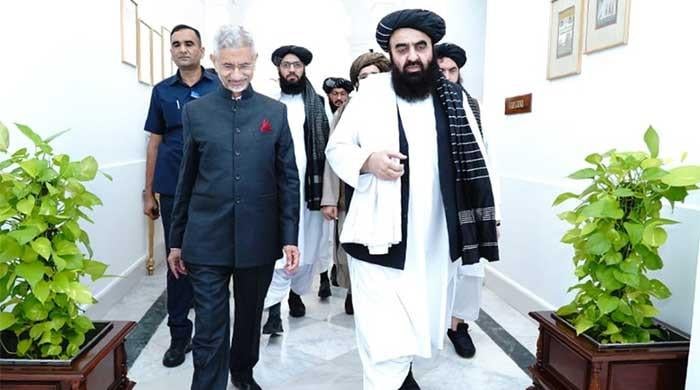
- Move follows Taliban FM Muttaqi’s recent visit to New Delhi.
- Jaishankar earlier announced to restore full diplomatic status.
- New Delhi aims to expand bilateral engagement, cooperation.
India has “reopened” its embassy in the Afghan capital Kabul after four years, as diplomatic relations between both countries saw a significant expansion following Afghan Taliban Foreign Minister Amir Khan Muttaqi’s recent visit to New Delhi.
This development came after Indian Foreign Minister Subrahmanyam Jaishankar announced earlier this month that New Delhi would reopen its embassy in Kabul.
India had closed its embassy in Kabul after the Taliban seized power following the withdrawal of US-led Nato forces in 2021, but opened a small mission a year later to facilitate trade, medical support, and humanitarian aid.
In a statement, the Indian Ministry of External Affairs said: “In keeping with the decision announced during the recent visit of the Afghan Foreign Minister to India, the government is restoring the status of the Technical Mission of India in Kabul to that of Embassy of India in Afghanistan with immediate effect.”
“This decision underscores India’s resolve to deepen its bilateral engagement with the Afghan side in all spheres of mutual interest.”
“The Embassy of India in Kabul will further augment India’s contribution to Afghanistan’s comprehensive development, humanitarian assistance, and capacity-building initiatives, in keeping with the priorities and aspirations of Afghan society,” it concluded.
About a dozen countries, including Pakistan, China, Russia, Iran, and Turkiye, have embassies operating in Kabul, although Russia is the only country to have formally recognised the Taliban regime.
Muttaqi had paid a six-day visit to India to boost ties with New Delhi earlier this month.
Analysts said the trip highlights the Taliban regime’s efforts to expand engagement with regional powers in a quest for economic relations and eventual diplomatic recognition.
India and Afghanistan have historically had friendly ties, but New Delhi does not recognise the Taliban regime.
According to the Western diplomats, the Taliban administration’s path to recognition is being stalled by its curbs on women.
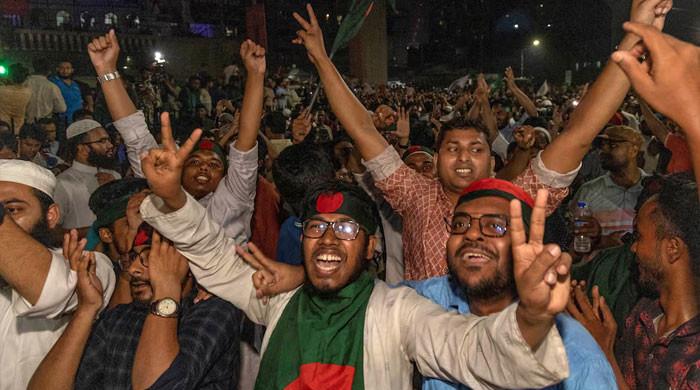

DHAKA: Bangladesh’s Election Commission will announce on Thursday the date of parliamentary elections scheduled for February, a commission official said, after a student-led uprising toppled Prime Minister Sheikh Hasina in 2024.
Bangladesh has been governed by an interim administration led by Nobel laureate Muhammad Yunus since August last year, when long-serving Hasina fled to India in the face of deadly street protests against her government.
Chief Election Commissioner AMM Nasir Uddin will announce the election schedule in a national broadcast at 6pm (1200 GMT), senior Election Commission Secretary Akhtar Ahmed told reporters.
A national referendum on implementing the so-called ‘July Charter’, a state reform plan drafted in the aftermath of the unrest, is also expected to be held on the same day.
The charter proposes wide-ranging changes to state institutions, including curbing executive powers, strengthening the independence of the judiciary and election authorities, and preventing the misuse of law-enforcement agencies.
Former prime minister Khaleda Zia’s Bangladesh Nationalist Party is widely seen as the frontrunner in the upcoming polls, competing alongside the Jamaat-e-Islami party, which has returned to electoral politics after the interim government eased restrictions.
Jamaat, Bangladesh’s biggest Islamic party, could not contest elections after a 2013 court ruling that its registration as a political party conflicted with the country’s secular constitution. Bangladesh is a Muslim-majority country of 173 million people.
Hasina’s Awami League, which has been barred from contesting the election, has warned of unrest if the ban is not lifted.


The United States has seized a sanctioned oil tanker off the coast of Venezuela, President Donald Trump announced on Wednesday, escalating tensions between Washington and Caracas and pushing oil prices higher.
“We’ve just seized a tanker on the coast of Venezuela, large tanker, very large, largest one ever, actually, and other things are happening,” Trump said, reiterating pressure on Venezuelan President Nicolas Maduro to step down. When asked about the fate of the oil, Trump replied: “We keep it, I guess.”
In response, the Venezuelan government condemned the move as “blatant theft” and an “act of international piracy,” vowing to defend its sovereignty, natural resources, and national dignity, and to raise the matter with international bodies.
This marks the first known action against an oil tanker since Trump ordered a military buildup in the region.
The US has previously targeted suspected drug vessels, raising legal and diplomatic concerns.
US Attorney-General Pam Bondi confirmed on X that the FBI, Homeland Security, Coast Guard, and military executed a seizure warrant on the crude oil tanker, used to transport sanctioned oil from Venezuela and Iran.
A brief video posted by Bondi showed helicopters approaching the vessel and armed personnel rappelling onto it.
While US officials did not publicly name the vessel, British maritime risk firm Vanguard identified it as the Skipper. The tanker had departed Venezuela’s main oil port of Jose between December 4–5 after loading roughly 1.1 million barrels of Merey heavy crude, according to satellite and PDVSA data.
The seizure affected oil markets, with Brent crude rising 27 cents to $62.21 per barrel, and US West Texas Intermediate gaining 21 cents to $58.46 per barrel.
Maduro addressed a military commemoration on Wednesday but did not directly comment on the tanker’s seizure.
Impact on oil?
Venezuela exported more than 900,000 barrels per day (bpd) of oil last month, the third-highest monthly average so far this year, as PDVSA imported more naphtha to dilute its extra-heavy oil output.
Even as Washington increased pressure on Maduro, the U.S. had not previously moved to interfere with oil flows.
Venezuela has had to deeply discount its crude to its main buyer China, due to growing competition with sanctioned oil from Russia and Iran.
“This is just yet another geopolitical/sanctions headwind hammering spot supply availability,” Rory Johnston, an analyst with Commodity Context, said.
“Seizing this tanker further inflames those prompt supply concerns but also doesn’t immediately change the situation fundamentally because these barrels were already going to be floating around for a while,” Johnston said.
Chevron, which partners with PDVSA, said its operations in the country were normal and continuing without disruption.
The US oil major, responsible for all Venezuelan crude exports to the United States, last month increased crude exports to the US to 150,000 bpd from 128,000 bpd in October.
Increasing pressure on Maduro
Maduro has alleged that the US military build-up is aimed at overthrowing him and gaining control of the OPEC nation’s vast oil reserves.
Since early September, the Trump administration has carried out more than 20 strikes against suspected drug vessels in the Caribbean and Pacific, killing more than 80 people.
Experts say the strikes may be illegal.
There has been little or no proof made public that the boats are carrying drugs or that it was necessary to blow them out of the water rather than stop them, seize their cargo and question those on board.
Concerns about the attacks on the boats increased this month after reports that the commander overseeing one of the operations ordered a second strike that killed two survivors.
A Reuters/Ipsos poll published on Wednesday found that a broad swath of Americans oppose the US military’s campaign of deadly strikes on the boats, including about one-fifth of Trump’s Republicans.
In a sweeping strategy document published last week, Trump said his administration’s foreign policy focus would be on reasserting its dominance in the Western Hemisphere.
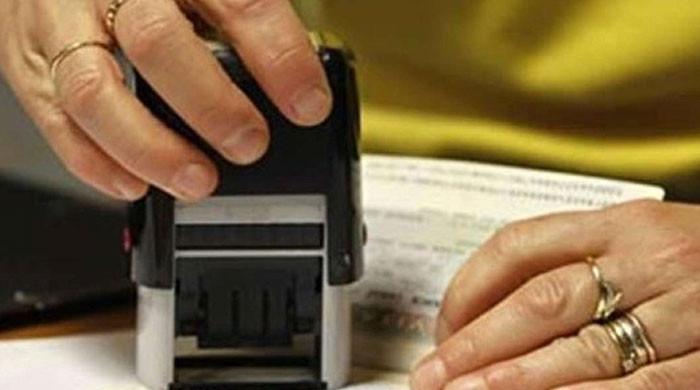
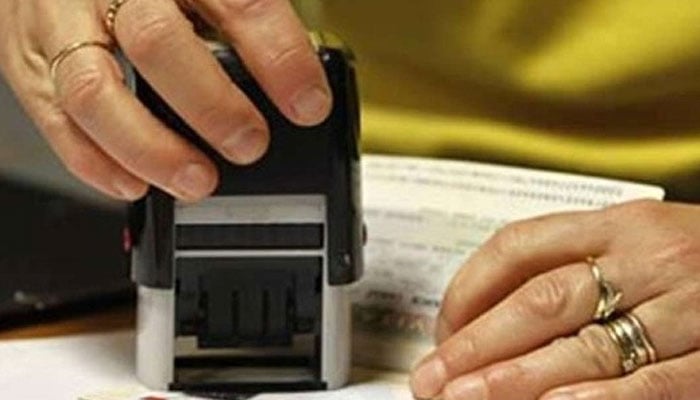
WASHINGTON: President Donald Trump’s administration officially launched his “Trump Gold Card” visa programme on Wednesday to provide a pathway, with a steep price, for non-US citizens to get expedited permission to live in the United States.
The website Trumpcard.gov, complete with an “apply now” button, allows interested applicants to pay a $15,000 fee to the Department of Homeland Security for speedy processing.
After going through a background check or vetting process, applicants must then make a “contribution” – the website also calls it a “gift” – of $1 million to get the visa, similar to a “Green Card,” which allows them to live and work in the United States.
“Basically it’s a Green Card, but much better. Much more powerful, a much stronger path,” Trump told reporters at the White House. “A path is a big deal. Have to be great people.”
Commerce Secretary Howard Lutnick said some 10,000 people have already signed up for the gold card during a pre-registration period and he expected many more to do so. “I would expect over time that we’d sell, you know, thousands of these cards and raise, you know, billions, billions of dollars,” Lutnick told Reuters in a brief interview.
Lutnick said the gold card programme would bring people into the United States who would benefit the economy. He compared that to “average” Green Card holders, whom he said earned less money than average Americans and were more likely to be on or have family members on public assistance. He did not provide evidence for that assertion.
Trump’s administration has pursued a broad crackdown on immigration, deporting hundreds of thousands of people who were in the country illegally and also taking measures to discourage legal immigration.
The gold card programme is the Trump version of a counterbalance to that, designed to make money for the US Treasury in the same way the president, a former New York businessman and reality television host, has said his tariff programme has successfully done.
Lutnick noted that there was also a corporate version of the gold card that allowed companies to get expedited visas for employees they wanted to work in the United States, for a $2 million contribution per employee.


Banks to get new powers to give financial advice

Isla Fisher offers condolences on the death of ‘Confessions of a Shopaholic’ author
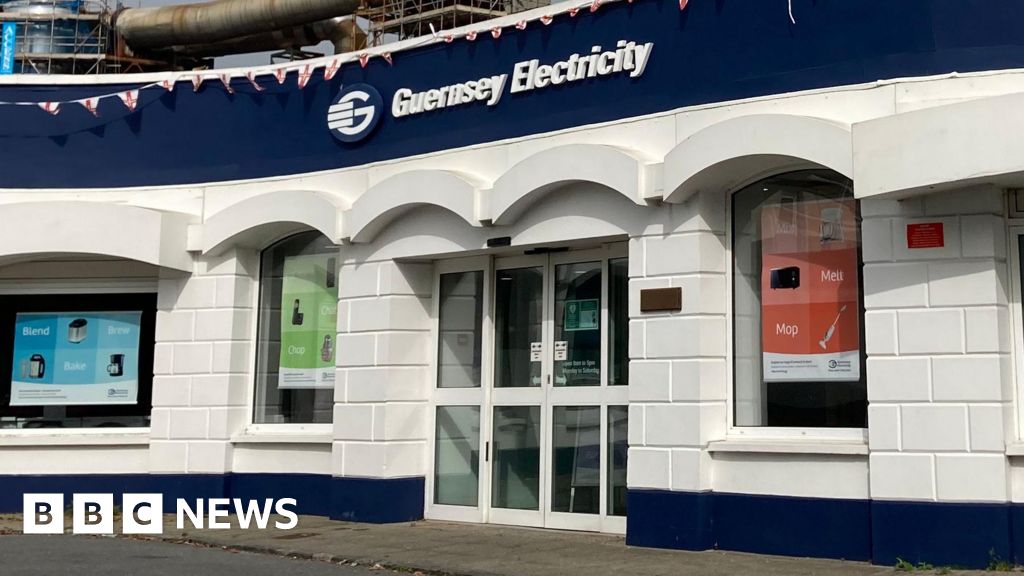
Guernsey electricity price rises a concern, survey suggests

-
 Business1 week ago
Credit Card Spends Ease In October As Point‑Of‑Sale Transactions Grow 22%
-
 Business1 week ago
IndiGo Receives Rs 117.52 Crore Penalty Over Input Tax Credit Denial
-
 Politics4 days ago
17 found dead in migrant vessel off Crete: coastguard
-
 Fashion1 week ago
World goods trade growth set to moderate as barometer index dips: WTO
-
 Politics3 days ago
Zelenskiy says Ukraine’s peace talks with US constructive but not easy
-

 Politics3 days ago
Thailand launches air strikes against Cambodian military: army
-

 Fashion3 days ago
Germany’s LuxExperience appoints Francis Belin as new CEO of Mytheresa
-

 Fashion1 week ago
Outlook on Philippines’ long-term rating positive: S&P Global Ratings